How to Choose an All-Inclusive Resort If You Get Bored Sitting on the Beach
An all-inclusive resort can sound ideal until you imagine spending six consecutive days alternating between a lounge chair, a buffet, and the same swimming pool. If sitting on the beach loses its appeal after an hour, the right resort can still deliver an excellent vacation. The key is choosing a property around what you enjoy doing, rather than treating its beachfront location as the main attraction.
Look for an all-inclusive resort with a genuinely varied activity program, convenient access to excursions, several worthwhile dining experiences, and entertainment that matches your preferred pace. Most importantly, distinguish between activities advertised in resort photographs and experiences that are actually available, included, and practical to enjoy during your stay.
Quick Answer: What Should an Active Traveler Look For?
- Several kinds of daytime activities: Look beyond pool games for fitness classes, water sports, workshops, sports facilities, and guided experiences.
- Easy access to the surrounding destination: A resort near towns, cultural attractions, or nature experiences provides alternatives to staying on the property.
- Dining with genuine variety: Different cuisines, restaurant settings, and interactive dining experiences can make evenings more interesting.
- Entertainment that suits your style: Live music, performances, dancing, and quieter social experiences appeal to different travelers.
- Clear activity inclusions: Confirm what is complimentary, what requires reservations, and what carries an additional charge.
Start by Identifying What Actually Keeps You Entertained
Not every traveler who dislikes extended beach lounging wants an adventure vacation. Some people enjoy learning new skills, while others prefer exploring neighborhoods, trying restaurants, or staying physically active. Before comparing resorts, identify the experiences you would happily spend several hours doing.
If you enjoy movement, prioritize swimming, tennis, pickleball, fitness classes, kayaking, or other organized sports. If you prefer intellectual or cultural stimulation, investigate cooking demonstrations, local food experiences, dance lessons, craft workshops, and opportunities to visit nearby communities.
Travelers who become restless without changing scenery should place particular importance on the destination outside the resort. A large activity schedule cannot completely replace the freedom to explore somewhere new.
A useful test: Imagine a vacation day with no beach time whatsoever. Can you identify three enjoyable ways to spend the morning, afternoon, and evening? If not, the resort may not be the right match.
Choose the Right Type of All-Inclusive Experience
All-inclusive resorts differ considerably in their atmosphere and priorities. Choosing the right general style can narrow your search more effectively than comparing room photographs.
| Resort style | Best fit | Potential drawback |
|---|---|---|
| Activity-focused resort | Travelers who enjoy sports, classes, and organized recreation | Scheduled activities may feel structured or crowded |
| Entertainment-focused resort | Guests who enjoy social events, performances, and nightlife | Music and group activities may reduce opportunities for quiet |
| Wellness-oriented resort | Travelers interested in yoga, fitness, and personal routines | Specialty treatments and programs may cost extra |
| Destination-oriented resort | Travelers who want to explore beyond the property | Off-site activities may involve transportation and additional spending |
| Large family resort | Families seeking activities for different ages | Facilities may be busy, and adult-focused activities can be limited |
These categories often overlap. A resort might combine extensive sports facilities with a strong entertainment program, or offer a quiet setting with easy access to local attractions. Evaluate the actual property rather than relying entirely on its marketing category.
Examine the Daily Activity Schedule Before Booking
One of the most revealing pieces of resort information is its current activity calendar. A long list of facilities does not necessarily mean there is enough organized programming to sustain a weeklong stay.
Look for activities distributed throughout the day rather than concentrated around a single pool. Ideally, the program includes different formats: independent recreation, instructor-led classes, small-group sessions, and evening entertainment.
Check Frequency, Duration, and Participation Requirements
A resort might advertise kayaking, for example, without explaining that equipment is available only during limited hours or when weather conditions permit. Cooking classes may take place once a week rather than daily. Some activities require minimum participation, advance registration, or additional payment.
Ask whether the resort can provide a recent sample activity calendar for the season you intend to visit. It will not guarantee the exact schedule for your vacation, but it can reveal whether the property consistently offers experiences that interest you.
Look for Activities You Would Actually Join
Twenty scheduled events are not particularly useful if fifteen involve pool competitions or activities you have no desire to attend. A smaller selection of genuinely appealing experiences can be more valuable than an extensive calendar designed around another type of guest.
Prioritize Resorts With Convenient Excursion Options
If your ideal vacation involves exploring, location may matter more than the number of swimming pools. A resort situated near appealing towns, nature areas, historic sites, or cultural attractions can make an all-inclusive vacation considerably more flexible.
For example, a traveler staying in the Riviera Maya might want access to archaeological sites, cenotes, or nearby communities. Someone visiting Jamaica may be more interested in waterfalls, outdoor excursions, or cultural experiences. The relevant consideration is not simply whether those attractions exist in the region, but how practical they are to reach from the specific resort.
Examine transportation arrangements, realistic travel distances, tour departure points, and the amount of your day an excursion would consume. A destination described as nearby in promotional material might still require substantial travel.
Important distinction: An all-inclusive package does not automatically cover off-site excursions. Resort-organized activities and third-party tours may have different pricing, booking requirements, cancellation terms, and transportation arrangements.
Compare Water Sports, Land Sports, and Independent Recreation
For travelers who dislike staying still, practical recreational facilities can provide more lasting enjoyment than occasional scheduled entertainment.
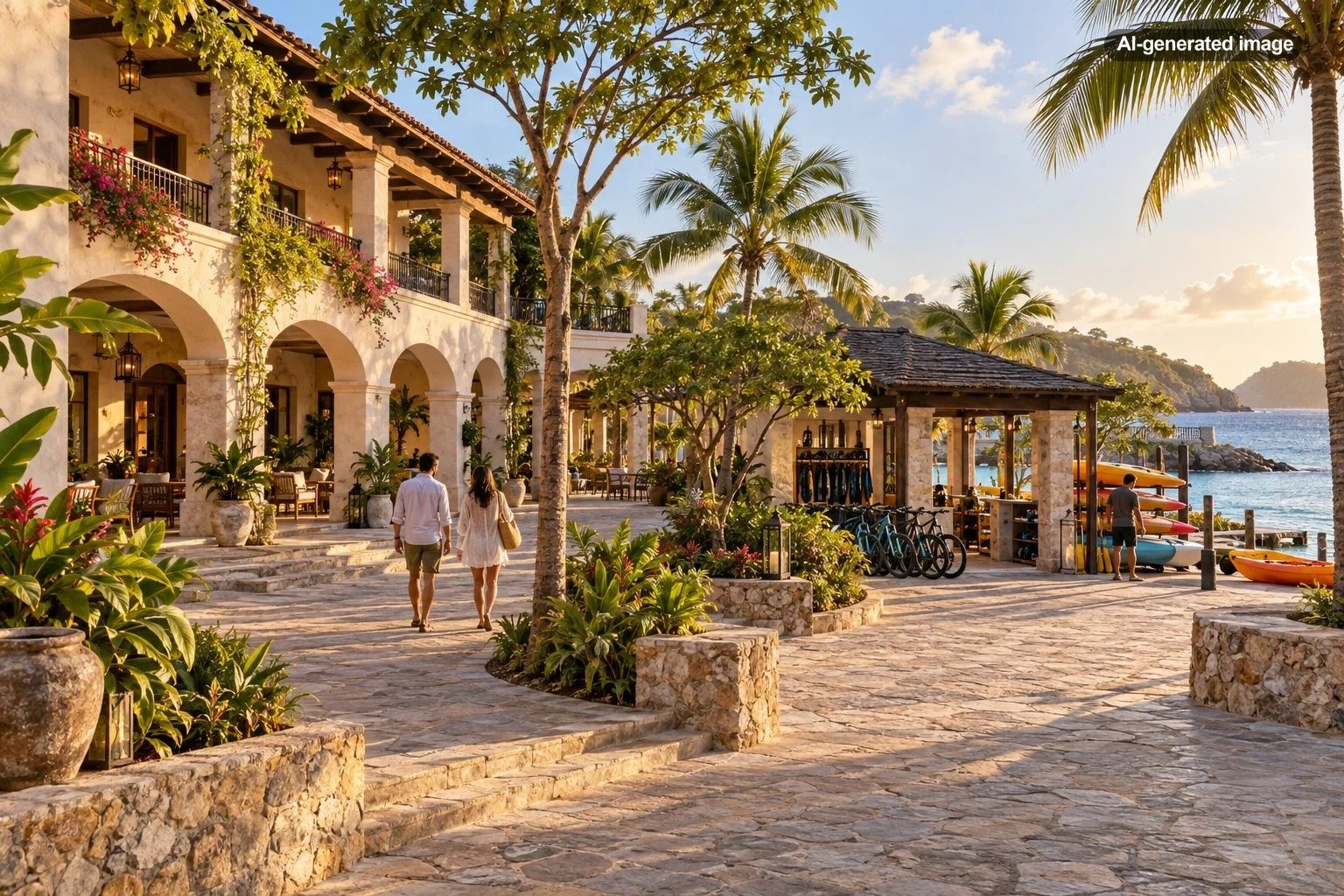
Non-motorized water sports such as paddleboarding, kayaking, and snorkeling may be included at some resorts. Others offer tennis courts, fitness centers, beach volleyball, cycling activities, or additional sports facilities. The precise selection and participation rules differ by property.
Think about whether you prefer guided activities or the freedom to exercise independently. Someone who enjoys an early-morning workout may appreciate a well-equipped fitness center more than a resort offering several highly scheduled afternoon classes.
Also check equipment availability and restrictions. Weather, sea conditions, staff supervision, equipment shortages, and booking requirements can affect the activities available on a particular day.
Do Not Underestimate Dining Variety
For many travelers, dining becomes a meaningful part of the vacation experience. Restaurants with different cuisines, atmospheres, and service styles can create natural changes of pace throughout the stay.
When comparing resorts, consider the balance between casual restaurants, buffets, specialty dining, and more relaxed evening settings. A property with numerous restaurant names may still offer overlapping menus or limited operating schedules.
Investigate whether specialty restaurants require reservations, whether premium menu selections carry additional charges, and whether dining access varies by room category or package. Also consider the practical experience of securing dinner reservations during a busy stay.
If food is a major interest, culinary demonstrations, tasting sessions, or cooking workshops can provide experiences beyond simply eating at a different restaurant every evening.
Make Sure the Evening Atmosphere Matches Your Preferences
A resort that feels lively during the afternoon can become unexpectedly quiet after dinner. Conversely, a property known for late-night entertainment may feel too energetic for travelers who want activity without constant noise.
Review the types of evening programming rather than relying on broad descriptions such as lively or vibrant. Live bands, theatrical performances, cultural presentations, dance events, lounge music, and interactive entertainment create distinctly different experiences.
Consider where entertainment takes place in relation to guest rooms. If you enjoy shows but prefer an early bedtime on certain nights, room location and venue layout can become important.
Couples with different energy levels may find properties with multiple evening venues especially useful. One person can enjoy a performance while another relaxes in a quieter setting without either feeling that the entire resort follows one schedule.
Consider Resort Size and Layout Carefully
Large resorts can offer a broader assortment of facilities, restaurants, and entertainment spaces. However, bigger does not automatically mean more enjoyable.
On an expansive property, reaching the sports center, theater, restaurant, and waterfront may involve long walks or internal transportation. What appears convenient on a resort map can feel cumbersome when repeated several times daily.
Smaller resorts may have fewer scheduled activities but offer a more manageable environment and easier access to everything on the property. They can work particularly well when the surrounding destination provides additional things to do.
Look for a property map and identify the distance between your potential room category, main dining venues, sports facilities, entertainment areas, and resort entrance. If mobility or accessibility is a consideration, ask directly about paths, stairs, elevators, and available transportation rather than assuming facilities are easily reachable.
Calculate the Real Cost of Staying Active
An all-inclusive package can simplify meal and beverage spending, but the total vacation cost still depends on how you plan to spend your time.
Common potential extras include off-site tours, motorized water sports, scuba diving, certain premium activities, spa treatments, private instruction, specialty dining upgrades, and transportation beyond the resort.
Rather than comparing nightly rates alone, estimate the total cost of the experiences you actually want. A resort with a higher room rate but several appealing included activities could offer better value for your preferences than a less expensive property where most of your chosen experiences are charged separately.
Ask for the current inclusions and exclusions in writing, particularly for activities that strongly influence your booking decision. Never assume that a facility pictured on the website is automatically part of your package.
Read Reviews for Evidence of Genuine Activity Variety
Guest reviews can be useful when they describe specific experiences rather than simply praising the beach or pool.
Look for recent, detailed comments about whether activities actually took place, how easy it was to participate, whether equipment was available, and whether the entertainment changed throughout a multiday stay.
Reviews from travelers with similar interests are especially informative. Someone seeking a peaceful beach retreat may criticize the same lively activity program that another guest would consider a major advantage.
Watch for repeated observations across several recent reviews, but do not treat individual reports as guaranteed current conditions. Activity staffing, schedules, facilities, and policies can change.
Build a Sample Three-Day Itinerary Before Reserving
An effective way to test a resort is to imagine how you would spend three consecutive days without making the beach the centerpiece.
Day One: Recreation and Evening Entertainment
Begin with a fitness class or morning swim, try an included recreational activity after breakfast, and explore the resort’s dining options. Finish with live entertainment or a social event that genuinely interests you.
Day Two: Explore Beyond the Property
Spend part of the day visiting a nearby town, cultural attraction, or natural destination. Return for dinner and a quieter evening. Check excursion travel requirements and costs before treating this as a realistic plan.
Day Three: Learn Something New
Choose a workshop, sport, introductory lesson, or culinary experience that differs from your usual routine. Leave room for independent recreation rather than scheduling every hour.
If you struggle to create this itinerary using activities the resort actually offers, consider a different property. If you can build three enjoyable days with minimal repetition, you have a much stronger indication that the destination suits your travel style.
Questions to Ask Before Booking
- Can the resort provide a recent sample weekly activity and entertainment schedule?
- Which sports, classes, workshops, and entertainment experiences are included in my specific package?
- Which activities require reservations, separate fees, or advance qualifications?
- Are recreational facilities and equipment available throughout the day?
- What attractions are reasonably accessible outside the property, and how is transportation arranged?
- Are restaurant reservations or dining restrictions likely to affect my plans?
- Does the activity schedule change seasonally or depend on occupancy?
These questions help separate resorts that merely advertise many amenities from those that provide a satisfying variety of usable experiences.
Frequently Asked Questions
Are all-inclusive resorts enjoyable if you do not like the beach?
Yes. Many travelers choose all-inclusive resorts for dining, recreation, wellness, entertainment, and convenience rather than beach lounging. The most suitable property depends on whether those alternatives are sufficiently varied and accessible.
Are excursions included at all-inclusive resorts?
Not necessarily. Some packages include certain on-site activities, while off-site tours and specialized experiences often cost extra. Confirm the details of the specific package before booking.
Are adults-only resorts better for travelers who get bored easily?
Not automatically. Adults-only resorts may emphasize dining, wellness, social events, or nightlife, but some prioritize quiet relaxation. Compare activity calendars rather than assuming the guest-age policy determines entertainment variety.
Is a larger all-inclusive resort always better for activities?
No. Larger properties may have more facilities but also longer walking distances and busier venues. A smaller resort with well-run activities and a convenient location can be equally satisfying.
How many days should you stay at an activity-focused all-inclusive resort?
There is no universal ideal. A shorter stay may suit travelers who want a few days of structured recreation, while a longer vacation works better when there are enough activities and nearby excursions to prevent repetition. Build a sample itinerary before choosing your trip length.
Choose Experiences First and the Beach Second
The best all-inclusive resort for someone who gets bored sitting on the beach is not necessarily the property with the longest shoreline, the most restaurants, or the largest swimming pool. It is the one that offers enough meaningful variety to make each day feel different.
Prioritize activities you would genuinely enjoy, confirm what is included, investigate the surrounding destination, and consider how the property functions throughout an ordinary day. When the resort fits your interests rather than an idealized picture of beach relaxation, an all-inclusive vacation can feel engaging without requiring you to spend every afternoon in a lounge chair.