How to Find Hotels With Recliners or Comfortable Chairs Instead of Just Desk Seating
A comfortable hotel room should offer somewhere pleasant to sit besides the bed. Yet many rooms advertised as spacious or well appointed provide little more than a desk chair, leaving travelers who want to read, watch television, relax, or spend an evening indoors without a truly comfortable seating option.
Finding hotels with recliners or supportive lounge chairs requires more than filtering for a suite or checking whether a room includes a seating area. The most reliable approach combines room-specific photographs, careful interpretation of amenity descriptions, recent guest feedback, and direct confirmation from the property before booking.
Quick Answer: How to Find a Hotel Room With Comfortable Seating
- Search for specific seating terms such as recliner, lounge chair, upholstered armchair, reading chair, or separate sitting area.
- Examine photographs of the exact room category rather than relying on the hotel’s general photo gallery.
- Look for residential-style suites, extended-stay accommodations, and rooms with dedicated living areas.
- Read recent guest reviews for mentions of comfortable chairs, limited seating, or furniture changes.
- Contact the hotel to confirm the chair type and whether it is included in the specific room you intend to reserve.
The key distinction is between a room that technically has a chair and one that provides a genuinely comfortable place to relax.
Why Hotel Seating Is Often Less Comfortable Than Expected
Many hotel rooms are designed around sleeping, short visits, luggage storage, and occasional laptop use. A desk chair serves a functional purpose while occupying relatively little floor space. Even upscale rooms may prioritize a larger bed, work surface, or open circulation space over an additional upholstered chair.
The term seating area can also be misleading. It might describe a single compact chair beside a small table, a narrow upholstered bench, or a loveseat with limited back support. None of these necessarily delivers the comfort of a recliner or substantial lounge chair.
Furniture choices also vary between room categories within the same property. A suite might have a sofa and armchair, while a standard king room contains only a desk chair. Renovations and replacement furniture can introduce further differences, meaning older photographs may no longer represent the room accurately.
Search for the Right Kind of Chair, Not Just a Seating Area
Broad hotel searches rarely distinguish between ergonomic work seating and furniture intended for relaxation. More precise language can help identify promising properties, especially when searching hotel websites, guest reviews, and image results.
Recliners
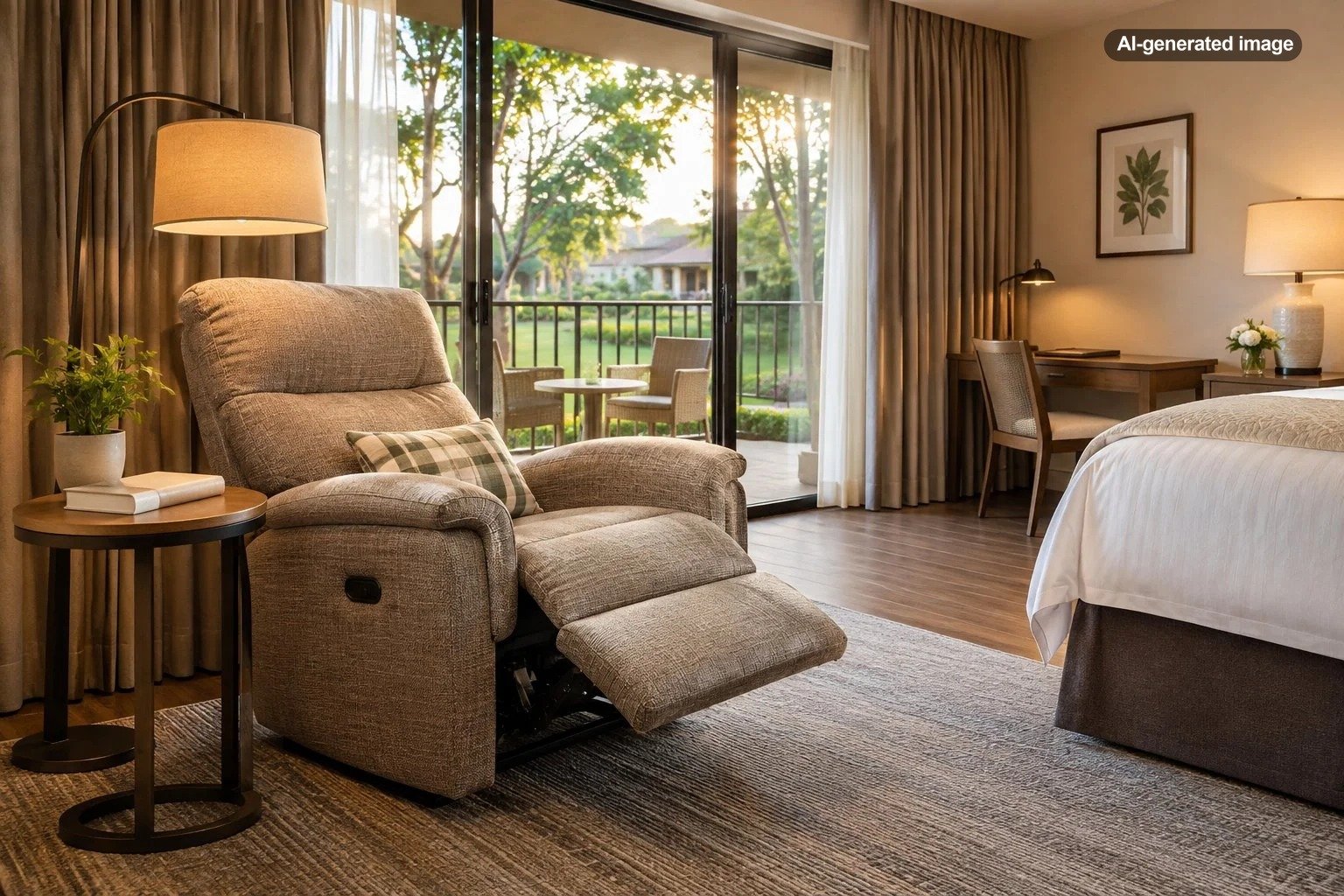
A true recliner usually allows the backrest to tilt and provides some form of leg support. This is the most specific furniture request and can be relatively difficult to locate through standard hotel booking filters. Some accommodations may feature reclining chairs, but travelers should not assume that a chair described as comfortable or lounge-style actually reclines.
Upholstered Armchairs
A substantial armchair can be an excellent alternative for reading or watching television. Look for a supportive backrest, armrests, and a seat that appears deep enough for relaxed sitting. A matching ottoman may improve comfort, although its presence should be verified separately.
Lounge Chairs and Reading Chairs
These descriptions often suggest furniture intended for relaxation rather than work. However, lounge chair is a broad term that can include low, firm, highly styled furniture. Photographs are essential for deciding whether the particular design suits your needs.
Sofas and Loveseats
A sofa may provide more seating flexibility, particularly when two people want to relax together. However, a sofa bed can feel quite different from a conventional upholstered sofa. If back support or seat firmness matters, ask whether the furniture is primarily a sleeper sofa.
Which Hotel Room Types Are Most Likely to Have Better Seating?
Room category is often a more useful clue than hotel star level or brand positioning. Certain accommodation layouts provide more space for furniture beyond the bed and desk.
| Room type | Potential seating advantage | What to verify |
|---|---|---|
| Standard room | Occasionally includes an armchair or small loveseat | Whether seating extends beyond the desk chair |
| Junior suite | May have a larger sitting area within one room | Exact furniture arrangement and chair type |
| One-bedroom suite | Often provides a separate living space | Whether the living room has armchairs, a sofa, or both |
| Extended-stay suite | May feature residential-style living furniture | Seat comfort, sofa-bed configuration, and room layout |
| Vacation rental | Can offer a furnished living room with several seating choices | Current furniture, accessibility, and property-specific amenities |
These are useful tendencies rather than guaranteed amenities. A thoughtfully furnished standard room can be more comfortable than a large suite with rigid contemporary seating.
How to Evaluate Hotel Room Photos Before Booking
Photographs often provide stronger evidence about furniture than short amenity lists, but they need to be interpreted carefully.
Identify the Exact Room Category
Start with photographs associated with the particular category you plan to reserve. A hotel’s main gallery may mix standard rooms, premium suites, accessible rooms, and promotional interiors without clearly identifying each one.
Compare the room name shown beside the photograph with the name used on the booking page. If they differ, treat the photo as an illustration rather than confirmation of your accommodation.
Look Beyond the Furniture’s Appearance
A chair can look attractive in a photograph while offering poor support for prolonged sitting. Consider whether it has armrests, a usable backrest, appropriate seat depth, and sufficient space around it.
Very low accent chairs, backless benches, narrow occasional chairs, and rigid dining-style seats may be less suitable for someone expecting to spend several hours relaxing.
Check Chair Placement Relative to the Television
Comfortable furniture is less useful when positioned where the television cannot be viewed naturally. A chair tucked into a corner beside a window may be ideal for reading but awkward for evening television viewing.
Look for layouts where the chair or sofa faces the television, can reasonably be angled toward it, or sits within a separate living area with its own screen.
Watch for Photography That Conceals the Layout
Wide-angle photography can make rooms appear more spacious than they feel in person. A chair photographed from the foot of the bed may actually be squeezed between the wall and a side table.
Look across multiple photographs for a clearer understanding of available floor space. Guest-submitted images can be helpful when they show ordinary room arrangements rather than carefully staged promotional views.
Use Guest Reviews to Verify the Actual Seating Experience
Guest reviews can reveal details that rarely appear in official room descriptions. Search within reviews for words such as recliner, armchair, chair, sofa, comfortable seating, and sitting area.
Pay particular attention to comments about watching television, reading, working from the room, or spending extended periods indoors. These experiences may provide more relevant information than broad statements about room quality.
For example, a review mentioning that the room had only one uncomfortable desk chair is highly relevant to someone traveling as a couple. A guest describing a supportive reading chair beside the window may identify a more promising room configuration.
Review dates matter. Furniture may have changed since the guest stayed, and different reviewers may have occupied different room categories. Treat reviews as clues to investigate, not guarantees of current amenities.
Questions to Ask the Hotel Before You Reserve
When comfortable seating is a priority, direct communication with the property can prevent an unsuitable booking. Avoid asking only whether the room has a chair, because nearly any desk chair could satisfy that question.
Instead, ask specific questions:
- Does the room category I am booking include an upholstered armchair, lounge chair, recliner, or sofa?
- Is the chair designed for relaxing, or is it primarily a desk chair?
- Does any chair recline or include an ottoman or footrest?
- Can someone seated in the chair comfortably watch the room’s television?
- Is the pictured furniture standard in every room of this category?
- If furniture varies, can a room with the desired seating be confirmed or requested?
If the answer depends on room assignment, ask whether the hotel can guarantee that arrangement. A request placed on a reservation is not necessarily a confirmed amenity.
For an important seating requirement, written confirmation can be useful. Keep the reply alongside your reservation details, while recognizing that even confirmed arrangements may occasionally be affected by operational changes.
When a Suite Is Worth Considering
Upgrading to a suite may make sense when you expect to spend significant time in your room. Longer stays, evenings spent watching television, remote work combined with relaxation, and travel with another person can all increase the value of a separate sitting area.
However, a suite is not automatically the better choice. Some junior suites devote their extra space to a desk, decorative furniture, or an open-plan layout without offering a supportive lounge chair.
Compare the actual seating configuration against the additional cost rather than treating suite status as proof of comfort. A standard room with a substantial upholstered chair may meet your needs better than a larger suite furnished primarily with a firm sofa bed.
Consider Residential-Style Accommodations for Longer Stays
For travelers who want an environment that feels more like a living room, extended-stay suites and vacation rentals can provide another avenue of comparison.
Residential-style accommodations may include sofas, armchairs, separate living rooms, and more flexible television-viewing arrangements. They can be especially appealing when two adults want comfortable seating without spending the entire evening on the bed.
An alternative is to browse Homes & Villas by Marriott Bonvoy for vacation-rental accommodations where individual property photographs may help assess living-room furniture. Availability, furniture, property standards, fees, and booking conditions vary, so verify the specific listing rather than assuming every accommodation provides a recliner or supportive chair.
Vacation rentals introduce their own tradeoffs, including potentially different check-in procedures, service arrangements, and cancellation conditions. They are worth comparing when seating is a major priority, but they are not universally preferable to traditional hotels.
What Travelers Often Overlook About Comfortable Hotel Chairs
Comfort Means Different Things to Different Travelers
A soft, deep chair may appeal to someone who enjoys curling up with a book. Another traveler may prefer a firmer, higher seat with substantial armrests because it is easier to sit down and stand up.
Travelers with mobility considerations should evaluate seat height, armrest stability, available clearance, and the overall route through the room. A recliner alone does not establish that a room meets accessibility needs, and accessible-room features should be confirmed directly.
Two Guests May Need Two Comfortable Seats
A photograph showing one generous lounge chair can be promising for a solo traveler but less useful for a couple. Ask how many comfortable seats are available when both guests expect to use the sitting area simultaneously.
Decorative Furniture Is Not Necessarily Functional Furniture
Stylish hotel interiors sometimes feature sculptural chairs chosen primarily for their appearance. A chair without substantial back support, or one positioned beside a small decorative table, may not suit prolonged sitting.
Furniture Can Vary Within a Room Category
Hotels may have multiple layouts under the same room name. Corner rooms, connecting rooms, and differently configured floors may feature variations in furniture placement. When a particular chair matters, verify the arrangement rather than assuming category consistency.
Frequently Asked Questions
Do hotels commonly have recliners in guest rooms?
Recliners are not a standard feature across most hotel room categories. Upholstered armchairs, sofas, and desk chairs are more broadly encountered. Travelers specifically seeking a reclining mechanism should ask the property rather than relying on general seating descriptions.
Can I request a recliner from the hotel?
You can ask, but hotels may not have movable recliners available. Furniture requests depend on the property’s inventory and policies. It is better to find a room that already contains the desired furniture than to rely on a special request being fulfilled.
Does a hotel suite guarantee comfortable seating?
No. A suite generally indicates a different or larger accommodation configuration, but the term does not guarantee a recliner, supportive armchair, or particular sofa style. Review the specific suite’s furniture before booking.
How can I tell whether a hotel chair will be comfortable for long periods?
Use multiple room photographs, detailed guest reviews, and information from hotel staff. Look for adequate back support, armrests, appropriate seat height, and sensible placement. Actual comfort remains subjective, so photographs cannot provide complete certainty.
Is a hotel with a separate living room better for television viewing?
It can be, particularly when the living area includes a sofa or armchairs oriented toward a television. However, some separate living rooms contain compact sleeper sofas or awkwardly positioned screens. Confirm both the furniture and television arrangement.
Make the Chair Part of Your Booking Decision
Comfortable seating should not be treated as an insignificant detail when you expect to spend meaningful time in your hotel room. A supportive chair can make an extended stay, a quiet evening, or a working vacation substantially more pleasant.
The most effective strategy is simple: search using specific furniture terms, inspect photographs of the exact accommodation category, consult recent guest reviews, and obtain direct confirmation of the seating arrangement before committing to a reservation.
Choose the room that fits how you intend to use it, not merely the one with the largest advertised floor area or the most impressive photographs. A genuinely comfortable place to sit can be one of the most useful amenities a hotel room provides.