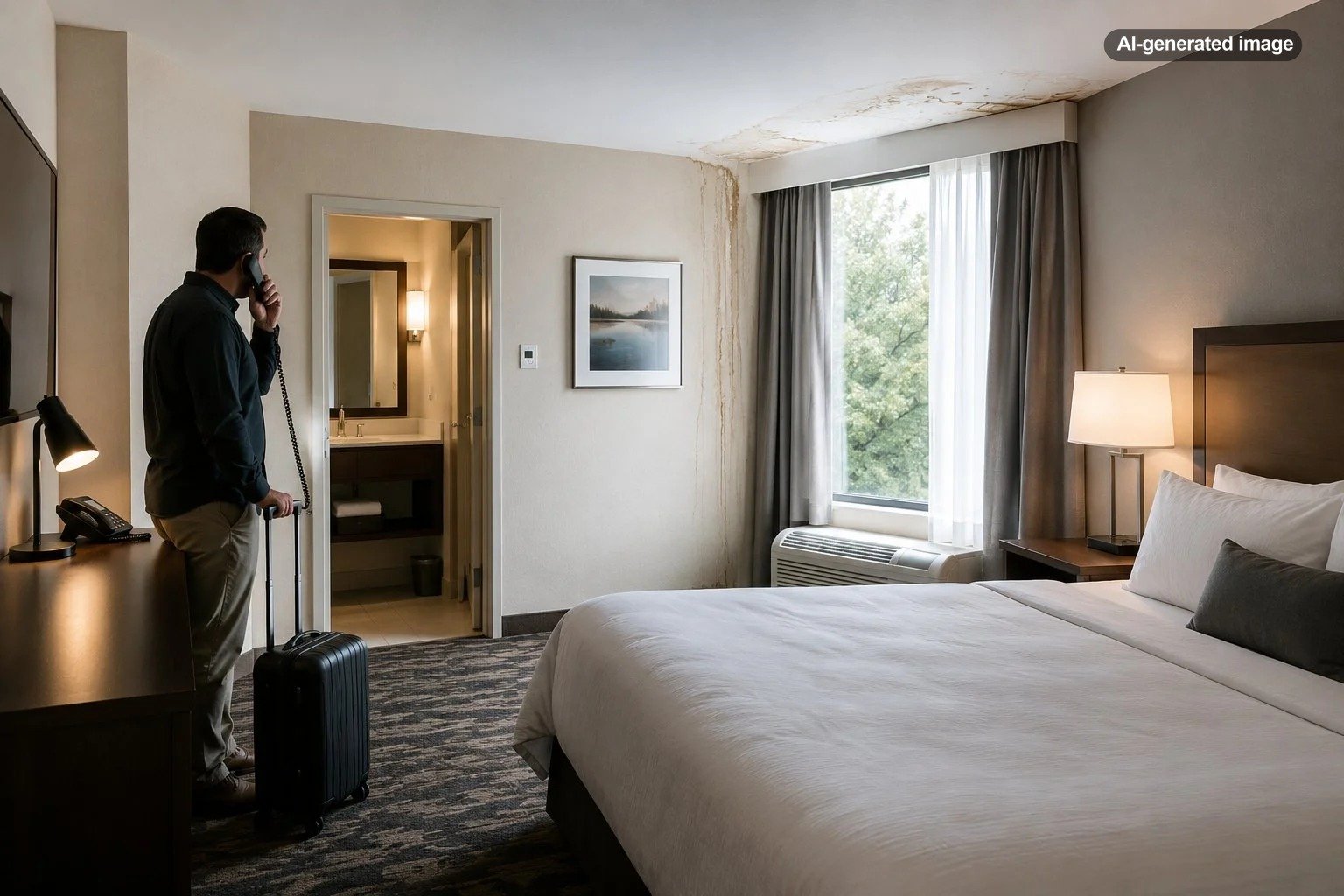
When Should You Complain About a Hotel Room?
You should complain about a hotel room when a problem materially affects cleanliness, safety, sleep, privacy, accessibility, or the basic features you reasonably expected from the reservation. You do not need to tolerate a serious issue simply because you have already checked in or do not want to appear demanding.
The most effective complaints are made promptly, calmly, and with a specific request. Reporting the problem while the hotel still has an opportunity to correct it is usually more productive than waiting until checkout or posting a negative review after the trip.
Quick answer: When a hotel complaint is justified
- Complain immediately about safety hazards, signs of pests, severe sanitation problems, broken locks, smoke, flooding, or inaccessible accommodations that were confirmed in advance.
- Report the issue promptly when noise, temperature, plumbing, bedding, or malfunctioning equipment substantially interferes with your stay.
- Ask for clarification when the room, view, bed configuration, or included features differ from the reservation.
- Start with the front desk and give the hotel a reasonable opportunity to inspect or correct the problem.
- Request a proportionate solution, such as cleaning, maintenance, a room change, removal of an incorrect charge, or an adjustment for a major unresolved disruption.
Complain immediately about safety, security, or serious sanitation problems
Some concerns should not wait. Contact the front desk immediately if the door does not lock properly, a smoke detector appears damaged, electrical fixtures are sparking, water is leaking near outlets, or an exterior entrance does not secure as expected. Leave the room while the hotel evaluates the situation if remaining there could expose you to danger.
Serious sanitation concerns also warrant prompt attention. Examples include visibly soiled bedding, substantial mold-like growth, bodily fluids, overflowing sewage, a strong gas or chemical odor, or credible evidence of pests. Avoid disturbing suspected pests or moving belongings throughout the room, since doing so may complicate an inspection or spread the problem.
Take a few clear photographs when it is safe and appropriate. Record the time, room number, and name or role of the employee you contacted. Documentation should support a practical conversation, not replace one.
Speak up when the room prevents reasonable sleep or comfort
A hotel room does not have to be silent or flawless, but it should be reasonably usable. Persistent mechanical noise, an air-conditioning failure during hot weather, an inadequate heating system in cold conditions, repeated hallway disturbances, or nearby construction that was not apparent when booking may justify a complaint.
Before escalating, determine whether the hotel can address the cause. Staff may be able to reset the climate system, send maintenance, contact a neighboring room, move you away from an elevator, or offer a room in a quieter section of the building.
Ordinary city sounds, occasional corridor activity, and normal daytime maintenance may not justify compensation. The stronger complaint is one involving sustained or excessive disruption that prevents normal use of the room, especially after the hotel has been notified.
Report cleanliness problems before settling into the room
Minor housekeeping oversights are usually easy to correct when reported promptly. A missed wastebasket, an empty soap dispenser, a stained towel, or an incompletely cleaned bathroom may call for fresh supplies or a housekeeping visit rather than a refund.
The severity and extent of the problem matter. One overlooked item is different from a room that appears not to have been serviced. If multiple surfaces are dirty, bedding seems unchanged, trash remains from a previous guest, or the bathroom is clearly unsanitary, requesting a different room may be more reasonable than waiting for a partial cleaning.
Contact the front desk before unpacking extensively. A room move becomes more complicated after clothing, toiletries, food, and luggage have been distributed throughout the space.
Complain when the room differs materially from the reservation
A complaint may be appropriate when the room you receive is meaningfully different from what your confirmation shows. Common examples include receiving one bed instead of two confirmed beds, being assigned a smoking room after reserving a nonsmoking room, or not receiving an accessibility feature that the property explicitly confirmed.
First, review the wording of the reservation. Some listings describe a request or preference rather than a guarantee. Phrases such as “subject to availability” can affect what the hotel is obligated or able to provide. A broad room image may also represent a category rather than the exact room assigned.
Present the reservation confirmation and identify the specific discrepancy. Avoid relying solely on memory or general expectations. A concise statement such as, “My confirmation lists two beds, but this room has one. Could you move us to the confirmed configuration?” gives the employee a clear problem to solve.
Accessibility problems deserve prompt and precise attention
Travelers who reserved or confirmed accessibility features should report missing or unusable features immediately. Explain which feature is needed and why the assigned room does not meet that need. The practical priority is obtaining a room or accommodation that allows the traveler to use the property safely and independently.
Do not let the conversation become limited to whether the room is generally labeled accessible. Accessibility needs vary, and a room may include some features without including the particular feature that was requested. Refer to written confirmations and keep records of conversations when the issue cannot be resolved at the property.
How to make a hotel complaint effectively
Begin with the person who can address the issue most quickly, usually the front desk. Describe observable facts rather than assigning blame. State when the problem began, how it affects the stay, and what you would consider a reasonable correction.
Use a simple three-part explanation
- Describe the problem: “The shower is not draining, and water is spreading across the bathroom floor.”
- Explain the effect: “We cannot use the bathroom safely in its current condition.”
- Request a solution: “Could maintenance address it now, or could we move to another room?”
Remain polite, but do not minimize a serious concern. Calm persistence is generally more useful than anger, threats, or an immediate demand for the highest possible compensation.
What resolution should you request?
The request should match the scale of the problem. Fresh linens, replacement toiletries, a maintenance visit, or a quieter room may fully resolve a limited issue. A room change is appropriate when the problem cannot be corrected promptly or when remaining in the room would be unreasonable.
A partial adjustment may be worth discussing when a significant portion of the stay was disrupted and the hotel could not restore the expected service. A full refund is generally a stronger request and may be more reasonable when the room was unusable, the hotel could not provide a suitable alternative, and the guest left rather than completing the stay.
Do not assume that every inconvenience produces an automatic refund. Resolution policies vary, and the booking channel can matter. A hotel may have less flexibility over payment changes when the reservation was prepaid through another company, although staff may still be able to document the issue or provide another form of assistance.
When to escalate beyond the front desk
Ask for a manager when the initial employee cannot authorize an appropriate solution, the issue remains unresolved, or the response does not reflect the seriousness of the concern. Repeat the essential facts without restarting the conversation as an emotional argument.
After departure, send a written complaint when necessary. Include the reservation number, stay dates, property name, room number, a brief timeline, photographs or receipts when relevant, the steps already taken, and the resolution requested. Keep copies of confirmations and correspondence.
For billing disputes, first ask the hotel or booking provider to explain and correct the charge. Review the reservation terms and final folio carefully. If an actual credit card billing error remains unresolved, contact the card issuer promptly and follow its formal dispute instructions and deadlines.
Complaints that are less likely to be persuasive
A complaint is weaker when it concerns a preference that was never guaranteed, a problem reported only after the hotel no longer had an opportunity to fix it, or a minor inconvenience paired with a demand for a full refund.
Other weak approaches include exaggerating the issue, threatening a negative review before requesting help, or withholding important information. For example, refusing an offered room change and later claiming the hotel did nothing may make a compensation request less convincing.
This does not mean travelers must accept an unsuitable solution. If the replacement room has the same problem, creates a new accessibility issue, or requires an unreasonable disruption late at night, explain why the offer does not adequately resolve the situation.
What travelers often overlook
Timing has a major effect on the outcome. A hotel can send housekeeping, dispatch maintenance, investigate noise, or offer another room only while the stay is in progress. Reporting the issue at checkout may still be appropriate, but fewer corrective options remain.
Travelers should also distinguish between the hotel and the booking provider. The property controls room assignments and on-site operations, while a third-party booking company may control certain payment or cancellation terms. Depending on the problem, you may need written documentation from the hotel before approaching the company that processed the reservation.
Finally, inspect the room soon after arrival. Check the lock, bedding, bathroom, temperature controls, and any feature essential to the trip. An early inspection can prevent a late-night discovery after the hotel has filled its remaining rooms.
Frequently asked questions
Should I complain about a noisy hotel room?
Yes, when the noise is persistent or excessive enough to interfere with sleep or normal room use. Report it while it is occurring so staff can investigate or offer another room.
Can I ask to change rooms?
Yes. A room change is a reasonable request when the current room has a serious cleanliness, maintenance, accessibility, security, or noise problem that cannot be corrected promptly. Availability may limit the hotel’s options.
Should I complain during the stay or after checkout?
Complain during the stay whenever possible. This gives the hotel an opportunity to resolve the problem. Follow up in writing afterward if the matter remains unresolved or involves billing.
Does a disappointing view justify a complaint?
It may justify a conversation if a particular view was explicitly confirmed as part of the reserved room category. If the view was merely requested or shown in representative photography, the hotel may not have guaranteed it.
Is it reasonable to request a refund?
It can be reasonable when the room was substantially unusable, the hotel could not provide a suitable correction, and the disruption affected a meaningful portion of the stay. For smaller problems that were corrected, a full refund is usually disproportionate.
The practical standard
Complain when the problem is significant enough to affect the room’s cleanliness, safety, privacy, accessibility, comfort, or promised configuration. Report it quickly, document it accurately, and request a solution that matches the severity of the disruption. A well-structured complaint gives the hotel the clearest possible opportunity to make the stay right.