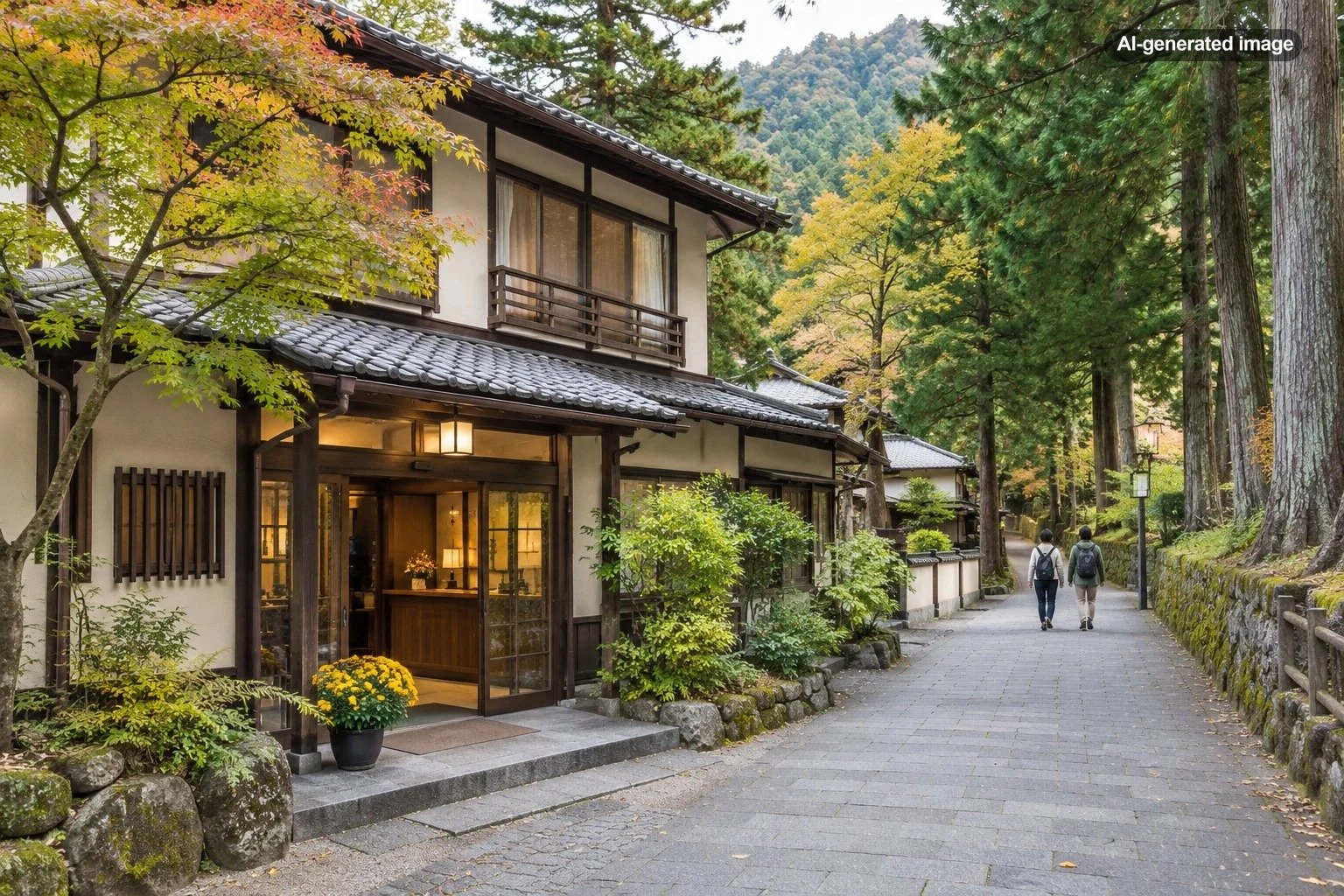
Where to Stay in Nikko for Temple Visits and Nature Without Constant Bus Transfers
Choosing where to stay in Nikko is largely a question of geography. The city’s celebrated shrines and temples occupy a compact historic district, while its lakes, waterfalls, forests, and mountain trails extend considerably farther west. A hotel that is convenient for one may require a substantial journey to reach the other.
For travelers who want to explore Nikko’s temples on foot while keeping nature excursions manageable, the Shinkyo Bridge and central historic district offer the strongest overall location. Staying near Nikko Toshogu Shrine or along the approach from Shinkyo reduces repeated local bus journeys. Hotels near Tobu-Nikko Station offer another practical solution, particularly for visitors planning excursions into the mountains.
Planning Snapshot: Choosing Your Nikko Base
- Best overall area: Shinkyo Bridge and the historic temple district for walking between major cultural attractions.
- Best for train arrivals: Tobu-Nikko Station and JR Nikko Station, especially when carrying luggage or planning several excursions.
- Best for a traditional stay: Ryokan around Shinkyo, Sannai, and the Tamozawa area.
- Suggested stay: Two nights for one substantial temple day and one nature-focused excursion; three nights allows a more relaxed pace.
- Transportation strategy: Walk between nearby temples and reserve buses or other transport for destinations such as Lake Chuzenji and Okunikko.
The important distinction is between minimizing bus transfers and eliminating buses altogether. Central Nikko makes temple sightseeing remarkably walkable, but reaching its more distant mountain landscapes generally requires another form of transportation.
Understanding Nikko’s Three Most Useful Areas
Shinkyo Bridge and the Historic District
The surroundings of Shinkyo Bridge are particularly appealing for visitors whose main interests are Nikko Toshogu Shrine, Rinnoji Temple, Futarasan Shrine, and the surrounding wooded grounds. These landmarks can be explored as a connected walking circuit rather than as separate bus trips.
Accommodation around Shinkyo also makes it possible to enjoy the river and the historic approach to the shrines without traveling back to the station after every outing. The principal compromise is that arriving with heavy luggage may involve an uphill walk or a short transfer from the railway stations.
Tobu-Nikko and JR Nikko Stations
The station district is an efficient base for travelers arriving from Tokyo, making day excursions, or departing early. The two stations are close together, and buses serving both the World Heritage area and western Nikko depart from this general transportation hub.
The drawback is distance from the temple complex. Walking to the main shrine area generally takes approximately 30 to 45 minutes, depending on the exact destination, route, and pace. The route includes uphill sections. Travelers who expect to make frequent trips between their hotel and the shrines may find this less convenient than staying near Shinkyo.
Tamozawa and the Western Edge of Central Nikko
The Tamozawa area offers a quieter setting with trees, historic surroundings, and access to pleasant walks. Nikko Tamozawa Imperial Villa Memorial Park provides a cultural attraction beyond the principal shrine cluster, while the nearby streets lead toward the broader natural landscape.
This area suits travelers who prefer a slower stay and do not need shops or railway stations immediately outside their accommodation. However, properties here can be farther from the central bus terminals, and walking routes should be checked carefully before booking.
Nikko Kanaya Hotel: Historic Character Near Shinkyo Bridge
Best for: Travelers who want a historic hotel experience and convenient walking access to major shrines.
Nikko Kanaya Hotel occupies a particularly useful position for cultural sightseeing. Situated near Shinkyo Bridge, the established heritage hotel places visitors within walking distance of the World Heritage district. Its official website identifies Nikko Toshogu Shrine as approximately a 15-minute walk away.
The property combines Western-style historic hospitality with architectural features influenced by Japan. Its long history makes the building itself part of the experience, rather than simply a place to sleep after sightseeing.
Positioned in the upscale heritage-hotel category, it is especially suitable for couples, architectural enthusiasts, and travelers seeking a distinctive overnight stay.
Tradeoff: The approach includes a steep slope, which matters when arriving with luggage or returning after extensive sightseeing. The hotel describes a station shuttle service, but travelers should verify the operating arrangements before relying on it.
Nikko Hoshinoyado: A Traditional Ryokan Close to the Shrines
Best for: Visitors seeking Japanese-style accommodation, traditional dining, and short walks to cultural landmarks.
Nikko Hoshinoyado is one of the most practical choices for combining a traditional inn experience with central sightseeing. According to its official website, Shinkyo Bridge is approximately two minutes away on foot, Rinnoji Temple about 10 minutes, and Nikko Toshogu Shrine around 15 minutes.
The ryokan offers Japanese-style rooms, a garden setting, bathing facilities, and seasonal kaiseki dining. Its location allows guests to organize temple visits independently without repeatedly checking the local bus timetable.
This is an appealing upper-moderate to upscale choice for couples and travelers who value the atmosphere of a Japanese inn over a conventional city hotel.
Tradeoff: Traditional dining arrangements require attention to the selected accommodation plan. Guests with dietary restrictions should contact the property in advance, and travelers unfamiliar with Japanese-style bedding should confirm their preferred room arrangements.
Nikko Tokinoyuu: Practical Accommodation Near Shinkyo
Best for: Travelers who prioritize a central location and a Japanese-style stay without selecting a high-end resort.
Nikko Tokinoyuu is located near Shinkyo Bridge, placing it conveniently for travelers who intend to spend considerable time exploring the main temple district on foot. Its location also provides access to central Nikko’s restaurants and local streets.
The property offers an alternative to larger historic hotels and luxury retreats. Its positioning is more modest, making it worth comparing for travelers who want to devote more of their trip budget to experiences rather than elaborate hotel facilities.
A stay here works especially well when the itinerary revolves around visiting Toshogu, Rinnoji, and the neighboring shrines, with perhaps one longer excursion beyond central Nikko.
Tradeoff: The property is not directly beside the railway stations. Guests should consider the arrival journey and confirm room configurations, dining arrangements, and other facilities rather than assuming the services of a larger hotel.
Nikko Tokanso: Traditional Lodging in the Sannai Area
Best for: Travelers who want to stay close to the shrine precincts in a quieter traditional setting.
Nikko Tokanso occupies a distinctive position in the Sannai area, close to the historic religious sites. The Japan Ryokan and Hotel Association identifies the property at 2335 Sannai, within the area associated with Nikko’s celebrated shrines and temples.
Its traditional Japanese-style accommodation and historic surroundings provide a different experience from staying along the busier station approach. The setting is particularly convenient for travelers interested in spending unhurried time around the shrine complex.
As a traditional ryokan, Tokanso is worth considering within the moderate accommodation category, although actual rates and available plans depend on travel dates.
Tradeoff: The shrine-side setting does not eliminate the need to travel from the railway stations. Visitors should also check the exact walking route, especially if carrying large bags or traveling with someone who finds uneven or sloping paths difficult.
FUFU Nikko: A Luxury Retreat Near Tamozawa
Best for: Couples and travelers who want a refined resort-style stay alongside cultural sightseeing.
FUFU Nikko is located beside Nikko Tamozawa Imperial Villa Memorial Park, providing a peaceful base within the broader central Nikko area. Rather than placing guests beside the railway stations, the property emphasizes privacy, landscaped surroundings, and time spent at the hotel itself.
Its official website describes suite accommodations with private hot spring baths and restaurant dining. This makes FUFU Nikko particularly attractive to travelers who want their lodging to be an important part of the vacation, rather than simply a convenient overnight stop.
Its luxury positioning suits special occasions and slower itineraries that combine history, nature, and relaxation.
Tradeoff: The location is less convenient for travelers who expect to walk back and forth to the railway stations. It also requires a longer walk to parts of the main shrine complex than the Shinkyo-area alternatives. Confirm arrival transportation and any hotel transfer arrangements before booking.
Nikko Station Hotel Classic: Convenient for Rail Travel and Nature Excursions
Best for: First-time visitors, rail travelers, and those planning excursions to western Nikko.
Nikko Station Hotel Classic occupies a convenient position immediately opposite JR Nikko Station and close to Tobu-Nikko Station. This makes it particularly practical for travelers arriving with luggage or intending to use buses for longer excursions.
The hotel provides conventional Western-style accommodation and natural hot spring bathing facilities. Its modern-classic format offers a familiar hotel experience while retaining a connection to Nikko’s hot spring culture.
For travelers who want to visit both the historic temples and mountain destinations, the station location simplifies departure logistics. Bus services toward the World Heritage district, Lake Chuzenji, and Okunikko can be accessed from the nearby station area.
The hotel falls broadly within the moderate category, with the balance of convenience and facilities likely to appeal to travelers who prefer straightforward planning.
Tradeoff: The temples are not immediately outside the hotel. Walking to the shrine district takes longer than from a Shinkyo-area property, so this is a better choice for travelers who value arrival and excursion convenience over maximum temple proximity.
Nikko Station Hotel II Bankan: A Simpler Base Near Tobu-Nikko Station
Best for: Independent travelers, shorter stays, and visitors seeking practical accommodation near transportation.
Nikko Station Hotel II Bankan is a casual hotel located approximately three minutes on foot from Tobu-Nikko Station, according to its official website. Its modern, uncomplicated positioning makes it an alternative for guests who do not require traditional ryokan dining or extensive resort facilities.
The property offers Western-style room configurations and a convenient station-area location. Travelers planning an early start toward Lake Chuzenji or those returning to Tokyo after sightseeing may appreciate the relatively simple arrival and departure process.
Its generally budget-conscious to moderate positioning makes it worth comparing with other station hotels, especially for travelers prioritizing location and basic comfort.
Tradeoff: The hotel is farther from the principal shrines than accommodations near Shinkyo. It also offers a different experience from a full-service resort or traditional ryokan, so travelers seeking atmospheric dining and a longer on-property experience may prefer another option.
Comparing the Most Convenient Nikko Hotels
| Property | Location advantage | Best fit |
|---|---|---|
| Nikko Kanaya Hotel | Shinkyo and historic district | Heritage hotel experience |
| Nikko Hoshinoyado | Short walks to major temples | Traditional ryokan stay |
| Nikko Tokinoyuu | Near Shinkyo Bridge | Central, practical lodging |
| Nikko Tokanso | Sannai shrine district | Quiet traditional atmosphere |
| FUFU Nikko | Tamozawa surroundings | Luxury and relaxation |
| Nikko Station Hotel Classic | JR and Tobu railway access | Nature excursions by bus |
| Nikko Station Hotel II Bankan | Near Tobu-Nikko Station | Simple, independent travel |
How to Visit Temples and Nature Without Repeated Transfers
The most efficient Nikko itinerary separates the historic district from the mountain region rather than attempting to move between them repeatedly throughout the day.
Day One: Walk Between the World Heritage Sites
Begin around Shinkyo Bridge, then continue toward Rinnoji Temple, Nikko Toshogu Shrine, and Futarasan Shrine. These sites form a walkable cultural district, although individual complexes contain steps, slopes, and extensive grounds.
Travelers staying near Shinkyo can return to their hotel without needing a bus. Those based near the railway stations can either walk uphill to the district or use a direct local bus service, depending on energy and weather.
A slower afternoon might include nearby wooded paths or the Tamozawa area, provided the chosen route matches the traveler’s walking ability.
Day Two: Make One Dedicated Nature Excursion
For Lake Chuzenji and Kegon Falls, plan a separate outing toward the western mountains. Buses travel from the Nikko station area toward these destinations, although road traffic and seasonal demand affect journey times.
Rather than returning to central Nikko between attractions, organize the day around destinations along the same general transport corridor. A visit to Lake Chuzenji and Kegon Falls can form one logical excursion, while travelers interested in Senjogahara or Yumoto Onsen should allow additional time to continue farther into Okunikko.
Autumn foliage season can create substantial congestion on the roads toward the mountains. Traveling early and avoiding an overly tight schedule are more useful strategies than assuming published bus journey times will always hold.
When a Rental Car Makes Sense
A rental car may be worthwhile for travelers planning several remote nature stops, especially when walking routes, bus connections, or seasonal scheduling make public transportation less suitable. It is generally unnecessary for a temple-focused stay in central Nikko.
Driving introduces its own considerations, including mountain-road traffic, parking arrangements, and weather conditions. During busy foliage periods, a car does not necessarily offer a faster journey than a bus using the same congested roads.
What Travelers Often Overlook When Booking in Nikko
Walking distance is not the same as easy walking. Some hotels are geographically close to the shrines but sit above steep approaches. A short route may still be demanding with luggage, after a long sightseeing day, or in wet weather.
Traditional meals require planning. A ryokan with dinner service may offer a memorable experience, but guests should confirm whether meals are included, whether advance reservations are required, and how dietary restrictions are handled.
The station area and temple area serve different purposes. Station hotels simplify arrivals and departures, while Shinkyo-area properties minimize repeated travel around the historic attractions. Neither choice is universally better.
Central Nikko and Okunikko are not interchangeable. A hotel near Lake Chuzenji may provide wonderful access to lakeside scenery while requiring a substantial journey back to the World Heritage temples. Travelers who principally want cultural sightseeing should be cautious about choosing mountain accommodation solely for its natural setting.
Transport schedules and property services can change. Check current bus routes, seasonal operations, hotel shuttle arrangements, luggage storage, and dining policies directly before departure.
Frequently Asked Questions
Is it better to stay near Nikko Station or Toshogu Shrine?
Stay near Toshogu Shrine or Shinkyo Bridge if temple visits are the main priority. Choose the station district if convenient railway arrivals, departures, and bus excursions matter more. For a balanced two-night trip, the Shinkyo area is often the more atmospheric walking base.
Can you explore Nikko without a rental car?
Yes. Central Nikko’s major shrines and temples are connected by walkable routes, while public buses serve more distant destinations. A car becomes more useful for itineraries involving numerous remote stops or locations with limited transport options.
Where should you stay for both temples and Lake Chuzenji?
Central Nikko, particularly around Shinkyo or the railway stations, is the practical compromise. The former reduces local temple transfers, while the latter simplifies boarding buses for a dedicated Lake Chuzenji excursion.
How many nights are enough in Nikko?
Two nights provide a sensible starting point for visitors who want one temple-focused day and one nature excursion. Three nights allow additional time for quieter walks, traditional hospitality, and weather flexibility.
Is staying at Lake Chuzenji better for nature lovers?
It can be, particularly for travelers prioritizing lakeside scenery and western Nikko. However, it is less practical for repeated visits to the central temples. A traveler with equal interests in cultural sightseeing and mountain landscapes may prefer central Nikko or a split stay.
The Most Practical Choice for a Balanced Nikko Stay
For visitors who want to explore Nikko’s temples and enjoy nearby nature without constant bus transfers, choose accommodation around Shinkyo Bridge or the central historic district. Nikko Hoshinoyado, Nikko Kanaya Hotel, Nikko Tokinoyuu, and Nikko Tokanso offer different interpretations of this convenient location.
Travelers who prioritize easy train connections and a straightforward departure point for longer nature excursions should compare Nikko Station Hotel Classic and Nikko Station Hotel II Bankan. Those who prefer a more luxurious, slower experience may find FUFU Nikko particularly appealing.
The essential strategy is simple: select a hotel that allows the cultural attractions to be explored on foot, then group distant nature destinations into dedicated excursions. This approach makes better use of time than trying to find one property that places every part of Nikko immediately outside the door.
Sources & Further Reading
- Nikko Official Guide: World Heritage and Onsen Highlights
- Nikko Official Guide: Getting Here and Around
- Kanaya Hotels: Official Website
- Nikko Hoshinoyado: Official Website
- Nikko Tokinoyuu: Official Website
- Japan Ryokan and Hotel Association: Nikko Tokanso
- FUFU Nikko: Official Website
- Nikko Station Hotel Classic: Official Website
- Nikko Station Hotel II Bankan: Official Website
- Japan National Tourism Organization: Nikko Area Guide