How to Choose a Desert Glamping Camp With Reliable Electricity and Bathrooms
Choosing a desert glamping camp with reliable electricity and bathrooms requires looking beyond attractive tent photographs and broad promises of luxury. The most useful questions concern how electricity is generated, whether power is available overnight, where bathrooms are located, and what happens when essential systems stop working. A beautiful desert setting can still be an uncomfortable place to spend the night if these details are unclear.
The strongest choice is a camp that explains its infrastructure in specific terms, confirms which facilities belong to your accommodation, and can describe its backup arrangements. A permanently connected camp may offer different conveniences from a remote solar-powered retreat, but neither configuration automatically guarantees a better stay. Understanding what each property actually provides is more valuable than relying on labels such as premium, eco-luxury, or fully equipped.
Quick Answer: What Should You Check Before Booking?
- Electricity: Confirm whether power is available continuously, during scheduled hours, or only when a generator operates.
- Bathrooms: Establish whether your accommodation has a private toilet and shower or uses shared facilities.
- Hot water: Ask whether hot showers are available throughout the day and whether supply is limited.
- Temperature control: Verify whether fans, air conditioning, heating, or heated bedding actually operate during sleeping hours.
- Backup arrangements: Ask what happens if electricity, water pressure, or bathroom facilities become unavailable.
For travelers who prioritize predictable comfort, clear written answers to these questions should carry more weight than decorative furnishings or promotional descriptions.
Understand How the Camp Produces Electricity
Desert glamping accommodations can use several different electrical systems. Some connect to an established electricity network, while others rely on generators, solar panels, batteries, or combinations of these sources. The type of system influences what guests can reasonably expect.
Grid-Connected Camps
Properties connected to an established electricity network may offer familiar conveniences such as standard outlets, lighting, refrigeration, and climate control. However, a grid connection does not guarantee uninterrupted service, particularly in remote areas where maintenance access may be limited.
Ask whether power reaches every guest unit and whether the property maintains backup electricity for essential facilities.
Generator-Powered Camps
Generators can support camps far from permanent electrical infrastructure, but operating schedules matter. A property may provide electricity during dinner and evening hours while switching off its generator overnight.
This arrangement may suit guests who need only occasional charging and lighting. It is less suitable for travelers expecting continuous air conditioning, overnight device charging, or electrical equipment that cannot tolerate interruptions.
Also ask whether generators are positioned near sleeping accommodations. Equipment noise may affect the atmosphere of an otherwise quiet desert retreat.
Solar and Battery Systems
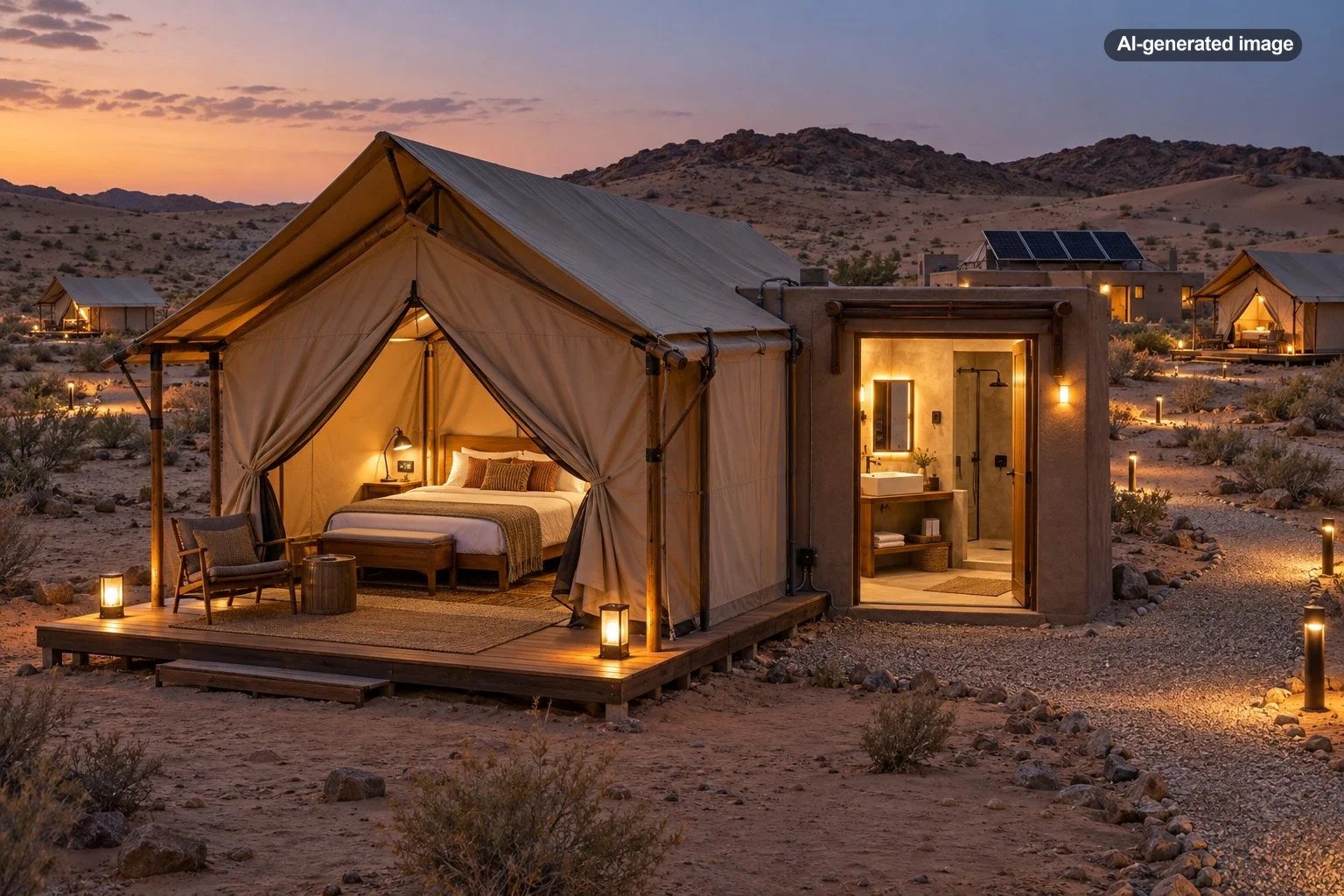
Solar-powered glamping can offer a quieter alternative, particularly when energy is stored in batteries for nighttime use. However, the presence of solar panels does not reveal how much energy is available or which appliances the system supports.
Ask whether the battery system powers guest outlets overnight, whether air conditioning is supported, and whether there are restrictions on high-consumption appliances. A camp designed primarily for lighting and phone charging is different from one engineered to support extensive climate control.
Distinguish Between Available Power and Dependable Power
A listing that advertises electricity may simply mean that a light and charging socket are installed. It does not necessarily mean guests can use appliances whenever they wish.
Before reserving, request clarification on the following details:
- Are standard electrical outlets available inside each tent or cabin?
- Is electricity available throughout the night?
- Are charging outlets compatible with your devices, or will adapters be necessary?
- Can the system support heating or cooling at the same time as device charging?
- Are there scheduled shutdown periods or appliance restrictions?
- Is backup power available, and which services does it support?
A traveler charging a phone and camera has different requirements from someone traveling with professional equipment or an electrically powered medical device. For essential equipment, do not treat an ordinary charging socket or an unverified backup generator as sufficient. Confirm the equipment’s electrical requirements and discuss them directly with the operator before booking.
Determine Whether Bathrooms Are Truly Private
Bathroom descriptions deserve equally careful attention. A camp might advertise private bathrooms, attached bathrooms, ensuite facilities, or dedicated washrooms, yet these terms can describe different physical arrangements.
An ensuite bathroom is generally understood to be directly connected to the accommodation. A private detached bathroom may be reserved exclusively for one tent but require a short outdoor walk. Shared bathrooms may serve several accommodations from a central building.
None of these configurations is inherently unsuitable. The right choice depends on privacy expectations, mobility needs, weather conditions, and the length of the stay.
For couples seeking hotel-like convenience, an attached bathroom may be worth prioritizing. Travelers comfortable with traditional camping may find a well-maintained shared facility entirely adequate, particularly for a short stay.
Check the Toilet, Shower, and Water Systems Separately
A bathroom can appear attractive in photographs while offering a very different experience in practice. Rather than asking whether bathrooms are modern, ask how individual components work.
Toilet Arrangements
Determine whether toilets use conventional flushing systems, water-saving designs, or another method. Confirm whether facilities are permanently available and how frequently shared bathrooms are cleaned.
If the camp uses composting or portable sanitation systems, request an explanation of how they operate and where they are located. The method itself is less important than understanding the experience before arrival.
Hot Showers
Hot water can be one of the most variable amenities at remote camps. Some properties use centralized heating, while others depend on solar-heated tanks or systems with limited capacity.
Ask whether hot water is available at any hour, whether showers operate during the early morning, and whether water use is restricted. If several guests shower consecutively, find out whether the system can maintain a comfortable temperature.
Water Pressure and Supply
Remote accommodations may depend on stored water, delivery systems, or pumps. These arrangements can influence shower pressure and overall availability.
A useful question is whether bathroom water supply depends on electricity. If pumps stop during a power interruption, plumbing may also be affected. Ask what facilities remain operational during an outage.
Compare Common Desert Camp Configurations
| Camp configuration | Potential advantage | Important question |
|---|---|---|
| Grid-connected camp with ensuite bathroom | Familiar accommodation experience | Is backup electricity available? |
| Solar-powered camp with private bathroom | Potentially quieter nighttime environment | What operates after sunset? |
| Generator-powered camp with shared bathrooms | May support more remote locations | When does the generator shut down? |
| Remote tent with detached private bathroom | Privacy without an attached structure | How far is the bathroom from the tent? |
These are illustrative configurations rather than universal standards. Individual properties may combine features differently. The comparison helps identify which operating details matter most for your stay.
Consider Desert Temperatures and Overnight Comfort
Desert conditions can make electrical reliability especially important. Depending on the destination, elevation, and season, daytime heat and nighttime cooling may create very different comfort requirements.
Air conditioning advertised in a tent description may operate only during certain hours. Heating may depend on electricity, a separate fuel source, or another arrangement. Confirm the exact system rather than assuming hotel-style operation.
Travelers visiting during warmer periods should establish whether cooling is available during the hours they expect to occupy their accommodation. During colder periods, ask what heating is provided overnight and whether additional bedding is available.
Also consider the tent’s construction. Insulated walls, ventilation, shade, and the position of sleeping areas may influence comfort independently of mechanical heating or cooling.
Evaluate Bathroom Access After Dark
Even when a camp provides excellent bathroom facilities, their location can affect convenience after sunset.
Ask whether routes between accommodations and bathrooms are illuminated, whether the walking surface is level, and whether steps or uneven ground are involved. A bathroom located only a short distance from a tent can feel considerably less convenient when reached across loose sand or unlit terrain.
Travelers with reduced mobility, families accompanying children, and guests who frequently need nighttime bathroom access may prefer attached facilities. Where accessibility is important, request specific measurements, entrance details, and bathroom photographs rather than relying on an undefined accessibility label.
Use Reviews to Check Operational Consistency
Guest reviews can reveal patterns that polished promotional photographs cannot. Focus on descriptions of actual electricity availability, shower performance, bathroom cleanliness, and staff responses to maintenance problems.
Look for repeated observations rather than isolated complaints. One report of weak shower pressure may reflect a temporary issue. Multiple recent reports describing nighttime power interruptions deserve more attention, particularly when the property’s listing suggests continuous electricity.
Compare reviews from similar seasons when possible. A camp operating comfortably during mild weather may face different demands during hotter or colder periods.
Review dates matter because equipment can be replaced, procedures can change, and facilities may undergo improvements. If a concern appears repeatedly, ask the operator whether the underlying issue has been resolved.
What Travelers Often Overlook
Distance from the nearest town: A secluded setting can mean longer journeys for replacement equipment, fuel deliveries, or maintenance assistance. Ask how the property handles infrastructure failures.
Bathroom capacity: A shared facility that works comfortably for a few accommodations may feel crowded when the camp is fully occupied. Ask how many guest units use each bathroom block.
Charging locations: Some camps provide central charging stations rather than individual outlets. This distinction matters for anyone expecting to charge devices securely inside their tent.
Water conservation policies: Desert properties may limit shower duration or water consumption. Such policies can be reasonable, but they should be understood before arrival.
Waste disposal: Responsible sanitation matters in fragile desert environments. The Bureau of Land Management notes that some desert locations require human waste to be packed out rather than buried. A professionally operated camp should be able to explain its sanitation arrangements and any guest responsibilities.
Communication during outages: Ask how staff notify guests about interruptions and whom to contact when electricity or plumbing stops working overnight.
Questions Worth Sending Before You Reserve
A short written message can resolve most uncertainty before payment. Consider asking:
- Is electricity available inside our accommodation 24 hours a day?
- What powers the camp, and what happens during a power failure?
- Will air conditioning or heating operate throughout the night?
- Is our bathroom attached, detached but private, or shared?
- Are hot water and showers available at all hours?
- How far is the bathroom from our sleeping accommodation?
- Are there electricity, water, or appliance-use restrictions?
- What alternatives are offered if an essential advertised facility becomes unavailable?
Request answers that apply to your exact accommodation category, not just the property as a whole. Larger camps sometimes offer several tent types with different electrical and bathroom arrangements. Retain the written confirmation alongside your reservation details.
Frequently Asked Questions
Do all luxury desert glamping camps have electricity?
No. Luxury describes a property’s positioning rather than a uniform technical standard. Some camps provide continuous electricity, while others offer limited charging, scheduled generator operation, or deliberately low-tech accommodations.
Are private bathrooms always attached to glamping tents?
No. A private bathroom may be located inside the accommodation or in a separate structure reserved for one unit. Ask whether the bathroom is ensuite and request confirmation of its location.
Can solar-powered glamping camps provide electricity overnight?
Yes, when the system includes adequate battery storage and is designed for nighttime demand. Availability depends on the individual installation, operating conditions, and electricity consumption. Confirm the hours and permitted uses.
Is a shared bathroom necessarily a poor choice?
Not necessarily. Shared bathrooms can work well when they are conveniently located, appropriately maintained, and sufficient for the number of guests. Privacy, accessibility, and nighttime convenience should guide the decision.
What should I prioritize for a multi-night desert stay?
Prioritize reliable nighttime temperature control, predictable bathroom access, dependable water supply, and clear procedures for service interruptions. Small inconveniences that seem manageable for one evening may become more significant over several nights.
Choose Infrastructure Before Decorative Luxury
The most satisfying desert glamping experience is not necessarily the one with the most elaborate furnishings or the most isolated location. It is the accommodation whose practical systems match the traveler’s expectations.
A remote solar-powered camp with straightforward facilities may be ideal for someone seeking quiet and simplicity. Another traveler may reasonably prefer a grid-connected retreat with an attached bathroom and continuous climate control. Both can be worthwhile choices when their limitations are clearly explained.
Before booking, establish precisely what electricity supports, when it operates, how bathroom facilities are arranged, and what happens when a system fails. Those answers turn a visually appealing listing into an informed accommodation decision.
Sources & Further Reading
- Bureau of Land Management: When Nature Calls – Properly Dispose of Human Waste – Guidance on sanitation and waste handling in desert recreation areas.
- National Park Service: Leave No Trace Seven Principles – General guidance on responsible camping, sanitation, and protecting natural environments.