Where Should I Stay in Miami for Beaches, Nightlife, or Family Travel?
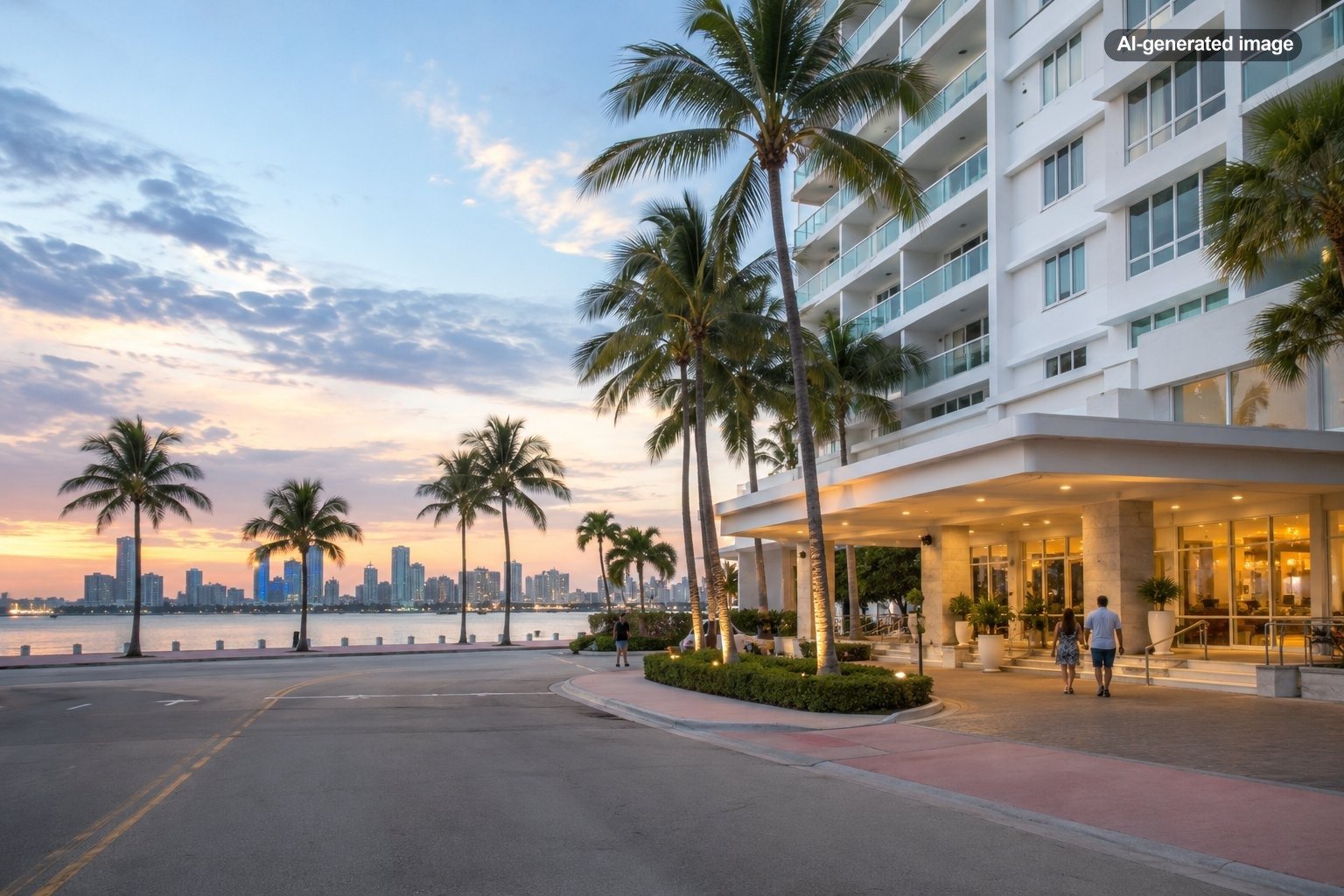
The best place to stay in Miami depends on the version of the city you want outside your hotel door. Choose South Beach for energetic nightlife and famous architecture, Mid Beach for a more resort-oriented beachfront stay, North Beach for a quieter coastal atmosphere, Brickell for restaurants and an urban base, or Coconut Grove for a relaxed neighborhood that can work especially well for families.
Miami is spread across a large metropolitan area, and the beach districts are separated from mainland neighborhoods by Biscayne Bay. A hotel that looks centrally located on a map may still require frequent rides across a causeway. It is usually better to stay close to your main priority than to choose a theoretically central location and commute every day.
Quick answer: the best Miami area for each type of trip
- Best for beaches and nightlife: South Beach, especially if you want restaurants, bars, architecture, and the ocean within walking distance.
- Best for a polished beachfront resort stay: Mid Beach, where larger hotels and a calmer setting balance beach time with access to South Beach.
- Best for a quieter beach trip: North Beach, which generally feels more residential and less centered on late-night entertainment.
- Best for urban dining and business travel: Brickell, a mainland district with high-rise hotels, restaurants, and useful transit connections.
- Best for many families: Coconut Grove, North Beach, or Key Biscayne, depending on whether you value neighborhood atmosphere, beach access, or a self-contained island setting.
South Beach: best for nightlife, walkability, and an iconic first visit
South Beach is the most recognizable part of Miami Beach, extending from the southern end of the island toward 23rd Street. It combines Atlantic Ocean beaches, Art Deco architecture, restaurants, shopping, and nightlife in a compact area. For travelers who want to walk between the beach, meals, and evening entertainment, it is often the most convenient choice.
The southern portion near South Pointe tends to feel more residential and polished than the busiest blocks farther north. The area around Ocean Drive places you close to the most photographed architecture and considerable visitor activity. Hotels near Collins Avenue or Washington Avenue can provide easy access to both the beach and inland dining, but the character can change noticeably from one block to another.
Best for: First-time visitors, couples, groups of friends, short trips, and travelers who do not want to rent a car.
Main tradeoffs: South Beach can be lively, crowded, and noisy, particularly around nightlife corridors and during major events. Rooms in older Art Deco buildings may have more character but less space than rooms in newer resort-style properties. Families can enjoy South Beach, but they should examine the immediate block and hotel atmosphere rather than assuming every part of the district feels the same.
Mid Beach: best for beachfront resorts and a more contained stay
Mid Beach occupies the central section of Miami Beach, roughly between South Beach and North Beach. The district is known for larger beachfront hotels, pools, restaurants, and direct access to the sand. It is a strong choice when the hotel itself will be an important part of the vacation.
The atmosphere is generally less hectic than the entertainment core of South Beach, although several hotels have their own lounges, restaurants, and social scenes. The Miami Beachwalk makes it possible to walk or bike along the coast, but many parts of Mid Beach are less convenient for casual restaurant hopping than South Beach. Guests may eat at their hotel more often or use rides for evenings out.
Best for: Couples, resort-focused vacations, beach weekends, and travelers who want a polished hotel environment without staying in the busiest nightlife district.
Main tradeoffs: Mid Beach is not as compact for independent dining and nightlife. A beachfront location may also place you farther from mainland neighborhoods such as Brickell, Wynwood, and Coconut Grove. Compare what is included in the room rate and review parking, dining, and property policies before booking, since these details vary by hotel.
North Beach: best for a quieter coastal atmosphere
North Beach has a calmer, more residential character than South Beach. Its beach, waterfront paths, neighborhood restaurants, and lower-key rhythm appeal to travelers who want the Miami coastline without building the entire trip around nightlife.
This area can suit families and longer stays because it feels less like a continuous entertainment district. It may also appeal to travelers who prefer independent restaurants and a more everyday neighborhood environment. The exact experience depends on whether the hotel is near the beach, farther inland, or closer to neighboring communities such as Surfside and Bal Harbour.
Best for: Families, couples seeking a quieter beach trip, repeat visitors, and travelers who prioritize mornings by the ocean over late nights.
Main tradeoffs: North Beach is farther from South Beach attractions and the mainland’s central districts. Travelers planning frequent nights in South Beach or Brickell should account for transportation time. The lodging selection also differs from the concentration of large resorts found in Mid Beach.
Brickell: best for restaurants, high-rise hotels, and an urban base
Brickell is a dense mainland neighborhood known for high-rise residences, business activity, shopping, restaurants, and modern hotels. It offers a distinctly urban experience rather than a traditional beach vacation. Metrorail and Metromover connections make it useful for travelers who want access to downtown destinations and Miami International Airport without relying exclusively on a car.
Brickell works well when dining, meetings, nightlife, or city exploration matters more than waking up beside the ocean. The neighborhood has many establishments within a concentrated area, although wide roads, construction, heat, and heavy traffic can make some walks feel longer than they appear on a map.
Best for: Business travelers, city-break visitors, couples interested in restaurants and bars, cruise passengers adding a hotel stay, and travelers dividing time between several mainland neighborhoods.
Main tradeoffs: Brickell is not on the beach. Reaching Miami Beach requires crossing the bay, and travel time can vary considerably with traffic. Choose Brickell only if you are comfortable treating the beach as an excursion rather than the default setting for each day.
Downtown Miami: best for events, museums, and transportation connections
Downtown Miami sits immediately north of Brickell and can be practical for events, cultural attractions, waterfront venues, and transportation connections. The hotel inventory includes modern high-rises, business-oriented properties, and accommodations near Biscayne Bay.
The experience is highly location-dependent. Some blocks place visitors near waterfront activity and Metromover stations, while others can feel quiet outside business or event hours. Travelers should check the walking route between the hotel and the places they expect to visit, not merely the straight-line distance.
Best for: Event attendees, museum visitors, pre-cruise or post-cruise stays, and travelers who want an urban base with access to several transportation options.
Main tradeoffs: Downtown is not a beach neighborhood, and its evening atmosphere is less consistent from block to block than Brickell’s restaurant districts. It is practical for certain itineraries but may feel less vacation-oriented than Miami Beach or Coconut Grove.
Coconut Grove: best for families and a relaxed neighborhood stay
Coconut Grove offers leafy streets, waterfront parks, sidewalk dining, boutiques, and a more settled neighborhood atmosphere. It feels distinct from both the high-rise intensity of Brickell and the visitor-heavy sections of Miami Beach. Families often appreciate the ability to combine parks, casual meals, and slower evenings without staying far outside the city.
The compact commercial center is walkable, but attractions beyond it are spread out. Coconut Grove has a Metrorail station, although the station is not directly in the center of every hotel and restaurant cluster. Depending on the property, guests may still use a rideshare, hotel shuttle, trolley, or car for some outings.
Best for: Families, couples, repeat Miami visitors, longer stays, and travelers who want neighborhood dining rather than a large resort complex.
Main tradeoffs: Coconut Grove does not provide the classic walk-out-the-door Atlantic beach experience. It is also farther from South Beach nightlife. The neighborhood makes the most sense when its parks, restaurants, and relaxed pace are part of the appeal rather than a compromise made solely for a lower-key hotel.
Key Biscayne: best for a peaceful beach-centered family trip
Key Biscayne is a barrier island south of Miami Beach with beaches, parks, residences, and a limited selection of hotels. It can feel removed from the city despite being connected to the mainland by the Rickenbacker Causeway. Families and couples may prefer it when the goal is a quieter coastal trip with less emphasis on nightlife.
The island’s self-contained character is part of its appeal. It is possible to spend much of a short vacation nearby, especially when the chosen hotel provides beach access and on-site amenities. Travelers planning to explore Miami Beach, Wynwood, or northern Miami neighborhoods every day may find the location inconvenient.
Best for: Families, couples, beach-focused stays, and travelers who prefer calm evenings.
Main tradeoffs: Access depends on a single main causeway, and a car or rideshare is useful for broader sightseeing. The area is not suited to travelers seeking a dense nightlife scene or a large variety of walkable attractions.
Coral Gables: best for elegant surroundings and a mainland retreat
Coral Gables is known for Mediterranean-influenced architecture, landscaped streets, restaurants, and a polished residential and business environment. It can be an effective base for travelers visiting the University of Miami, attending events, or exploring the southern side of the metropolitan area.
The district offers a quieter hotel experience than South Beach or Brickell. Some accommodations are near walkable dining clusters, while others are better suited to guests with a car. Coral Gables is a strategic choice when the itinerary includes Coconut Grove, South Miami, or other southern neighborhoods.
Best for: Business trips, family visits, couples seeking a refined mainland setting, and travelers with plans concentrated south of downtown.
Main tradeoffs: It is not close to the ocean, and reaching Miami Beach can take time. Travelers whose top priority is beach access should usually stay on or nearer the barrier island instead.
Wynwood and the Design District: best for art, shopping, and short urban stays
Wynwood is associated with murals, galleries, restaurants, breweries, and a busy social scene, while the nearby Miami Design District emphasizes architecture, galleries, dining, and luxury shopping. Both areas can be interesting places to spend time, but they require a more careful hotel-location decision than established lodging districts such as South Beach or Brickell.
These neighborhoods are best treated as specialized urban bases. They can work for travelers attending events nearby or prioritizing art and dining, but they are not ideal substitutes for a beachfront stay. Walkability can also change quickly between blocks, so examine the immediate surroundings and expected evening routes.
Best for: Art-focused weekends, dining trips, event attendance, and repeat visitors seeking a different side of Miami.
Main tradeoffs: The beach requires transportation, and the hotel selection is more limited. First-time visitors may find South Beach, Mid Beach, Brickell, or Coconut Grove easier to understand as a primary base.
How to choose between Miami Beach and mainland Miami
The most important decision is whether to stay on Miami Beach or the mainland. Choose Miami Beach when the ocean is central to the trip and you expect to spend several days near the sand. Choose the mainland when restaurants, business, museums, events, transit access, or visits to multiple neighborhoods matter more.
Splitting a short trip between two hotels is rarely necessary. Moving consumes time, and Miami’s distances can make check-in day less efficient than expected. A split stay becomes more reasonable on a longer trip when you want several resort days followed by an urban stay in Brickell or Coconut Grove.
What travelers often overlook
The immediate block matters
Neighborhood labels cover large areas. A quiet hotel at the edge of South Beach may feel very different from one near a major nightlife corridor. Review the exact address, nearby businesses, beach entrance, and walking route before booking.
Oceanfront and ocean view are not the same
An oceanfront property may sit directly beside the beach, but an individual room may face the city, courtyard, or another building. An ocean-view room may offer only a partial angle toward the water. Read the room description rather than relying on the hotel’s general location.
Transportation can shape the trip
Metrorail and Metromover are most useful in mainland areas, while Miami Beach travel relies more heavily on buses, local trolley services, biking, walking, taxis, and rideshares. Service details can change, so check current routes when planning. A rental car may help with regional exploration, but parking can add cost and inconvenience in dense neighborhoods.
Hotel atmosphere can be as important as neighborhood atmosphere
A family-oriented resort, a nightlife-driven boutique hotel, and a business hotel can exist within the same district. Read recent guest feedback for noise, pool atmosphere, room layout, elevator access, and the character of common areas. Those practical details often matter more than a broad neighborhood reputation.
Frequently asked questions
Where should first-time visitors stay in Miami?
South Beach is usually the clearest choice for travelers who want the beach, architecture, dining, and a recognizable Miami experience within a compact area. Brickell is a better first-time base for visitors who prioritize restaurants, urban sightseeing, and mainland transportation.
What is the best part of Miami for families?
North Beach, Coconut Grove, and Key Biscayne are strong options. North Beach provides a quieter coastal setting, Coconut Grove offers parks and neighborhood dining, and Key Biscayne suits families planning a more self-contained beach vacation.
Where should couples stay?
Mid Beach works well for a resort-centered escape, South Beach suits couples who want dining and nightlife, and Coconut Grove offers a relaxed neighborhood atmosphere. The right choice depends on whether beach access, evening activity, or quiet surroundings has the highest priority.
Can I visit Miami without renting a car?
Yes, particularly when staying in South Beach, Brickell, or Downtown and organizing the itinerary by area. Walking, transit, rideshares, taxis, bikes, and local trolley services can cover many trips. A car becomes more useful when visiting widely separated neighborhoods or destinations outside the urban core.
Is it better to stay in Miami or Miami Beach?
Stay in Miami Beach for easy ocean access and a vacation-oriented atmosphere. Stay on the mainland for high-rise city hotels, business travel, dining, events, and easier access to districts such as Brickell, Downtown, Coconut Grove, Coral Gables, and Wynwood.