Desert Camp vs. Hotel in Merzouga: Which Experience Is Better?
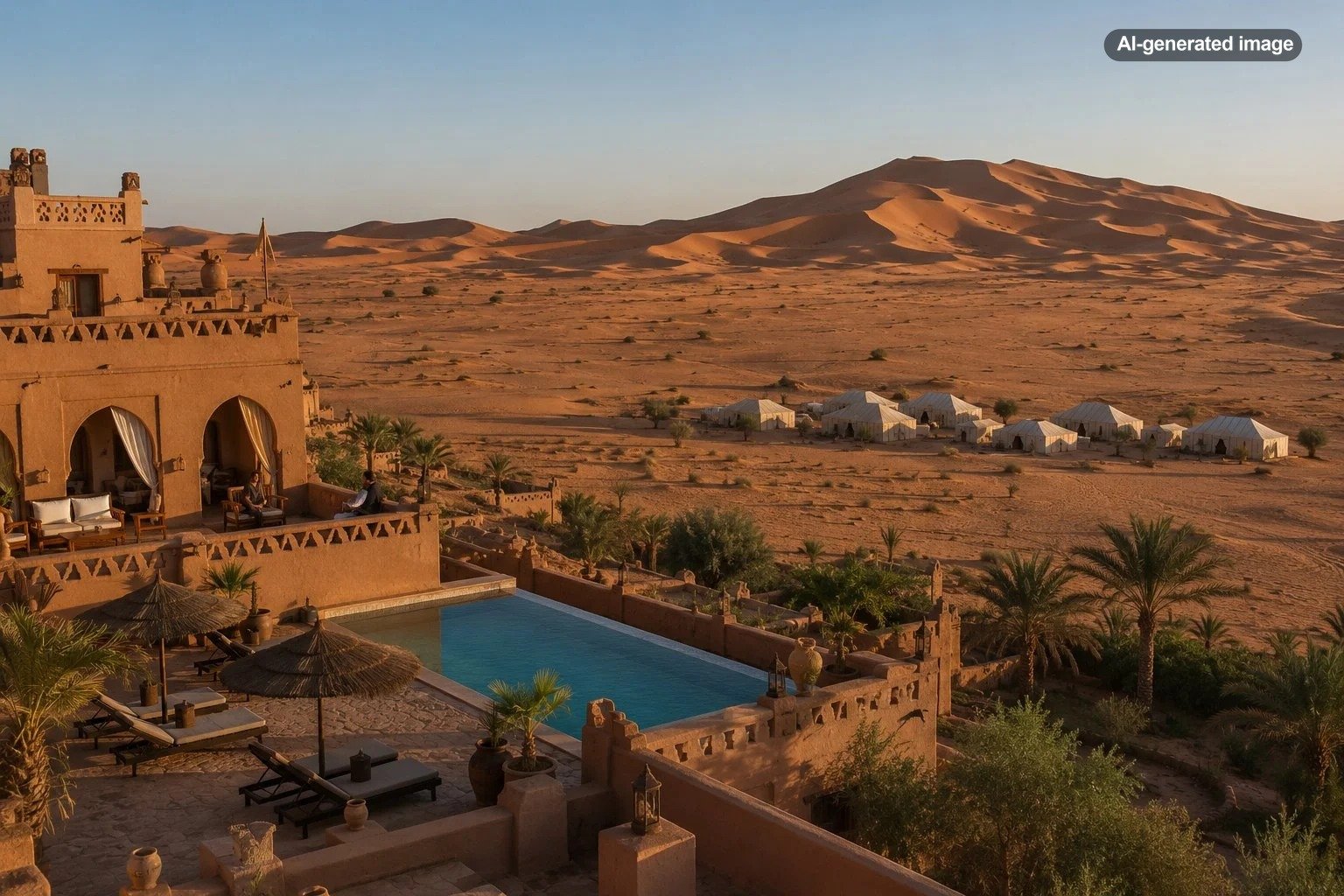
Choosing between a desert camp and a hotel in Merzouga comes down to one central question: do you want maximum immersion in the dunes or greater comfort and flexibility? A desert camp usually provides the more memorable setting, especially for sunset, stargazing, and waking near the sands of Erg Chebbi. A hotel is generally the better choice for dependable facilities, easier access, climate control, and a less structured schedule.
For many first-time visitors, the strongest plan is not to choose only one. Spending one night in a desert camp and another night at a hotel or guesthouse near Merzouga combines the atmosphere of the dunes with time to shower, rest, reorganize luggage, and travel onward comfortably.
Quick answer: Which option is better?
- Choose a desert camp if sleeping near the dunes is a major reason for visiting Merzouga.
- Choose a hotel if you prioritize a private room, reliable plumbing, easier vehicle access, and greater control over your schedule.
- Choose a higher-comfort camp if you want the desert setting but are unwilling to give up a proper bed or private bathroom.
- Split your stay if you have at least two nights and want both immersion and recovery time.
Desert camp vs. hotel in Merzouga at a glance
| Consideration | Desert camp | Hotel |
|---|---|---|
| Setting | Closer to or among the dunes | Village, roadside, or dune-edge location |
| Comfort | Varies from simple to high-comfort glamping | Usually more predictable |
| Access | May require a camel, four-wheel-drive vehicle, or arranged transfer | Often reachable directly by road |
| Schedule | Often organized around transfers and shared meals | Usually more independent |
| Best for | Atmosphere, scenery, and a distinctive overnight experience | Rest, convenience, families, and longer stays |
The main reason to choose a desert camp: location
Merzouga is known as a gateway to Erg Chebbi, and a camp puts the landscape at the center of the stay. Instead of viewing the dunes during an excursion and returning to town, you remain in the desert environment through sunset, darkness, and early morning.
That difference matters. The most appealing part of a camp stay is not necessarily the tent itself. It is the ability to step outside and experience a broad horizon, changing light, cooler evening air, and a quieter setting than most conventional accommodations can provide.
Camp locations vary considerably, however. Some sit deep enough within the dune landscape to feel remote, while others are closer to vehicle tracks or the developed edge of the desert. Travelers should not assume that every property marketed as a desert camp offers the same degree of isolation.
The main reason to choose a hotel: predictability
A hotel, inn, or guesthouse near Merzouga generally offers a more controlled environment. You may be able to drive directly to the entrance, keep your main luggage nearby, arrive without coordinating a special transfer, and leave according to your own timetable.
Hotels are also easier for travelers who want to rest after a long overland journey. A conventional room is more likely to provide solid walls, better protection from windblown sand, straightforward access to electricity, and a familiar bathroom arrangement. Individual standards still vary, so these features should be confirmed before booking rather than assumed.
A hotel does not necessarily mean sacrificing the desert. Some accommodations stand near the dune edge, allowing guests to enjoy views and excursions while returning to a conventional room afterward. This can be an effective compromise for travelers who want to see Erg Chebbi without sleeping in a tent.
Not all Merzouga desert camps are alike
The word camp covers a wide range of experiences. A simple camp may focus on basic shelter, shared facilities, communal meals, and minimal electricity. A high-comfort camp may include a furnished tent, a fixed bed, decorative textiles, lighting, and an attached bathroom.
Marketing terms such as traditional, luxury, premium, and glamping are not standardized descriptions. Two camps using the same label may provide very different levels of comfort. Before reserving, examine the specific sleeping and bathroom arrangements rather than relying on the category name.
Questions to ask before booking a camp
- Is the bathroom private, shared, attached, or located in a separate structure?
- How is the camp reached, and is the transfer included?
- Can guests choose between a camel transfer and a vehicle transfer?
- Are dinner and breakfast included in the reservation?
- Is electricity available throughout the night?
- Are towels, bedding, and toiletries provided?
- Can large suitcases be stored securely elsewhere?
- What happens if strong wind or other difficult weather affects the stay?
Comfort differences become more important after dark
Daytime photographs do not always reveal how an accommodation feels overnight. Desert temperatures can shift significantly between afternoon and early morning, and conditions vary by season. Tent materials, ventilation, heating, cooling, bedding, and bathroom design can therefore affect the experience more than decorative details.
Noise is another overlooked factor. A camp may feel peaceful, but sound can travel between tents. Evening music, generators, arriving vehicles, and neighboring groups may be audible. Travelers seeking complete silence should ask about camp size, entertainment, generator use, and the distance between tents.
Hotels usually provide more separation from wind and outside activity, although soundproofing and temperature control are never guaranteed. Light sleepers may find a solid-walled room more restful before a long transfer or driving day.
Transfers can shape the entire camp experience
Reaching a camp is often part of the appeal. Depending on the location and operator, the final segment may involve a camel ride, a four-wheel-drive transfer, or a combination of transportation methods. Sunset timing may influence departure, and guests may be asked to meet at a hotel, office, parking area, or other staging point.
This creates a more structured arrival than checking into a hotel. It can feel adventurous, but it also reduces flexibility. A late arrival, delayed road trip, mobility limitation, or preference to avoid riding an animal may change which transfer method is practical.
Travelers should confirm the meeting point, transfer duration, luggage limit, and return time in advance. It is especially important to understand whether the listed reservation includes transportation to the camp or only the tent and meals.
Which option works better for different travelers?
First-time Sahara visitors
A desert camp is often the stronger choice when the overnight desert setting is a central part of the trip. One night is usually enough to experience sunset, dinner, the night sky, and sunrise without committing the entire Merzouga stay to tented accommodation.
Families with young children
A hotel may be easier because it offers direct access, a simpler bedtime routine, and more predictable bathroom arrangements. Families considering a camp should ask about walking distances, heating or cooling, child-appropriate meals, bed configurations, and transportation safety.
Travelers with limited mobility
A hotel is usually the more manageable starting point, but accessible design should still be confirmed directly. Sand, steps, uneven surfaces, low furnishings, and detached bathrooms can make some camps challenging. A vehicle transfer may be more suitable than a camel ride, but the route from the drop-off point to the tent also matters.
Couples seeking atmosphere
A smaller, well-spaced camp can provide an appealing setting for sunset and a quiet evening. Couples should ask whether meals and entertainment are communal, since the experience may be more social than private.
Photographers and early risers
A camp provides faster access to early and late light around the dunes. A dune-edge hotel can also work well, particularly when it offers the freedom to leave before organized camp activities begin. Location is more important than the accommodation label.
Remote workers and connectivity-dependent travelers
A hotel is generally the safer choice, but internet quality should be verified. Camp Wi-Fi, mobile reception, charging access, and power availability may be limited or inconsistent. Anyone who must join a call or submit work should avoid treating connectivity as guaranteed.
Why a split stay is often the best plan
A two-night plan can solve most of the tradeoffs. Travelers can arrive at a hotel, leave bulky luggage there, take a smaller overnight bag to the camp, and return the next morning for a shower or a second night in a conventional room.
This arrangement is particularly useful when Merzouga appears in the middle of a longer Morocco itinerary. Road journeys to and from the region can be tiring, and a hotel night provides more recovery time than moving directly from a long drive into a scheduled camp transfer.
A practical sequence is to check into a hotel first, organize the camp transfer for that afternoon, spend one night among the dunes, and return to the hotel the following morning. The order can be reversed when departure logistics make that easier.
What travelers often overlook
Luggage handling: Large suitcases may not travel comfortably to a camp. Pack medications, water, warm layers, sun protection, a small flashlight, charging equipment, and overnight essentials in a separate bag.
Bathroom wording: A private bathroom may be attached to the tent, located beside it, or placed elsewhere within the camp. Ask for the exact arrangement.
Meal timing: Camp dinners are commonly served at a set time. Travelers with dietary requirements should communicate them before arrival and confirm what can realistically be accommodated.
Entertainment: Music and group activities can add energy to the evening, but they may not suit travelers expecting silence. Ask whether entertainment is regular, occasional, or seasonal.
Weather flexibility: Wind, heat, cold, and sand can change how comfortable a camp feels. Review the cancellation and relocation policy, especially when traveling during a period of more demanding conditions.
Animal welfare preferences: A camel ride is not mandatory at every camp. Travelers who do not want one should request a vehicle transfer and confirm the arrangement in writing.
How to make the final decision
Choose a desert camp when the setting itself is the priority and you are comfortable with a more organized, less predictable overnight stay. Choose a hotel when sleep quality, private facilities, direct road access, or schedule flexibility matters more than remaining among the dunes after dark.
Before paying, compare the exact camp location, transfer method, bathroom arrangement, climate-control features, meal inclusions, luggage policy, and cancellation terms. For a hotel, compare its distance from the dunes, road access, parking arrangements, room features, and ability to organize desert excursions.
The better experience is therefore personal rather than universal. A camp offers the strongest sense of immersion. A hotel offers the strongest practical base. Travelers with enough time can avoid the compromise by combining both.
Frequently asked questions
Is one night in a Merzouga desert camp enough?
For most visitors, one night provides enough time for a transfer, sunset, dinner, stargazing, sleep, and sunrise. A second night may suit travelers who want a slower pace or additional desert activities.
Do all desert camps have private bathrooms?
No. Facilities range from shared bathrooms to attached private bathrooms. The term luxury does not guarantee a particular layout, so confirm the details directly.
Can you visit the dunes without staying in a camp?
Yes. Travelers can stay at a hotel or guesthouse and arrange daytime, sunset, or sunrise excursions. This is a good option for those who want the landscape without an overnight tent stay.
Are desert camps suitable for winter travel?
They can be, but nighttime comfort depends on weather, tent construction, bedding, and heating arrangements. Ask specifically how the camp manages colder nights.
Should you book the hotel or camp first?
Start with the experience that has the most restrictive availability or transfer schedule, then arrange the other night around it. Confirm how the two accommodations will handle luggage and transportation between them.