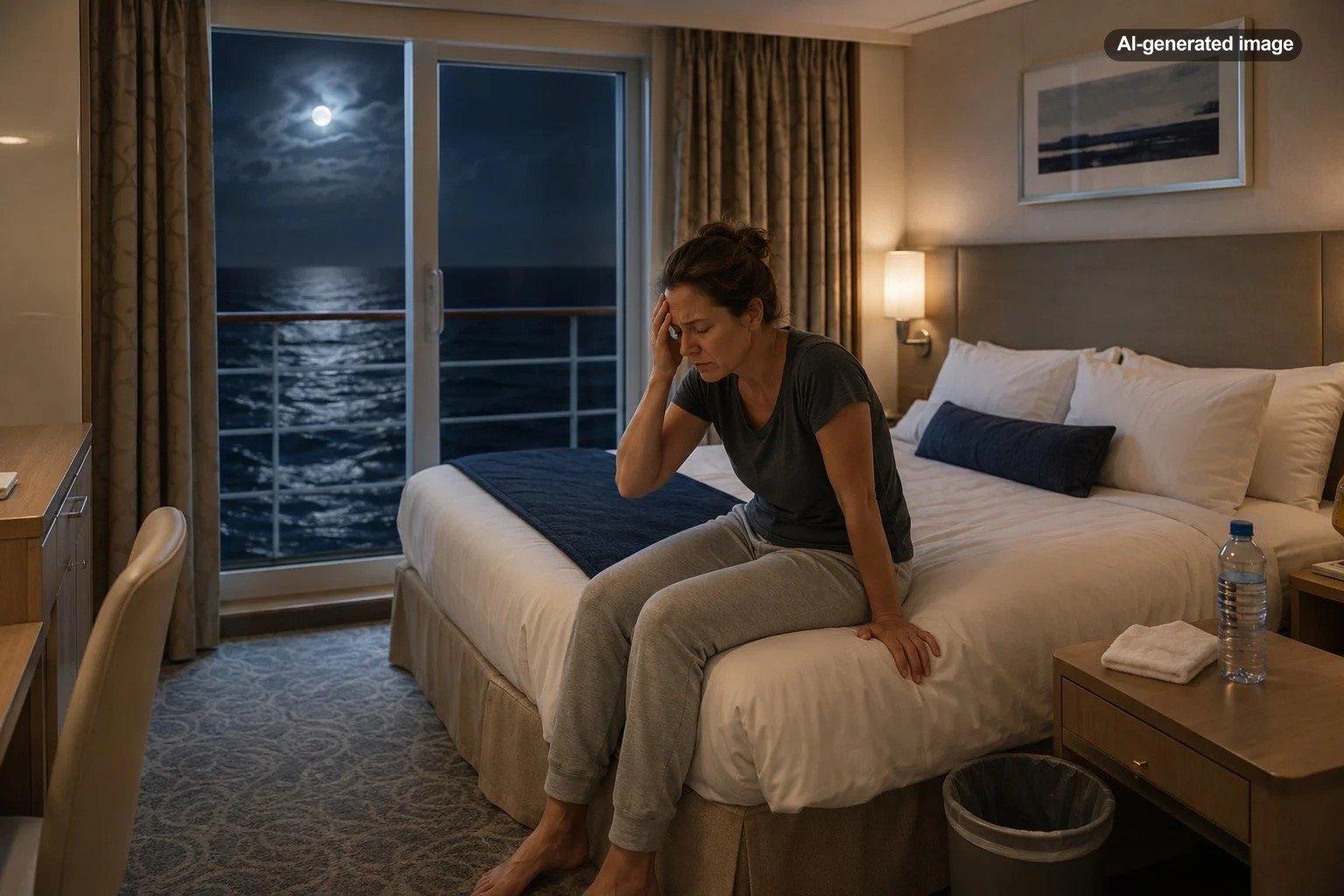
What to Do If You Get Severely Seasick on the First Night of Your Cruise
Severe seasickness on the first night of a cruise can feel alarming, especially when you are vomiting, unable to eat, or wondering whether the entire sailing will be miserable. Start by getting to a safe, quiet place, reducing visual stimulation, taking small sips of fluid, and contacting the ship’s medical center if symptoms are intense, persistent, or accompanied by warning signs.
Do not assume that every case of vomiting at sea is ordinary motion sickness. Gastrointestinal illness, medication reactions, migraine, dehydration, and other medical problems can produce similar symptoms. The ship’s medical staff can assess whether you need treatment rather than simply waiting for the motion to pass.
Quick answer: What should you do immediately?
- Stop walking around and sit or lie somewhere secure where a sudden roll of the ship will not cause a fall.
- Look toward the horizon if that feels comfortable, or close your eyes and keep your head still.
- Take small, frequent sips of water or another clear fluid rather than drinking a large amount at once.
- Avoid alcohol, heavy meals, reading, scrolling, and watching moving images.
- Call the ship’s medical center if vomiting is repeated, you cannot keep fluids down, or the symptoms feel unusually severe.
First, move to the most manageable environment
Motion sickness develops when the movement detected by the inner ear conflicts with what the eyes and other parts of the body perceive. Reducing that sensory mismatch may make the symptoms more manageable.
If you can move safely, try a location near the center of the ship and on a lower passenger deck, where movement may feel less pronounced than it does high up or near the bow and stern. Some travelers feel better outdoors with fresh air and a clear view of the horizon. Others become more nauseated while watching waves and prefer a quiet cabin with their eyes closed.
Choose whichever setting reduces your symptoms. Do not force yourself to remain on an open deck if you are weak, unsteady, or at risk of falling. Use handrails, ask a travel companion for help, and avoid stairs when the ship is moving heavily.
Keep your head still and reduce visual triggers
Once you are settled, support your head against a pillow, headrest, or wall. Looking at a stable point in the distance can help some people reconcile visual and motion signals. If that does not help, close your eyes and breathe slowly.
Put away your phone, tablet, book, and laptop. Focusing on a nearby stationary object while your inner ear detects movement can intensify the sensory conflict. Dim lighting and a cooler room may also feel more comfortable when nausea is severe.
Try not to pace around the cabin. Movement can increase dizziness, and repeated trips to the bathroom may create a fall risk. Keep a wastebasket, bag, tissues, water, and the cabin phone within easy reach.
Replace fluids carefully after vomiting
Repeated vomiting can cause dehydration, but drinking too quickly may trigger more vomiting. Begin with very small sips of water or another clear beverage. Pause if nausea surges, then try again after your stomach settles.
Once you can retain fluids, bland foods such as crackers, plain bread, rice, bananas, or broth may be easier to tolerate than rich foods. Skip the buffet, room-service feast, greasy meals, spicy food, and alcohol until you are clearly improving. Strong food odors can also aggravate nausea, so eating in the cabin may not be helpful if smells are a major trigger.
People with diabetes, kidney disease, heart disease, pregnancy, or another condition that affects fluid or dietary needs should seek individualized advice from the ship’s medical staff rather than relying on general hydration guidance.
Use motion-sickness medication cautiously
Common motion-sickness medicines include antihistamines such as meclizine or dimenhydrinate, while scopolamine is available by prescription in the United States. These medicines generally work better when taken before significant symptoms develop, although some may still be used after symptoms begin.
Follow the package directions or the instructions supplied by your clinician. Do not take an extra dose simply because you vomited unless a medical professional advises you to do so. It may be unclear how much medication was absorbed, and taking more could lead to an excessive dose.
Motion-sickness medicines can cause drowsiness, blurred vision, dry mouth, confusion, or impaired coordination. Alcohol and other sedating medicines may increase those effects. Extra caution is appropriate for older adults and for anyone with glaucoma, urinary problems, certain heart conditions, or other medical concerns. A pharmacist or the ship’s clinician can help determine whether a particular product is appropriate.
If you already applied a prescription scopolamine patch, do not add another patch without medical direction. Wash your hands after touching the patch and avoid transferring medication to your eyes.
Know when to contact the ship’s medical center
Calling the medical center is reasonable whenever your symptoms feel severe, even if it is the first night and you suspect motion sickness. Cruise ships generally provide instructions for reaching medical staff through the cabin phone, the daily program, or the ship’s app.
Seek prompt medical assessment when:
- You repeatedly vomit or cannot keep fluids down.
- You feel faint, confused, extremely weak, or unable to walk safely.
- You have very little urine, a very dry mouth, or other signs of dehydration.
- You have chest pain, trouble breathing, a severe headache, weakness on one side, or difficulty speaking.
- You have significant abdominal pain, blood in vomit, a high fever, or persistent diarrhea.
- Your symptoms began after a fall, head injury, new medication, or possible allergic reaction.
- You are pregnant or have a medical condition that makes vomiting or dehydration more concerning.
The clinician may determine that your symptoms are consistent with motion sickness, provide medication that is easier to tolerate than an oral tablet, address dehydration, or investigate another cause. Medical care aboard a ship may generate a separate charge, so retain receipts and treatment records for a possible travel-insurance claim.
Do not automatically assume vomiting is seasickness
Timing offers clues but does not establish the cause. Seasickness commonly appears as the ship reaches open water and may involve dizziness, pallor, sweating, nausea, and vomiting. Symptoms may improve when the ship docks or the sea becomes calmer.
Illness is more plausible when vomiting occurs with fever, diarrhea, severe stomach cramps, or similar symptoms among travel companions. Migraine, vertigo, food-related illness, medication side effects, and alcohol can also resemble or worsen seasickness.
If vomiting or diarrhea may be infectious, remain in your cabin and call medical services rather than walking through public areas. Follow any isolation, hygiene, or reporting instructions provided by the ship.
How to approach the next morning
Many travelers adapt to a ship’s movement over time, but recovery is not guaranteed by morning. Resume activities gradually. Start with fluids and a light meal, then spend time in a stable area before committing to a long excursion, workout, or rich breakfast.
If you are still dizzy, sedated from medication, or unable to eat and drink normally, cancel activities that require balance, heat exposure, swimming, climbing, or a lengthy transfer away from the ship. Missing an excursion is frustrating, but becoming ill ashore without easy access to your cabin or the ship’s medical team can be considerably harder.
Ask the medical staff how to time any medication before the ship sails again after a port call. Preventive timing may be more effective than waiting for nausea to return. You can also ask guest services whether a different available cabin would place you closer to the ship’s center, although cabin changes depend on occupancy and should not be treated as guaranteed.
What travelers often overlook
Severe seasickness affects more than comfort. Drowsiness from medication, dehydration, and poor balance can create practical safety problems. Avoid showering alone if you feel faint, standing on wet decks, leaning over railings, or combining sedating medication with alcohol.
Travel companions should know where the sick traveler’s identification, medication list, insurance information, and emergency contacts are kept. A person who is vomiting heavily may not be able to explain medical conditions or medications clearly.
It is also worth documenting the episode. Note when symptoms began, what you ate or drank, which medications you took, how often you vomited, and whether you developed diarrhea, fever, pain, or neurological symptoms. That information can help the medical team distinguish ordinary motion sickness from another problem.
Frequently asked questions
Will severe seasickness last for the entire cruise?
Not necessarily. Some people improve as their bodies adapt, when sea conditions calm, or after appropriate treatment. Others remain sensitive throughout the sailing. Persistent or worsening symptoms deserve medical evaluation.
Is it better to lie down or go outside?
Both can help, depending on the person. A secure outdoor location with fresh air and a horizon view may reduce symptoms, while lying still with closed eyes may be better for someone who feels weak or visually overwhelmed. Safety comes first if the deck is wet or the ship is moving heavily.
Should I make myself eat?
No. Focus first on retaining small amounts of fluid. When nausea eases, try a small portion of bland food. Seek medical advice if you cannot keep liquids down.
Can I take two different motion-sickness medicines together?
Do not combine medicines without guidance from a clinician or pharmacist. Several products have overlapping ingredients or sedating effects, and a combination may be unsafe for your health conditions or other medications.
Should I leave the cruise at the next port?
That decision depends on the cause and severity of your symptoms, the medical team’s assessment, the itinerary, and your ability to travel safely. Speak with the ship’s clinician and guest services before making independent transportation arrangements.