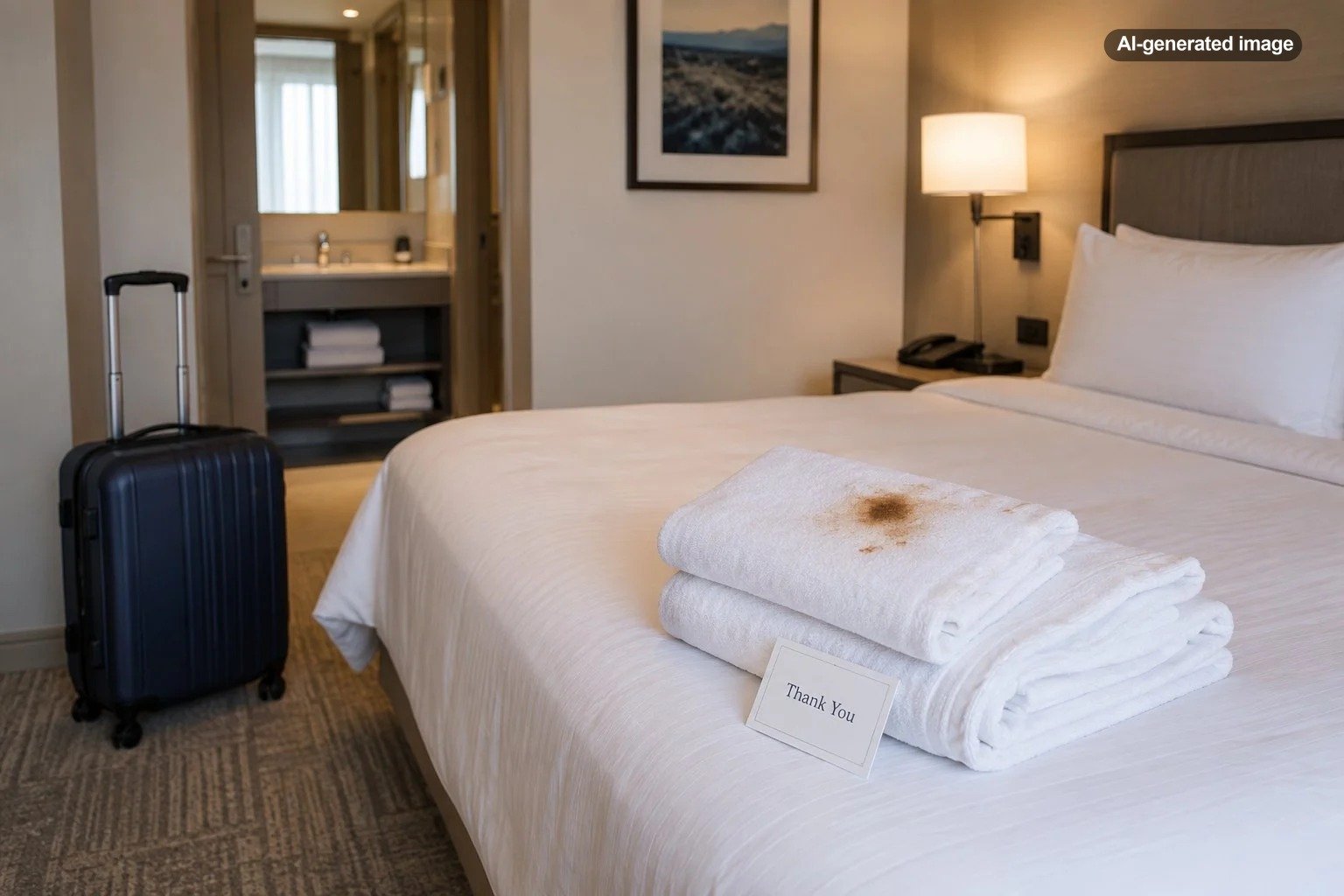
Can a Hotel Charge You for Stained Towels or Sheets?
Yes, a hotel can potentially charge you for stained towels or sheets when it believes the staining represents guest-caused damage rather than ordinary use. However, a mark on hotel linen does not automatically justify a replacement fee. The practical question is whether the item can be restored through the property’s normal commercial laundering process or has been permanently damaged.
Policies, documentation standards, and applicable consumer laws vary, so travelers should not assume that every stain will produce a charge or that every charge is automatically valid. Makeup, hair dye, self-tanner, blood, ink, grease, and bleaching products are among the substances most likely to create disputes because they can permanently alter white linens.
Quick answer
- Hotels may charge for linens they reasonably consider permanently damaged.
- Ordinary laundry soil is generally different from damage requiring replacement.
- A property may place the charge on the payment card used for incidentals, depending on the authorization and terms accepted at check-in.
- The hotel should be able to explain what was damaged and how the amount was determined.
- If you disagree, contact the property promptly and request documentation before escalating the matter to your card issuer.
The difference between normal use and permanent damage
Hotel sheets and towels are designed for repeated commercial washing. Everyday body oils, light cosmetic residue, perspiration, and ordinary dirt are expected parts of operating a hotel. These conditions typically belong within routine housekeeping and laundry costs.
A damage charge becomes more plausible when a substance cannot be removed through normal treatment or when attempts to remove it would make the item unsuitable for continued guest use. A white bath towel discolored by hair dye, for example, presents a different operational problem from a towel that simply needs washing. Likewise, sheets affected by permanent ink, nail polish, adhesive, or chlorine bleach may no longer meet the property’s presentation standards even if they remain physically intact.
The distinction is not always obvious. A dramatic-looking stain may disappear after professional laundering, while a small chemical mark may permanently weaken or discolor fabric. This is why the appearance of the linen at checkout is not always enough to determine whether a fee is justified.
How hotels usually identify linen damage
Housekeeping employees commonly inspect rooms during turnover and separate unusually stained or damaged items from normal laundry. The property may then photograph the linen, note the room number, attempt stain treatment, or report the item to a manager. Procedures differ widely among independent hotels, branded properties, resorts, and vacation rentals.
A carefully managed property will generally connect the item to a specific room and document the condition before assessing a charge. That does not guarantee that the guest will agree with the conclusion, but it creates a clearer basis for reviewing the decision.
Travelers should be cautious about assuming that a charge labeled as an incidental is necessarily a final damage fee. Hotels often authorize a temporary hold at check-in to cover incidentals. A pending authorization may later disappear or be replaced by the final amount. Check whether the transaction is pending or posted before treating it as a completed charge.
How much can a hotel charge?
There is no universal linen-damage price that applies to every hotel. A property’s amount may reflect its replacement cost, purchasing contract, linen quality, processing expense, or an established damage schedule. A basic washcloth and a specialty duvet cover are not equivalent items, so charges can differ substantially.
A reasonable charge should have a defensible connection to the damaged property. Travelers can ask whether the amount represents the replacement cost of one item, an entire matched set, professional cleaning, or another expense. If a hotel charges for multiple items, request an itemized explanation showing which pieces were affected.
Be wary of treating online anecdotes as a reliable price guide. A charge reported by one traveler may involve a different fabric, hotel category, country, tax structure, or type of damage. Exact fees can also change over time.
What to do when you notice a stain during your stay
Contact housekeeping or the front desk rather than hiding the item or attempting an aggressive cleaning method. Fast disclosure can give the hotel’s laundry team a better chance of treating the stain successfully. It also creates a record that you tried to address the issue responsibly.
Avoid using bleach, harsh chemicals, hot irons, or improvised solvents on hotel linens. These methods can set a stain, remove color, damage fibers, or create a larger problem. Do not discard the item, take it home, or place it somewhere housekeeping is unlikely to find it.
For a minor spill, ask whether the hotel wants the linen collected immediately. Staff may provide a replacement and send the affected item for pretreatment. Cooperation does not necessarily mean accepting financial responsibility; it simply helps prevent avoidable damage.
What to do if a charge appears after checkout
Start with the hotel
Call the property and ask for the manager or department responsible for post-stay charges. Provide your name, stay dates, confirmation number, room number if known, and the transaction amount. Ask for a written explanation rather than relying only on a verbal description.
Request useful documentation
Ask which item was damaged, when it was discovered, whether cleaning was attempted, and how the amount was calculated. You may also request photographs, the room inspection record, or a copy of the policy or registration terms the hotel believes authorize the charge. A hotel may not provide every internal record, but specific questions often produce a more useful response.
Explain your position clearly
If you did not cause the stain, say so directly and identify any relevant circumstances. Perhaps the linen was already marked when you arrived, the item did not belong to your room, or the charge covers more pieces than were actually used. If you reported the condition during the stay, provide the approximate time and the name of the employee you contacted, if available.
Ask for a practical resolution
Depending on the facts, you might request removal of the charge, a corrected amount, or an itemized replacement cost. Keep the discussion factual. Accusing staff of fraud before reviewing the documentation can make a straightforward billing correction harder to resolve.
When a credit card dispute may be appropriate
If the hotel will not resolve a charge you believe is incorrect, contact your card issuer and ask about its dispute process. The Consumer Financial Protection Bureau advises consumers to contact the card company promptly and, to preserve certain federal billing-error rights, send a written notice within 60 calendar days after the charge appeared on the statement.
Save the hotel receipt, photographs, emails, folio, written policy, and notes from telephone calls. A card issuer may consider information from both the traveler and the merchant. A dispute is not a guarantee that the charge will be reversed, and it should not be used merely because a legitimate fee is inconvenient.
Continue paying undisputed portions of the credit card bill on time. Debit-card procedures and protections may differ from credit-card procedures, so ask the bank which deadlines and documentation apply to the specific payment method.
Common situations that create linen-charge disputes
- Makeup on white towels: Ordinary foundation may wash out, but waterproof cosmetics or heavily pigmented products can require special treatment.
- Hair dye: Permanent and semi-permanent dyes can leave lasting color on towels, pillowcases, robes, and shower textiles.
- Self-tanner: Fresh tanning products may transfer to sheets before they are fully dry and can be difficult to remove.
- Bleaching skin or cleaning products: Benzoyl peroxide and chlorine-based products can remove fabric color rather than deposit a conventional stain.
- Blood: Hotels are accustomed to handling bodily-fluid stains, but delayed treatment, extensive saturation, or permanent discoloration may affect whether the item remains usable.
- Ink, paint, wax, or adhesive: These materials are more likely to be treated as unusual damage rather than ordinary linen use.
How to reduce the risk of being charged
Use designated makeup towels when provided, and allow hair dye or self-tanner to dry fully before contacting hotel textiles. Bring a personal dark-colored face cloth if you regularly use products that transfer pigment. Keep pens, art materials, food, and beverages away from the bed whenever practical.
Inspect visibly stained linens when you first enter the room. If you find an existing mark, photograph it and notify the hotel promptly. The goal is not to document every minor imperfection, but to create a clear record when something could later be mistaken for damage caused during your stay.
Before booking a vacation rental, extended-stay unit, or boutique property, review the damage and incidental terms carefully. These accommodations may use different linen inventories and assessment procedures from large hotels.
Frequently asked questions
Can a hotel charge for makeup on a towel?
Potentially. The key issue is usually whether the makeup can be removed through normal laundering. A washable mark is less likely to justify replacement than permanent discoloration.
Can a hotel charge the card after I leave?
A hotel may attempt a post-checkout charge for documented incidentals or damage when permitted by the payment authorization and accepted terms. You can still ask for an explanation and dispute an incorrect charge through the appropriate process.
Does a damage deposit limit what the hotel can charge?
Not necessarily. The answer depends on the property’s terms and applicable law. A deposit may be applied toward damage without establishing the maximum possible liability.
Should I photograph the room before checkout?
Photographs can be useful when there is visible preexisting damage or a developing disagreement. They are not required for every stay, but they may help establish the condition of the room and linens.
Can I take a stained towel instead of paying for it?
No. Hotel linens remain the property’s belongings unless the hotel expressly sells or gives the item to you. Removing it could create an additional charge or dispute.
The practical bottom line
A hotel may charge for stained towels or sheets when the staining amounts to permanent, guest-caused damage. It should not follow, however, that every visible mark warrants a replacement fee. The strongest decisions are based on documented damage, a clear connection to the guest’s room, and a reasonable explanation of the amount.
If a charge appears, ask the hotel for details first. Review the response, preserve your records, and use the card issuer’s dispute process promptly when you have a legitimate reason to believe the fee is incorrect.