How to Tell If a Resort Beach Has Frequent Boat Traffic Near Swimmers
Pictures of a beautiful resort beach rarely tell you how busy the water becomes once boats start moving. A calm-looking shoreline might sit beside a popular snorkeling departure point, water taxi route, or marina entrance. For travelers who want to swim comfortably, the difference matters almost as much as the quality of the sand or the clarity of the water.
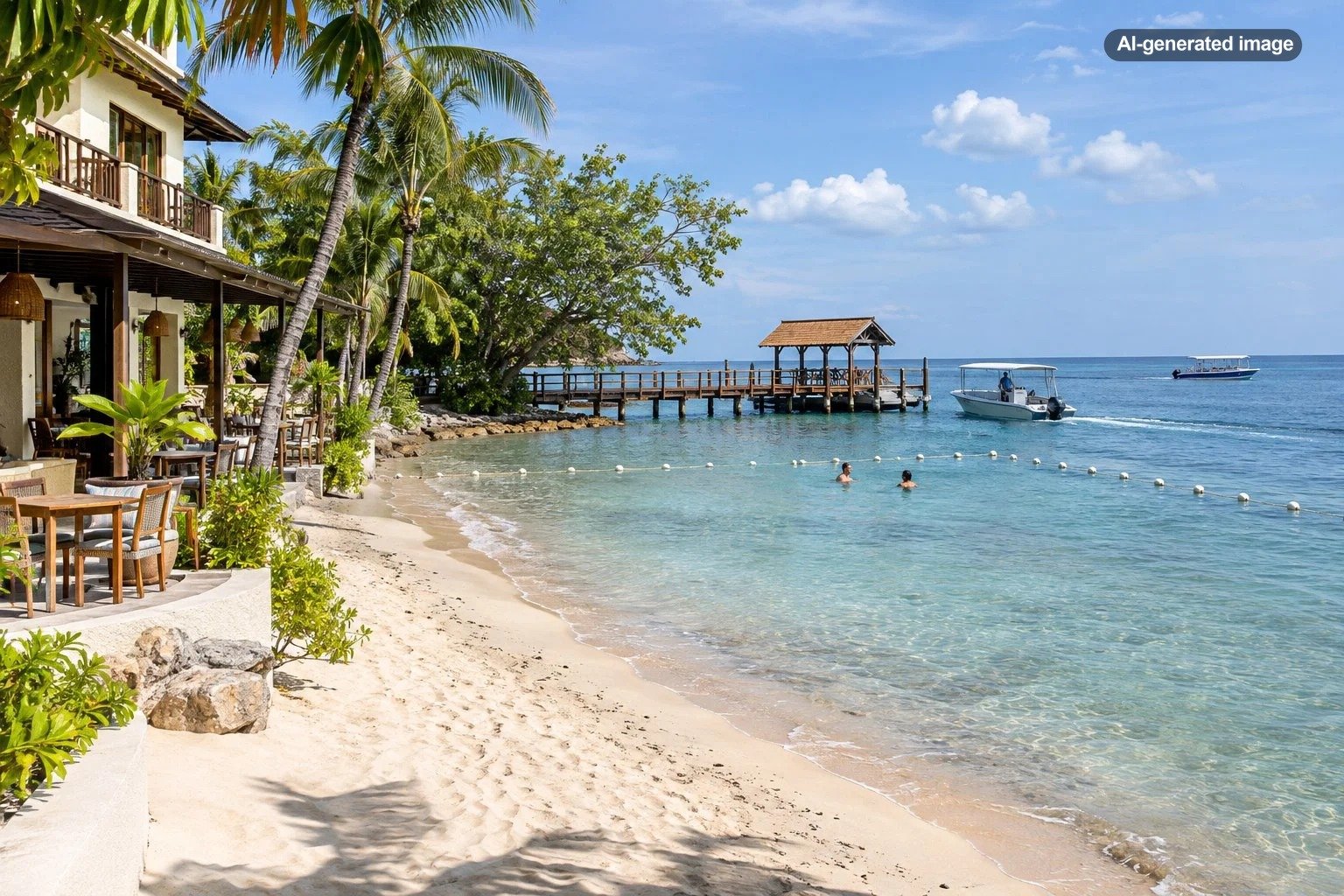
To tell whether a resort beach has frequent boat traffic near swimmers, examine its location on satellite maps, look for nearby docks and navigation channels, study recent guest photographs and reviews, and ask the property how swimming areas are separated from motorized watercraft. The most important question is not simply whether boats visit the beach, but whether they regularly travel through or close to the area where guests enter the water.
Quick Answer: Signs a Resort Beach May Have Frequent Boat Traffic
- Nearby marinas or ferry docks: These can indicate regular vessel movements along the shoreline.
- Boats anchored directly offshore: A concentration of vessels may suggest a popular excursion, snorkeling, or pickup location.
- Water sports launching from the swimming beach: Jet skis, speedboats, and tour boats may create additional activity near guests.
- Reviews mentioning engine noise or boat wakes: Repeated observations can reveal conditions that promotional photographs overlook.
- No clearly identified swimming zone: This warrants additional questions about how boats and swimmers are separated.
None of these clues proves that a beach is unsafe. Together, however, they help distinguish a quiet swimming beach from an active waterfront where boat movement is part of the daily environment.
Start With Satellite Maps and the Shape of the Coastline
A satellite map is one of the most useful tools for evaluating a resort beach before booking. Find the property’s exact location and zoom out far enough to see the surrounding bay, harbor, or coastline.
Look for docks, piers, marinas, boat ramps, ferry terminals, and channels connecting protected water to the open sea. Their relationship to the swimming beach can be more revealing than their absolute distance from the resort.
Check Whether the Beach Faces a Boat Route
Imagine a resort positioned along a narrow bay with a marina at its inland end. Boats leaving the marina may have limited routes to open water, making the bay a natural passageway. A resort farther from the marina could still experience frequent traffic if its beach faces that passage.
By contrast, a resort on a separate stretch of coastline may have a nearby marina without experiencing much boating activity directly in front of its swimming area.
Also examine headlands, islands, and reef openings. These features can influence where vessels travel, although an aerial image alone cannot establish actual navigation routes.
Look for Piers and Floating Platforms
A pier extending from the beach may serve swimmers, sightseeing boats, water taxis, or excursion operators. It is worth identifying its purpose rather than assuming all piers indicate heavy motorboat activity.
Several boats visible near a resort in one satellite image are a useful clue, but they are not a measurement of daily traffic. Satellite imagery captures a particular moment and may be outdated.
Understand the Difference Between Boat Traffic and Swimming-Area Exposure
A beach can have considerable boat activity offshore while maintaining a relatively separate swimming area. Another beach might see fewer vessels overall but have occasional boats passing close to where people swim.
For a swimming-focused vacation, the second situation may be more disruptive, even if the total boat count is lower.
| Beach arrangement | What to investigate |
|---|---|
| Marked swimming area away from boats | Whether motorized craft remain outside the designated boundaries |
| Water sports beside the swimming area | How launches, returns, and swimmers are separated |
| Beach facing a marina channel | Frequency and proximity of passing vessels |
| Boats anchored farther offshore | Whether boats cross the swimming area to reach their anchorage |
This distinction prevents an overly simple conclusion that every beach with visible boats is unsuitable for swimming.
Check Whether the Resort Has a Designated Swimming Zone
A defined swimming area is one of the most useful features to ask about, particularly at resorts offering motorized water sports.
Depending on the destination, swimming zones may be identified by floating lines, buoys, signs, or other markers. The appearance and legal meaning of these boundaries vary internationally.
In the United States, certain regulatory markers identify areas where boats are prohibited. A crossed-diamond exclusion marker can indicate a designated swimming area or another location closed to watercraft. By comparison, a slow-no-wake marker regulates vessel speed rather than necessarily excluding boats.
These distinctions are important. A beach with reduced-speed boat traffic is not necessarily a boat-free swimming beach.
Ask whether the resort’s swimming area is specifically separated from motorized vessels, where its boundaries lie, and how those boundaries are communicated to boat operators. The presence of buoys alone does not establish their purpose or guarantee that every vessel will respect them.
Examine Guest Photos and Reviews for Recurring Patterns
Resort marketing photographs typically emphasize attractive conditions. Guest photographs can provide additional perspectives on how the waterfront operates during an ordinary vacation.
Review images taken from different parts of the beach, especially those showing the water beyond the loungers. Look for tour boats arriving at a dock, jet skis traveling along the shoreline, boat wakes near swimmers, or marked sections separating different activities.
Search recent guest reviews using terms such as boat, jet ski, water taxi, marina, wake, engine noise, snorkeling boats, and swimming area.
Separate Occasional Activity From a Daily Pattern
One guest mentioning a boat passing offshore does not establish frequent traffic. Several independent guests describing morning tour departures or repeated afternoon jet ski activity provide a stronger indication of recurring conditions.
Pay attention to the dates and seasons of reviews. Boat activity may vary with visitor demand, weather, local operating rules, and the schedules of nearby businesses.
Reviews also reveal different traveler preferences. A guest who enjoys watching boats from the beach might describe a busy waterfront positively, while someone seeking quiet swimming may find the same environment distracting.
Ask the Resort Specific Questions Before Booking
General questions often produce general answers. Asking whether a beach is safe or quiet may not clarify how close boats operate to swimmers.
Instead, contact the property and ask questions that describe the actual experience you want:
- Is there a designated swimming area where motorized boats are not permitted?
- Do excursion boats, water taxis, or jet skis regularly pass directly in front of the swimming beach?
- Are water sports launched from a separate section of the shoreline?
- Is the beach near a marina entrance or an established boat transit route?
- Are there particular times of day when boat activity is noticeably heavier?
- Can the property provide a current beach map showing swimming areas, docks, and water sports facilities?
If you are traveling with young children or plan to spend long periods swimming, explain that your priority is a clearly separated swimming area rather than convenient access to boat excursions.
A useful response should describe the layout and operating arrangements. If a representative cannot confirm those details, request clarification from the beach recreation or water sports team.
Consider What Type of Boats Use the Waterfront
Different kinds of vessels create different experiences. A beach occasionally visited by small, slow-moving boats may feel quite different from one beside an active jet ski operation or a channel used by larger excursion vessels.
Jet Skis and Other Personal Watercraft
Personal watercraft can create noticeable engine noise and repeated movement in a relatively small area. Check whether they use a dedicated launch corridor and whether that corridor is physically separated from swimmers.
Snorkeling and Diving Excursion Boats
Resorts with offshore reefs may attract excursion operators. Boats might leave from a dedicated dock, anchor beyond the swimming area, or use designated pickup locations.
The relevant question is whether their route overlaps with the place you expect to swim.
Water Taxis and Transfer Boats
At island resorts or properties with limited road access, boat transfers may be a routine part of guest transportation. These services can be convenient, but travelers seeking a quiet beach should ask where transfers arrive and whether their approach crosses the swimming frontage.
Fishing and Private Leisure Boats
Fishing boats and private vessels may operate independently of the resort. A property can control its own water sports activities more readily than traffic using public waterways, subject to local regulations.
Ask about the surrounding boating environment rather than relying only on what the hotel’s activity desk operates.
Pay Attention to Time of Day and Seasonal Changes
Boat traffic is not necessarily constant. Excursion operators may depart in groups, while recreational boating can become more active during weekends, holidays, or periods of favorable weather.
Morning swimming might be relatively peaceful at a beach that becomes noticeably busier later in the day. Another resort could experience the opposite pattern if early-morning fishing boats or tour departures pass nearby.
Weather and sea conditions also matter. Fewer boats on a windy day do not necessarily indicate a permanently quiet location, and calm water does not by itself establish safe swimming conditions.
If you are considering a resort for a specific travel month, prioritize recent observations from the same general season. Ask the property about typical conditions during your intended dates rather than relying on a single photograph.
What Travelers Often Overlook
A protected bay is not automatically quieter. Sheltered water may be attractive for swimming, but it can also be convenient for marinas, water taxis, and recreational boating.
A long beach can contain very different activity zones. One end might be used for excursions while another has a separate swimming area. Ask which section is closest to guest accommodations and regular beach access points.
Quiet sand does not always mean quiet water. A resort can have few beach visitors yet overlook a busy navigation channel.
Visible boat wakes deserve attention. Passing vessels can produce waves that reach shore, even when the boats themselves remain farther offshore. Local conditions influence how those waves develop and reach the swimming area.
Swimming boundaries are not a substitute for local guidance. Currents, weather, water depth, underwater hazards, and beach restrictions remain relevant even where boats are excluded.
How to Choose Between Two Otherwise Similar Beach Resorts
Suppose you are comparing two resorts with attractive beachfront accommodations. The first sits beside an active marina but has a designated swimming area away from vessel routes. The second occupies a quieter-looking cove but permits water sports launches near its principal swimming beach.
The first resort could be a better choice for swimming despite its proximity to a marina. The beach layout, boundaries, and actual vessel movements matter more than a simple count of nearby boats.
For families with children, travelers who enjoy extended ocean swims, or guests especially sensitive to engine noise, prioritize properties that can clearly explain the separation between swimmers and watercraft.
For travelers who value snorkeling excursions, jet skiing, and convenient boat transfers, an active waterfront may be an acceptable tradeoff, provided appropriate arrangements are in place.
The most useful comparison is therefore not busy beach versus empty beach. It is whether each resort’s particular mix of swimming, boating, and shoreline activities suits your vacation.
Frequently Asked Questions
Can you tell how busy a resort beach is from Google Maps?
Maps can help identify marinas, docks, narrow channels, and nearby boat facilities. Satellite imagery may also show vessels offshore. However, a static image cannot establish how frequently boats pass or how closely they approach swimmers. Combine map research with recent reviews and direct questions to the resort.
Does a buoyed swimming area mean boats are prohibited?
Not necessarily. The purpose of buoys depends on their markings, local regulations, and the destination’s navigation system. Some identify exclusion areas, while others mark speed restrictions, hazards, or navigation routes. Ask the resort to explain its specific swimming boundaries.
Are resort beaches near marinas unsuitable for swimming?
No. A marina nearby does not automatically mean vessels travel near swimmers. A marina may have a dedicated approach channel away from the beach, while the resort maintains a separate swimming area. The physical arrangement is the key consideration.
When is boat traffic usually lightest?
There is no universal answer. Activity depends on local excursions, commercial routes, visitor demand, weather, and seasonal patterns. Ask the resort about typical daily movements during your travel dates rather than assuming mornings or weekdays will always be quieter.
What should you do if boats enter a swimming area?
Move away from the vessel’s path, avoid approaching or trying to confront the operator in the water, and return to shore when it is safe to do so. Report the situation to beach staff or the appropriate local authority. Follow posted restrictions and the directions of qualified beach personnel.
The Best Way to Evaluate a Resort Beach Before Booking
A little geographic research can prevent a mismatch between the beachfront vacation shown in photographs and the experience of swimming there. Start by locating nearby marinas and docks, then check recent guest observations for repeated boat activity. Finally, ask the resort to explain its swimming-zone boundaries and typical vessel movements.
A beach does not need to be completely free of boats to be enjoyable. What matters is whether watercraft operate at a suitable distance from swimmers, whether activity areas are clearly separated, and whether the overall setting matches your expectations.
When a resort can provide clear answers about its beachfront layout, you are better equipped to choose between a lively watersports destination and a more swimming-focused stay.
Sources & Further Reading
- Wisconsin Department of Natural Resources: Identifying Waterway Markers – Explains common exclusion, controlled-area, and informational buoy markings used in U.S. waterways.
- North Carolina Wildlife Resources Commission: No Wake Zones – Describes the purpose and regulation of no-wake areas, including those near swimming areas and congested waterways.
- NOAA National Ocean Service: Aerial Photography and Shoreline Mapping – Explains how aerial imagery helps document coastal features and supports nautical chart development.