How to Choose a Ski Hotel With Heated Boot Storage
Choosing a ski hotel with heated boot storage can make consecutive days on the mountain noticeably more comfortable. Instead of carrying damp ski boots into your room and hoping they dry overnight, you can leave them in a designated equipment area designed for the demands of winter sports. However, not every hotel advertising a ski room actually provides heated boot drying, and the differences matter when you are comparing accommodations.
The best choice is a hotel that combines suitable boot-drying equipment, convenient access, adequate storage capacity, and a practical route between the ski area and your room. Before booking, confirm how the drying system works, whether it is included in your room rate, and whether guests have reliable access during their stay.
Quick Answer: What Should You Look For?
When comparing ski hotels, prioritize these features:
- Actual boot drying: Confirm that the hotel has heated or ventilated boot dryers rather than ordinary storage shelves.
- Enough space: Ask whether drying positions are available for every guest in your party.
- Convenient access: Check the ski room’s opening hours and proximity to the slopes, lifts, or shuttle pickup.
- Suitable equipment: Determine whether the system accommodates your particular ski boots, including custom-fitted liners.
- Secure storage: Ask how boots and skis are identified, organized, and protected from mix-ups.
For a multi-day ski vacation, dependable overnight drying is generally more useful than a storage room that simply looks attractive in photographs.
Understand the Difference Between Ski Storage and Heated Boot Storage
Hotel descriptions frequently use terms such as ski room, ski cellar, equipment locker, boot room, and drying room. These facilities can serve very different purposes.
Basic Ski Storage Rooms
A basic ski storage room provides space for skis, poles, snowboards, and sometimes boots. It may contain wall racks, benches, or designated lockers without any active drying system.
This arrangement can be perfectly adequate for travelers who ski occasionally, use rental equipment stored elsewhere, or have sufficient time to air-dry their boots. However, an unheated storage room does not necessarily solve the problem of damp liners after consecutive ski days.
Heated Boot Drying Racks
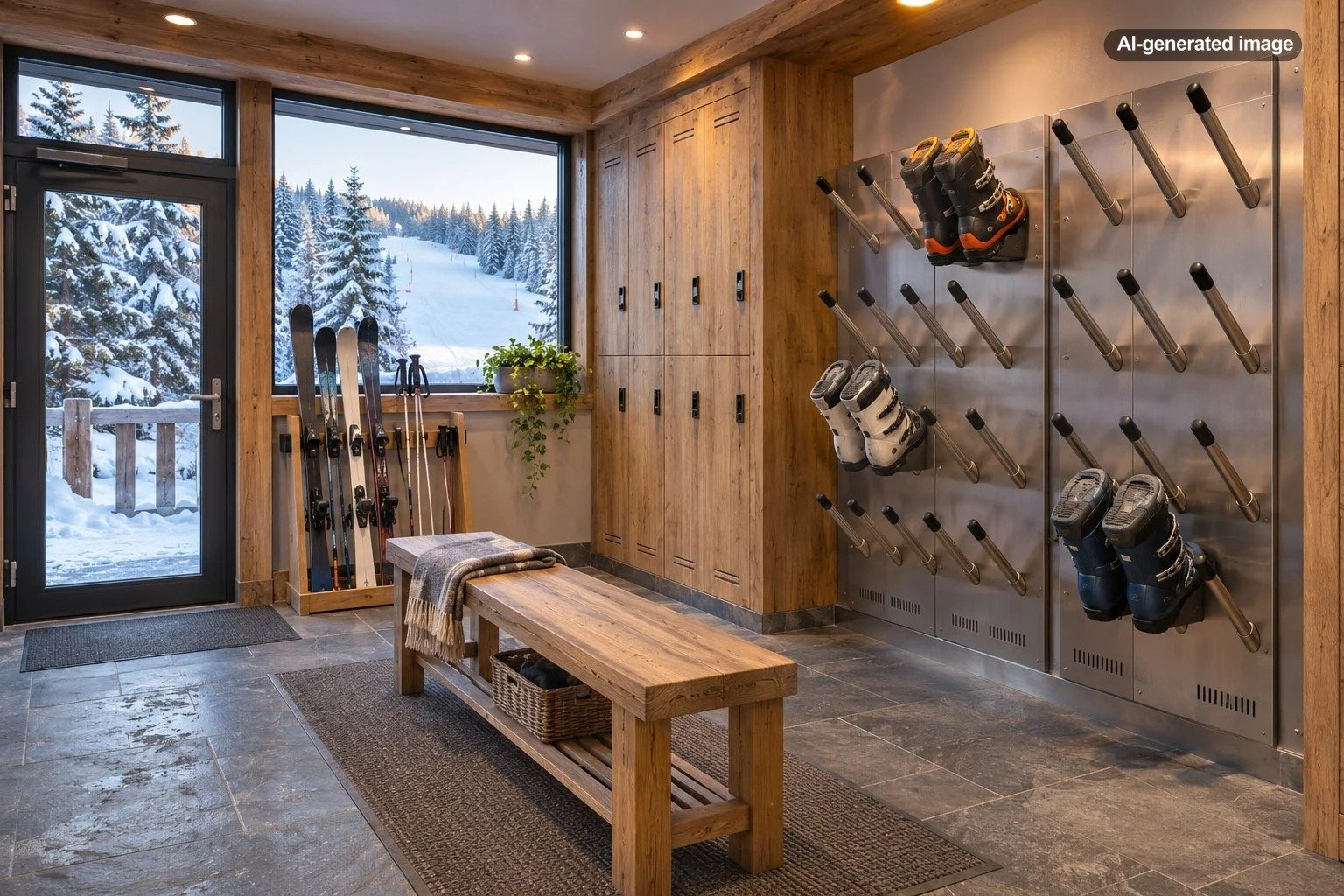
Dedicated boot racks may use controlled warmth, circulated air, or a combination of both. Many feature upright tubes or supports that direct air into the interior of each boot, helping moisture escape from areas that would otherwise dry slowly.
The important distinction is how the system dries footwear. Gentle circulation and equipment-compatible temperatures are preferable to improvised exposure to strong heat. Some custom liners and footbeds have specific drying restrictions, so travelers should follow the boot manufacturer’s instructions.
Individual Heated Ski Lockers
Some accommodations offer lockers designed to hold skis, poles, helmets, and boots together. Certain locker systems incorporate boot-drying elements, while others provide only secure storage.
Individual lockers can be especially convenient for families or groups because equipment remains organized in one designated place. Nevertheless, a locker described as heated should not automatically be assumed to have a functioning boot dryer. Ask whether warm or ventilated drying supports are installed inside.
Compare the Main Boot Storage Arrangements
| Storage type | Main advantage | What to verify |
|---|---|---|
| Standard ski room | Convenient equipment organization | Whether boots can actually dry |
| Shared heated rack | Dedicated overnight boot drying | Capacity and operating schedule |
| Heated private locker | Organized storage with possible drying | Actual drying equipment and locker size |
| In-room drying | Equipment remains nearby | Hotel rules and suitable drying space |
No single arrangement is ideal for every traveler. A shared drying rack may be sufficient for two adults, while a family managing several pairs of boots, helmets, and children’s equipment may appreciate dedicated lockers.
Check Whether the Boot Dryers Can Handle a Full Hotel
A hotel can advertise heated boot storage and still have too few drying positions to serve every guest who needs them. This is particularly relevant during busy winter periods when multiple rooms may return from skiing around the same time.
Ask whether each room receives assigned drying positions or whether the system operates on a first-come, first-served basis. If your group includes six skiers, for example, a facility with only a handful of shared drying supports may require additional coordination.
It is also worth asking whether the dryers operate overnight, whether staff control their schedule, and whether the equipment automatically switches off. A rack that stops running shortly after the lifts close may provide a different experience from a system operating through the evening and night.
Hotels may adjust operating schedules, allocate lockers differently, or change amenities between seasons. Confirm the arrangements for your actual travel dates rather than relying exclusively on an older review.
Make Sure the Drying System Is Appropriate for Your Ski Boots
Warm boots can be easier to put on than cold, damp ones, but more heat is not necessarily better. Excessive heat can affect certain boot materials, liners, adhesives, or custom-fit components.
If you own expensive or professionally fitted boots, check their care instructions before using unfamiliar drying equipment. Some liner manufacturers advise against heated boot dryers altogether. A hotel’s standard equipment may therefore be suitable for some guests but not every boot model.
Ask whether the hotel uses controlled-temperature forced air, passive warming, or another drying method. If your equipment requires unheated airflow, find out whether that option exists.
Travelers using rental boots should also check with the rental provider. Some rental shops prefer to store, maintain, or dry their own equipment overnight, which may eliminate the need for hotel boot storage.
Consider the Location of the Ski Room Within the Hotel
Even an excellent drying room becomes less convenient when reaching it involves several elevators, long corridors, or repeated trips through public areas while carrying equipment.
Ideally, the equipment room should connect logically with the hotel’s exterior ski entrance, lift access, shuttle stop, or other route guests use to reach the mountain.
For Ski-In, Ski-Out Hotels
A convenient ski-in, ski-out arrangement allows guests to return from skiing, store their equipment, change footwear, and continue to their rooms without transporting wet boots throughout the building.
However, ski-in, ski-out access does not guarantee heated storage. A property may provide direct slope access while offering only basic racks. Verify the two amenities separately.
For Hotels Away From the Slopes
If you will use a shuttle or walk to a lift, consider whether the ski room is near the departure point. Ask whether guests can leave their regular shoes in the storage area while skiing and whether there is comfortable seating for changing boots.
These details are particularly helpful for families with children, travelers managing several pieces of equipment, and anyone who finds walking long distances in rigid ski boots uncomfortable.
Review Security, Identification, and Access Hours
Drying equipment is only one part of a well-designed ski room. Organization and access can determine whether the facility actually improves the daily routine.
Look for individually assigned storage spaces, clearly numbered racks, or a straightforward method for identifying your equipment. Similar-looking ski boots can be easy to confuse in a busy communal room.
Ask whether the room is locked, whether access requires a room key or card, and whether staff supervise the facility. If you are traveling with valuable personal equipment, establish whether storage is shared or individually secured and what responsibility the property assumes for stored belongings.
Access hours deserve equal attention. Skiers heading out early may need their equipment before breakfast service begins. Guests returning from an evening activity may want to retrieve or organize equipment later in the day.
A room that closes at inconvenient times can undermine the benefit of having storage on the premises.
Decide Whether Heated Boot Storage Is Worth Paying More For
Heated boot storage can be a worthwhile amenity, but its value depends on the length and style of your trip.
For a one-night stay: The feature may be less important if you are skiing only once, particularly when a rental shop manages your equipment.
For a week of consecutive ski days: Reliable overnight drying becomes more valuable because damp liners can accumulate moisture between outings. Having a designated routine for boots and skis can also simplify mornings.
For families: A properly organized ski room can reduce the amount of equipment carried into bedrooms and make it easier to keep everyone’s belongings together.
For travelers with custom boots: Compatibility with your equipment matters more than simply having a heated rack. A lower-heat or nonheated drying option may be preferable.
Before choosing a more expensive hotel primarily for this amenity, compare the complete package: room comfort, slope access, transportation, breakfast arrangements, equipment storage, and the total booking conditions. Heated boot storage rarely justifies a major compromise in the aspects of the stay that matter most to you.
How to Verify Heated Boot Storage Before Booking
Hotel amenity lists are a useful starting point, but direct confirmation is the most dependable way to understand the actual setup.
First, examine recent photographs of the ski room. Look for upright boot supports, ventilation tubes, drying cabinets, or dedicated locker interiors rather than assuming that a room containing skis has heated drying equipment.
Next, review recent guest comments for practical observations about space, organization, access, and whether boots were ready to wear the following morning. Treat individual reviews as personal experiences rather than guarantees of current conditions.
Finally, contact the hotel with specific questions:
- Does the ski room have active boot dryers or only heated storage space?
- Are drying positions assigned to each room?
- Is the facility included in the room rate, or does it require an additional charge?
- Do the dryers operate overnight?
- Is there an unheated setting for sensitive or custom-fitted liners?
- Can guests store skis, helmets, poles, and regular shoes in the same area?
- What are the access hours, and how is the room secured?
When heated drying is essential to your plans, ask the property to confirm the amenity in writing before making a nonrefundable reservation.
What Travelers Often Overlook
One frequently overlooked detail is the difference between drying the inside of a boot and simply warming its outer shell. An ordinary heated room may feel comfortable without directing much airflow into damp liners. Purpose-built systems can address this more effectively, provided they are suitable for the footwear.
Another consideration is the morning transition from storage to the mountain. A ski room with a bench, adequate floor space, and an orderly layout may be more useful than a technically sophisticated rack in a cramped basement.
Also consider what happens to other wet equipment. Heated boot storage does not necessarily mean the property provides suitable drying areas for gloves, jackets, base layers, or helmets. If you expect to ski in wet conditions, ask about separate clothing-drying facilities.
Finally, travelers bringing their own equipment should allow time to inspect and prepare their boots after each ski day. Remove surface moisture, follow the manufacturer’s liner-care instructions, and avoid leaving wet equipment sealed inside a boot bag overnight.
Frequently Asked Questions
Do all ski hotels have heated boot storage?
No. Some provide heated drying racks or lockers, while others offer basic ski storage without active drying. The presence of a ski room alone does not confirm heated boot storage.
Will a heated ski room dry boots overnight?
A suitable boot-drying system may dry ordinary moisture overnight, but results depend on how wet the liners are, airflow, operating time, equipment capacity, and the construction of the boots. No hotel should be assumed to guarantee fully dry footwear by morning.
Can heated boot dryers damage ski boots?
Excessive heat can damage certain liners, shells, adhesives, and custom-fitted components. Use equipment compatible with your boot manufacturer’s instructions, and avoid direct exposure to radiators, fireplaces, or other uncontrolled heat sources.
Is heated boot storage normally included in a ski hotel stay?
Policies vary. Some accommodations include access to shared drying facilities, while others may charge for individual lockers or particular storage arrangements. Verify inclusions and any additional fees before booking.
Do you need heated boot storage if you rent ski equipment?
Not necessarily. If the rental provider stores and dries boots between ski days, hotel drying facilities may be unnecessary. If you take the rental equipment back to your accommodation each evening, ask both the rental provider and hotel about suitable storage.
Choosing the Right Ski Hotel for Your Trip
A good ski hotel with heated boot storage should make the entire skiing routine easier, not merely provide another amenity on a booking checklist. Look for an effective and equipment-compatible drying system, enough space for your group, straightforward access, sensible security, and a convenient location within the property.
The most useful final step is to confirm the details directly with the hotel. A few precise questions can reveal the difference between an ordinary ski closet and a thoughtfully designed drying facility that helps you start each morning with comfortable, properly cared-for equipment.