Where to Stay in Takayama for Old Town Streets and Japanese Alps Day Trips
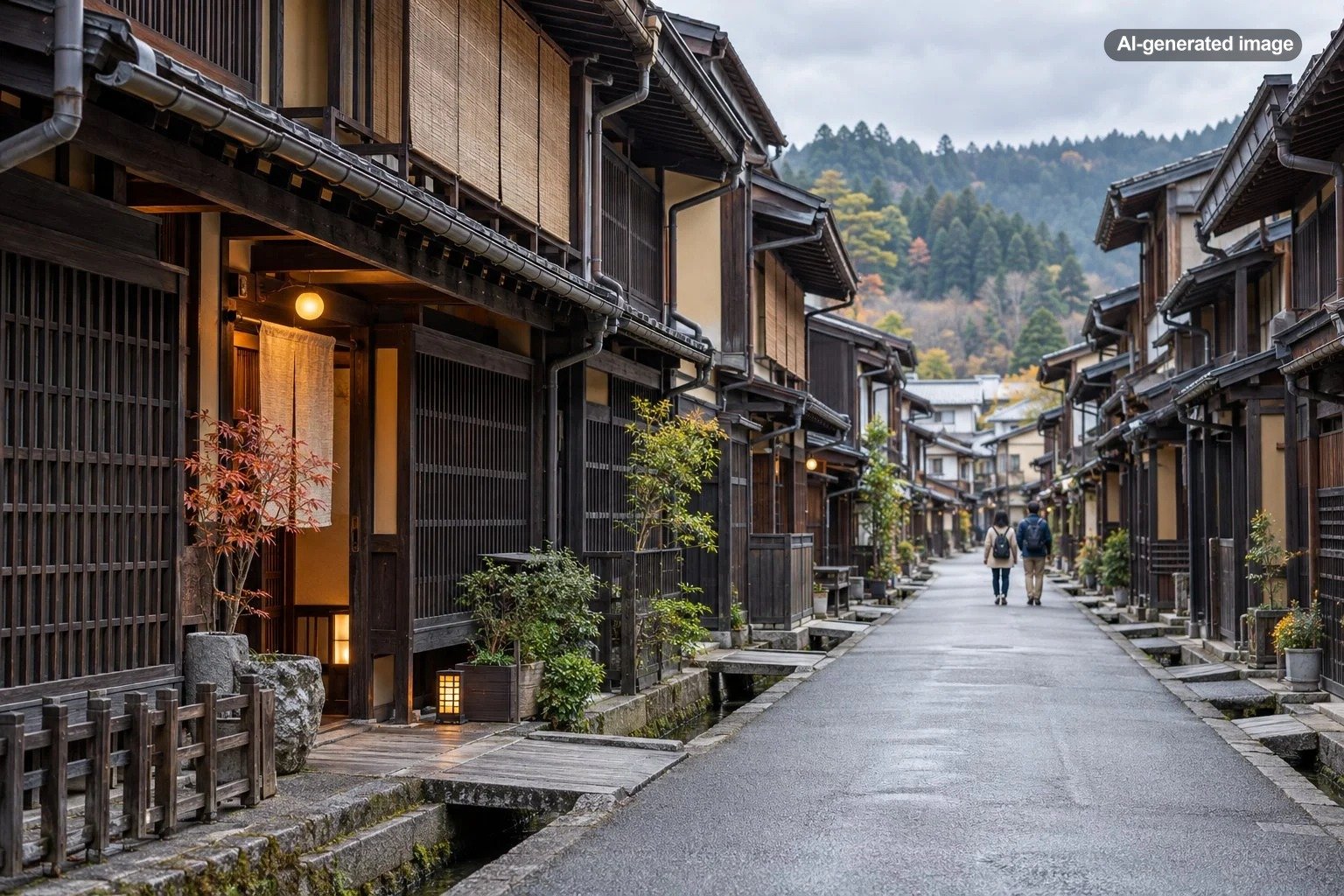
Takayama rewards travelers who choose their accommodations around how they intend to spend their days. Stay near Sanmachi Suji, the preserved streets of the historic Old Town, and traditional wooden buildings, sake breweries, and early-morning walks become part of the daily routine. Stay closer to Takayama Station, and journeys toward Kamikochi, Shirakawa-go, and the Japanese Alps become considerably easier to organize.
For most first-time visitors, central Takayama is the strongest choice. The distance between the station district and Old Town is manageable on foot, making it possible to enjoy both without changing hotels. The more important decision is whether to prioritize historic atmosphere, traditional ryokan hospitality, modern hotel facilities, or straightforward access to regional buses.
Takayama at a Glance: Where to Stay
- Best for historic atmosphere: Hotel Wood Takayama or Ryokan Tanabe.
- Best for early regional departures: Tokyu Stay Hida-Takayama Musubi no Yu or Residence Hotel Takayama Station.
- Best for an upscale contemporary stay: Mercure Hida Takayama.
- Best for a larger hotel with hot springs: Takayama Green Hotel or Hida Hotel Plaza.
- Suggested stay: Two nights for Old Town and one substantial excursion; three nights for a more relaxed combination of town exploration and mountain sightseeing.
- Transportation: Walking works well within central Takayama. Regional buses serve several major excursions, while a rental car can offer flexibility for selected countryside routes.
Hotel Wood Takayama: For Old Town Atmosphere
Hotel Wood Takayama is an appealing choice for travelers whose main reason for visiting is the historic townscape. Located on Kamininomachi within the Old Town area, the property places guests close to traditional streets and the architectural character that distinguishes Takayama from larger Japanese cities.
The hotel’s design incorporates timber, understated interiors, and a concept influenced by Zen and local culture. Its positioning is upscale and design-conscious rather than that of a conventional full-service resort. Room categories include standard, superior, deluxe, and maisonette accommodations.
Best for: Couples, design-focused travelers, and visitors who want to explore Sanmachi Suji before the busiest sightseeing periods.
Tradeoff: The Old Town location is particularly rewarding for walking, photography, and cultural exploration, but travelers making frequent early bus departures must allow additional time to reach the station area. Confirm the route with luggage before booking.
Ryokan Tanabe: For Traditional Japanese Hospitality
Ryokan Tanabe offers a more traditional approach to staying in Takayama. Established in 1934, the inn occupies a central location on Aioimachi, within walking distance of the historic district and Miyagawa Morning Market.
Its interiors emphasize Japanese craftsmanship, tatami rooms, and the intimate character associated with a longstanding ryokan. The property offers traditional multi-course meals featuring regional ingredients, as well as communal bathing facilities. Room arrangements vary, including Japanese-style accommodations and selected rooms combining Western beds with traditional design.
This is an upscale cultural stay rather than simply a convenient place to sleep. The experience can be especially rewarding for visitors interested in Japanese hospitality, regional cuisine, and a slower evening routine.
Best for: Couples, cultural travelers, and visitors who want a traditional inn experience close to Old Town.
Tradeoff: Ryokan stays can involve more structured dining and arrival arrangements than conventional hotels. Travelers planning late returns from mountain excursions should check meal times, check-in expectations, and dietary requirements before confirming their reservation.
Tokyu Stay Hida-Takayama Musubi no Yu: For Station Convenience
Tokyu Stay Hida-Takayama Musubi no Yu is particularly well positioned for visitors who expect to use Takayama as a transportation base. Its official access information places the property approximately two minutes on foot from JR Takayama Station, with the historic streets roughly ten minutes away.
The property combines contemporary accommodation with Japanese-inspired design and an onsen bathing experience. This balance makes it useful for travelers who want regional transportation close at hand without sacrificing a sense of place.
Best for: First-time visitors, travelers arriving by train, and those planning multiple bus excursions.
Tradeoff: The immediate surroundings feel more like a practical station district than a preserved historic neighborhood. Guests can easily walk toward Old Town, but the traditional streets are not directly outside the hotel entrance.
Residence Hotel Takayama Station: For Longer Stays
Residence Hotel Takayama Station takes a practical, apartment-style approach to accommodation. Located about two minutes on foot from JR Takayama Station, it offers condominium-style rooms suited to travelers who appreciate greater independence during a multiday visit.
The hotel’s official accommodation information includes standard rooms and larger suite configurations. This makes it worth considering for couples, small groups, and travelers combining Takayama with several other destinations in Japan.
Its station-side location is especially convenient when luggage, train departures, and regional transportation are significant considerations.
Best for: Longer visits, independent travelers, and small groups seeking flexible room arrangements.
Tradeoff: The experience is more functional than a traditional ryokan. Those seeking elaborate Japanese dining rituals or a particularly atmospheric historic setting may prefer accommodation closer to Sanmachi Suji.
Mercure Hida Takayama: For Contemporary Comfort
Mercure Hida Takayama combines modern hotel design with details inspired by local craftsmanship and the surrounding landscape. The property is positioned near Takayama’s central station, making it useful for both Old Town exploration and regional sightseeing.
Its official website describes contemporary guest rooms, a dining venue emphasizing local ingredients, and natural hot spring facilities. The overall character is polished and contemporary, with regional influences incorporated into the accommodation experience.
Best for: Couples, international travelers, and visitors who prefer an upscale modern hotel over a traditional inn.
Tradeoff: Although Takayama’s historic district is walkable, the hotel provides a modern interpretation of local culture rather than the immersive traditional atmosphere of a ryokan. Travelers primarily seeking tatami accommodation and formal Japanese meals should compare alternatives.
Takayama Green Hotel: For a Larger Hotel Experience
Takayama Green Hotel is a substantial hotel southwest of the station, with a broad collection of guest rooms, dining facilities, shopping opportunities, and natural hot spring bathing.
The property’s official website places it approximately six minutes on foot from JR Takayama Station. Its larger scale distinguishes it from the smaller inns around Old Town, making it a reasonable choice for visitors who value on-site facilities and a more comprehensive hotel environment.
The hotel’s hot spring area overlooks a Japanese garden, providing a relaxing contrast to days spent walking or exploring the surrounding region.
Best for: Families, couples, and travelers who want several hotel facilities in one property.
Tradeoff: Its location is convenient for the station but farther from the core historic streets than an Old Town ryokan. Guests expecting to spend most evenings around Sanmachi Suji should consider their walking preferences.
Hida Hotel Plaza: For Central Access and Hot Springs
Hida Hotel Plaza offers another appealing middle ground between station access and traditional Japanese hospitality. The hotel is approximately five minutes on foot from Takayama Station and within walking distance of major central attractions.
The property offers both Japanese-style and Western-style guest rooms, natural hot spring bathing, and several dining options. This flexibility makes it useful for groups with different accommodation preferences or travelers who want a traditional regional element without committing to a full ryokan experience.
Best for: Mixed-age groups, families, and travelers seeking a larger established hotel with central access.
Tradeoff: The experience is less intimate than that of a small historic inn. Travelers prioritizing quiet architectural character over hotel facilities may find the Old Town properties more appealing.
Hotel Around Takayama: For Exploring Local Culture
Hotel Around Takayama is a contemporary property near the station whose concept emphasizes connections to local craftsmanship, food, and regional experiences. The official website places it approximately four minutes on foot from JR Takayama Station.
Its location makes it convenient for arriving by train while remaining close enough to the historic center for regular walks. The hotel’s locally focused concept is a good match for visitors who want suggestions beyond the main sightseeing streets.
Best for: Independent travelers, couples, and visitors interested in regional food and contemporary Japanese design.
Tradeoff: Travelers who specifically want traditional tatami accommodation and ryokan dining rituals should consider a dedicated Japanese inn instead.
Wat Hotel & Spa Hida Takayama: For Practical Comfort
Wat Hotel & Spa Hida Takayama offers a contemporary hotel experience in the Hanasatomachi area, approximately seven minutes on foot from Takayama Station according to its official website.
The hotel provides bathing facilities, a breakfast service, laundry facilities, and other practical amenities. Its location works well for visitors who prefer modern accommodations and expect to divide their time between downtown sightseeing and excursions beyond the city.
Best for: Practical-minded travelers, couples, and visitors who value hotel facilities after full days of walking.
Tradeoff: Guests are outside the most atmospheric historic streets and should plan a short walk to Old Town. Confirm specific room and bathing arrangements when booking rather than assuming all accommodation categories offer the same features.
Which Takayama Area Should You Choose?
| Area | Main advantage | Consideration |
|---|---|---|
| Sanmachi Suji and Old Town | Historic streets, traditional architecture, early walks | Longer journey to regional bus departures |
| Takayama Station district | Train access, bus center, easier luggage handling | Less traditional atmosphere immediately outside |
| Central streets between station and Old Town | Balanced access to sightseeing and transportation | Location and walking distances vary by property |
| Southwest of the station | Several larger hotel options | Longer walks to the historic district |
For a short first visit, staying between the station and Old Town is often the easiest compromise. Travelers can explore the historic center on foot while keeping transport connections reasonably accessible.
Those who specifically want atmospheric mornings should lean toward Old Town. Travelers planning two or more regional excursions may find the station district more efficient.
Planning Japanese Alps Day Trips From Takayama
Kamikochi: Mountain Scenery and Walking Trails
Kamikochi is one of the most compelling excursions from Takayama for visitors interested in alpine landscapes, riverside walks, and mountain photography. The usual public transportation route connects Takayama’s Nohi Bus Center with Hirayu Onsen, where travelers transfer to the Kamikochi service.
Official route information describes approximately an hour to Hirayu Onsen and another 25 to 30 minutes toward Kamikochi, excluding connection time. Because seasonal operations and departure times change, travelers should consult current bus information before choosing a departure.
Kamikochi is not an ordinary year-round sightseeing destination. Access is seasonal, and private vehicles are restricted within the protected area. An early departure and sufficient time for the return journey are important considerations.
Shirakawa-go: Historic Farmhouses and Rural Scenery
Shirakawa-go provides a different kind of excursion, focused on traditional gassho-zukuri farmhouses and the rural landscape of the Shogawa Valley. Buses connect Takayama with Shirakawa-go, making a visit possible without renting a vehicle.
Some services require advance reservations. Travelers should verify current operating schedules, reservation requirements, and return options rather than assuming a bus will be available on arrival.
Hirayu Onsen and the Okuhida Area
Hirayu Onsen and the broader Okuhida region are appealing for travelers who want mountain surroundings and hot spring culture without necessarily completing a strenuous hike. Hirayu is also a transportation interchange for journeys toward Kamikochi.
Visitors who are primarily interested in hot springs may prefer to spend a night in Okuhida rather than treating the region exclusively as a day trip. For those prioritizing Takayama’s restaurants and historic streets, however, keeping a central city base is generally more convenient.
Should You Rent a Car in Takayama?
A rental car is not essential for a typical Takayama visit. The historic center is walkable, and buses serve several important regional attractions. Travelers visiting Kamikochi must also account for restrictions on private vehicle access, which reduce the advantage of driving directly toward the destination.
Driving can become more useful when an itinerary includes multiple rural stops, smaller villages, or accommodations outside established bus routes. Winter conditions introduce additional considerations, including snowfall, mountain-road conditions, appropriate tires, and parking arrangements.
Affiliate disclosure: HotelInfo.com may earn a commission when you book or purchase through links on this page. This does not affect the price you pay. Learn more.
If independent countryside exploration is part of the itinerary, travelers can compare available rental vehicles with Expedia. Check pickup locations, insurance terms, winter equipment, parking costs, and driving requirements before reserving. For a visit focused on Old Town and established bus excursions, public transportation may be the simpler option.
What Travelers Often Overlook Before Booking
- Traditional sleeping arrangements: Some ryokan rooms use futons on tatami rather than conventional beds. Confirm the exact room category if bed height or sleeping preference matters.
- Meal arrangements: Ryokan dinner service may follow specific times. A late return from the mountains can conflict with a prepaid dinner.
- Bathing facilities: An advertised onsen does not necessarily mean every room has a private hot spring bath. Check whether facilities are communal, private, or room-specific.
- Luggage and walking routes: Takayama is manageable on foot, but snowy or wet conditions can make a longer walk with suitcases less appealing.
- Seasonal mountain access: A hotel can remain open throughout the year even when particular alpine attractions or connecting transportation services are unavailable.
- Accommodation taxes and cancellation terms: These can differ by property, booking channel, room rate, and stay date. Review the final booking conditions carefully.
Frequently Asked Questions About Staying in Takayama
Is Old Town or the station area better?
Old Town is better for historic atmosphere and early walks through traditional streets. The station area is better for travelers who prioritize train connections, luggage convenience, and repeated day trips. Both are practical bases for central sightseeing.
How many nights should you spend in Takayama?
Two nights allow time to explore the historic center and make one substantial excursion. Three nights provide a more comfortable pace for combining Old Town with Shirakawa-go, Kamikochi during its operating season, or an onsen excursion.
Is a ryokan worth choosing over a regular hotel?
A ryokan can be worthwhile when traditional hospitality, Japanese meals, and local atmosphere are central to the trip. A conventional hotel may suit travelers who want more flexible dining arrangements, familiar bedding, or particularly convenient station access.
Can you visit Kamikochi without renting a car?
Yes, during the operating season. Public buses connect Takayama with Hirayu Onsen, where travelers transfer to transportation serving Kamikochi. Check the latest operating dates and connections before planning the trip.
Should you stay in Takayama or Hirayu Onsen?
Stay in Takayama when historic streets, restaurants, markets, and convenient train connections are the priorities. Choose Hirayu Onsen when hot spring bathing, mountain surroundings, and access to alpine areas matter more than spending evenings in a city center.
The Best Base for Your Takayama Trip
The most rewarding accommodation choice depends on which part of the trip you want to make effortless. Hotel Wood Takayama and Ryokan Tanabe emphasize historic atmosphere and traditional character. Tokyu Stay Hida-Takayama Musubi no Yu and Residence Hotel Takayama Station make transportation the priority. Mercure Hida Takayama, Hida Hotel Plaza, and Takayama Green Hotel offer different balances of comfort, facilities, and location.
For travelers dividing their time between Old Town and the Japanese Alps, central Takayama generally offers the most versatile base. Choose a property whose location matches your earliest departure, preferred evening routine, and desired accommodation style, then verify current transportation and booking details before finalizing the itinerary.
Sources & Further Reading
- Hotel Wood Takayama – Official Website
- Ryokan Tanabe – Official Website
- Tokyu Stay Hida-Takayama Musubi no Yu – Official Website
- Residence Hotel Takayama Station – Official Website
- Mercure Hida Takayama – Official Website
- Takayama Green Hotel – Official Website
- Hida Hotel Plaza – Official Website
- Hotel Around Takayama – Official Website
- Wat Hotel & Spa Hida Takayama – Official Website
- Nohi Bus – Takayama and Kamikochi Transportation
- Kamikochi Official Website – Public Transportation Access