Can You Skip a Safari Game Drive and Stay at the Lodge?
Yes, you can usually skip a safari game drive and stay at the lodge instead. Many safari lodges allow guests to decide whether to participate in scheduled wildlife excursions, even when those drives are included in the accommodation rate. A morning spent sleeping later, reading on a shaded terrace, or enjoying the lodge can be a perfectly reasonable part of a safari vacation. However, policies differ between properties, and guests should confirm arrangements before assuming that every scheduled activity is optional.
The more important question is not simply whether you can skip a drive, but what happens when you do. Meal schedules, lodge facilities, staff availability, group arrangements, and wildlife safety rules can affect how enjoyable that quieter period becomes. Understanding these details allows travelers to balance wildlife viewing with the rest and comfort that may have influenced their choice of accommodation.
Quick Answer: What Happens If You Skip a Safari Game Drive?
- Participation is often optional: Many lodges permit guests to miss a scheduled drive without disrupting the rest of their stay.
- Included drives are not necessarily refundable: Skipping an excursion generally should not be assumed to produce a credit or lower room rate.
- You can often remain at the lodge: Depending on the property, guests may enjoy their rooms, communal lounges, pools, or designated relaxation areas.
- Some services may operate differently: Breakfast, refreshments, spa appointments, and other activities may follow the game-drive schedule.
- Wildlife safety rules still apply: Guests must follow staff instructions and should never assume they can explore the grounds independently.
Some properties explicitly advertise this flexibility. Oase Greater Kruger and Sausage Tree Safari Camp, for example, describe arrangements that allow guests to remain at camp instead of participating in every scheduled drive. Their examples illustrate an important point: safari itineraries can be structured without requiring every traveler to follow exactly the same daily routine.
Are Safari Game Drives Mandatory?
At many conventional safari lodges, morning and afternoon game drives form the central activity program. Guests may be invited to join both excursions each day, but an included activity is not automatically a compulsory one.
The distinction becomes important when comparing different safari arrangements.
Private Safari Lodges
Privately operated safari lodges frequently offer scheduled guided drives as part of an accommodation package. Guests may be able to decline individual excursions, although the property’s specific rules determine how much notice is required and whether alternative activities can be arranged.
Smaller lodges sometimes operate with limited vehicles, guides, or staff. Letting the team know your plans helps them coordinate departures, meals, and guest services.
Organized Safari Tours
A multi-day guided safari tour can be less flexible. Transportation, accommodation, and excursions may form part of a coordinated group itinerary. A traveler who wants to remain behind could encounter practical complications if the group is changing camps or traveling to another destination that day.
Before booking an organized tour, ask whether remaining at the accommodation is permitted during activities and whether independent supervision or transport is available.
Private or Exclusive-Use Safaris
A private safari arrangement may provide greater control over departure times and daily activities. However, private vehicles and guides are not unlimited resources, and operational constraints still matter.
Travelers seeking a flexible schedule should establish their preferences before arrival rather than assuming a private booking guarantees completely unrestricted timing.
What Can You Do at the Lodge While Others Are on a Game Drive?
Staying behind does not necessarily mean spending several hours without anything to do. The available options depend on the accommodation, its location, and the services operating during excursion periods.
Enjoy a Slower Morning
Safari game drives often begin around dawn because cooler periods can offer rewarding wildlife-viewing opportunities. For guests who have been traveling extensively, a quiet morning without another early departure may be particularly appealing.
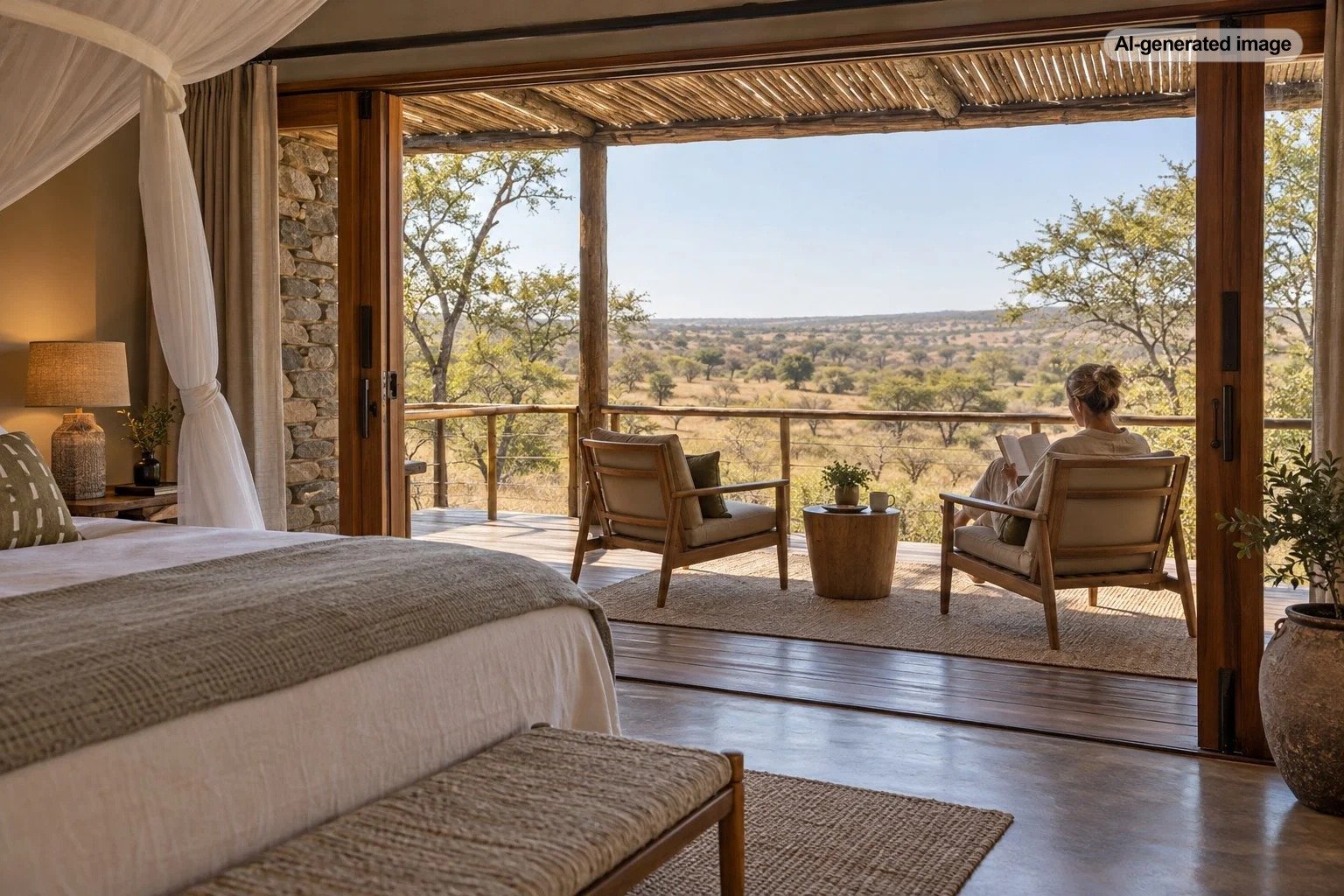
Depending on the lodge, you might sleep later, enjoy coffee in your room, read on a private deck, or have breakfast at a more relaxed pace. Confirm breakfast arrangements first, particularly if the usual morning meal takes place after the vehicles return.
Spend Time at the Pool or on a Terrace
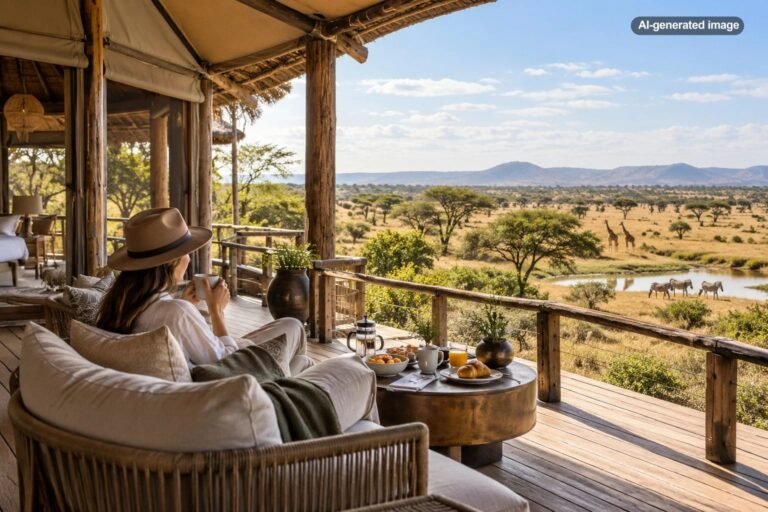
Some lodges have swimming pools, viewing decks, shaded lounges, or other comfortable spaces where guests can enjoy the surrounding landscape without joining an excursion.
A property overlooking a waterhole or open landscape may offer opportunities to observe wildlife from designated viewing areas. However, sightings are unpredictable, and a view from the lodge should not be treated as a replacement for guided wildlife tracking.
Ask which communal facilities remain accessible when most guests are away. Certain areas may have limited staffing or temporary restrictions.
Book a Spa Treatment or Another Activity
At properties offering wellness services, a massage or other scheduled treatment may provide an appealing alternative to a game drive. Some lodges also arrange culinary experiences, photography sessions, cultural activities, or guided nature walks.
These experiences should not be assumed to be included in the standard rate. They may require advance reservations, separate payment, or minimum participation numbers. Guided walks also involve their own safety requirements and should never be replaced by independent exploration.
Will You Lose Money by Skipping an Included Game Drive?
Possibly in terms of unused package value, but not necessarily through an additional charge.
Many safari accommodation packages combine lodging, meals, and scheduled wildlife activities into one rate. When the excursions are included rather than priced individually, there may be no automatic refund for missing one.
Consider three common booking structures:
- Fully inclusive safari: Scheduled drives are part of the package. Missing one may not change what you pay.
- Accommodation with optional excursions: If drives are purchased separately, choosing not to book one may reduce the total cost.
- Prepaid guided tour: Activities may be bundled into an itinerary with cancellation terms that limit refunds for missed excursions.
Travelers planning to skip several drives should compare accommodation packages before booking. A lodge with optional excursions might offer better value than a premium safari package built primarily around guided wildlife viewing.
One practical question to ask is: If I choose not to participate in a scheduled game drive, does any portion of the activity cost remain refundable or transferable? Request the answer in writing when the distinction matters to your booking decision.
Is It Safe to Stay at a Safari Lodge While the Game-Drive Vehicles Are Away?
Remaining at the lodge is not inherently inappropriate, but wildlife properties require different precautions from conventional hotels.
Some safari lodges are situated in areas where potentially dangerous wildlife can move through or near the property. Others operate within fenced compounds or have different arrangements for guest movement. The presence of a lodge building does not establish that every outdoor area is safe to access independently.
Before the game-drive vehicles depart, confirm which areas you can use, whether staff will remain on-site, and whether an escort is necessary between your room and communal facilities.
Follow these precautions:
- Stay within areas explicitly designated for guests.
- Never leave lodge grounds to follow or photograph an animal.
- Do not approach wildlife visiting a waterhole, pool area, or accommodation deck.
- Follow instructions about moving around the property after dark.
- Keep room doors and other wildlife barriers secured as directed.
- Know how to contact lodge staff if assistance is needed.
For families, confirm supervision arrangements for children who remain behind. Some lodges require an adult to stay with a child who cannot participate in a drive, and childcare services should never be assumed to exist.
Should You Skip the Morning or Afternoon Game Drive?
If you want to miss only one excursion, the better choice depends on your priorities rather than a universal rule about which drive is more rewarding.
| Consideration | Skip the Morning Drive | Skip the Afternoon Drive |
|---|---|---|
| Rest | Sleep later and avoid an early wake-up | Enjoy a longer break after lunch |
| Wildlife viewing | Miss early-day activity opportunities | Miss late-day and possible after-dark opportunities |
| Lodge experience | Enjoy a quieter morning | Enjoy the lodge during afternoon and sunset hours |
| Best suited to | Travelers recovering from early departures or long journeys | Travelers wanting an unhurried afternoon or evening |
Morning drives can be especially appealing in hot regions because temperatures are often cooler and some animals are more active. Afternoon drives can provide changing light, opportunities for wildlife activity as temperatures ease, and, where permitted, observations after sunset.
Neither excursion guarantees particular sightings. Wildlife movement depends on weather, habitat, season, species behavior, and chance.
For a first safari, participating in at least one morning and one afternoon excursion can provide a useful introduction to the different conditions. After that, travelers can make more informed decisions about whether additional drives or additional rest better suit their interests.
Can Different Members of Your Group Choose Different Activities?
Often, yes. A couple, family, or group of friends does not necessarily need to participate in every activity together.
One traveler might want to photograph wildlife at every opportunity, while another prefers a slower vacation with more time at the lodge. Both approaches can be compatible with the same accommodation when participation is flexible.
However, several details deserve attention. A single family member remaining at camp with young children may need to provide supervision. Guests with mobility limitations should confirm access to facilities and available assistance. Couples traveling on a shared private vehicle may need to coordinate their preferences if the guide and vehicle are reserved for the group rather than individual passengers.
If different schedules are important, choose a property that explicitly accommodates independent activity choices instead of relying on assumptions about standard safari hospitality.
When Is Skipping a Game Drive a Good Idea?
Skipping an excursion can make sense when the benefits of rest or flexibility are greater than the expected value of another wildlife outing.
After a demanding travel day: Long flights, transfers, and disrupted sleep can leave travelers tired before the safari has properly begun. Depending on arrival arrangements, a gentle start may improve the rest of the stay.
During a longer safari: On a multi-night stay with repeated wildlife excursions, taking an occasional break can provide variety without eliminating the central safari experience.
When traveling with different interests: Some guests prioritize photography and wildlife tracking, while others place more value on scenery, food, accommodation, and relaxation.
When physical comfort is a concern: Open safari vehicles can involve prolonged sitting, uneven tracks, temperature changes, and exposure to dust. Travelers with particular accessibility or comfort needs should discuss suitable arrangements with the lodge.
When conditions are unpleasant: Weather can affect enjoyment, although the guide and lodge should determine whether an excursion can operate safely. A guest’s preference to remain indoors is separate from an operator’s decision to cancel an activity.
When Might You Regret Missing a Game Drive?
There are also situations where skipping a drive deserves careful consideration.
On a one- or two-night safari, the number of available wildlife-viewing opportunities may already be limited. Missing a scheduled outing could mean giving up a substantial portion of the experience you traveled to enjoy.
This is especially relevant when your main purpose is to observe a particular habitat, learn from specialist guides, or spend as much time as possible photographing animals.
Skipping a drive can also be more consequential when the excursion visits a different section of a reserve or follows a specialized route. Ask the guide whether the outing offers anything meaningfully different from previous drives before making your decision.
There is no guarantee that the excursion you skip would have delivered an exceptional wildlife encounter. Equally, no subsequent drive can promise to recreate what another group observed. Making peace with that uncertainty is part of planning a relaxed safari.
What Travelers Often Overlook Before Staying Behind
The biggest practical surprise is often not the absence of a game drive but the way lodge operations are organized around excursions.
At a smaller property, the main breakfast service may begin after the morning vehicles return. Staff members may be preparing rooms or meals while most guests are away. Certain activities may require a guide who is already assigned to a scheduled drive.
Communication can also be limited in remote locations. Rather than assuming you can arrange everything from your room at short notice, discuss your plans with the lodge team beforehand.
Before deciding to stay behind, confirm:
- Whether participation in each scheduled drive is optional.
- How much notice the lodge needs if you decline a drive.
- Whether breakfast, lunch, or refreshments are available during your preferred hours.
- Which guest areas remain accessible and whether escorts are required.
- Whether a pool, spa, or alternative activity will be operating.
- Whether an unused drive has any refund or credit value.
- How children or guests requiring assistance will be supervised.
These questions are particularly useful before booking a remote property where alternative dining or leisure facilities may not exist outside the lodge.
How to Choose a Safari Lodge If You Want More Relaxation Than Game Drives
Not every safari property is equally suited to travelers who want a combination of wildlife experiences and leisure.
Start by looking closely at the daily schedule. A lodge emphasizing two structured game drives per day may be excellent for wildlife enthusiasts, but its operating rhythm might feel demanding to someone seeking substantial unstructured time.
Next, examine the property itself. A comfortable terrace, inviting communal spaces, a pool, or thoughtfully designed rooms may matter more when you expect to spend extended periods at the accommodation. Verify which facilities exist and whether they remain available throughout the day.
Finally, compare the activity packages. Some properties emphasize a broad choice of experiences and flexible participation, while others primarily sell a guided safari program. Neither approach is inherently better; the important consideration is whether the package fits how you intend to spend your time.
For travelers who value relaxation as much as wildlife viewing, a longer stay with fewer planned excursions may be preferable to a short itinerary that feels tightly scheduled.
Frequently Asked Questions
Can I stay in my room while everyone else goes on a safari drive?
Often, yes. Many lodges allow guests to remain in their rooms during scheduled excursions. Confirm the property’s policy, how to contact staff, and whether any movement restrictions apply while other guests are away.
Will the lodge charge me extra for missing a game drive?
Missing an included drive does not normally mean purchasing an additional service, but refund, cancellation, and package policies vary. Ask whether the rate remains unchanged and whether any prepaid activity fees are refundable.
Can I watch wildlife from the lodge instead?
Some lodges overlook waterholes or wildlife habitat, providing opportunities to observe animals from designated guest areas. However, sightings are never guaranteed, and watching from the lodge is different from traveling with a guide who can explore a wider area.
Do children have to go on every game drive?
Not necessarily. Children’s participation depends on the lodge’s age policies and activity rules. If a child stays behind, an accompanying adult or an approved supervision arrangement may be required. Confirm these details before arrival.
Should I tell the lodge in advance that I want to skip a drive?
Yes. Advance notice helps staff plan vehicle occupancy, guide assignments, meals, and any alternative arrangements. It is particularly helpful at small lodges and for groups sharing a private safari vehicle.
The Bottom Line: A Safari Does Not Have to Be Constantly Scheduled
Skipping a safari game drive is often possible, and choosing to enjoy the lodge instead does not make the trip any less legitimate. The best safari schedule is one that reflects your interests, energy level, available time, and reasons for visiting.
For travelers with only a short stay, participating in scheduled drives may provide the greatest opportunity to experience the reserve. For those spending several nights at a comfortable lodge, occasionally replacing a drive with a slower morning or relaxed afternoon can create a more balanced vacation.
The essential step is to confirm the property’s rules before making plans. When you understand what is included, which services remain available, and how wildlife safety is managed, you can decide confidently whether to join the next drive or enjoy the surroundings from the lodge.
Sources & Further Reading
- Oase Greater Kruger – Frequently Asked Questions – Information about optional game drives, flexible activity schedules, and lodge-based experiences.
- Sausage Tree Safari Camp – Safari Adventures – Details about daily game drives, staying at camp, and included or optional activities.
- Shimungwe Lodge – Frequently Asked Safari Questions – Information about family arrangements, children’s activities, and supervision policies.