How to Choose a Safari Lodge If You Hate Early Morning Wake-Up Calls
If the idea of being awakened before sunrise every day makes a safari sound more exhausting than exciting, choose the lodge based on its activity schedule rather than its room alone. Many safari programs emphasize early-morning and late-afternoon wildlife viewing, but the amount of flexibility varies considerably. The most useful questions are whether game drives are shared or private, whether morning departures are optional, whether activities can be scheduled later, and whether missing a dawn drive still leaves you with a satisfying wildlife experience.
You do not necessarily need to avoid safari lodges altogether. You need a property whose operating style matches the way you prefer to travel. A lodge with private vehicles, flexible guiding, afternoon and evening activities, and worthwhile experiences around camp can be much better for a late riser than one built around a rigid twice-daily group schedule.
Quick answer: prioritize schedule flexibility over luxury level
- Ask whether game drives are shared or private. Private vehicles generally provide more control over departure times and the length of each outing.
- Confirm whether the morning drive is optional. Do not assume that an advertised daily itinerary can be rearranged.
- Look for strong afternoon and evening wildlife viewing. These can make skipping some early starts feel like a choice rather than a major sacrifice.
- Choose a lodge with worthwhile daytime activities. Wildlife watching from camp, guided walks where appropriate, spa time, pools, photography, or simply a good setting can make the middle of the day more rewarding.
- Ask specific questions before booking. A vague promise of a personalized stay is less useful than a clear explanation of how guides, vehicles, meals, and departure times actually work.
Understand why safari mornings often start so early
Early departures are not simply a hospitality tradition. Safari schedules are commonly organized around the cooler parts of the day, with another major activity period later in the afternoon and evening. Lodges may therefore arrange breakfast, housekeeping, guiding, and vehicle assignments around a morning departure followed by a long midday break.
That does not mean every guest must enjoy the same routine. The important distinction is between a lodge where the early schedule is a default and one where it is effectively the only practical way to participate. If sleeping late matters to you, determine which situation applies before paying for the stay.
Private vehicles can make the biggest difference
A private safari vehicle is one of the most useful features for travelers who dislike fixed wake-up times. Instead of coordinating with several unrelated guests, you travel with your own party and guide. This can make it easier to discuss departure times, wildlife interests, photography priorities, breaks, and the overall pace of the day.
There is an important caveat: private does not automatically mean completely unrestricted. Reserve rules, guide availability, wildlife conditions, meal arrangements, daylight, and other operational considerations may still influence timing. Ask what flexibility a private vehicle actually provides rather than assuming that you can depart whenever you want.
Private vehicles may also cost more or be included only with certain accommodations. For a traveler who would otherwise skip half the scheduled activities, however, paying for greater control can be more valuable than spending the same amount on a larger suite or more elaborate room.
Find out how shared game drives actually operate
Shared drives are not necessarily a poor choice for late sleepers. What matters is how rigidly they are scheduled. At one lodge, a morning vehicle may leave at a set time with no later alternative. At another, guides may have some flexibility depending on the number of guests and the day’s plans.
Ask the reservations team questions that produce concrete answers: What time do morning drives generally depart during your travel period? Is participation optional? If you skip the morning drive, is another guided activity available later? Are afternoon drives included independently of morning participation? Can a private vehicle be arranged, and must it be reserved in advance?
These questions reveal far more than asking whether the lodge offers a flexible itinerary.
Choose a place where afternoons and evenings matter
If you strongly prefer sleeping past dawn, your safari should not depend entirely on the morning drive. Look for a program where the afternoon outing is treated as a substantial wildlife experience rather than a secondary excursion.
Late-afternoon drives can extend toward sunset and, where local rules and lodge operations permit, may continue into darker hours. The exact format varies by destination and property, so confirm what is actually offered. For a late riser, the broader principle is simple: the more meaningful the second half of the day is, the less pressure there is to attend every dawn departure.
This is especially useful on a longer stay. You might choose one or two early mornings when you feel rested and keep other days deliberately slower rather than forcing yourself into the same schedule every day.
Consider how much wildlife you can experience from the lodge
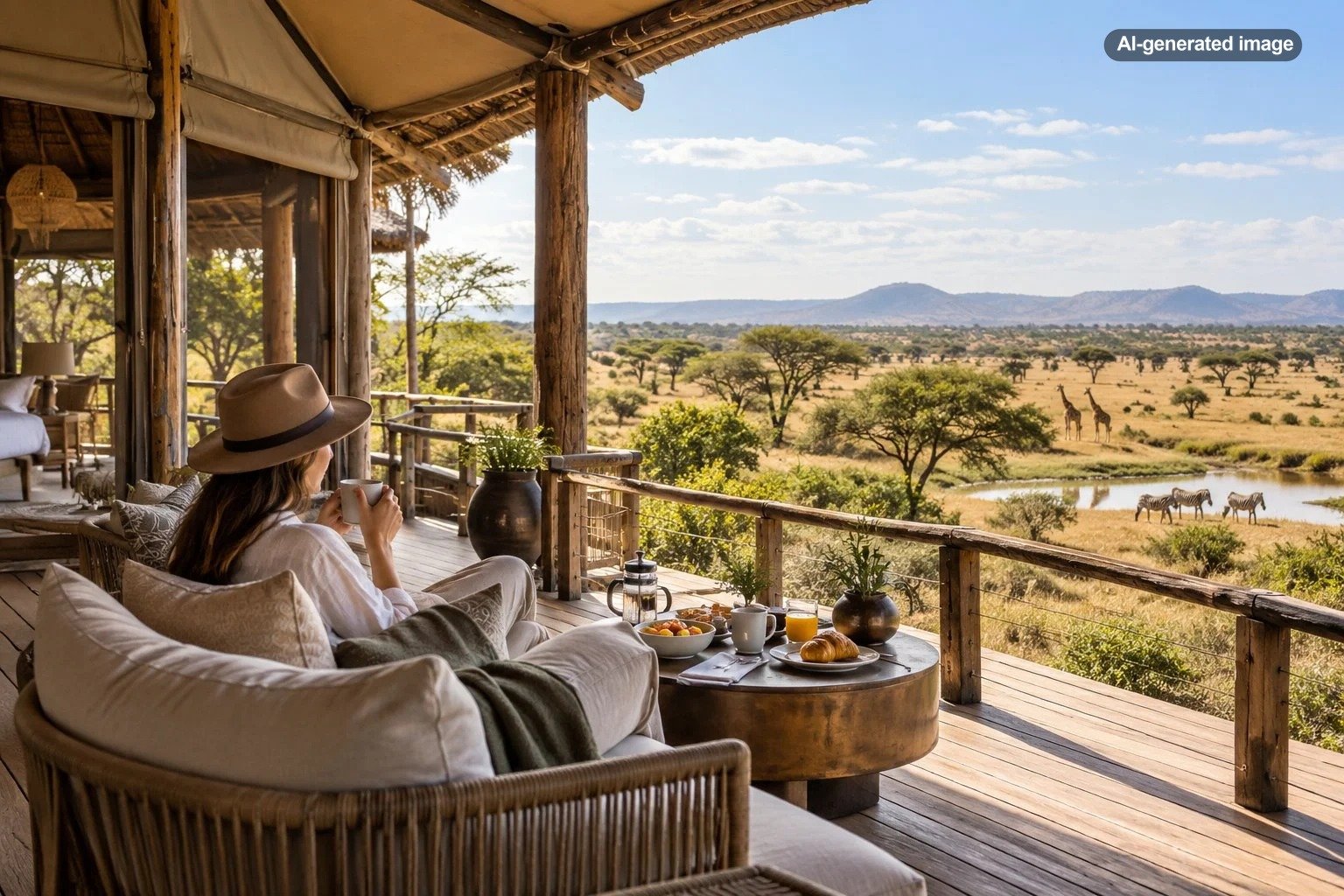
Some safari properties are enjoyable even when you are not in a vehicle. Depending on the location, guests may be able to watch wildlife or landscapes from decks, common areas, water-facing viewpoints, or their accommodations. That can matter enormously if your ideal morning involves coffee and a quiet view instead of an alarm in the dark.
Do not assume, however, that every lodge has animals regularly passing in front of camp. Ask what guests can realistically see from the property and whether the lodge setting itself is a meaningful part of the experience.
A late sleeper may also value a strong pool area, comfortable outdoor spaces, spa services, photography opportunities, or other daytime options more than a traveler who expects to spend nearly every available hour on scheduled activities.
Pay attention to meal times as well as game-drive times
A surprisingly rigid meal schedule can undermine an otherwise flexible safari. If breakfast is primarily designed around returning guests from an early drive, ask what happens when you sleep through it. Can you eat later? Is there a continental option, brunch arrangement, or other practical alternative?
The same issue applies in reverse at night. If you prefer evening wildlife activities, find out whether dinner timing works comfortably with them. A genuinely relaxed safari experience requires the guiding schedule and hospitality schedule to fit together.
Do not confuse an exclusive-use villa with automatic scheduling freedom
Private villas and exclusive-use safari houses can be attractive to families and groups because they often provide more privacy and dedicated services. They may also include private guiding or vehicles, which can improve scheduling flexibility.
Still, verify what is included. An exclusive accommodation does not necessarily guarantee an unrestricted activity schedule. Ask whether your group has a dedicated vehicle, whether the guide is assigned exclusively to you, and how freely daily departure times can be adjusted.
Decide how much wildlife optimization you are willing to trade for sleep
This is the central tradeoff. Choosing later mornings can mean giving up some opportunities associated with the lodge’s standard dawn program. That may matter greatly to a traveler whose main purpose is intensive wildlife photography or maximizing time in the field. It may matter much less to someone who wants a balanced vacation combining wildlife, scenery, rest, meals, and comfortable accommodations.
Neither approach is inherently better. The mistake is booking a highly structured safari and then discovering that the operating rhythm conflicts with the way you actually enjoy traveling.
If wildlife viewing is your highest priority but you still dislike early starts, a compromise can work well: stay long enough that you do not feel compelled to attend every activity, schedule selected early drives rather than all of them, and preserve several slower mornings.
Questions to send the lodge before you book
A short email can prevent a major mismatch. Ask the property directly:
- What time do morning game drives usually depart during my travel dates?
- Are wake-up calls automatic or only provided on request?
- Can I skip a morning drive without affecting my afternoon activity?
- Are later morning departures ever available?
- Are game drives shared with other guests?
- Can I reserve a private vehicle, and is there an additional charge?
- Does a private vehicle allow us to choose our departure time?
- What daytime activities are available if I sleep through the morning drive?
- Can breakfast or another morning meal be served after the standard schedule?
Keep the reply with your booking information, particularly if schedule flexibility is one of the main reasons you selected the property.
What travelers often overlook
The length of the stay matters almost as much as the lodge itself. On a very short safari, skipping one morning drive can represent a large share of your available wildlife time. During a longer stay, you can alternate early starts with slower mornings and still participate in several game drives.
Also consider who you are traveling with. If one person loves dawn drives and another hates them, a private vehicle does not automatically solve the conflict because both travelers may still have to agree on one departure time. Depending on the property, separate shared activities or multiple vehicles may be more practical.
Finally, avoid choosing solely from photographs of the rooms. Safari lodges are unusually schedule-dependent accommodations. The guiding system, vehicle arrangements, meal flexibility, and daily rhythm can affect your experience at least as much as the bedroom.
FAQ
Do I have to go on every early morning safari drive?
Usually, participation in leisure activities is optional, but the important question is what alternatives exist if you skip a scheduled departure. Confirm the lodge’s exact arrangements before booking.
Is a private safari vehicle worth it for late sleepers?
It can be particularly valuable when it provides genuine control over departure times and trip length. Verify the lodge’s policy, availability, and any additional cost rather than assuming private vehicles always operate on a fully customized schedule.
Can I still have a good safari if I prefer afternoon drives?
Yes, particularly at a lodge with substantial afternoon or evening activities and a stay long enough to give you several wildlife-viewing opportunities. You should still understand that choosing to skip early drives changes the experience and may reduce your total time in the field.
Should I tell the lodge that I hate early wake-up calls?
Yes. Be specific before booking. Tell the reservations team that you prefer later mornings and ask them to explain exactly how that preference would affect game drives, meals, guiding, and vehicle arrangements.
What is the best safari style for someone who wants to sleep late?
Look for a lodge or private safari arrangement with flexible guiding, private or easily customized vehicle options, worthwhile afternoon and evening activities, and enough to enjoy at the property during the day. That combination gives you the strongest chance of enjoying the safari without organizing the entire vacation around a predawn alarm.