Why Do Some Ski Resorts Require a Shuttle Even When Hotels Look Slopeside?
A hotel can appear to sit directly beside a ski mountain yet still require a shuttle to reach the lifts. The explanation usually comes down to a distinction that photographs and lodging descriptions do not always make clear: being close to ski terrain is not the same as having a practical, skiable route between the hotel and the lifts.
Mountain roads, separate base villages, terrain restrictions, property boundaries, and seasonal snow conditions can all affect access. A hotel may overlook the slopes without connecting to them directly. Understanding these differences before booking can prevent an unexpectedly complicated morning routine.
Quick Answer: Why Slopeside Does Not Always Mean Ski-In/Ski-Out
- Mountain proximity is not necessarily lift access. A hotel may face the ski area but sit across a road, ravine, or restricted section of terrain.
- Resorts often have multiple base areas. The nearest visible slopes may not connect conveniently to the lifts or services guests need.
- Terrain access depends on ability. A route that works for advanced skiers may be unsuitable for beginners.
- Snow conditions affect access. A skiable connection may be unavailable when coverage is insufficient.
- Shuttles sometimes connect essential services. Ski school, rentals, restaurants, or particular lift networks may operate away from the hotel.
What Does Slopeside Actually Mean?
The word slopeside generally describes a property’s position near ski terrain. It does not, by itself, establish that guests can step outside, put on their skis, and reach an operating lift.
For example, a hotel might stand immediately below a mountain face, with ski runs visible from its windows. However, the nearest trail could terminate on the other side of a road. Reaching the main base area might require a shuttle even though the physical distance between the building and the mountain looks small.
Another property might sit beside a ski trail but lack an authorized entry point. Guests may need to use a designated pedestrian route or transportation service rather than crossing landscaping, private property, or unsuitable terrain.
This makes it useful to distinguish three descriptions:
- Slopeside: Generally located beside or very near ski terrain, without necessarily guaranteeing skiable access.
- Ski-in/ski-out: Intended to indicate that guests can ski to and from the property or an associated access point, subject to terrain and operating conditions.
- Near the lifts: Indicates proximity but may involve walking, stairs, a shuttle, or another connection.
These phrases are not always applied consistently across booking platforms. The specific route matters more than the label.
Mountain Geography Can Make a Short Distance Inconvenient
Ski destinations are built around terrain rather than the relatively level street grids found in many cities. Two buildings that appear close together on a map may be separated by substantial elevation changes, winding roads, or steep slopes.
Roads and Elevation Changes
A hotel could be located only a short distance from a lift when measured in a straight line, yet the pedestrian route might descend a steep hill before climbing toward the base terminal. Carrying skis, poles, and boots over this route can be considerably more demanding than the map suggests.
Road crossings can create another complication. Even when a crossing is possible, carrying equipment across vehicle traffic or snow-covered surfaces may make a designated shuttle more practical.
Natural and Property Boundaries
Creeks, wooded areas, retaining walls, private developments, and protected terrain can prevent a direct connection. Resort maps may show the buildings and slopes close together without clearly illustrating these barriers.
Aerial photographs are useful for understanding the setting, but they are not sufficient evidence that a continuous, permitted ski route exists.
Large Ski Resorts Often Have Several Separate Base Areas
One of the most overlooked reasons for shuttle transportation is the difference between a ski resort’s overall boundary and its individual base villages.
Large destinations may have several clusters of hotels, restaurants, rental shops, parking areas, and lift terminals. Some areas connect primarily through ski trails, while others are linked by roads or transportation services.
Big Sky Resort in Montana offers a useful example of this layout. Its official information identifies Mountain Village, Madison Base, and Montage as distinct mountain access areas. During winter operations, skiing can provide connections between base areas, but visitors must account for lift closing times and their ability to navigate the terrain.
A hotel located within one base area therefore should not automatically be assumed to provide convenient access to every meeting point or mountain facility.
This distinction is particularly important when travelers book lessons, arrange equipment rentals, or plan to meet family members who ski at different levels.
Beginner Skiers May Need Transportation Even When Others Can Ski Out
Not all ski-in/ski-out access is equally useful to every guest. A property may offer a legitimate connection to the mountain through terrain that exceeds a beginner’s comfort or skill level.
Consider a hotel with a ski-out route leading directly onto an intermediate trail. Experienced skiers might consider that exceptionally convenient. A first-time skier, however, may need to reach a separate beginner area with gentle slopes, instruction facilities, and appropriate lifts.
Families can encounter similar situations when children’s lessons begin at a different base. Parents may be able to ski directly from their hotel but still need transportation each morning to bring younger children to their designated meeting area.
Before booking, ask whether both the outbound and return ski routes are appropriate for the least experienced skier in the group. Also confirm how nonskiers can reach the base without using ski trails.
Snow Coverage and Lift Operations Can Change the Experience
Even genuine ski-in/ski-out properties can experience periods when their usual access routes are unavailable.
Lower-elevation trails may need sufficient snow coverage before opening. Warm spells, early-season conditions, or late-season melting can interrupt a connection that normally operates throughout the main winter period.
Lift closures may also change the most convenient starting point. A hotel might maintain its physical access to the mountain while the nearest lift is temporarily unavailable, requiring guests to reach another operating terminal.
Wind, maintenance, terrain management, and other operational considerations can influence the daily arrangement. These are reasons to review current resort information rather than treating a property’s advertised access as an unconditional guarantee.
For trips early or late in the ski season, the distinction is especially valuable. Travelers should ask what transportation arrangements are available if the nearest ski connection is closed.
Why Resorts Provide Shuttles Even When Walking Is Possible
Shuttle transportation is not necessarily evidence of poor hotel placement. In some mountain villages, it is an intentional part of the resort’s transportation design.
Sun Peaks Resort in British Columbia, for example, describes a village transportation system that includes an in-resort shuttle, pedestrian connections, and designated ski access routes. These options serve different movement needs throughout the destination.
A shuttle can be useful for guests traveling with equipment, reaching restaurants away from their hotel, or moving between lodging areas without navigating snowy pedestrian routes.
It can also make resort facilities accessible to companions who do not ski. A party traveling with grandparents, young children, or guests seeking non-ski activities may appreciate convenient transportation even when the skiers can reach the lifts directly.
The important question is not simply whether a shuttle exists, but whether using it is optional or necessary for the activities that matter most to the traveler.
How to Evaluate a Hotel’s Actual Ski Access Before Booking
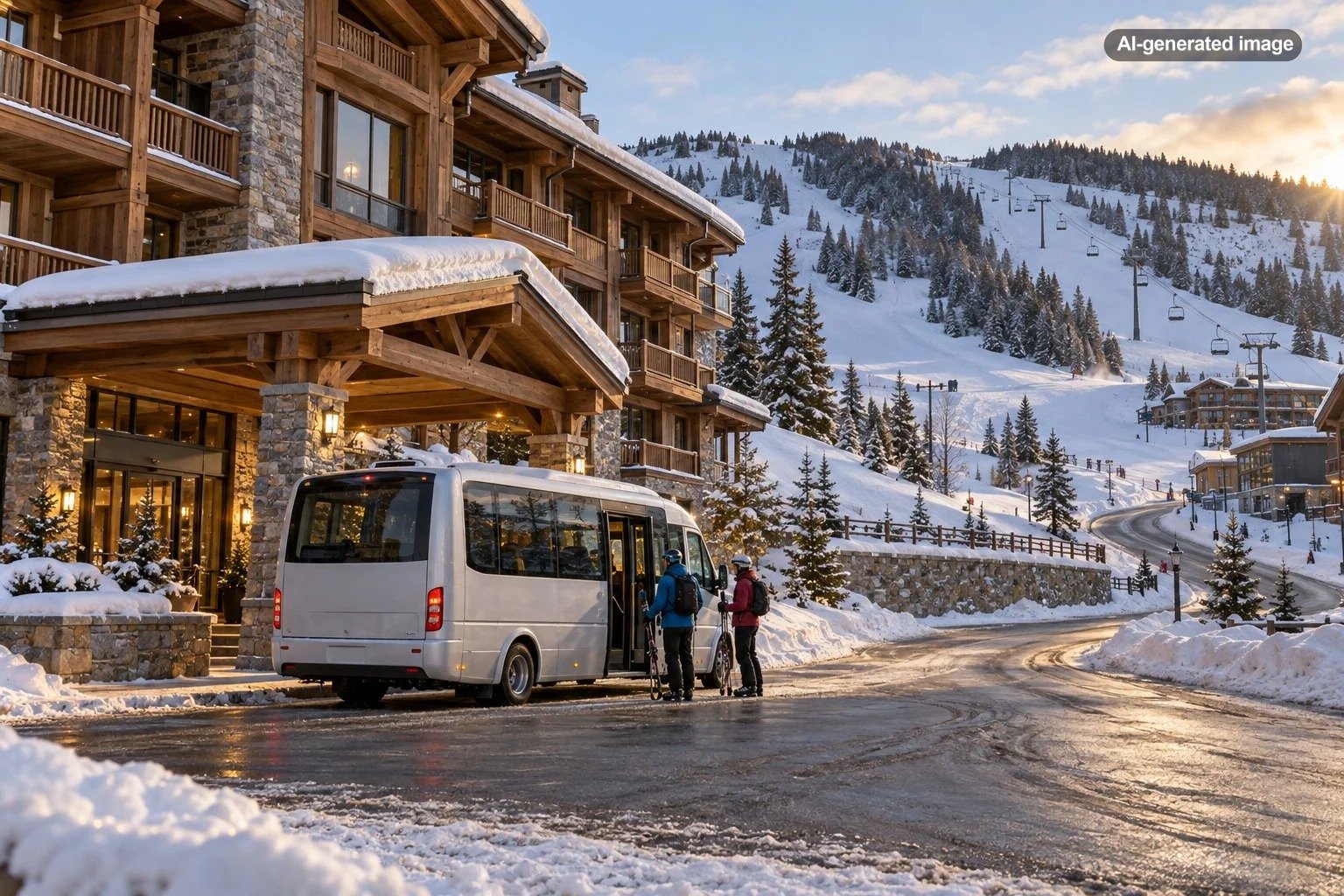
Hotel photographs frequently emphasize dramatic mountain views, snowy rooftops, and nearby chairlifts. These images convey the atmosphere of a destination but rarely explain the practical journey from a guest room to the first run.
Start with the official resort trail map and identify the hotel’s exact location. Then determine where the nearest operating lift, beginner area, and ski-school meeting point are situated.
Next, confirm the route in both directions. Skiing away from a hotel does not guarantee an equally convenient return, particularly if the return route involves more difficult terrain or depends on a specific lift.
Finally, consider the journey with equipment. A short walk on a cleared summer pathway can feel significantly different when wearing ski boots and carrying several sets of skis.
A Real Property Example at Big Sky
The Summit Hotel at Big Sky Resort provides an example of lodging positioned in the central Mountain Village area. The resort’s official hotel information describes the property as slopeside, at the foot of Lone Mountain, and lists ski-valet services among its amenities.
That location may appeal to travelers who want to stay close to Mountain Village’s main ski infrastructure. However, proximity to the central base does not mean that every lesson, activity, or destination elsewhere within the resort can be reached without additional transportation.
Affiliate disclosure: HotelInfo.com may earn a commission when you book or purchase through links on this page. This does not affect the price you pay. Learn more.
Travelers comparing lodging in this part of Montana can view rooms and property details for The Summit Hotel at Big Sky Resort. Confirm current access arrangements, rates, amenities, and reservation terms before making a decision.
Slopeside Hotel or Shuttle-Dependent Hotel: Which Is Better?
The most convenient accommodation depends on how the group intends to use the mountain. Direct ski access can be especially attractive for travelers who value flexibility, while shuttle-connected lodging may offer other advantages worth considering.
| Consideration | Direct ski access | Shuttle-dependent lodging |
|---|---|---|
| Morning departure | Potentially more flexible | Depends on shuttle service |
| Beginners | Convenient if suitable terrain connects | May serve beginner areas directly |
| Midday breaks | Often easier to return to the room | May require planning around transportation |
| Lodging selection | Limited to suitable mountain locations | May offer more location choices |
| Evening activities | Depends on nearby village services | May provide connections to other resort areas |
For enthusiastic skiers planning full days on the mountain, minimizing transportation may justify prioritizing direct access. The ability to return for a forgotten item or take a midday break can be particularly valuable.
For travelers whose plans include sightseeing, dining, or occasional skiing, a well-connected hotel away from the lifts may be equally practical. The potential savings or broader accommodation choices should be weighed against the time and effort involved in daily transfers.
Questions to Ask Before Reserving a Slopeside Hotel
Rather than relying on a single descriptive phrase, contact the property or examine its current access information. These questions help establish what the stay will actually involve:
- Can guests ski directly from the building to an operating lift?
- Can guests ski back to the property using beginner-friendly terrain?
- Is the connection normally available throughout the planned travel dates?
- Where do ski lessons and equipment rentals begin?
- Does reaching those facilities require transportation?
- Is the shuttle complimentary, and who operates it?
- Where is the pickup point relative to the guest rooms?
- What transportation alternative exists when a lift or access trail is closed?
- How do evening transportation arrangements differ from daytime service?
Ask for the current winter access map when available. Written confirmation of the relevant arrangements can also help clarify expectations before booking.
Frequently Asked Questions
Does slopeside always mean ski-in/ski-out?
No. Slopeside generally indicates proximity to ski terrain, while ski-in/ski-out suggests a usable skiing connection. Since descriptions vary, travelers should verify the actual route to and from the lifts.
Can a ski-in/ski-out hotel still require a shuttle?
Yes. Guests may need transportation for lessons, equipment rentals, other base areas, or periods when the normal ski connection is unavailable. A ski-in/ski-out description does not guarantee direct access to every resort facility.
Are ski resort shuttles usually free?
Some resorts and properties offer complimentary transportation, while other services may have fees or eligibility restrictions. Arrangements vary by destination, operator, and season, so confirm current terms directly.
Is it better to stay next to a gondola or directly on a ski trail?
Both can be convenient. Gondola-adjacent lodging may offer straightforward lift access without requiring guests to ski to the terminal. Trailside lodging can make departures and returns particularly easy when the connecting runs match the group’s ability.
How can travelers tell whether a slopeside hotel is truly convenient?
Compare the hotel’s exact location with the official trail and village maps, identify the nearest useful lift, and confirm the route in both directions. Include ski-school locations, walking conditions, and transportation alternatives in the assessment.
The Most Important Detail Is the Route, Not the View
A mountain-facing hotel can be a beautiful place to stay without offering direct ski access. Conversely, a less dramatic-looking property may sit beside a convenient lift terminal or an easy beginner trail.
The most reliable approach is to evaluate the journey between the guest room and the activities that matter. Confirm the route, terrain difficulty, seasonal limitations, and shuttle arrangements before committing to a reservation.
For ski travelers, the meaningful measure of convenience is not how close the slopes appear in a photograph. It is how easily everyone in the group can reach the mountain, enjoy the day, and return to the hotel.