How to Document a Cruise Cabin Problem Before Asking to Move
Discovering a serious problem with your cruise cabin can turn an otherwise enjoyable sailing into a frustrating experience. Whether the issue involves persistent noise, a malfunctioning air conditioner, an unpleasant odor, plumbing trouble, or a room that does not match your confirmed booking, the way you document the problem matters. A clear record helps shipboard staff understand what is happening, gives them an opportunity to investigate, and supports a more organized request if you need to move to another cabin.
The most effective approach is to photograph or record the problem, note when it occurs, report it promptly, and keep a written record of the cruise line’s response. You do not need an elaborate evidence file. A few accurate, well-organized details are generally more useful than dozens of unexplained photographs or repeated complaints without documentation.
Quick Answer: What to Document Before Requesting a Cabin Change
- Photograph visible problems: Capture damage, leaks, stains, malfunctioning fixtures, or other observable conditions before they are repaired or cleaned.
- Record recurring issues: Make short videos or time-stamped notes when noise, vibration, temperature problems, or odors repeatedly interfere with your cabin’s use.
- Identify your cabin: Keep your ship name, sailing date, cabin number, and reservation details together.
- Report the problem promptly: Contact your stateroom attendant, guest services, or the appropriate shipboard department rather than waiting until the end of the voyage.
- Document the response: Record when staff inspected the cabin, what action was proposed, and whether the issue improved.
Important: Documentation should never delay reporting an urgent hazard. If there is active flooding, smoke, a serious electrical concern, a security threat, or a medical emergency, contact the appropriate shipboard personnel immediately and follow their instructions.
Start With Evidence That Shows the Actual Problem
Before contacting guest services, take a few minutes to capture the conditions you want addressed, provided the situation is safe. Focus on evidence that helps another person understand the problem without relying entirely on your description.
Take Clear Photographs With Context
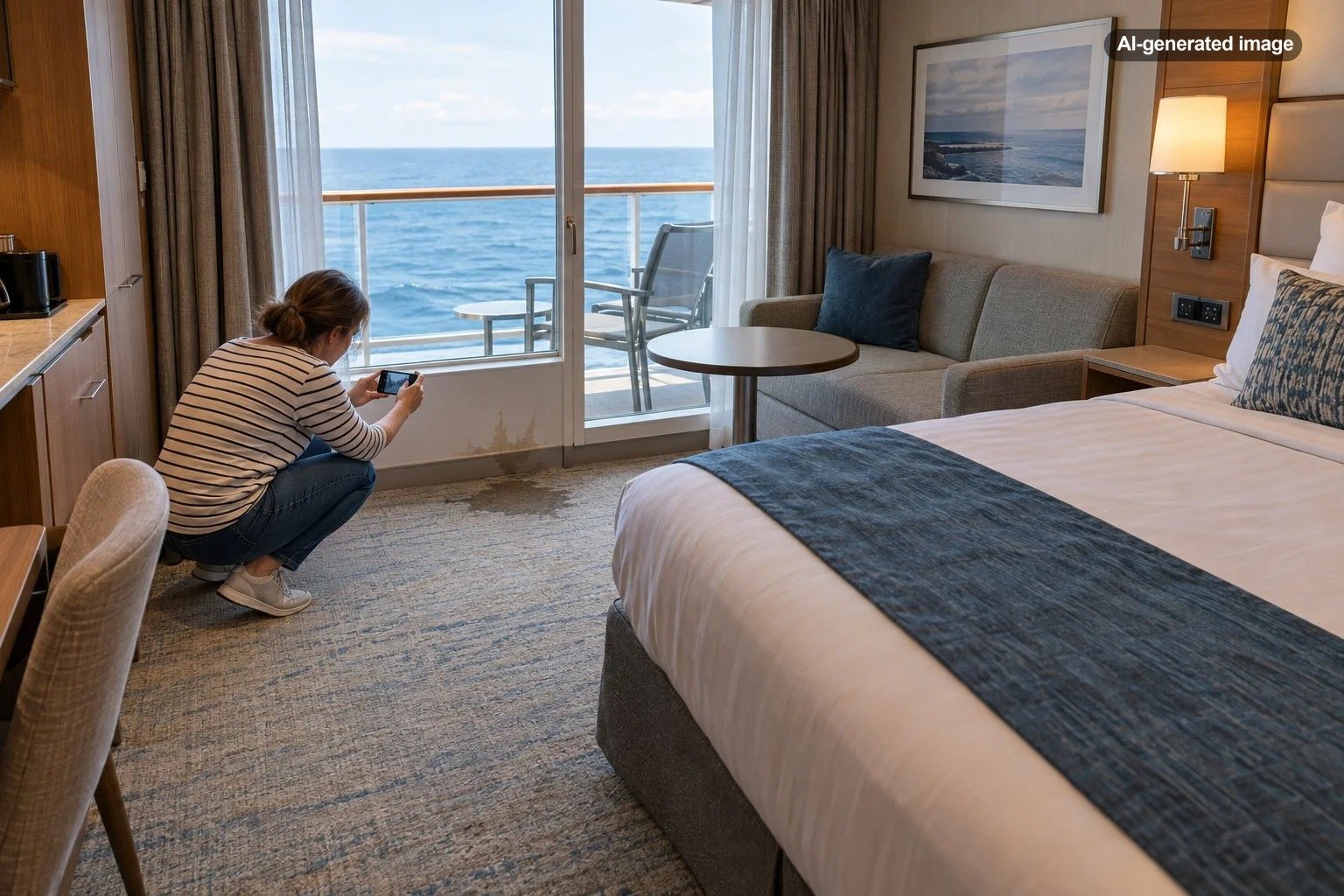
A useful photograph should establish both what is wrong and where the problem exists. For example, if water is collecting beside the bathroom entrance, take one wider photograph showing the bathroom threshold and surrounding floor, followed by a closer image of the water or suspected source.
If a balcony door does not close properly, photograph its position and any visible gap or damaged component. Do not force the mechanism or repeatedly operate a fixture that appears unsafe.
For damaged furniture or visible cleanliness problems, use ordinary lighting and avoid filters that exaggerate discoloration or alter the appearance of the scene. Where appropriate, take one photograph of the overall area and another showing the specific concern.
Use Short Videos for Problems That Photographs Cannot Explain
Some cabin problems are difficult to establish with a still image. A rattling ceiling panel, repetitive mechanical noise, dripping pipe, or intermittently malfunctioning toilet may be easier to demonstrate through a brief recording.
Keep videos focused on the problem. A recording of a repetitive noise can be particularly helpful when the noise occurs only at certain times. However, phone microphones and automatic volume adjustments can distort perceived loudness, so recordings should supplement rather than replace a description of how the disturbance affects you.
For temperature complaints, a photograph of the cabin thermostat may establish the selected setting, but it does not necessarily prove the actual room temperature. Note how long the system has been running, whether airflow is present, and what symptoms you observe.
Create a Simple Timeline of the Problem
A chronological record is one of the most valuable tools when discussing a cabin issue with shipboard staff. It distinguishes an isolated inconvenience from a continuing condition and makes it easier to explain whether attempted repairs were effective.
You can use your phone’s notes application to record the date, approximate time, observation, and action taken. Include the ship’s local time when practical, especially if your phone changes time zones during the voyage.
For example, a record might look like this:
- Day 1, 4:15 p.m.: Noticed water pooling near the shower entrance after normal use. Took two photographs.
- Day 1, 4:35 p.m.: Reported the issue to the stateroom attendant and requested inspection.
- Day 1, 6:10 p.m.: Maintenance inspected the shower area and attempted a repair.
- Day 2, 8:20 a.m.: Water returned after showering. Took another photograph and informed guest services.
This kind of timeline establishes that the problem recurred after an attempted solution. It also prevents confusion when multiple employees become involved during different shifts.
Document Different Cabin Problems in Different Ways
Not every stateroom complaint requires the same evidence. Choose a documentation method that fits the nature of the problem instead of trying to photograph something that cannot reasonably be shown.
Persistent Noise or Vibration
Record the approximate time, duration, frequency, and apparent location of the disturbance. Note whether it happens while the ship is maneuvering, during scheduled entertainment, or throughout the night. If appropriate, record a short video from the affected sleeping area.
Distinguish between occasional operational sounds and a recurring disturbance that significantly affects rest. Cruise ships are working vessels, and some movement and mechanical noise are normal. Documentation is most useful when it identifies a persistent or unusual condition.
Air Conditioning or Ventilation Problems
Photograph the thermostat or control panel, document the selected setting, and note whether airflow or cooling is present. Record when the problem began and whether it persists despite reasonable adjustments.
A cabin that feels warm immediately after boarding is not necessarily experiencing equipment failure. A continuing inability to maintain a comfortable temperature, particularly after staff have inspected the system, deserves a more detailed record.
Odors and Suspected Sanitation Issues
An odor cannot be reliably captured in a photograph. Instead, document where it is strongest, when it appears, whether it is constant or intermittent, and whether staff can independently observe it.
A sewage-like smell near a bathroom, for example, may require a different investigation from an odor apparently entering through ventilation. Avoid stating that mold, sewage contamination, or another specific hazard has been confirmed unless qualified personnel have actually established that finding.
If the odor is accompanied by smoke, fumes, illness, or another immediate safety concern, alert shipboard personnel without delay.
Cleanliness, Stains, or Suspected Pests
Photograph visible conditions before they are cleaned or removed. Include the surrounding area so the location is clear. If you discover a suspected insect, ask staff to inspect and identify it rather than making an unsupported diagnosis based on appearance alone.
A visible stain does not automatically establish a health hazard, and a possible insect sighting does not confirm an infestation. Accurate descriptions preserve credibility while allowing the appropriate team to investigate.
Incorrect Cabin Features or Accessibility Concerns
If the cabin differs from what you believe was confirmed, preserve the reservation confirmation and any written correspondence describing the promised features. Photograph the actual configuration when appropriate.
For example, an unexpectedly missing accessible bathroom feature is different from disappointment over a room’s appearance. Explain the specific functional requirement and how the assigned accommodation does or does not meet it. Accessibility issues may require immediate attention and should be communicated directly to guest services or the ship’s designated accessibility personnel.
Report the Problem Before Requesting a Move
Once you have enough evidence to explain the concern, notify the appropriate staff member. The cabin attendant may be able to arrange housekeeping assistance or direct the issue to maintenance. Guest services can help coordinate complaints involving multiple departments or requests for alternative accommodations.
Describe the problem calmly and specifically. Explain when it began, how it affects your use of the cabin, and what has already been attempted.
A practical opening might be: There has been a recurring leak near our shower entrance. We reported it earlier today, and maintenance inspected the area, but the water has returned. We have photographs showing both occurrences. Could someone reassess the problem and advise whether a permanent repair or another cabin is possible?
This gives staff a clear problem to investigate and a reasonable proposed outcome. Avoid leading with demands for compensation before the ship has had an opportunity to evaluate the condition.
Ask whether the report can be logged and whether a reference number is available. Not every cruise line uses the same complaint-tracking system or provides written confirmation for routine service issues.
Know When a Repair Is Reasonable and When Relocation Makes More Sense
A cabin change is not always the first or most practical solution. Some problems can be resolved quickly without disrupting your trip. Others may continue despite repeated attention or make the cabin unsuitable for its intended use.
A repair may be preferable when the problem is limited to a malfunctioning light, a minor fixture adjustment, an isolated housekeeping issue, or an equipment fault that can be corrected promptly.
A relocation request becomes more reasonable when a significant problem recurs after repairs, essential bathroom facilities remain unusable, persistent noise repeatedly prevents sleep, a substantial odor continues, or the cabin cannot meet an important confirmed accessibility requirement.
Cabin availability can be limited, especially on a full sailing. A legitimate complaint does not automatically establish a right to an upgrade, refund, or specific replacement cabin. The available resolution depends on the situation, cruise line terms, applicable protections, and operational circumstances.
How to Ask Guest Services for a Different Cabin
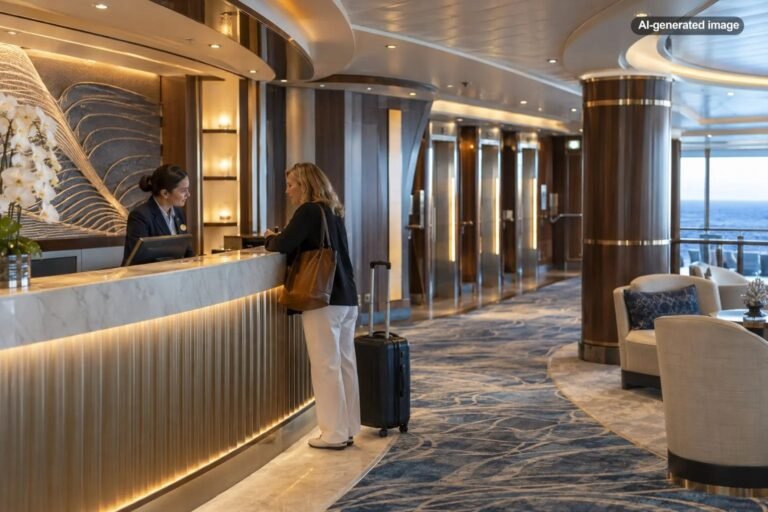
When requesting relocation, explain why remaining in the existing cabin is no longer practical. Present your evidence in a concise sequence: the original problem, the reporting history, any attempted solution, and the condition that remains unresolved.
Ask whether an alternative stateroom is available and whether staff can explain the proposed arrangements before you move.
Questions worth asking include:
- Is the alternative cabin available for the remainder of the sailing?
- Is it the same category, a different category, or a temporary accommodation?
- Are the bed configuration and essential accessibility features suitable?
- Would the new location introduce different concerns, such as proximity to public areas or elevators?
- Will any fare adjustment or onboard account change apply?
- Who will help coordinate luggage and personal belongings?
If you are traveling with children, require connecting accommodations, or rely on mobility equipment, explain those needs before accepting a proposed replacement. A cabin that solves one inconvenience may create another if its layout or location is unsuitable.
Do not assume a cabin number offered verbally is permanently assigned until the arrangement is confirmed by shipboard staff.
Keep a Record of Every Inspection, Repair, and Offer
Documentation should continue after your initial complaint. If a maintenance employee inspects the cabin, note when the visit occurred and what work was described. If staff advise that a repair is complete, observe whether the condition has actually improved.
When guest services offers a different cabin, onboard credit, or another accommodation, request written confirmation when available. If no written document is provided, make a contemporaneous note of the offer and its terms.
Be particularly careful about descriptions such as temporary room, complimentary move, or upgrade. Clarify what those terms mean in your situation instead of assuming they include a particular room category or financial adjustment.
If you accept a resolution, keep a record of what was agreed. Acceptance of a cabin move does not necessarily determine whether other compensation is available, and any associated conditions should be understood before you agree.
What to Do if Guest Services Cannot Resolve the Problem
If the issue continues and the initial response is inadequate, request a review by an appropriate supervisor or guest services manager. Explain what has already happened rather than restarting the complaint as if it were new.
For issues involving sanitation, maintenance, accessibility, or personal safety, ask for escalation to the relevant shipboard department. Serious medical concerns should be directed to the ship’s medical personnel rather than handled exclusively as an accommodation complaint.
Maintain a factual record of the outcome. If no alternative cabin is available, ask what practical measures can be taken to make the existing room usable and whether the cruise line can provide a written summary of the unresolved issue.
It is generally better to raise concerns during the voyage, when staff can inspect the actual conditions, than to make the first report after returning home. Post-cruise photographs and recollections may not establish what happened as effectively as contemporaneous records and onboard reports.
What Travelers Often Overlook When Documenting a Cabin Complaint
Photograph conditions before and after attempted repairs. The second photograph can be more informative than the first because it shows whether the original problem returned.
Keep original media files. Cropped screenshots and forwarded photographs can lose contextual or metadata details. Retain original images and videos when possible, alongside any copies shared with staff.
Do not record other guests unnecessarily. Focus on your cabin and the relevant conditions. Avoid recording private conversations or identifiable people without an appropriate reason and regard for applicable rules.
Keep booking documents available offline. A screenshot or saved copy of your confirmation can be useful if onboard internet access is limited or costly.
Separate inconvenience from material impairment. A cosmetic defect, a short delay in housekeeping, and a bathroom that cannot be used are not equivalent problems. Describe the actual effect on your stay.
Do not spend the entire vacation collecting evidence. Once a problem is adequately recorded and staff have been notified, concentrate on obtaining a workable solution. Add new documentation only when conditions change or promised remedies fail.
How to Preserve Your Case After the Cruise
If the problem remains unresolved or materially affected your voyage, organize the evidence before submitting a post-cruise complaint. Include your ship name, sailing dates, reservation reference, cabin number, description of the problem, timeline, and the steps taken onboard.
Attach a reasonable selection of photographs, recordings where accepted, and any written communication or account statements relevant to the issue. Explain the resolution you received, if any, and identify what remains outstanding.
Keep your request proportionate and specific. A claim involving one evening of inconvenience differs from a claim involving several nights in a cabin that could not be used comfortably. Do not assume that documentation alone guarantees reimbursement or that every cruise line follows the same claims process.
Consult the cruise line’s current guest care procedures and booking terms for instructions and applicable deadlines. If you purchased travel insurance, review the policy’s covered events, exclusions, notice requirements, and supporting documentation rules rather than assuming ordinary cabin dissatisfaction is covered.
Frequently Asked Questions
Do I need photographs to request a different cruise cabin?
No. You can report a cabin problem and request assistance without photographs. However, relevant images or recordings can help explain visible damage or recurring conditions, particularly when the problem is not occurring at the moment staff inspect the room.
Can I request a cabin change because of noise?
Yes, you can ask guest services to investigate persistent or disruptive noise and consider alternative accommodations. Whether a move is offered depends on the circumstances, the ship’s available cabins, and the cruise line’s response. A record of the timing, duration, and impact of the noise can make the request clearer.
What if the cruise line repairs the problem but it happens again?
Record the recurrence, including when it happened and how it compares with the original condition. Notify guest services that the attempted repair did not provide a lasting solution, and ask whether another inspection or relocation is possible.
Should I ask for a refund before asking to move?
Usually, the immediate priority should be a usable and appropriate cabin. Report the issue, allow reasonable investigation where safe, and discuss relocation or other practical remedies. Any later compensation request can then reflect the documented impact and the cruise line’s actual response.
Can I complain after the cruise if I did not report the problem onboard?
You can contact the cruise line after sailing, but the absence of an onboard report may make the circumstances more difficult to verify. Whenever practical, document and report cabin problems during the voyage, while staff still have an opportunity to inspect and address them.
A Clear Record Helps You Seek a Practical Resolution
The purpose of documenting a cruise cabin problem is not to build the largest possible complaint file. It is to establish what went wrong, when it happened, how it affected your stay, and what the cruise line did in response.
A few clear photographs, a short timeline, and an accurate record of conversations can make the difference between a vague complaint and a request that staff can meaningfully evaluate. Report urgent concerns immediately, give reasonable repairs a chance when appropriate, and request relocation when the existing cabin remains unsuitable.
Whether the outcome is a successful repair, another stateroom, or a post-cruise review, organized and accurate documentation puts you in a better position to explain the problem and pursue a fair resolution.