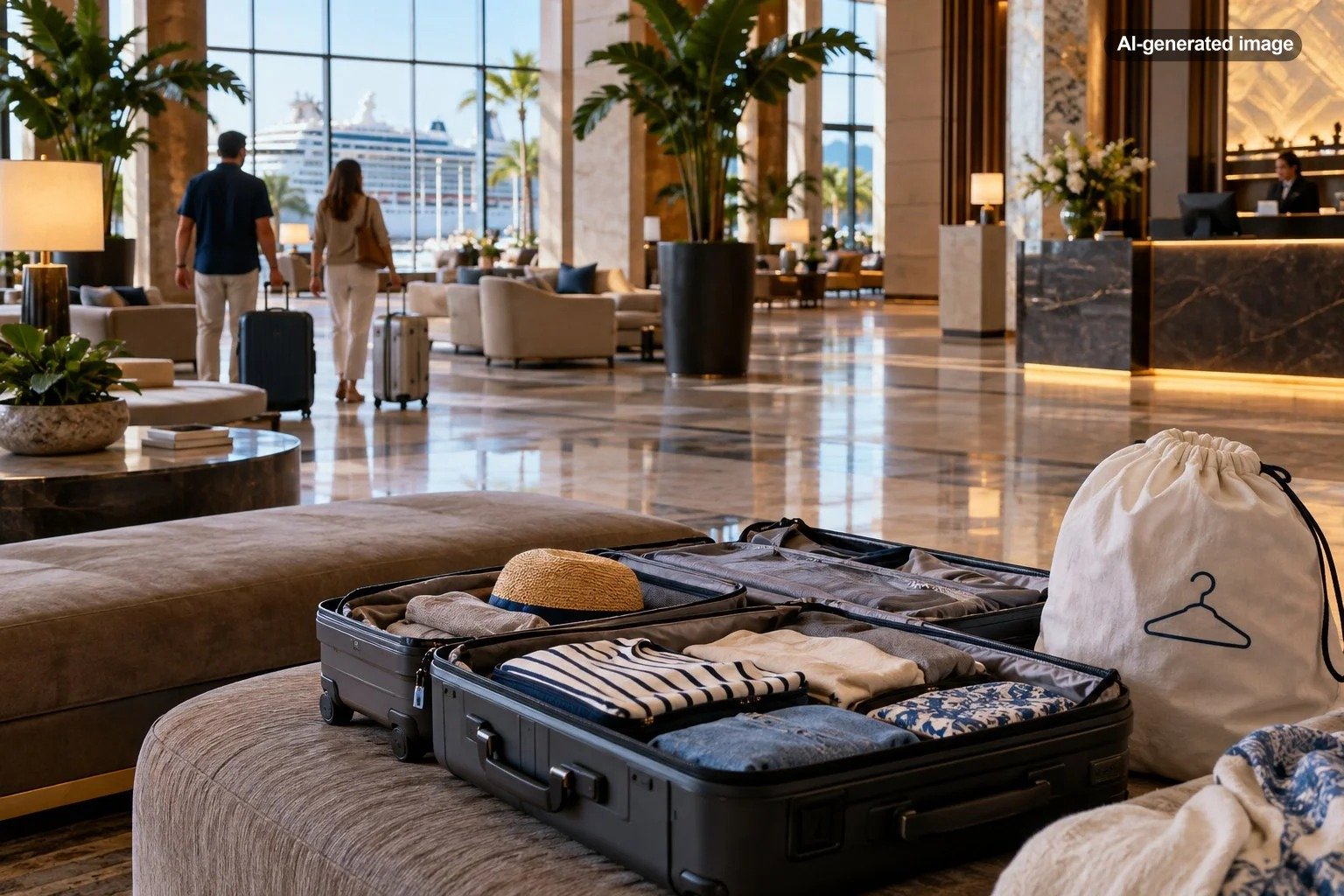
Should You Pack Enough Clothes for Every Day or Use Cruise Laundry Service?
For most cruises, you do not need to pack a completely different outfit for every day. A more practical approach is to bring enough clothing for several days, repeat versatile pieces, and use onboard laundry selectively if the sailing is long enough to justify it. This can reduce luggage without making your trip depend entirely on a ship’s laundry service.
The right balance depends on the length of the cruise, the type of clothing you expect to wear, whether your ship offers self-service machines or only staffed laundry, and how comfortable you are repeating outfits. A three- or four-night cruise may require no laundry at all, while a longer sailing can make one well-timed laundry cycle much more useful.
Quick answer: pack a rotation, not one outfit for every day
- For a short cruise, packing enough clothing for the entire trip is usually the simplest option.
- For a weeklong cruise, many travelers can reduce luggage by repeating casual items and laundering only essentials if needed.
- For longer cruises, using laundry at least once can substantially reduce the number of basics you need to bring.
- Do not assume every ship has a self-service laundromat. Laundry arrangements vary by cruise line and sometimes by ship.
- Keep specialty clothing, delicate garments, and anything you cannot easily replace out of your laundry plan unless you are comfortable with the available service.
When packing enough clothes for the whole cruise makes sense
Packing everything you expect to wear is easiest on shorter sailings. If you are taking a long weekend cruise, the space saved by planning a laundry day may be minor compared with the convenience of simply having clean clothes ready.
This approach also works well when your wardrobe is compact. Lightweight shirts, swimwear, casual dresses, shorts, and similar pieces may not consume much luggage space. Rewearing an evening layer or pair of pants can further reduce the number of complete outfits required.
Travelers with tightly scheduled port days may also prefer to avoid laundry. Even when a ship offers self-service facilities, washing clothes takes time. Staffed laundry is more convenient, but you still need to allow for collection, processing, and return rather than assuming an item will immediately be available again.
When cruise laundry becomes more useful
Laundry becomes increasingly attractive as the trip gets longer. On a 10-night, two-week, or extended voyage, packing a fresh set of every basic for every day can quickly create unnecessary bulk. Underwear, socks, exercise clothing, T-shirts, sleepwear, and children’s everyday clothes are particularly easy categories to cycle through laundry.
A practical strategy is to pack enough everyday basics to get through the first part of the sailing comfortably, then wash a load or send selected items out midway through the trip. This provides some margin if laundry is delayed while still allowing you to travel with less clothing.
Laundry can be especially useful when a cruise is only one part of a longer vacation. Someone combining several hotel nights, a cruise, and additional travel afterward may benefit more from a smaller reusable wardrobe than a passenger who is flying directly to a short sailing and returning home immediately afterward.
Self-service and staffed laundry are not the same experience
The most important point is that cruise laundry arrangements are not standardized. Some ships provide self-service washers and dryers, while others offer only laundry handled by the ship’s staff.
For example, Carnival currently describes self-service launderettes on many of its ships, while noting exceptions where valet laundry is available instead. Royal Caribbean states that it does not provide self-service laundry facilities and instead offers washing, pressing, dry cleaning, and wash-and-fold services. These details can change, so check the specific cruise line and ship before making your packing plan.
Self-service laundry gives you more control over when and how you wash ordinary clothing, but it also requires your time. Staffed service can be easier, particularly on a port-intensive itinerary, although it may not suit every garment and should be treated as an onboard service rather than an unlimited substitute for packing.
What clothing should you plan to rewear?
Not every piece of clothing needs to be treated as a one-day item. Pants, skirts, casual overshirts, sweaters, light jackets, and some evening clothing can often be worn more than once when they remain clean. Building outfits around a few compatible pieces can reduce luggage more effectively than simply eliminating random items.
Consider bringing several tops that work with the same bottoms, one or two layers for cool indoor spaces or breezy decks, and footwear that works with multiple outfits. Swimwear is another category where two or three options can be more practical than packing a separate suit for every pool or beach day.
Basics worn directly against the skin are different. Underwear, socks, workout clothing, and hot-weather shirts may need more frequent washing. Those are often the best items to include in a mid-cruise laundry plan.
Formal and specialty clothing needs a separate plan
Do not base your entire packing strategy on the assumption that every garment can go through ordinary ship laundry. Delicate fabrics, structured clothing, specialty sportswear, and garments with unusual care requirements deserve more caution.
If you plan to dress more formally on certain evenings, it can be easier to bring the required pieces clean and ready rather than expecting to wash them during the sailing. The same applies to an outfit needed for a specific event. Laundry is most useful for replenishing ordinary basics, not for creating a last-minute solution for irreplaceable clothing.
Families may benefit from laundry sooner than couples or solo travelers
Families can generate dirty clothing quickly, particularly on cruises involving pools, beaches, active shore excursions, or young children. In that situation, access to laundry can be valuable even on a moderately long sailing.
However, families also need to consider logistics. A single load may not cover everyone’s clothing, and relying on self-service machines can mean spending vacation time moving several loads through washers and dryers. Staffed laundry may reduce that burden when available, while simply packing extra children’s basics can sometimes be the easier choice.
Couples and solo travelers often have more flexibility because a compact mix-and-match wardrobe can cover several days with fewer pieces. For them, laundry may function mainly as backup rather than a planned part of the itinerary.
Do not wait until you are out of clean clothes
If your packing strategy depends on laundry, use it before you reach the point where everything essential is dirty. Leave enough clean clothing for at least the immediate period after you submit or wash a load.
This matters most when using staffed service because turnaround can vary. It also helps with self-service facilities, which may be more convenient at some times than others. A small buffer makes the plan much less fragile.
A practical packing strategy by cruise length
Three to five nights: Packing enough everyday clothing for the whole sailing is generally the simplest approach. Laundry is more useful as a backup for spills or unexpected needs.
Six to nine nights: A mix-and-match wardrobe with repeated outer pieces usually works well. Laundry can be optional, particularly for basics or activewear.
Ten nights or longer: Planning at least one laundry cycle can make lighter packing considerably easier. Focus on washable everyday items while bringing specialty clothing separately.
Cruise plus additional land travel: Laundry can become especially valuable because it lets the same wardrobe continue working after disembarkation rather than requiring separate clothing for every segment.
What travelers often overlook
Luggage space is not the only consideration. Laundry planning affects time, convenience, garment care, and how much flexibility you have when plans change. Packing extremely light may look efficient until one spill or delayed laundry return leaves you without the clothing you expected to wear.
The better goal is usually not to pack the minimum possible amount. It is to pack enough that laundry is a convenience rather than an emergency. A moderate wardrobe with one optional wash during a longer cruise gives most travelers more flexibility than either extreme.
Frequently asked questions
Do all cruise ships have self-service laundry?
No. Laundry arrangements vary by cruise line and ship. Some offer self-service facilities, while others use staffed washing, pressing, dry cleaning, or wash-and-fold services.
Should I plan to do laundry on a seven-night cruise?
Not necessarily. Many travelers can manage a week with a compact wardrobe and repeated outer pieces. Laundry is more useful if you exercise frequently, travel with children, pack very lightly, or continue traveling after the cruise.
How can I pack lighter without relying heavily on laundry?
Choose tops and bottoms that work together in several combinations, repeat outer layers, bring only a few pairs of versatile shoes, and reserve extra packing capacity for basics that genuinely need frequent changing.
Is cruise laundry useful on longer sailings?
Yes. On longer trips, washing ordinary basics once or twice can reduce the amount of clothing you need to bring. Confirm the options on your specific ship before relying on this strategy.