What to Do If the Air Conditioning in Your Hotel Room Does Not Work
If the air conditioning in your hotel room does not work, start with a few basic checks, then contact the front desk promptly rather than spending hours trying to fix the equipment yourself. Ask the hotel to investigate the problem and, if it cannot be corrected reasonably quickly, discuss practical alternatives such as another room. The exact solution will depend on the property, local conditions, room availability, and the terms of your reservation.
A broken air-conditioning system can be more than an inconvenience in very hot weather. If the room is becoming uncomfortably warm, especially for a child, older traveler, pregnant traveler, or anyone who is particularly sensitive to heat, make finding a cooler environment the priority rather than waiting indefinitely for a repair.
Quick answer: what to do when your hotel AC is not working
- Check the thermostat, power controls, doors, and windows for simple issues.
- Give the system a few minutes after changing the temperature setting.
- Contact the front desk and clearly describe what is happening.
- Ask when maintenance can inspect the system and what alternative the hotel can offer if it cannot be fixed.
- If heat is becoming a health concern, move to a cooler location and seek appropriate help rather than remaining in an overheated room.
Start with the thermostat, but do not dismantle anything
Hotel climate-control systems vary considerably. Some rooms have familiar wall thermostats, while others use centralized systems, window units, motion sensors, balcony-door sensors, or controls integrated with the hotel’s building-management system. That means a setting that appears correct may not necessarily produce immediate cooling.
First, confirm that the thermostat or air-conditioning unit is switched on and set to cooling rather than fan-only or heating mode. Set the desired temperature below the current room temperature, make sure exterior doors and windows are closed, and wait several minutes to see whether cooler air begins circulating.
If the display is blank, the unit makes an unusual noise, water is leaking, there is a burning smell, or the system repeatedly shuts itself off, stop troubleshooting and contact hotel staff. Guests generally should not remove covers, reset electrical breakers, open equipment panels, or attempt mechanical repairs. Apart from the possibility of injury, doing so can make it harder for hotel maintenance staff to diagnose the original problem.
Call the front desk sooner rather than later
If the room is not cooling after the basic checks, contact the front desk. Be specific. Instead of simply saying that the room is hot, explain what you have observed: for example, the thermostat is set to cooling but no air is coming from the vent, the unit is blowing warm air, the room temperature continues to rise, or the control panel does not respond.
It is reasonable to ask what the hotel can do next and approximately how the issue will be handled. Depending on the property and situation, staff may send maintenance, provide instructions for operating an unfamiliar system, or discuss moving you to another available room. Do not assume that every property will offer the same remedy.
If you have plans that require leaving the hotel, ask whether someone needs to be present while maintenance enters the room. You may also want to keep valuables secured according to your normal travel routine before leaving.
Ask about a different room if the problem cannot be resolved
A room change is often the most practical request when an air-conditioning problem cannot be corrected promptly, but availability can vary. When speaking with the front desk, explain that the original room is not maintaining a comfortable temperature and ask whether another room with functioning climate control is available.
Before moving all of your belongings, consider asking whether the replacement room has been checked. If practical, you can also inspect the room before fully relocating. Confirm that the climate-control system appears to operate normally and that the replacement room otherwise meets the essential requirements of your reservation.
A room move may involve tradeoffs. The available replacement could be on another floor, farther from traveling companions, or configured differently from your original room. Decide which factors matter most. In hot conditions, reliable cooling may reasonably take priority over a preferred view or hallway location, while in mild weather you may have more flexibility.
Document the problem if it remains unresolved
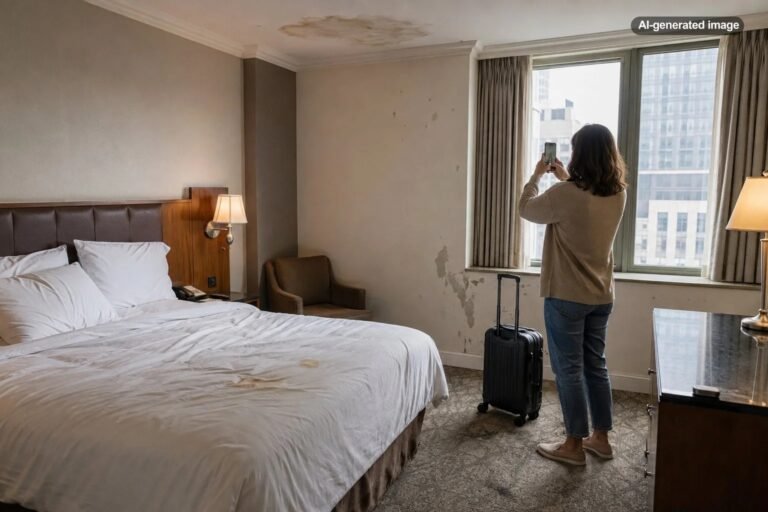
If repeated requests do not resolve the issue, keep a simple record of what happened. Note when you first reported the problem, whom you contacted if you have that information, whether maintenance visited, and what solutions were offered. A photo of a thermostat display may also be useful when it accurately illustrates the problem, although a thermostat reading alone does not establish why a room is warm.
If you later request a billing adjustment, refund, cancellation, or another resolution, written details can make the conversation clearer. However, do not assume a particular refund or compensation is automatically required. Hotel policies, reservation terms, booking channels, and applicable consumer laws can differ. The U.S. Federal Trade Commission recommends first trying to resolve consumer problems directly with the business and keeping relevant records when pursuing a complaint.
Take excessive heat seriously
If a malfunctioning air conditioner leaves the room dangerously hot, the priority changes from resolving a hotel-service problem to protecting your health. Move to an air-conditioned lobby, another cooled indoor space, or another appropriate cooler environment while the hotel addresses the room.
According to the U.S. Centers for Disease Control and Prevention, heat-related illness can include symptoms such as headache, dizziness, weakness, nausea, heavy sweating, and fainting. Heat stroke is a medical emergency and may involve confusion, loss of consciousness, seizures, or dangerously elevated body temperature. Travelers experiencing severe symptoms should seek emergency medical attention rather than waiting for a hotel maintenance visit.
Heat tolerance also varies. Weather, activity level, hydration, age, underlying health factors, and some medications can affect heat risk. A room temperature that is merely uncomfortable for one traveler may be considerably more problematic for another.
Consider your options if the hotel cannot provide a workable solution
If the air conditioning remains unusable and the hotel cannot provide another suitable room, ask the property what alternatives are available under your reservation. Depending on the circumstances, you might discuss cancellation of the remaining stay, a refund or adjustment, or assistance with another accommodation, but none of these outcomes should be assumed in advance.
If you booked through a third-party travel service, you may also need to contact that company because changes or refunds sometimes must be processed through the original booking channel. Keep any confirmation numbers, receipts, messages, and documentation available while discussing the issue.
The practical question is whether the proposed solution leaves you with acceptable lodging. If the hotel can repair the system quickly or move you to a comfortable room, changing properties may create unnecessary disruption. If it cannot provide a reasonably usable room, relocating may become the more sensible option even if changing hotels is inconvenient.
What travelers often overlook
Not every room that feels warm has a broken air conditioner. Some systems cool gradually, automatically reduce operation when a balcony door is open, respond to occupancy sensors, or are centrally controlled. Asking hotel staff how the system is designed to operate can prevent unnecessary frustration.
At the same time, do not spend an entire evening experimenting with controls if the room clearly is not cooling. Reporting the issue early gives the hotel more time to inspect it and gives you more time to consider alternatives before you are exhausted and ready to sleep.
It is also helpful to separate inconvenience from urgency. A slightly warmer room on a mild evening may allow time for routine maintenance. A steadily heating room during extreme summer conditions deserves a faster response, particularly when a traveler is showing symptoms associated with heat illness.
Frequently asked questions
Should I call maintenance or the front desk?
Start with the front desk unless the hotel has given you a dedicated maintenance number. The front desk can usually record the problem, coordinate the appropriate staff, and discuss another room or other options if necessary.
How long should I wait for the AC to cool the room?
There is no universal time because systems and room conditions vary. After confirming the controls are set correctly, allow a reasonable period for the system to respond. If it is blowing warm air, not running at all, or the room continues becoming hotter, report the problem instead of repeatedly changing the thermostat.
Can I demand a refund because the air conditioning is broken?
Refund and compensation rights depend on the reservation terms, hotel policies, booking channel, circumstances, and applicable law. Explain the problem to the hotel, give it an opportunity to propose a solution when appropriate, and document what happens if you later need to pursue a complaint.
Should I sleep in the room if it is very hot?
If the temperature is creating a health concern or you develop symptoms of heat-related illness, prioritize getting to a cooler environment. Severe symptoms such as confusion, loss of consciousness, or seizures require emergency medical attention.