How Hard Is It to Get Restaurant Reservations at an All-Inclusive Resort?
Getting restaurant reservations at an all-inclusive resort can range from effortless to surprisingly competitive. The difficulty usually depends less on the words “all-inclusive” and more on the resort’s dining system, occupancy level, restaurant size, length of stay, and how flexible you are about dinner times. Some restaurants operate without reservations, while others use advance booking for selected dinner venues.
If trying several specialty restaurants is important to your vacation, it is worth understanding the system before arrival. A resort with many restaurants can still have a few particularly desirable venues with limited seating, and the most convenient dinner times can disappear before less popular times do.
Quick answer: restaurant reservations are usually manageable if you plan early
- Not every restaurant requires a reservation. Buffets, cafes, casual restaurants, food stands, and some full-service venues may use walk-in seating.
- Specialty dinner restaurants are more likely to require booking. Smaller dining rooms and restaurants built around a longer dining experience can have fewer available seatings.
- Prime dinner times tend to be the hardest to obtain. Travelers willing to eat earlier or later generally have more flexibility.
- Short stays create more pressure. Missing one available evening matters much more on a three-night trip than on a weeklong stay.
- The resort’s actual reservation rules matter more than assumptions. Check whether dining can be booked before arrival, through an app, at check-in, through a concierge, or only after reaching the property.
Why some all-inclusive restaurants are harder to book than others
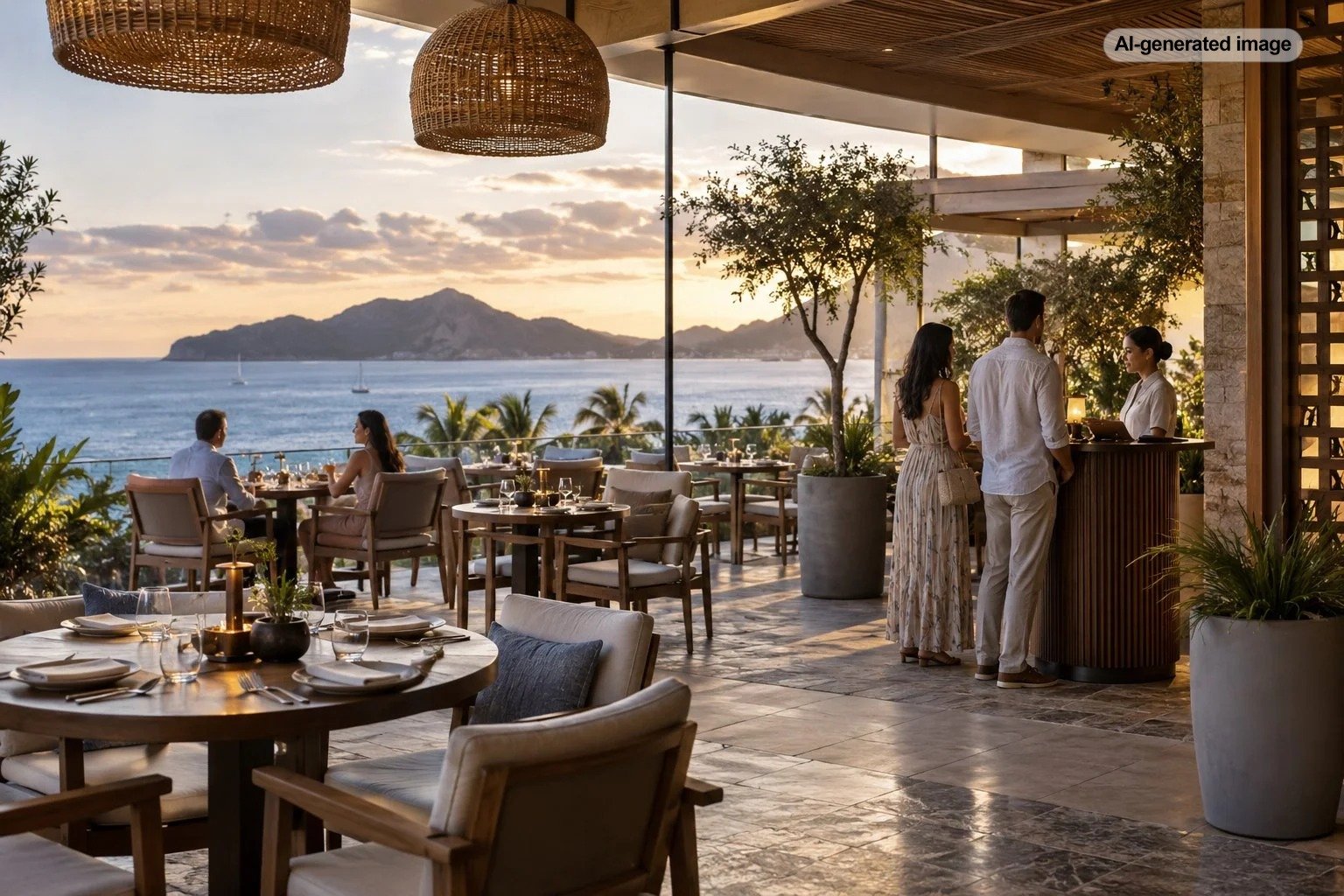
Dining capacity is not distributed evenly across a resort. A large property may have several casual options capable of serving many guests while also operating one or two smaller restaurants with significantly fewer tables. That difference can make a resort feel as though it has abundant dining overall while a specific restaurant remains difficult to reserve.
Restaurant format matters as well. A buffet can accommodate guests differently from a small tasting-menu venue, steakhouse, teppanyaki restaurant, or intimate adults-oriented dining room. Restaurants with fixed seatings, elaborate service, or limited tables naturally have less flexibility when many guests request similar times.
Demand also varies by night. Guests frequently try to schedule their preferred restaurants around excursions, entertainment, arrival day, departure day, weddings, or other plans. As a result, availability may be tight on one evening and considerably better on another.
The most popular dinner time may be the real problem
Travelers sometimes conclude that a restaurant is “fully booked” when the main problem is actually their preferred time. A restaurant might have no availability around the most convenient part of the evening but still offer an early or late seating.
This distinction matters if the restaurant itself is more important to you than the exact dinner hour. Someone determined to eat at a particular venue may be better served by accepting a less convenient time. Conversely, families with young children, travelers with evening entertainment plans, or guests managing medication schedules may reasonably value a specific dining window more than a particular restaurant.
Before booking a resort primarily for its restaurants, think about which side of that tradeoff applies to you. A long restaurant list is less useful if your vacation depends on obtaining several specific venues at nearly identical times every night.
How your length of stay changes the reservation strategy
A longer stay provides more opportunities to work around limited availability. If your first-choice restaurant is unavailable tonight, you may be able to reserve it two or three nights later without sacrificing much of your plan.
Short stays require more deliberate planning. On a three- or four-night trip, arrival and departure logistics may already reduce the number of practical dinner opportunities. An excursion or special event can narrow the schedule further. In that situation, waiting until midway through the stay to investigate reservations can leave very few alternatives.
If dining is a major reason you selected the resort, determine the booking process as early as the property allows. If dining is secondary to the beach, pool, activities, or sightseeing, there may be little reason to structure the entire trip around restaurant reservations.
Check whether reservations open before arrival
There is no universal reservation procedure across all-inclusive resorts. Depending on the property, guests may encounter app-based reservations, a concierge or dining desk, reservations handled after check-in, assistance from certain service categories, or restaurants that simply accept walk-ins.
Because these procedures can change, confirm the current system directly with the resort rather than relying entirely on an old review, forum post, or social-media comment. The most useful questions are straightforward: Which restaurants currently require reservations? When does booking open? Can reservations be made before arrival? Is there a limit on how many dinners can be reserved at once? What happens when a restaurant shows no availability?
Those answers reveal far more about the likely dining experience than simply counting the number of restaurants listed on the resort website.
What to do immediately after arriving at the resort
If reservations cannot be made before your stay, review dining availability reasonably early after arrival. Prioritize the restaurants that matter most rather than attempting to create a perfect schedule for every meal at once.
Start with the smallest or most distinctive restaurants and the nights when your schedule is least flexible. Leave casual restaurants and walk-in venues for evenings when plans may change. This creates a useful mix of structure and spontaneity rather than turning the vacation into a sequence of appointments.
It is also worth asking what the resort recommends when a desired restaurant appears unavailable. Policies differ, but availability can sometimes change as other guests adjust their plans. That does not mean you should assume a table will eventually appear; it simply means an initial lack of availability does not always require abandoning the idea immediately.
How flexible travelers can make dining much easier
Flexibility is often the simplest solution to reservation pressure. Instead of insisting on one restaurant at one time on one evening, decide which part of the plan can move.
- If the restaurant matters most, accept a different dining time.
- If the dinner time matters most, choose among several restaurants.
- If a specific evening matters most, keep both the restaurant and time flexible.
- If you have a special celebration, investigate the reservation process before the trip rather than assuming arrangements can be made after arrival.
This approach is especially useful for groups. The larger the party, the more difficult it may be to find one table matching everyone’s preferred restaurant and time. Groups should identify their highest-priority dinner plans before scattering the rest of the schedule across multiple venues.
Do not judge an all-inclusive resort only by its restaurant count
A property advertising many dining venues can look more appealing than one with a shorter list, but the number alone tells you little about how easily those restaurants fit into a real stay. Several venues may serve only certain meals, some may be casual alternatives, and others may require advance planning.
When comparing resorts, consider the dining model instead. Ask whether you prefer maximum variety, easy walk-in meals, formal specialty dinners, adults-oriented restaurants, family-friendly flexibility, or the ability to eat without planning ahead. Travelers who dislike scheduling dinner may be happier at a resort with strong walk-in choices than at one whose most appealing restaurants require frequent reservations.
Dining should also be considered alongside the rest of the stay. Room location, beach or pool preferences, activities, overall resort scale, and the type of atmosphere you want may ultimately matter more than securing every restaurant on a dining list.
What travelers often overlook about resort dining reservations
The biggest overlooked issue is that reservation difficulty is personal. A couple willing to dine at 5:30 or 9:00 may describe the process as easy, while another traveler seeking the same restaurant every night around a narrower time window may consider it frustrating.
Dietary needs can also change the planning equation. Travelers who require particular accommodations should communicate with the resort according to its current procedures rather than assuming every restaurant can handle every requirement without notice. Similarly, families should confirm any restaurant-specific age or dining policies directly with the property when those details are important to the trip.
Finally, avoid building your vacation around secondhand reports that a particular restaurant is “impossible” to reserve. Resort occupancy, operating procedures, restaurant schedules, and guest demand can vary. Current information from the property is more useful than another traveler’s experience from a different week.
FAQ about all-inclusive restaurant reservations
Should I make restaurant reservations as soon as possible?
If a specific restaurant or dinner time is important to you, generally use the earliest reservation opportunity the resort makes available. There is less urgency when you are happy with several restaurants and flexible dining times.
Are all a la carte restaurants at all-inclusive resorts reservation-only?
No. Policies vary by resort and restaurant. Some full-service restaurants accept walk-ins, while others require or encourage reservations. Confirm the current rules for the property you are considering.
Is it easier to get restaurant reservations on a longer stay?
A longer stay usually gives you more possible evenings, which makes it easier to work around unavailable dates or times. It does not guarantee access to any particular restaurant.
What if the restaurant I want is unavailable?
Check different times and different evenings, ask about the property’s current process for changed availability, and keep a good alternative in mind. Do not skip an otherwise appealing resort dinner simply because one preferred venue is unavailable.
Should restaurant reservations determine which all-inclusive resort I book?
They should matter most when specialty dining is a major part of the trip for you. If you mainly want convenient meals between beach, pool, and activity time, a resort with dependable walk-in options may suit you better than one requiring extensive dinner planning.
The practical conclusion is simple: getting restaurant reservations at an all-inclusive resort is not automatically difficult, but travelers who care about particular venues should understand the booking system early. Prioritize the meals that matter, stay flexible about timing where possible, and verify current procedures directly with the resort. That turns dining reservations from a potential source of frustration into a manageable part of planning.