Port Side vs. Starboard on a Mediterranean Cruise: Does It Matter?
For most Mediterranean cruises, choosing port instead of starboard – or starboard instead of port – will not determine whether you have a good view. These itineraries frequently change direction, enter ports at different angles, sail overnight, and visit harbors where the ship may dock on either side. The route, cabin position, and potential obstructions usually matter more than the side of the vessel.
Side selection can still make a modest difference on a predominantly northbound or southbound itinerary, a one-way voyage that follows a coastline, or a sailing with scenic arrivals you hope to watch privately. The useful question is therefore not simply which side is better, but whether a particular side offers a repeatable advantage on your exact route.
Quick answer
- Port is the left side when you face the bow, or front, of the ship.
- Starboard is the right side when you face forward.
- Neither side consistently faces the pier, coastline, sunrise, or sunset throughout a typical Mediterranean itinerary.
- Round-trip cruises usually give each side a mixture of land, sea, morning light, and evening light.
- Cabin location, noise exposure, obstruction, and distance from elevators are often more important than port versus starboard.
Port and starboard compared
| Consideration | Port side | Starboard side |
|---|---|---|
| Position | Left when facing forward | Right when facing forward |
| Docking view | May face the pier or harbor | May face the pier or harbor |
| Coastal views | Potentially better on selected route segments | Potentially better on selected route segments |
| Sun exposure | Depends on direction and time of day | Depends on direction and time of day |
| Motion | Essentially the same at a comparable location | Essentially the same at a comparable location |
Why the itinerary matters more than the label
A Mediterranean cruise rarely follows one clean compass direction from beginning to end. A Western Mediterranean itinerary might travel between Spain, France, Italy, and islands such as Mallorca or Sardinia. An Eastern Mediterranean cruise may weave among mainland Greece, the Greek islands, Turkey, Croatia, Montenegro, or Italian ports. Turns between calls continually change which side faces land.
Round-trip sailings further reduce any side advantage. If a ship travels generally east during one portion of the voyage and returns west later, the balcony that received afternoon sun early in the trip may receive morning light on the return. One-way itineraries can produce a more consistent pattern, but individual approaches, departures, and offshore routing still complicate the calculation.
Study the itinerary map as a broad guide, not a promise. The displayed line may be illustrative rather than the vessel’s precise navigational track. Weather, traffic, operational requirements, and port instructions can also affect the approach.
Can one side provide better coastline views?
Sometimes, particularly during a long passage along a recognizable coast. On a predominantly northbound segment, land lying to the west would be more visible from port, while land to the east would favor starboard. Reverse the direction and the preferred side reverses as well.
That logic is less useful when the ship crosses open water, sails far offshore, changes course after leaving port, or passes islands on both sides. Mediterranean cruises also complete much of their longer-distance sailing at night. A theoretically superior coastal orientation has limited value if the relevant stretch occurs while most passengers are asleep.
Passengers who care deeply about a particular sail-in should research that individual harbor and then remain flexible. Public decks often provide a wider field of view than a private balcony, and moving from one side of the ship to the other prevents a fixed cabin orientation from controlling the experience.
Does the ship always dock on the port side?
No. Despite the terminology, the port side is not guaranteed to face the port or pier. A ship may berth with either side alongside based on the harbor layout, assigned berth, traffic, wind, local procedures, and the captain’s operational plan.
The same ship can dock differently on separate visits to the same destination. At tender ports, where passengers transfer to shore using smaller boats, the ship remains offshore and there may be no conventional pier-side view at all. Tender operations can also use a side selected for conditions on that particular day.
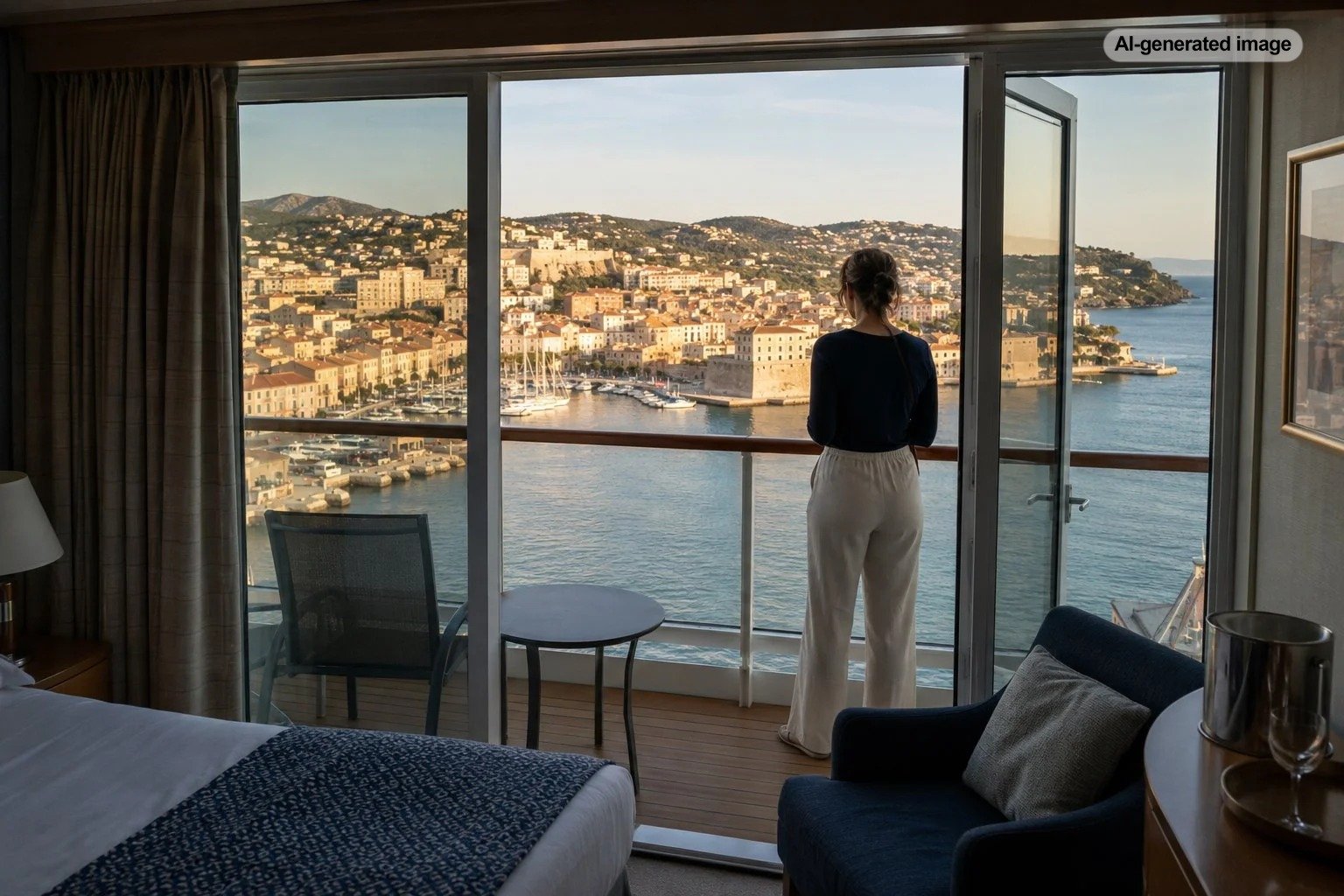
A pier-facing cabin may offer lively views of harbor activity and a closer look at the destination. The tradeoff is possible operational noise, service vehicles, terminal structures, and reduced privacy. A sea-facing cabin may be quieter and visually cleaner, but it can miss the immediate harbor scene. Neither is universally preferable.
Which side is better for sunrise or sunset?
It depends on the ship’s heading. The sun rises in the east and sets in the west, while the vessel’s orientation changes throughout the cruise. On a sustained northbound segment, starboard generally faces east and port faces west, favoring morning light on starboard and evening light on port. On a sustained southbound segment, the relationship reverses.
Eastbound and westbound travel makes the sun more forward or aft than directly to one side. Seasonal changes, surrounding terrain, islands, and course adjustments further affect what is visible. Travelers who want consistently shaded balconies should be equally cautious: the cooler side during breakfast may become the sunnier side later in the day.
Cabin factors that usually matter more
Position between the bow and stern
Travelers sensitive to motion often favor a cabin closer to the ship’s center rather than far forward or aft. A lower deck near midship may feel more stable than a high cabin near either end. Port and starboard cabins in equivalent positions should experience broadly similar movement.
Obstructions and deck configuration
Check the ship-specific deck plan for lifeboats, structural supports, equipment, promenade areas, or unusual balcony shapes. An unobstructed cabin on the supposedly less desirable side is often a better choice than an obstructed cabin on the theoretically scenic side.
Noise above, below, and across the hall
Look for theaters, nightclubs, pool decks, restaurants, fitness facilities, crew areas, and service spaces. Connecting doors and proximity to elevators can also affect noise. Cabins surrounded by other cabins are generally easier to evaluate than those beside busy public venues.
Daily convenience
A long walk to dining rooms or activity areas may matter more over a week than a possible harbor view lasting several minutes. Families may value access to children’s facilities, while travelers with mobility considerations may prioritize elevators and shorter routes. Couples seeking quiet may willingly accept a longer walk for a less trafficked corridor.
How to choose for your specific Mediterranean cruise
- Identify whether the sailing is round-trip or one-way. Side selection is more likely to matter on a linear itinerary with a sustained direction.
- Trace the major daytime sailing segments. Focus on passages likely to occur while you are awake rather than assuming every line on the route map represents visible scenery.
- Mark the views you care about most. Decide whether coastline, harbor activity, sunrise, sunset, or shade has priority.
- Inspect the exact deck plan. Compare like-for-like cabins for obstruction, public spaces, and location aboard the ship.
- Choose the stronger cabin if the evidence is mixed. A favorable layout and quiet location offer benefits throughout the voyage.
Affiliate disclosure: HotelInfo.com may earn a commission when you book or purchase through links on this page. This does not affect the price you pay. Learn more.
When comparing route maps, sailing direction, ships, and departure ports, travelers can explore cruise options. Fares, taxes, gratuities, onboard charges, itineraries, and cancellation conditions vary, so review the current terms for the specific sailing before booking.
What travelers often overlook
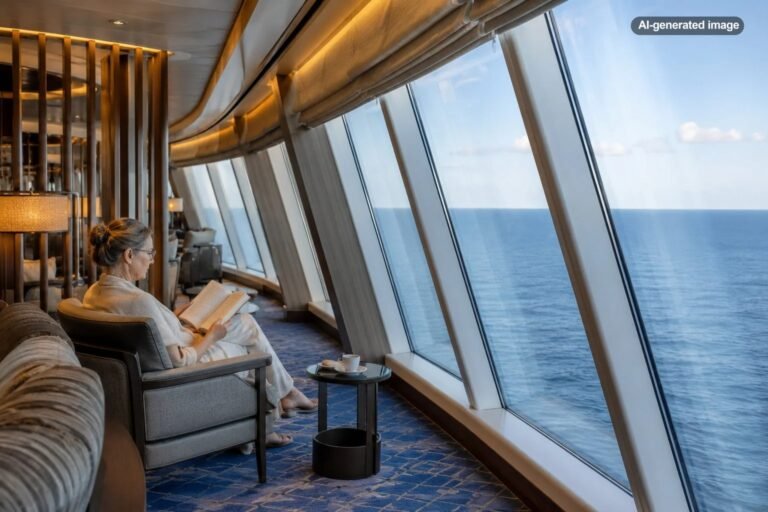
The best scenic moments are not necessarily visible from a cabin. Arrival may occur before dawn, departure may overlap with dinner, or the most interesting landmark may appear on the opposite side. Open decks and observation lounges give passengers the freedom to change position.
It is also worth checking whether two adjacent balcony categories differ in size, shelter, or furniture. A recessed balcony may receive less direct sun, while an exposed balcony can feel brighter or windier. These physical differences may be more noticeable than the compass orientation.
Finally, avoid paying a substantial premium solely for port or starboard unless the cruise line or a reliable route-specific source identifies a meaningful advantage. On a varied Mediterranean itinerary, the better value is usually the cabin with the preferred deck, layout, and location.
Frequently asked questions
Is port or starboard better for a balcony cabin?
Neither is automatically better. Select the side only after comparing the route, then give greater weight to obstruction, deck position, noise, and balcony design.
Which side faces land on a Mediterranean cruise?
The answer changes as the ship turns and travels between islands and coastal ports. A route with several countries and directions will not keep land on one side consistently.
Will the cruise line tell me which side faces the pier?
Do not treat a predicted berthing side as guaranteed. Port assignments and operational conditions can change, sometimes even for repeated visits to the same harbor.
Is one side better for seasickness?
No meaningful difference exists between comparable port and starboard cabins. A lower, more central cabin is generally the more relevant location choice for a traveler concerned about motion.
What should I choose if both sides cost the same?
Choose the cabin with the cleaner view, quieter surroundings, and more convenient position. If those factors are identical, use the route direction and preferred morning or evening light as a tiebreaker.