Where to Stay in Porto for Riverside Dining Without Climbing Hills Back to Your Hotel
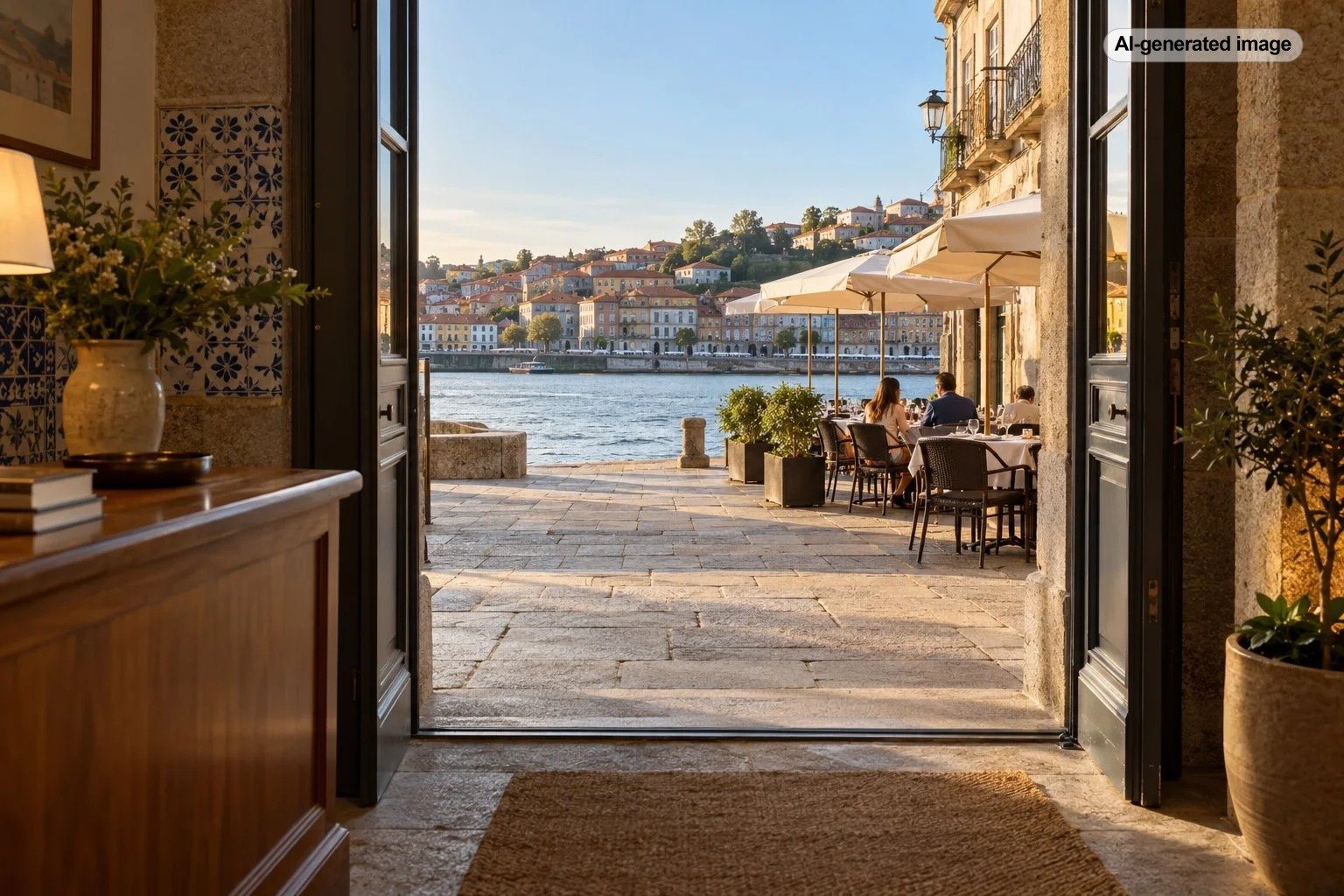
Porto’s riverside restaurants are among the city’s most appealing places to spend an evening. The Douro reflects the lights of Vila Nova de Gaia, outdoor tables line the historic waterfront, and dinner can extend comfortably into a second glass of wine. The difficulty often comes afterward: returning to a hotel that looked conveniently close on a map but sits several steep streets above the river.
For travelers who want riverside dining without an uphill walk afterward, the lower Ribeira district is generally the strongest place to stay. Hotels around Praca da Ribeira, Cais da Ribeira, and the lower portion of Rua do Infante D. Henrique offer especially convenient access to the waterfront. Certain properties along Gaia’s riverfront also work well, provided dinner is on the same side of the Douro.
Quick Answer: Where to Stay for Easy Riverside Evenings
- Closest to the restaurant terraces: Pestana Vintage Porto and Ribeira do Porto Hotel, both on Praca da Ribeira.
- Apartment-style accommodation: Porto River Aparthotel, near the waterfront on Rua dos Canastreiros.
- Small historic hotel: Ribeira Douro Hotel, among Ribeira’s lower streets.
- Contemporary boutique accommodation: The Editory House Ribeira Porto, a short walk from the lower waterfront.
- Design-focused alternatives: Memoria Porto and 1872 River House, near the lower historic center.
- Dining on the Gaia waterfront: The Rebello, across the Douro from Porto’s historic center.
Planning snapshot: The most useful base is lower Ribeira. The principal tradeoff is convenient dining access versus the crowds, nighttime activity, and higher ground required for many daytime attractions. A two- to four-night stay provides a reasonable starting point for exploring central Porto, with taxis or other transportation available for more demanding climbs.
Why the Exact Street Matters More Than the Neighborhood Name
Porto is built across steep terrain descending toward the Douro. Its riverside setting creates wonderful viewpoints, but it also means that two hotels only a few hundred yards apart horizontally can require very different walks.
A property advertised as being in the historic center might be near Sao Bento station, Clerigos, or Rua das Flores. These locations can be excellent for sightseeing, yet the return from a waterfront dinner may involve a sustained climb or a combination of sloping streets and steps.
The lower Ribeira waterfront is different. Staying near Praca da Ribeira allows travelers to spend the evening among riverside restaurants and return to their accommodation without climbing back toward the upper city. This does not mean every nearby street is level. Cobblestones, short inclines, uneven sidewalks, and occasional steps remain common throughout the historic district.
For travelers especially concerned about hills, the correct question is not simply whether a hotel is near Ribeira. It is whether the hotel’s actual entrance is close to the waterfront elevation and whether the route back from the intended restaurant avoids stairs.
Pestana Vintage Porto: For Dinner Directly on Praca da Ribeira
Area: Praca da Ribeira. Positioning: Luxury.
Pestana Vintage Porto occupies a collection of historic buildings directly on Praca da Ribeira, one of the city’s defining waterfront gathering places. Its location makes it particularly suitable for travelers who want to finish dinner, walk across the square, and return to their room without making the climb into central Porto.
The hotel combines historic architecture with an established luxury-hotel experience. Its river-facing position places the Douro, the Dom Luis I Bridge, and the opposite bank of Gaia at the center of the stay. The property also lists dining and bar facilities, offering another option for evenings when guests prefer not to venture far.
Best for: Couples, first-time visitors prioritizing the waterfront, and travelers prepared to spend more for a particularly convenient dining location.
Tradeoff: Praca da Ribeira is a popular public gathering place. Guests seeking quiet evenings should consider room position and ask about potential street noise. The central location does not eliminate uphill walking when visiting landmarks above the river.
Ribeira do Porto Hotel: A Practical Address on the Main Square
Area: Praca da Ribeira. Positioning: Moderate.
Ribeira do Porto Hotel stands at Praca da Ribeira 5, placing it exceptionally close to the restaurants and outdoor seating that define the lower waterfront. The property occupies a renovated historic building and offers a smaller-scale alternative to the area’s more elaborate luxury accommodations.
Its appeal is straightforward: the location does much of the work. Travelers can arrange an evening around the square and neighboring riverside streets without needing to plan transportation back to an upper-city hotel.
Best for: Travelers who place greater value on location than an extensive collection of hotel facilities, including couples and visitors on shorter stays.
Tradeoff: A central historic building offers a different experience from a large modern hotel. Confirm elevator access, the precise room configuration, and potential noise exposure before booking, especially when mobility or uninterrupted sleep is important.
Porto River Aparthotel: More Room to Settle In Beside the Douro
Area: Rua dos Canastreiros, lower Ribeira. Positioning: Upscale apartment-style accommodation.
Porto River Aparthotel occupies an attractive location close to the river and the lower approach to the Dom Luis I Bridge. Its apartments combine the architectural character of historic Ribeira with practical features suited to travelers who want more independence than a conventional hotel room typically provides.
The property describes apartments overlooking either the Douro or the surrounding historic streets. Listed apartment facilities include kitchenettes, although travelers should confirm the layout and equipment of the specific category they select.
For dining-oriented stays, the location is particularly helpful. Restaurants around Cais da Ribeira and the lower bridge approach can be reached without returning to the elevated commercial streets.
Best for: Couples on longer city breaks, travelers who appreciate apartment-style space, and visitors who may want breakfast or a light meal in their accommodation.
Tradeoff: Apartment categories vary, and river views are not universal. Historic street conditions also mean that a short walk is not necessarily a completely smooth or step-free one.
Ribeira Douro Hotel: A Smaller Retreat Among Historic Riverside Streets
Area: Rua da Reboleira. Positioning: Moderate to upscale boutique.
Ribeira Douro Hotel occupies two rehabilitated buildings in the historic Ribeira area, close to the Douro. Its location appeals to visitors who prefer the atmosphere of narrow old-town streets rather than a hotel directly facing the busiest waterfront square.
The property’s room selection includes accommodations overlooking the picturesque surrounding streets, while some rooms have Douro views. The hotel also lists breakfast service, luggage storage, and a 24-hour concierge.
Its position in lower Ribeira makes it a sensible option for returning from waterfront restaurants, although the exact route should be checked if avoiding every incline is essential.
Best for: Couples and independent travelers who want a quieter-feeling historic setting while remaining close to riverside dining.
Tradeoff: The surrounding streets are narrow and historic rather than uniformly level. Guests should examine the entrance route and confirm accessibility arrangements before assuming that the location guarantees an effortless return.
The Editory House Ribeira Porto: Contemporary Comfort Near the Waterfront
Area: Rua Infante Dom Henrique. Positioning: Upscale boutique.
The Editory House Ribeira Porto occupies the former Balleteatro building in the historic Ribeira district. Its contemporary interiors offer a different atmosphere from the more traditional accommodations found among the oldest waterfront buildings.
The hotel operates close to the Douro and provides a useful base for exploring the lower historic center. Its location on Rua Infante Dom Henrique places the riverside dining district within easy reach, although the walking route may include modest changes in elevation.
The property also has an informal bar serving snacks and drinks, which may appeal to guests who prefer a relaxed option within their hotel.
Best for: Travelers who prefer modern hotel design, couples wanting to explore both Ribeira and the adjoining historic streets, and visitors seeking a balance between dining access and city sightseeing.
Tradeoff: This is not the same as having a hotel entrance directly on Praca da Ribeira. Check the pedestrian route from the restaurants you expect to visit, particularly if even a short uphill section would be inconvenient.
Memoria Porto: Historic Character Between the River and the City
Area: Rua de Sao Francisco. Positioning: Upscale boutique.
Memoria Porto, part of FLH Hotels, occupies a restored historic building close to the Douro in Porto’s old center. The property emphasizes the building’s architectural character, thoughtful contemporary interiors, and its relationship with the surrounding city.
With a relatively small number of rooms, it is an attractive option for travelers who want an intimate hotel rather than a large property. Its position near the river and the streets around Sao Francisco provides convenient access to dining in lower Ribeira.
Best for: Design-conscious couples, travelers interested in historic architecture, and guests who want proximity to both riverside restaurants and the lower historic center.
Tradeoff: Proximity to the water should not be confused with a completely flat route from every restaurant. The surrounding streets connect several elevations, so it is worth checking the final approach on a map with terrain information.
1872 River House: An Intimate Stay Facing the Waterfront
Area: Rua do Infante D. Henrique. Positioning: Upscale boutique guesthouse.
1872 River House is a small accommodation overlooking the Douro, offering a more personal-scale stay than Porto’s larger waterfront hotels. Its historic riverside setting suits visitors who want to spend their evenings close to the water and return to an intimate property rather than a busy hotel complex.
The accommodation has eight rooms, with views varying between the river and city streets. That distinction matters when choosing a room: staying near the river does not automatically mean waking up to a river-facing window.
Best for: Couples, slower-paced city breaks, and travelers who appreciate small historic properties with distinctive settings.
Tradeoff: Limited room inventory and the characteristics of an older building make advance confirmation worthwhile. Ask about entrance steps, room access, and check-in arrangements if arriving late or traveling with heavy luggage.
The Rebello: A Gaia Riverside Alternative for Dining Across the River
Area: Vila Nova de Gaia waterfront. Positioning: Luxury.
Not every comfortable riverside evening needs to take place on Porto’s north bank. Vila Nova de Gaia, directly opposite Ribeira, has its own waterfront restaurants, wine-related attractions, and views toward Porto’s historic skyline.
The Rebello occupies repurposed historic warehouse buildings along the Gaia riverbank. The property offers suites, restaurants, a rooftop bar, and wellness facilities, making it a strong option for travelers who want to combine dining and accommodation within the same waterfront area.
This distinction is important. If dinner is on the Gaia side, choosing a Gaia waterfront property can eliminate the need to cross the Douro afterward. However, Gaia also rises steeply away from the river, and The Rebello should not be confused with hotels located higher up near Jardim do Morro.
Best for: Couples looking for an upscale, design-led stay, travelers focused on Gaia’s dining and wine culture, and visitors who appreciate a view toward Porto rather than from Porto.
Tradeoff: Travelers who intend to dine primarily on Praca da Ribeira may find a north-bank hotel more convenient. Crossing between Porto and Gaia is manageable for many visitors, but it adds distance and requires careful consideration of bridge access and elevation.
Comparing Porto’s Most Convenient Riverside Hotel Areas
| Area | Dining advantage | Main consideration |
|---|---|---|
| Praca da Ribeira | Immediate access to waterfront restaurants | Busy evenings and potential noise |
| Lower Ribeira lanes | Short walks to varied dining options | Uneven paving and occasional slopes |
| Lower Rua do Infante D. Henrique | Convenient for Ribeira and historic-center restaurants | Entrance elevation varies by property |
| Gaia riverfront | Easy access to Gaia-side dining | Cross-river trips add distance |
| Upper historic center | Convenient for shopping and sightseeing | Uphill return from riverside restaurants |
How to Check Whether Your Walk Home Really Avoids Hills
Hotel descriptions frequently mention proximity to the Douro, but distance alone does not reveal the physical effort required. Before booking, use the following checks to evaluate the route.
- Locate the actual entrance: A property may face the river while its usable entrance is on another street or level.
- Check terrain and street-level imagery: Inspect the route between the hotel entrance and the waterfront restaurants rather than relying only on a straight-line distance.
- Look for stairs: Older pedestrian shortcuts can include steps even when the route seems short.
- Review elevator access: Historic buildings may have elevators, but the entrance, lobby, and individual rooms may still involve steps.
- Ask about luggage drop-off: Vehicle access to narrow historic streets can differ from pedestrian access, especially around busy public spaces.
- Confirm noise exposure: A convenient waterfront position may involve restaurants, outdoor activity, and late-evening pedestrian traffic.
Travelers with limited mobility should contact their preferred property directly about a continuous step-free route from the street to the room. An accessible room designation does not independently guarantee an easy route through the surrounding neighborhood.
Should You Stay Above Ribeira and Use Transportation After Dinner?
Staying higher in Porto is not necessarily a mistake. The streets around Avenida dos Aliados, Sao Bento, and Clerigos offer excellent access to sightseeing, shopping, and other dining districts. For travelers whose evenings are spread across the city, these areas may be more practical overall.
One workable approach is to stay in the upper city and take a taxi or suitable ride service after riverside dinner. This avoids requiring every restaurant choice to be within walking distance of the hotel. However, vehicles cannot always reach the exact waterfront location where a traveler is standing, and local access restrictions or busy streets can affect pickup arrangements.
Another consideration is Porto’s funicular, which connects the riverside area near the lower level of the Dom Luis I Bridge with the higher Batalha area. It can help with certain journeys, but travelers should verify current operations and should not assume it will be running after a late dinner or deliver them close to their hotel.
For a trip organized primarily around long evenings beside the Douro, staying low in Ribeira generally removes more logistical uncertainty than depending on transportation each night.
What Travelers Often Overlook About Riverside Hotels
A river view does not guarantee an easy waterfront return
Some of Porto’s most dramatic river views come from hotels positioned well above the Douro. These settings can be wonderful for photography and relaxation, but they may require substantial climbing after dinner. Travelers prioritizing ease of walking should distinguish waterfront elevation from elevated panoramic views.
The Dom Luis I Bridge has two different levels
The bridge’s upper and lower crossings connect different parts of Porto and Gaia. For riverside dining, the lower crossing is usually the more relevant route. Choosing a hotel near the upper bridge approach simply because the map shows the same landmark can lead to an unexpectedly demanding walk.
Restaurant proximity is not the same as restaurant quality
Ribeira offers atmospheric settings and convenient outdoor tables, but the most visible waterfront restaurants are not automatically the strongest choices for every meal. Travelers should look at current menus, reservation policies, and recent independent feedback. Staying in lower Ribeira also makes it possible to explore adjoining streets for alternatives.
You may still want transportation during the day
Even a nearly level walk home from dinner does not eliminate Porto’s hills. Reaching Sao Bento, Clerigos, and other higher landmarks can involve significant climbing. A sensible itinerary may combine walking along the waterfront with taxis, public transportation, or planned downhill sightseeing routes.
Frequently Asked Questions
What is the best area to stay in Porto to avoid hills after dinner?
Lower Ribeira, particularly around Praca da Ribeira and the immediate waterfront, is generally the best option for travelers planning to dine beside the Douro. The area reduces the need for an uphill return, though individual streets and building entrances still require checking.
Is Porto’s Ribeira district flat?
No. The riverside promenade and main waterfront square provide relatively level walking compared with the steep streets above them, but Ribeira as a whole includes slopes, uneven cobblestones, and stairs. A hotel in Ribeira is not automatically accessible by a completely level route.
Is it better to stay in Ribeira or Vila Nova de Gaia?
Choose Ribeira if most of your evening dining will be on Porto’s historic waterfront. Choose Gaia’s lower riverfront if you prefer its restaurants, wine-related attractions, and views toward Porto. The most comfortable choice is usually the bank where you expect to spend the majority of your evenings.
Can you walk back from Gaia to Ribeira after dinner?
Yes, the lower level of the Dom Luis I Bridge provides a pedestrian connection between the two banks. However, walking distance depends on the precise restaurant and hotel locations. Bridge access and surrounding street conditions should be checked before assuming the return journey will be short or entirely level.
Do you need a rental car when staying in Ribeira?
Usually not for a city stay centered on the historic waterfront. Ribeira is suited to exploring on foot, supplemented by public transportation or taxis when necessary. A rental car becomes more useful for travelers planning independent excursions outside Porto, but parking and access to narrow historic streets can make it inconvenient for a riverside-focused visit.
Choosing the Right Hotel for Your Evenings in Porto
For travelers whose main objective is to enjoy dinner overlooking the Douro and return to their hotel without a steep climb, start with Pestana Vintage Porto or Ribeira do Porto Hotel on Praca da Ribeira. Porto River Aparthotel provides a useful apartment-style alternative, while Ribeira Douro Hotel, The Editory House Ribeira Porto, Memoria Porto, and 1872 River House offer different forms of boutique accommodation close to the lower historic center.
The Rebello is worth considering when the preferred evening setting is Gaia’s riverfront rather than Porto’s north bank. The right choice depends less on which property advertises the grandest river panorama and more on which entrance makes the journey from your preferred dinner table genuinely convenient.
In Porto, an excellent hotel location is often measured vertically as well as horizontally. A little attention to street elevation before booking can make riverside evenings considerably more relaxing.
Sources & Further Reading
- Pestana Hotel Group: Pestana Vintage Porto
- Visit Porto: Ribeira do Porto Hotel
- Ribeira Douro Hotel: Official Website
- Porto River Aparthotel: Official Website
- The Editory House Ribeira Porto: Official Website
- FLH Hotels: Memoria Porto
- Olivia Singular Houses: 1872 River House
- The Rebello: Official Website