Do Cruise Cabins at the Very Front of a Ship Have More Wind on the Balcony?
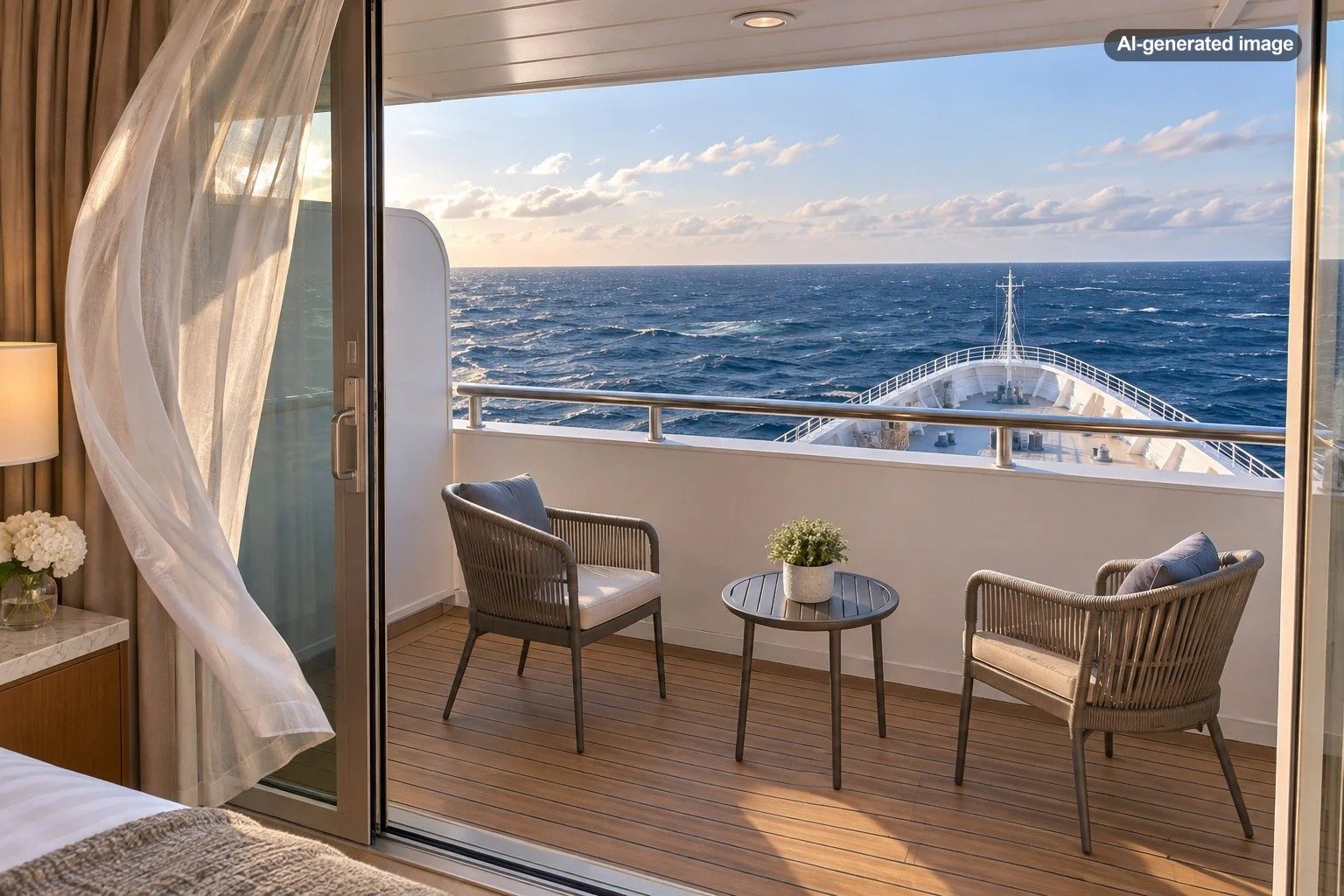
Yes, cruise cabins with balconies facing directly forward at the very front of a ship are generally more exposed to wind than balconies along the sides or at the stern. When a cruise ship is moving, the forward-facing surfaces encounter airflow created by the ship’s movement as well as the prevailing wind. On an exposed balcony, that combination can make standing near the railing surprisingly breezy, even when the weather otherwise feels pleasant.
However, not every cabin described as forward has a forward-facing balcony. Some cabins are simply located near the bow but have conventional side-facing balconies. Others have recessed outdoor spaces, high protective railings, or structural features that substantially change how much wind reaches passengers. Understanding these differences is essential when deciding whether a front-of-ship cabin is worth booking.
Quick Answer: How Windy Are Front Cruise Ship Balconies?
- Directly forward-facing balconies: Usually have the greatest exposure to airflow when the ship is traveling, particularly near the outer railing.
- Forward cabins with side-facing balconies: May experience conditions closer to other side balconies, depending on the ship’s shape and surrounding structures.
- Recessed or protected balconies: Can provide a noticeably calmer seating area even when the forward railing is windy.
- Weather and sailing conditions: Wind direction, vessel speed, sea conditions, and the route can change the experience considerably.
- Balcony access: Certain forward-facing balconies may have weather-related limitations, making the exact cabin’s restrictions worth checking before booking.
Why Does the Front of a Cruise Ship Feel Windier?
The principal reason is apparent wind: the airflow experienced by someone aboard a moving vessel. Even when the atmosphere is relatively calm, a ship traveling forward creates airflow relative to its passengers.
For example, a ship traveling at 20 knots through otherwise calm air experiences approximately 20 knots of apparent wind directly from ahead. If a 15-knot headwind is also blowing against the ship, the apparent wind could reach approximately 35 knots. Conversely, wind blowing in the same direction as the ship can reduce the apparent wind. These simplified examples assume aligned wind directions; actual conditions depend on the combined speed and direction of both movements.
The bow encounters that airflow first. On a forward-facing balcony, passengers may be exposed to more direct airflow than someone sitting on a balcony shielded by the ship’s side structure.
Yet airflow does not move uniformly around a large cruise ship. It can accelerate around corners, pass over railings, or create sheltered pockets behind structural barriers. That is why two balconies at the front of the same ship can feel different.
Forward-Facing Versus Forward-Located Balconies
One of the most important distinctions is whether the balcony actually points toward the bow.
Directly Forward-Facing Balconies
These balconies overlook the direction of travel. Their principal attraction is the unobstructed perspective ahead of the vessel, which can be especially appealing when approaching a harbor, sailing through scenic waterways, or watching the coastline come into view.
The tradeoff is direct exposure to airflow. Wind can be particularly noticeable while standing at the railing. Depending on the balcony’s design, passengers sitting farther back may experience greater protection.
Some forward-facing balconies have tall metal barriers rather than conventional glass railings. These can provide useful wind protection for seated passengers, but they may also obstruct the view unless someone stands up.
Forward Cabins With Side-Facing Balconies
A cabin labeled forward on a deck plan may simply occupy the front section of the ship while its balcony faces port or starboard.
These balconies generally behave more like other side-facing balconies. Their wind exposure depends on the wind direction, the ship’s orientation, and the location of structural features.
For travelers concerned about wind, this distinction may matter more than whether the cabin is categorized as forward or midship.
Does Balcony Height or Design Make a Difference?
Yes. Balcony construction can have a significant influence on how comfortable the outdoor space feels.
Recessed balconies sit partially within the ship’s structure and may benefit from protection along the sides and above. Depending on their orientation, they can offer a more sheltered seating environment.
Open balconies with relatively little surrounding structure may provide expansive views but allow more airflow across the seating area.
Solid-front balconies can deflect wind away from seated passengers, particularly when the railing is high enough to create a sheltered space behind it. The disadvantage is that the barrier may interrupt the ocean view from a chair or lounger.
Higher-deck balconies may be more exposed in some designs, particularly where surrounding structures offer little protection. However, deck height alone cannot reliably predict wind conditions. A protected upper balcony can be more comfortable than an exposed lower one.
Before selecting a specific stateroom, examine the deck plan and available photographs of that exact cabin category. Balcony depth, the presence of overhead coverage, railing construction, and the surrounding hull shape are all useful clues.
Can You Use a Forward-Facing Balcony While the Ship Is Sailing?
Often, yes, but access depends on the vessel, the cabin design, and conditions at sea.
Some cruise ships have forward-facing balconies designed for routine passenger use while underway. Others impose restrictions during particular weather conditions or when operational circumstances make outdoor access unsuitable.
On certain ships, specific forward-facing staterooms may carry restrictions noted in their cabin descriptions. These should not be confused with a universal rule applying to every forward balcony across every cruise line.
Wind can also make balcony doors more difficult to operate. Passengers should follow the cruise line’s instructions, avoid forcing doors against strong wind pressure, and respect any crew directions or temporary restrictions.
If private outdoor access throughout the sailing is a major reason for booking a balcony cabin, ask the cruise line whether the precise stateroom has any access limitations at sea.
Are Forward Balconies Less Comfortable on Sea Days?
They can be, particularly when the itinerary includes extended periods of open-water cruising.
On a port-intensive itinerary, passengers may spend substantial time ashore while the ship remains stationary. A forward-facing balcony could be particularly enjoyable during arrivals and departures, when the vessel is moving relatively slowly.
On an itinerary with several consecutive sea days, balcony comfort while the ship maintains cruising speed becomes more important. A passenger hoping to spend hours reading outdoors may prefer a sheltered side-facing balcony rather than a highly exposed position overlooking the bow.
Temperature also matters. A brisk breeze might feel refreshing in warm weather but uncomfortable during a cool-weather voyage. Passengers planning cruises through northern waters or during cooler seasons should consider the combined effect of wind and air temperature.
Rain and sea spray can further reduce comfort, especially when winds are strong. These conditions vary with the route, weather, and the ship’s design rather than simply with the cabin number.
Forward, Midship, or Aft: Which Balcony Location Is Better?
Each location offers a different balance of views, outdoor comfort, and movement.
| Location | Wind considerations | Best fit |
|---|---|---|
| Forward-facing bow | Potentially strong direct airflow while underway | Travelers prioritizing views ahead of the ship |
| Forward side-facing | Varies with wind direction and ship structure | Travelers wanting a forward location with a more conventional balcony |
| Midship side-facing | Exposure varies by side and local shielding | Travelers balancing outdoor comfort and reduced ship motion |
| Aft-facing stern | Often sheltered from direct head-on airflow, but not always calm | Travelers who enjoy wake views and outdoor relaxation |
Aft-facing balconies often appeal to travelers who enjoy watching the wake and prefer a less directly exposed orientation. However, following winds, crosswinds, ship geometry, and localized airflow can still make an aft balcony breezy.
Midship side-facing balconies are often a practical compromise, especially for passengers who also want to minimize the sensation of pitching in rough seas. They are not guaranteed to be wind-free.
What About Motion, Noise, and Sea Spray at the Front?
Wind is not the only consideration when booking a cabin close to the bow.
Ship movement: Forward cabins can experience more noticeable vertical motion as the bow rises and falls in waves. Passengers sensitive to seasickness may prefer a lower, more centrally located cabin.
Sea spray: Depending on weather, sea state, and balcony position, forward-facing outdoor spaces may occasionally be affected by spray or moisture.
Operational noise: Some forward cabins may experience sounds associated with bow thrusters during maneuvering or with waves striking the hull. The extent depends on the particular ship and cabin location.
Views and privacy: A forward-facing balcony can offer exceptional scenery ahead of the vessel. However, visibility from nearby decks or the bridge area can vary, and a large balcony does not necessarily provide complete privacy.
These considerations become especially important when comparing a premium forward suite with a conventional balcony cabin elsewhere on the ship.
How to Choose the Right Forward Balcony Before Booking
Rather than relying entirely on a cabin category name, evaluate the individual stateroom.
- Confirm the orientation: Determine whether the balcony faces directly forward or toward one side.
- Inspect the railing: A solid barrier may offer wind protection but limit views while seated.
- Look at balcony depth: A deeper outdoor space may offer more opportunities to sit away from direct airflow.
- Check the deck above: Overhead coverage can affect exposure to rain, sun, and surrounding airflow.
- Ask about restrictions: Confirm whether access can be restricted while underway or during certain conditions.
- Consider sea days: Longer open-water passages increase the importance of balcony comfort while cruising.
- Evaluate motion sensitivity: A beautiful forward view may not compensate for additional pitching if movement frequently causes discomfort.
When comparing available ships or sailing dates, travelers can compare available sailings with Expedia Cruises. However, balcony design and access restrictions should still be verified directly against the cruise line’s current deck plan and cabin information before making a reservation.
What Travelers Often Overlook About Windy Cruise Balconies
The most easily overlooked detail is the difference between standing at the railing and sitting behind it. A balcony that feels exceptionally windy at its outer edge may have a relatively comfortable recessed seating area. Conversely, an expansive balcony with minimal protection may look appealing in photographs but offer limited shelter during sustained cruising.
Another overlooked detail is that a larger balcony does not guarantee more usable outdoor time. Travelers should evaluate how the space functions, not just its stated area.
Finally, cabin categories are not standardized across cruise lines. Two accommodations both described as forward-facing suites may have entirely different balcony configurations. Photographs and deck plans from the actual ship are more useful than generalized descriptions.
Frequently Asked Questions
Is the very front of a cruise ship always the windiest place?
No. The bow is commonly exposed to substantial apparent wind while traveling, but localized airflow around the ship can produce strong gusts elsewhere. Wind direction, speed, and ship design all influence exposure.
Are forward-facing balconies usable when the ship is docked?
They are often more comfortable when the ship is stationary because the airflow associated with forward movement is absent. Natural wind can still be significant, and any ship-specific access rules continue to apply.
Can a windscreen make a forward balcony comfortable?
Built-in barriers, recessed seating areas, and solid railings can reduce direct wind exposure. Passengers should not attach unauthorized screens, coverings, or other modifications to balcony structures.
Is an aft-facing balcony less windy than a forward-facing balcony?
Often, particularly when the ship is moving into a headwind. Nevertheless, aft balconies can experience their own wind patterns, and protection varies between ships.
Should passengers prone to seasickness avoid forward balconies?
Passengers who are particularly sensitive to motion may prefer a cabin closer to the center of the vessel and on a lower passenger deck, where pitching is generally less pronounced. Wind exposure and motion sensitivity should be considered separately.
Is a Forward-Facing Cruise Balcony Worth It?
A forward-facing balcony can be an excellent choice for travelers who value panoramic views, scenic arrivals, and the distinctive experience of looking directly toward the ship’s destination. It is particularly appealing when the balcony has enough structural protection to make sitting outdoors comfortable.
For passengers who primarily want a quiet place to read, enjoy breakfast, or spend extended periods outdoors on sea days, a sheltered side-facing or aft-facing balcony may be more practical.
The best decision comes down to the actual balcony design, expected sailing conditions, and how the outdoor space will be used. A forward-facing balcony is not automatically too windy to enjoy, but its exposure deserves closer examination before booking.
Sources & Further Reading
- Celebrity Cruises: Forward vs. Aft of a Ship – Cruise-line guidance on forward staterooms, exposure to wind and sea spray, cabin configurations, and vessel movement.
- Cruise Critic: Aft Cabin vs. Forward – Practical comparison of forward and aft cabin locations, balcony exposure, ship motion, and weather-related considerations.