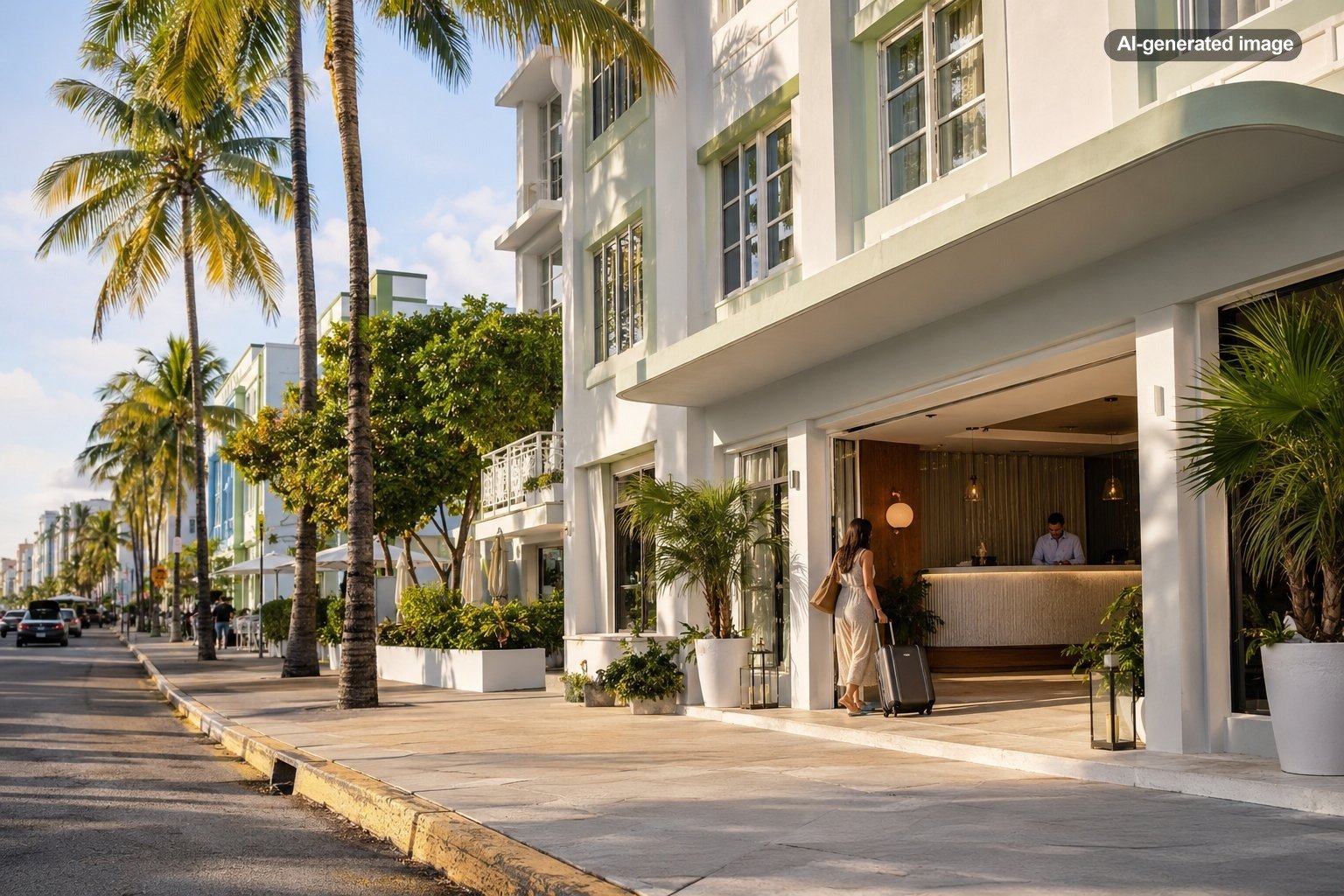
What to Know Before Visiting Miami Beach
Before visiting Miami Beach, understand that it is not simply one continuous resort district. South Beach, Mid Beach, and North Beach offer noticeably different experiences, and choosing the right area can shape everything from nightlife access to beach atmosphere, transportation needs, and lodging costs.
The most practical approach is to choose your neighborhood first, decide whether you truly need a car, and plan around South Florida’s heat, humidity, rain, and tropical weather. Miami Beach can suit a short urban beach break, a nightlife-focused weekend, or a quieter coastal stay, but those trips require different planning.
Miami Beach planning snapshot
- Best fit: Travelers who want an Atlantic beach combined with restaurants, architecture, nightlife, and access to greater Miami.
- Suggested stay: Three to five days works well for combining beach time with dining, cultural stops, and limited mainland exploration.
- Primary arrival point: Miami International Airport is the main airport for most visitors.
- Transportation: A car is often unnecessary for a stay centered on Miami Beach, but it may be useful for extensive mainland or regional trips.
- Budget position: Miami Beach generally rewards advance planning, especially when choosing beachfront lodging, parking a vehicle, or visiting during a major event.
Choose between South Beach, Mid Beach, and North Beach carefully
Miami Beach is a barrier island with several distinct districts. The official destination organization identifies South Beach, Mid Beach, and North Beach as separate neighborhoods, and the differences are meaningful rather than merely geographic.
South Beach is best for activity and walkability
South Beach extends from South Pointe Park north to 23rd Street. It contains many of the area’s most recognizable Art Deco buildings, busy restaurant corridors, nightlife venues, shopping, and heavily visited beachfront blocks.
This is often the strongest choice for a first visit when the priority is walking to dining, architecture, entertainment, and the ocean. The tradeoff is a more energetic atmosphere, heavier visitor traffic, and potentially more street noise in nightlife-oriented sections. Travelers seeking early nights should look carefully at the hotel’s exact block rather than relying only on a South Beach address.
Mid Beach balances resort scale with a calmer setting
Mid Beach generally covers the central portion of the island between South Beach and North Beach. It includes larger beachfront properties, restaurants, lounges, and stretches that feel less concentrated than the busiest parts of South Beach.
It can suit couples, families, and travelers who want a substantial beachfront hotel without placing nightlife outside the door. The practical tradeoff is that walking to central South Beach may not be convenient from every property, so visitors may use a trolley, bus, rideshare, taxi, or bicycle more often.
North Beach offers a more residential pace
North Beach has a lower-key atmosphere and a stronger neighborhood feel. It may appeal to travelers who prioritize quieter beach time, parks, casual dining, or a longer stay over immediate access to major South Beach nightlife.
The tradeoff is distance. Visitors planning frequent trips to South Beach, downtown Miami, Wynwood, or Brickell should account for additional transportation time rather than assuming every part of Miami Beach is close to every attraction.
You may not need a rental car
A rental car can be more burden than advantage for a trip focused primarily on the beach and nearby districts. Miami Beach offers walking, biking, taxis, rideshare services, county buses, and a city trolley system. The City of Miami Beach describes the trolley as one of several local transportation options, while Miami-Dade County operates Metrobus service to and from Miami Beach.
Travelers staying in a walkable part of South Beach may use a vehicle very little. Mid Beach and North Beach visitors can also manage without one when their plans remain near the island and they are comfortable combining local transit with occasional rideshares.
A car becomes more useful when the itinerary includes repeated trips across greater Miami, suburban destinations, the Florida Keys, the Everglades, or other places where public transportation is less direct. Even then, compare the convenience of a rental with hotel parking charges, public garage costs, traffic, and the time required to retrieve the vehicle.
Parking requires more planning than many visitors expect
Miami Beach operates municipal garages, surface lots, metered spaces, and residential permit zones. Availability and rates vary by location, and parking rules can change, so drivers should consult official city information rather than relying on an old travel post or an unverified map.
Before booking lodging, ask whether parking is on site, off site, valet only, or subject to separate charges. Do not assume that a hotel address near the beach includes complimentary parking. Travelers using vacation rentals should also confirm whether the property provides a legal parking arrangement rather than expecting unrestricted curb parking.
When using street spaces or municipal facilities, verify posted restrictions and payment instructions at the location. Residential zones, loading areas, event restrictions, and enforcement periods can differ from one block to another.
Heat, humidity, rain, and tropical weather affect daily plans
Miami Beach has warm, humid conditions for much of the year. During hotter periods, the combination of temperature and humidity can make midday walking feel more demanding than the forecast temperature alone suggests. Schedule long walks, outdoor architecture tours, and exercise earlier in the morning or later in the day when possible.
Brief but intense rain and thunderstorms can also interrupt outdoor plans. A flexible schedule is more useful than assuming an entire day will be lost because rain appears in the forecast. Lightweight rain protection, quick-drying clothing, sunscreen, water, and footwear that can handle wet sidewalks are practical additions.
Atlantic hurricane season officially runs from June 1 through November 30. That does not mean a storm will affect any particular trip, but travelers visiting during this period should monitor official forecasts, understand their hotel’s cancellation or interruption policies, and avoid depending solely on a general weather app when tropical conditions develop.
Beach conditions can change from day to day
The Atlantic can appear calm while still producing currents or surf conditions that require caution. Check posted flags, follow lifeguard instructions, and review the National Weather Service beach forecast when planning a swimming day. Conditions may differ from one day to the next and should not be judged solely from the view outside a hotel window.
Sun exposure is another practical concern. Even travelers who normally tolerate warm weather can underestimate the combined effect of direct sun, humidity, reflective sand, and time in the water. Use shade breaks, drink water regularly, and reapply appropriate sun protection according to its directions.
Public beaches are not interchangeable with private hotel pool areas or managed beach concessions. Confirm what your lodging actually provides before assuming that chairs, umbrellas, towels, food service, or reserved beachfront space are included.
Miami Beach and the City of Miami are not the same place
Miami Beach is a separate municipality on a barrier island, while many major attractions and neighborhoods are on the mainland. Downtown Miami, Brickell, Wynwood, Little Havana, Coconut Grove, Coral Gables, and the Design District require crossing Biscayne Bay or traveling farther inland.
This distinction matters when estimating travel time. A restaurant marketed as being in Miami may not be near a Miami Beach hotel. Likewise, a mainland hotel may offer convenient access to downtown businesses but not the walk-to-the-beach experience a traveler expects.
Group activities by area whenever possible. A day combining downtown Miami, Brickell, and a nearby museum is generally more efficient than making several separate trips between the mainland and the beach.
Dining and nightlife vary by block
Miami Beach has everything from casual counters to destination restaurants and late-night venues, but location and atmosphere matter. Ocean Drive offers a highly visible visitor experience, while areas around Washington Avenue, Collins Avenue, Lincoln Road, Sunset Harbour, Mid Beach, and North Beach provide different combinations of dining and nightlife.
Review menus and policies before sitting down, especially in heavily visited areas. Check whether service charges, minimums, event pricing, or reservation conditions apply. These details vary by establishment and should not be assumed from a restaurant’s appearance or location.
Travelers who want nightlife should consider walking distance when choosing lodging. Those who want quiet should look beyond marketing phrases such as central or close to everything and examine the relationship between the hotel, late-night venues, traffic corridors, and neighboring buildings.
Major events can change the character of a visit
Festivals, conventions, holiday weekends, sports events, and cultural programs can affect lodging availability, restaurant demand, traffic, beach crowds, and transportation. Before finalizing dates, check official city and destination calendars.
An event may be the reason to visit, but it can also change the atmosphere for travelers who are not attending. A normally manageable route may become congested, and a quieter district may receive overflow traffic. Booking refundable arrangements can provide useful flexibility when plans are made far in advance.
What travelers often overlook
- The exact hotel block matters: Two properties in the same neighborhood can offer very different levels of noise, walkability, and beach convenience.
- A beachfront address does not define every inclusion: Verify beach service, pool access, parking, breakfast, destination charges, and guest policies directly with the property.
- Mainland excursions consume time: Crossing between Miami Beach and mainland districts repeatedly can make a short trip feel rushed.
- Weather requires flexibility: Heat, thunderstorms, surf conditions, and tropical systems can all change outdoor plans.
- South Beach is not the only option: Mid Beach and North Beach may better suit travelers seeking a calmer stay or a more residential setting.
Frequently asked questions
How many days are enough for Miami Beach?
Three days can cover beach time, South Beach, and a limited mainland outing. Four or five days allow a more relaxed pace, additional neighborhoods, and flexibility for weather.
Is Miami Beach easy to visit without a car?
Yes, particularly when staying in a walkable district and focusing on the island. Local trolleys, buses, rideshares, taxis, bicycles, and walking can cover many common trips. A car is more useful for extensive regional exploration.
Which part of Miami Beach is best for a first visit?
South Beach is often the most convenient for travelers who want famous architecture, dining, nightlife, and beach access within a compact area. Mid Beach may be preferable for a calmer resort stay, while North Beach suits visitors prioritizing a quieter neighborhood atmosphere.
When should travelers monitor tropical weather?
Travelers should monitor official forecasts throughout the June 1 to November 30 Atlantic hurricane season, especially as the departure date approaches. Hotel, airline, and insurance terms should be reviewed before a storm is forecast, not after plans are disrupted.
Can Miami Beach and mainland Miami be explored in one trip?
Yes, but the itinerary should group mainland destinations geographically. Allow additional time for causeway traffic and avoid scheduling too many cross-bay trips in a single day.