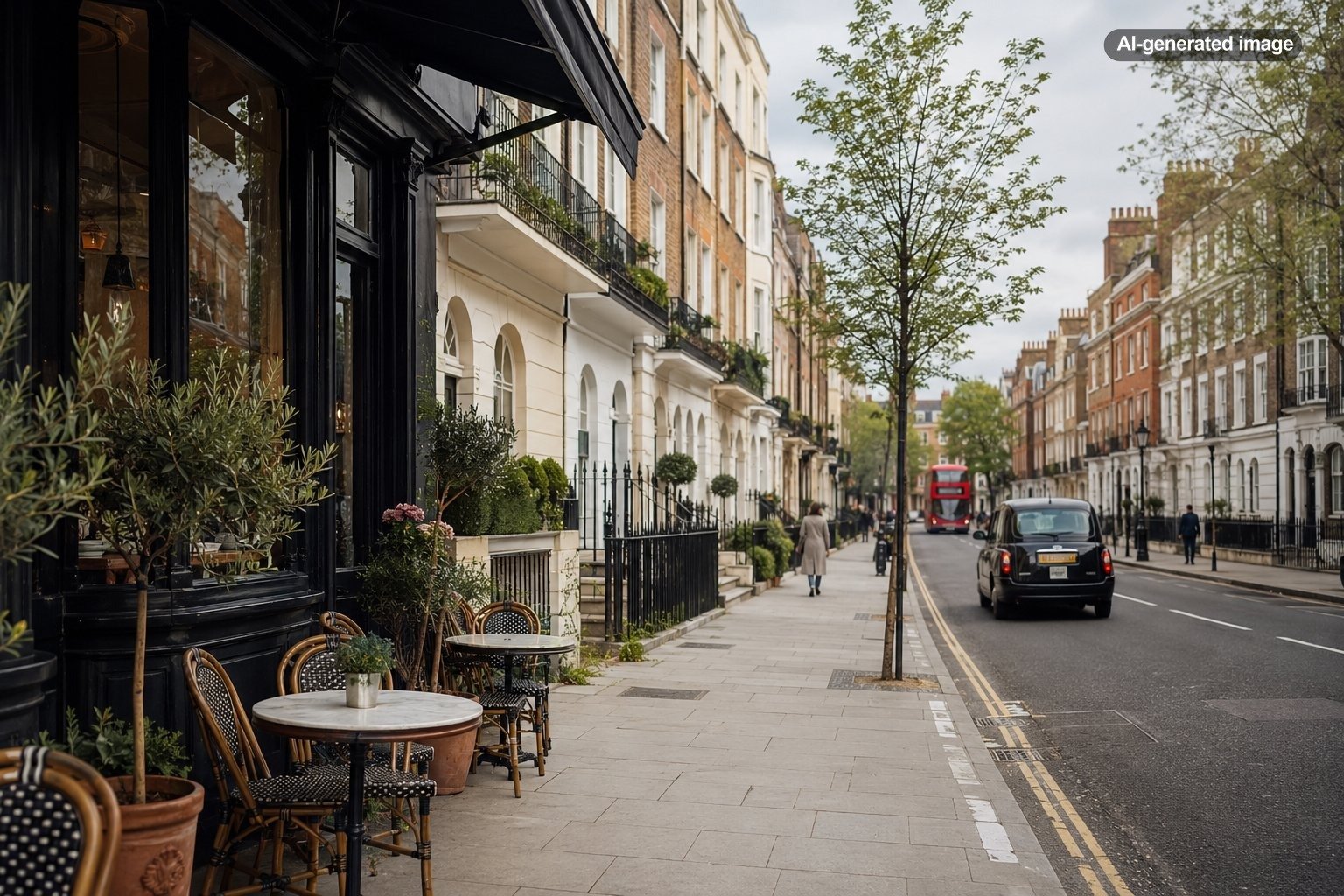
What to Know Before Visiting London
London is easier to enjoy when you treat it as a collection of distinct districts rather than a compact checklist of landmarks. The city is extensive, transportation decisions matter, and popular attractions often require more advance planning than first-time visitors expect. Before traveling, confirm your UK entry permission, choose accommodations based on the places you expect to visit, and build an itinerary that leaves room for transit, meals, and unplanned discoveries.
A successful first visit does not require seeing every famous sight. It requires understanding how the city works: contactless transportation, long distances between some attractions, variable weather, early reservation pressure, and the difference between staying centrally and staying conveniently for your particular plans.
London planning snapshot
- Best fit: Travelers interested in history, theater, museums, architecture, shopping, dining, and neighborhood exploration.
- Suggested duration: Four to six days provides a practical introduction without forcing every day into a rigid sightseeing schedule.
- Transportation: Most visitors can rely on the Underground, Elizabeth line, buses, walking, and occasional taxis rather than renting a car.
- Primary arrival points: Heathrow, Gatwick, Stansted, Luton, and London City airports serve different routes and require different transfer plans.
- Budget position: London can be expensive, particularly for centrally located hotels, major attractions, theater, and full-service dining, but many museums, parks, markets, and neighborhood walks are free.
Quick answer: the essentials to arrange before departure
- Check whether your nationality requires a visa or an Electronic Travel Authorisation, commonly called an ETA.
- Compare airport transfers before choosing a flight solely by airfare, because London’s airports are not interchangeable.
- Choose a hotel near a useful Underground or rail connection, not merely one described as being in central London.
- Reserve priority attractions, popular restaurants, and theater performances in advance when they are central to your trip.
- Plan by neighborhood so you spend more time exploring and less time crossing the city.
Confirm your passport, visa, and ETA requirements
Entry requirements depend on nationality, passport type, immigration status, and the purpose and length of the visit. Many travelers who do not need a conventional visitor visa must obtain an ETA before traveling to the United Kingdom. An ETA is permission to travel, not a guarantee of admission at the border.
Use the UK government’s official checker rather than relying on an airline summary, an old article, or advice written for another nationality. Apply through the official government service, and make sure the passport used for the application is the passport you will carry. Every traveler who needs an ETA must have one, including children.
Travelers with connecting flights should also check the rules carefully. Whether permission is required can depend on nationality and whether the passenger passes through UK border control. Requirements can change, so complete this step before paying for nonrefundable arrangements.
London’s airports are not equally convenient
A flight labeled for London may arrive a considerable distance from the neighborhood where you are staying. Heathrow has several rail and Underground options, including the Elizabeth line, Heathrow Express, and the Piccadilly line. The best choice depends on your destination, luggage, budget, and tolerance for transfers.
Gatwick commonly connects with central London by rail, while Stansted and Luton require their own airport-specific transfer plans. London City Airport is smaller and geographically closer to parts of east and central London, but it serves a more limited collection of routes. Before booking, compare the complete journey from the terminal to your hotel rather than comparing flight times alone.
Changing between London airports can consume a substantial portion of a travel day. A connection involving two different airports should include time for immigration, baggage collection, security, traffic or rail disruption, and the possibility of terminal delays. Treat an airport change as a transfer across a major city, not as a routine terminal connection.
Choose where to stay according to your itinerary
The phrase central London covers a wide area. A hotel may have a prestigious postal address yet be inconvenient for the places you plan to visit. Look at the nearest stations, the lines serving them, whether the route requires frequent changes, and how far the hotel entrance is from the platform in practical walking terms.
Westminster and the South Bank work well for travelers prioritizing major landmarks. Covent Garden, Soho, and the West End place theater, restaurants, and nightlife close at hand, although the busiest streets can feel crowded and room rates often reflect the location. South Kensington is useful for major museums and offers a more residential atmosphere in some sections. The City of London can be convenient for historic sites and business travel but may feel quieter outside the workweek. Shoreditch and parts of east London appeal to travelers focused on contemporary dining, nightlife, and creative neighborhoods, with a different atmosphere from ceremonial central London.
Families may value a larger room, elevator access, laundry facilities, or a calmer street more than immediate proximity to nightlife. Theater-focused visitors benefit from staying within an easy trip of the West End. Travelers taking early trains should consider access to the relevant mainline station. There is no universally best district; the strongest choice minimizes friction for your particular schedule.
Contactless payment makes transportation simpler
Transport for London allows passengers to use eligible contactless bank cards, mobile payment devices, or Oyster cards on its services. Pay-as-you-go travel is generally the simplest arrangement for a typical visitor. Use the same card or device throughout the day so the system can calculate applicable fare caps correctly.
Each passenger needs a separate payment method. Two adults cannot repeatedly tap the same contactless card for the same journey. Also remember to touch in and out where required, particularly on rail and Underground journeys. Buses require a touch when boarding but not when leaving.
A Visitor Oyster card can be useful for someone whose bank card does not support contactless payments or charges unfavorable international transaction fees. Contactless payment may be more convenient for many other travelers because it eliminates the need to preload credit. Before departure, check card fees, mobile-wallet compatibility, and whether your bank might block repeated small foreign transactions.
Plan days by area rather than by attraction ranking
London’s map can make nearby-looking attractions seem easier to combine than they are. Grouping stops geographically creates a calmer and more realistic itinerary. Westminster Abbey, the Houses of Parliament, St. James’s Park, and Buckingham Palace can form one cluster. The Tower of London, Tower Bridge, and the eastern side of the City form another. The British Museum, Covent Garden, Soho, and the West End can often be combined according to opening times and evening plans.
Avoid scheduling an early attraction in one part of London, lunch across town, an afternoon museum somewhere else, and a theater performance back in the West End. The transportation network is extensive, but station walks, platform changes, crowds, and service disruptions add time. One major reserved attraction plus flexible nearby activities is often a better daily framework than a tightly timed sequence of admissions.
Reserve the experiences you would be disappointed to miss
Some museums have free general admission, but free does not always mean that no advance booking is useful. Special exhibitions, timed-entry attractions, palace visits, studio tours, observation experiences, and popular restaurants can fill well ahead of a visit. Theater availability varies by production and date.
Make a distinction between priorities and optional stops. Reserve the two or three experiences that define the trip, then preserve flexibility around them. This approach protects the most important plans without making the entire vacation dependent on a minute-by-minute schedule.
Check official attraction websites shortly before visiting. Opening days, entry procedures, security rules, special closures, and temporary exhibitions can change. Public ceremonies and royal-site access may also be affected by official events.
Expect extensive walking even when using public transit
Visitors often underestimate how much walking a London trip involves. Large stations can contain lengthy corridors, interchanges may require stairs or escalators, and the walk from a station entrance to an attraction can be longer than expected. Comfortable, already-tested shoes are more valuable than footwear chosen only for appearance.
Travelers with mobility concerns should not assume every station is step-free from street to platform. Check the specific route and station accessibility information before leaving the hotel. A bus may provide a more comfortable and visually interesting alternative to the Underground, although road traffic can make journey times less predictable.
Build short recovery periods into the day. A cafe break, park bench, hotel pause, or unhurried lunch can make an evening performance far more enjoyable than continuous sightseeing from breakfast onward.
Weather requires flexible layers, not a single forecast-based outfit
London weather can change within the same day. Pack light layers, a compact rain-resistant outer layer, and shoes suitable for wet pavement. Even during warmer periods, evenings, shaded streets, air-conditioned interiors, and rain can feel cooler than expected.
A small umbrella can be useful, but a hooded jacket is often easier in crowds. During colder months, daylight is limited and outdoor plans are best scheduled earlier. In warmer weather, not every hotel room or historic building will provide the same level of air conditioning that some international visitors expect. Verify climate-control details directly with a hotel when this is important to your comfort.
Cards are widely useful, but small payment details matter
Contactless card and mobile payments are common throughout London. Notify your bank of international travel if required, understand foreign transaction fees, and carry a backup card separately from your primary wallet. A modest amount of cash can still be helpful, but carrying large amounts is generally unnecessary for ordinary visitor expenses.
When a payment terminal offers to convert a purchase into your home currency, review the exchange-rate implications before accepting. Your card issuer’s conversion may be preferable to merchant-provided currency conversion, depending on the account.
Service charges are frequently added to restaurant bills, especially for table service. Read the bill before adding an additional tip. Practices differ among restaurants, pubs, cafes, taxis, hotels, and guided services, so avoid applying one tipping rule to every transaction.
What travelers often overlook
Restaurant and pub customs differ
Some pubs require ordering at the bar, while others provide table service. Kitchens may stop serving before the venue closes. Popular dining rooms can require reservations, but casual markets and counter-service restaurants make it possible to keep many meals flexible.
Street direction requires attention
Traffic moves on the left, and unfamiliar road layouts can confuse visitors. Use marked crossings, follow pedestrian signals, and look in the direction indicated by pavement markings where provided. Cycle lanes may run between the sidewalk and the roadway, so check for bicycles before stepping across them.
Distances between neighborhoods add up
A hotel that saves money but adds two long transfers each day may not provide the value it initially appears to offer. Compare total travel time, not only the nightly rate or straight-line distance from a landmark.
Sunday and holiday patterns can affect plans
Transportation continues to operate, but engineering work, altered schedules, and different business hours can affect a carefully planned route. Check official journey planners on the day of travel rather than assuming the weekday pattern applies.
Frequently asked questions
How many days are enough for a first visit to London?
Four full days can cover several major sights and neighborhoods at a moderate pace. Five or six days allows more time for museums, markets, theater, residential districts, and schedule changes. A shorter visit is possible, but it benefits from focusing on one or two areas per day.
Do visitors need a rental car in London?
Most visitors staying within London do not need one. Parking, congestion, unfamiliar road rules, and strong public transportation usually make a car more burdensome than helpful. A rental car may become useful for a separate trip outside the city, ideally collected when leaving London rather than kept during the urban portion.
Is an Oyster card required?
No. Many travelers use an eligible contactless bank card or mobile device. Oyster remains useful for travelers who prefer a prepaid option or cannot use contactless payment without substantial bank fees.
Should London attractions be booked in advance?
Book the experiences that are essential to your trip, especially timed-entry attractions, limited-access sites, high-demand exhibitions, and popular performances. Leave less important museums, walks, parks, and neighborhoods flexible.
What is the biggest mistake first-time visitors make?
Trying to cover too much geographic ground in one day is among the most common planning errors. London rewards focused exploration. A shorter list organized by neighborhood usually produces a more satisfying visit than rushing between distant landmarks.