What Time You Must Be Back on the Ship to Avoid Getting Left at the Dock
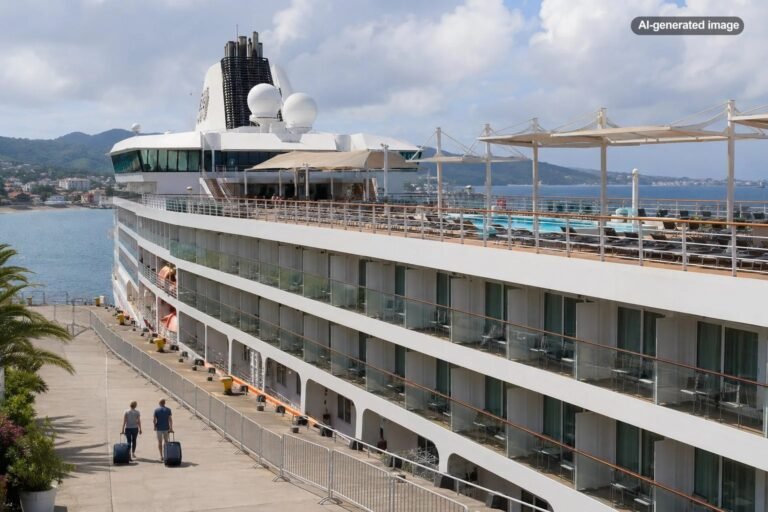
You must be back on the ship by the official all-aboard time, not merely before the published departure time. The exact deadline varies by cruise line, ship, and port, but it is commonly set 30 to 60 minutes before departure. Norwegian Cruise Line, for example, currently instructs guests to be back onboard no later than one hour before the scheduled departure time in ports of call.
The safest approach is to treat the posted all-aboard time as an absolute deadline and plan to reach the pier at least 60 minutes earlier. That extra margin protects you from traffic, delayed tours, long shuttle lines, tender queues, confusing port layouts, and clocks that do not match ship time.
Quick answer
- Check the official all-aboard time provided by the ship for that specific port day.
- Do not assume the deadline is the same as the itinerary’s departure time.
- Aim to be at the pier at least 60 minutes before all aboard when exploring independently.
- Keep your phone or watch set to ship time if instructed by the cruise line.
- Allow more time at tender ports, large terminals, and destinations with unreliable traffic.
All-aboard time and departure time are not the same
The departure time shown on an itinerary indicates when the ship is scheduled to leave the port. The all-aboard time is the earlier deadline by which passengers must already be back on the vessel.
A ship scheduled to depart at 6:00 p.m. might have an all-aboard time of 5:00 or 5:30 p.m. The crew may need time to verify that passengers have returned, retrieve gangways, complete port procedures, and prepare the vessel to sail.
Never calculate your return around the departure time alone. The only deadline that matters to a passenger ashore is the all-aboard time announced for that day.
Where to find the correct all-aboard time
The most reliable time is the one communicated onboard for the specific port call. It may appear in the cruise line’s app, the daily program, a notice in your cabin, a screen near the gangway, or an announcement before guests disembark.
Crew members may also display the time on a sign at the gangway. Photographing that sign before leaving the ship is a practical safeguard because it gives you a record of the deadline and the ship’s current time convention.
Do not rely exclusively on a third-party itinerary, an old email, a travel forum, or a screenshot taken before the cruise. Port schedules can change because of weather, congestion, operational needs, or itinerary adjustments.
Plan to reach the pier before the deadline
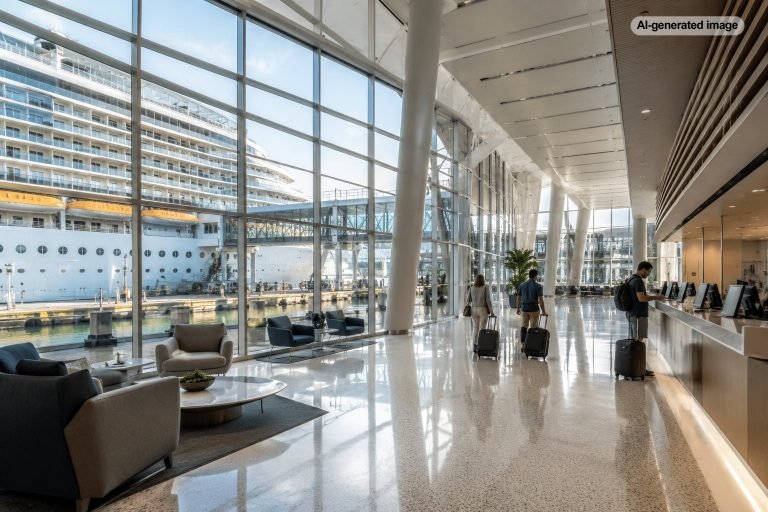
Returning to the port at the exact all-aboard time leaves no margin for error. You may still need to walk through a terminal, pass security, wait for a shuttle, clear a port checkpoint, or join a tender line before physically stepping onto the ship.
For independent sightseeing, a sensible default is to reach the immediate port area at least one hour before all aboard. More cautious travelers may prefer 90 minutes, especially in an unfamiliar destination.
When a larger buffer is appropriate
- Heavy traffic: Cities with congestion, limited roads, or frequent construction can turn a short drive into a long delay.
- Distant attractions: A beach, historic site, or scenic area far from the port creates more opportunities for transportation problems.
- Tender ports: When the ship anchors offshore, you must return by tender boat. The final tender may leave well before the ship itself departs.
- Unpredictable transportation: Infrequent trains, ferries, rideshares, taxis, and local buses require additional contingency time.
- Large port complexes: Some terminals require shuttles or lengthy walks between the port entrance and the gangway.
Ship time may differ from local time
One of the most consequential mistakes is assuming that the time displayed in the destination is the time the ship is using. Some cruise itineraries adjust clocks to match local time, while others continue operating on a different ship time.
Follow the instructions given by the captain and crew. If passengers are told to remain on ship time, manually set a watch or phone accordingly. Automatic phone settings can change when the device connects to a local cellular network, creating an unnoticed difference of an hour or more.
Before walking away from the pier, compare the time on your device with the official gangway display. Travelers carrying separate phones should verify that every member of the group is using the same clock.
Independent tours require conservative timing
Independent excursions can offer flexibility, smaller groups, or access to activities not sold through the cruise line. The tradeoff is that you are generally responsible for returning on time.
When booking an outside tour, provide the operator with the all-aboard time rather than the scheduled departure time. Ask when the tour expects to return to the pier, how it handles traffic delays, and whether the transportation is shared with guests from other ships.
A tour that returns 20 minutes before all aboard may look workable on paper but leaves little protection if a vehicle breaks down or a road becomes congested. For a distant excursion, favor an itinerary designed to return at least 90 minutes before the deadline.
Ship-sponsored excursions offer added protection, not unlimited flexibility
Cruise-line excursions are often promoted with the assurance that the ship will coordinate with the tour operator if the group is delayed. Carnival states that one benefit of its organized shore excursions is that the ship will remain in port until participating guests are back onboard. Norwegian similarly states that the ship will wait if one of its organized tours is late.
That protection applies to delays affecting the official excursion, not to passengers who leave the group, ignore the guide’s meeting time, or continue sightseeing independently afterward. You should still follow the tour leader’s instructions and return to the designated transportation promptly.
What happens if you miss the ship
If you are not back by the required time, the gangway may be removed and the ship may depart without you. The cruise line is not generally responsible for the cost of catching up when a passenger misses departure after independent time ashore.
You may need to arrange transportation to the next port, secure lodging, replace essential medication, contact the cruise line, and handle immigration or entry requirements. Depending on the itinerary, reaching the next port may be expensive, complicated, or impossible before the ship arrives.
Passports and other documents can also become an issue. In some situations, ship personnel may attempt to leave a missing passenger’s passport or documents with a port agent, but travelers should not assume this will happen. Follow the cruise line’s instructions about which identification to carry ashore.
A practical return-time calculation
Work backward from the official all-aboard time rather than from the ship’s departure.
Suppose the ship departs at 6:00 p.m. and all aboard is 5:00 p.m. You are visiting a site that normally takes 35 minutes to reach from the terminal. Add time for traffic, finding transportation, walking through the port, and security. A prudent traveler might leave the attraction around 3:15 or 3:30 p.m., with the goal of reaching the pier by 4:00 p.m.
That schedule may appear cautious, but the unused hour is valuable insurance. Returning early also gives you time to shop near the terminal, take photographs from the pier, or relax onboard without watching the clock.
What travelers often overlook
- The last tender time: At an anchored port, the important deadline may be the final boat from shore.
- Port security: Reaching the port entrance does not necessarily mean you have reached the ship.
- Meeting-point confusion: Cruise terminals can contain several berths and multiple ships.
- Weak phone service: Do not depend on being able to call a driver or tour operator at the last minute.
- Group delays: Agree on a return time before separating, and do not let one person hold every room key or identification document.
- Schedule changes: Recheck announcements before leaving because the ship may revise the day’s timing.
Frequently asked questions
Will a cruise ship wait for late passengers?
A ship may wait for a delayed cruise-line excursion, depending on the circumstances, but independent passengers should assume it will depart as scheduled. The captain, cruise line, and port authorities make the final operational decision.
How early should I return from an independent excursion?
Aim to reach the pier at least 60 minutes before all aboard. Use a 90-minute or larger cushion for distant attractions, tender ports, unreliable transportation, or destinations with heavy traffic.
Should I use ship time or local time?
Use whichever time the ship officially instructs passengers to follow. Confirm the time at the gangway and avoid relying on automatic phone settings.
Is being inside the cruise terminal enough?
No. You must complete any required security procedures and be physically back onboard by the deadline. Terminal lines and walking distances should be included in your return plan.
What should I carry when going ashore?
Carry the identification and documents required by the cruise line, your ship card, the port agent’s contact information, and a record of the all-aboard time. Keep essential medication and a payment method with you as well.