How to Manage a Multi-Generational Family Cruise Without Losing Your Mind
A successful multi-generational family cruise does not require everyone to spend every hour together. The most manageable approach is to agree on a few shared moments, give each household room to make independent choices, and settle practical questions before boarding.
The ship may provide the transportation, dining, entertainment, and lodging, but it does not automatically solve differences in energy, mobility, budgets, parenting styles, or vacation priorities. A little structure can keep those differences from becoming the main event.
Quick answer: Build the trip around flexibility
- Choose a ship and itinerary that work for the least flexible travelers in the group.
- Plan one or two shared activities per day rather than a full group schedule.
- Discuss cabins, costs, childcare, mobility, and dining expectations before booking.
- Create a simple communication system for schedule changes and meeting points.
- Allow relatives to skip activities without guilt or lengthy explanations.
Choose the cruise for the whole group, not the loudest traveler
Families often start by debating destinations, but the ship itself may have a greater effect on daily comfort. Grandparents may care about walking distances, elevator access, quiet seating, and straightforward dining. Parents may prioritize children’s programming, flexible meal options, and cabins that make bedtime manageable. Teenagers may want independence, reliable gathering places, and activities that do not feel designed for young children.
Consider the group’s least flexible needs first. A highly active itinerary with repeated early departures may frustrate travelers who need a slower morning. A very large ship may offer more entertainment but require longer walks and more coordination. A smaller ship may feel easier to navigate but provide fewer age-specific activities.
Departure port convenience also matters. A cruise that requires complicated flight connections, an overnight hotel, and a long transfer can create stress before anyone reaches the ship. Compare available sailings based on the full travel day, not only the ports on the itinerary.
Affiliate disclosure: HotelInfo.com may earn a commission when you book or purchase through links on this page. This does not affect the price you pay. Learn more.
Families still comparing ships, departure dates, and itineraries can search cruise itineraries before narrowing the options together. Fares, taxes, gratuities, onboard charges, cancellation terms, and itinerary details vary, so review the current conditions before booking.
Set the financial rules before reservations are made
Money becomes uncomfortable when people assume everyone shares the same budget. Decide early whether each household will book independently, whether one person will coordinate reservations, and which shared expenses will be divided.
Discuss more than the cruise fare. Possible costs can include transportation to the port, a pre-cruise hotel, gratuities, specialty dining, excursions, beverages, internet access, photos, childcare, and personal purchases. Some relatives may prefer a basic cabin and more spending money for activities. Others may value a balcony or additional space.
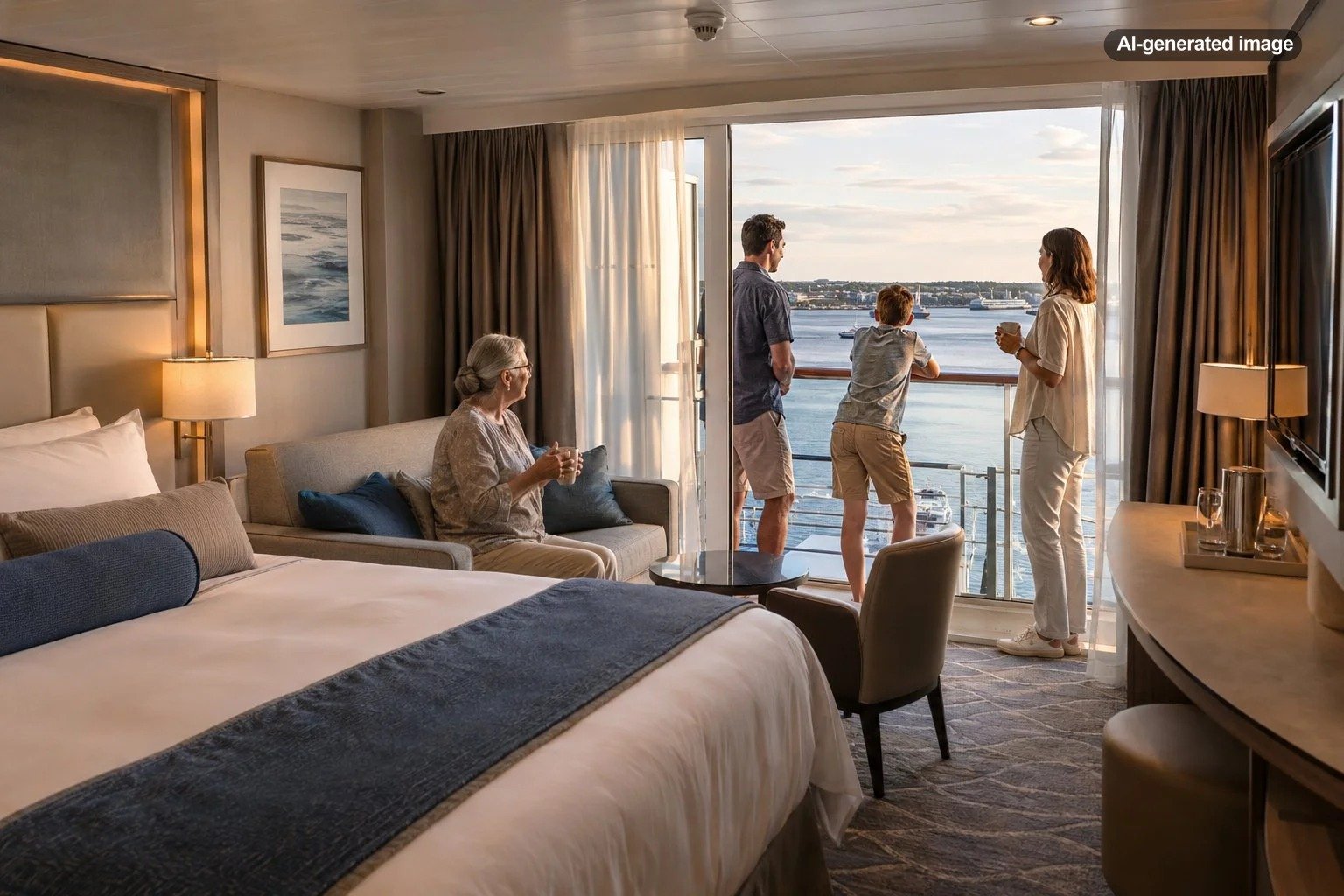
Avoid pressuring everyone into the same cabin category. Keeping cabins reasonably close can make coordination easier, but identical accommodations are not necessary. A family member who needs an accessible cabin, a quiet location, or space for a crib may have fewer suitable choices and should be considered early in the process.
Choose cabins based on real routines
Connecting cabins can be useful for parents and children, but they may not be ideal for every family. Older relatives may appreciate being nearby without sharing a wall with toddlers who wake early. Teenagers may benefit from a separate cabin arrangement when permitted by the cruise line’s current booking rules, but parents should verify occupancy and age requirements directly.
Think about daily movement around the ship. A cabin near an elevator may reduce walking, although it may also receive more hallway traffic. A cabin close to children’s areas can be convenient for parents but less peaceful for travelers seeking quiet. Cabins on different decks can work if the group is comfortable meeting in public spaces instead of constantly visiting one another’s rooms.
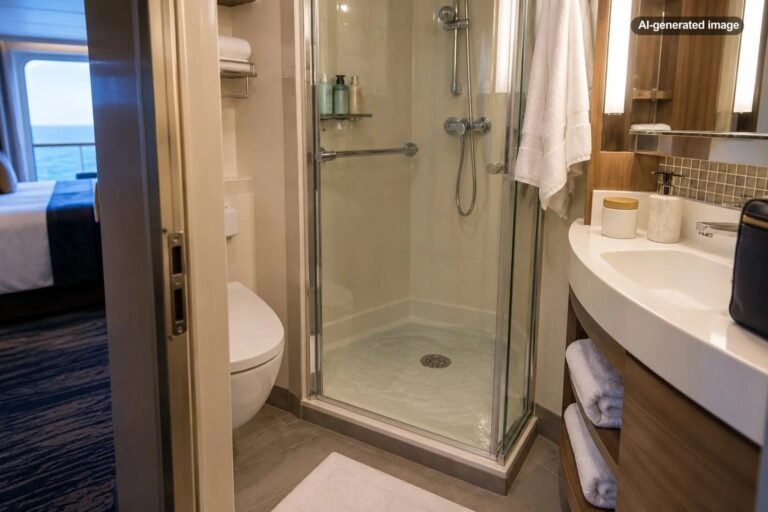
Anyone with mobility, medical equipment, or bathroom-access needs should review the cabin layout carefully rather than relying on a broad category description. Availability can be limited, so these requirements should be addressed before the rest of the group focuses on preferred views or locations.
Plan fewer mandatory group activities
The fastest way to exhaust a large family is to schedule every breakfast, show, excursion, and dinner as a group event. Instead, identify the experiences that matter most and treat everything else as optional.
A practical daily structure might include one shared meal and one planned activity. For example, the family could meet for dinner after spending the afternoon in smaller groups. On a port day, some relatives might take an excursion while others explore independently or remain on the ship.
Use language that makes declining easy. Saying, “We will meet in the dining room at 6:30, and anyone who wants a quiet evening can join us tomorrow,” is less stressful than requiring an explanation from every person who opts out.
Large groups should also expect plans to change. A child may need a nap, an older traveler may be tired after walking, or someone may simply prefer a different activity. Flexibility is not a failure of the itinerary. It is what keeps the trip enjoyable.
Handle dining before hunger creates conflict
Meals are natural gathering points, but they can become complicated when a group includes young children, dietary needs, different sleep schedules, and varying levels of patience.
Decide whether the family prefers a fixed dining time or greater flexibility. A consistent reservation may simplify planning and make it easier to sit together, while flexible dining may suit families whose days change frequently. Large parties may need to divide across nearby tables, depending on current ship arrangements.
Do not assume every dinner must be formal or lengthy. Parents of small children may prefer an earlier meal. Teenagers may want an occasional dinner with friends. Grandparents may enjoy a quieter specialty meal without the entire group. Agreeing to several full-family dinners rather than every dinner can preserve the sense of occasion.
Create a simple communication plan
Large ships make casual coordination surprisingly difficult. Phones may not function in the same way they do at home, and not every family member will want to purchase or manage an internet plan.
Before boarding, agree on a primary communication method, a backup meeting point, and a few fixed check-in times. The plan should be simple enough for the least technical traveler to use. A daily message can include dinner time, the main shared activity, and any port-day instructions.
Children and teenagers should know where to go if they become separated from the group. Adults should also avoid changing a meeting location repeatedly. A familiar lounge, dining entrance, or other clearly marked public space is usually easier than a vague instruction such as meeting “near the elevators.”
Respect different energy and mobility levels
Multi-generational travel works best when slower travelers are not treated as obstacles and more active travelers are not expected to reduce every day to the same pace.
For port days, compare walking demands, transportation, shade, rest opportunities, bathroom access, and the ability to return to the ship independently. A long excursion may be enjoyable for one part of the family while another group chooses a shorter outing.
Build recovery time into the schedule. A sea day does not need to be filled from breakfast through midnight. Quiet mornings, afternoon rest, and separate evening plans can prevent fatigue from becoming irritability.
Relatives with mobility concerns should confirm current accessibility arrangements with the cruise line and excursion provider. Do not assume that a description such as “easy” or “panoramic” guarantees minimal walking or step-free access.
Clarify childcare and supervision expectations
Grandparents may enjoy spending time with grandchildren, but that does not automatically make them the vacation childcare team. Parents should ask directly rather than assuming help will be available.
Discuss whether grandparents would like one planned evening with the children, whether cousins can attend activities together, and which adults are responsible during excursions, pool time, and late evenings. Cruise programming can provide useful options, but families should verify current ages, hours, registration requirements, capacity limits, and pickup procedures.
Teenagers also need clear boundaries. Decide where they may go independently, when they must check in, and whether they can charge purchases to the cabin account. Expectations should be agreed upon before the freedom of the ship makes negotiation more difficult.
Protect personal space without creating drama
Even close families can become overwhelmed by continuous togetherness. A cruise cabin is not a practical gathering room for a large group, and people may need private time without being upset or antisocial.
Encourage each household to maintain its own morning routine. Avoid unannounced cabin visits. Use public spaces for meetings, and let relatives decide when they are ready to socialize.
It also helps to assign fewer unofficial roles. One organized person can coordinate the main reservations, but that person should not become responsible for waking everyone, locating missing relatives, solving every dining issue, and tracking every child’s schedule.
What families often overlook
- Pre-cruise arrival: Traveling to the departure city early may reduce the risk of a delayed flight disrupting embarkation, but it adds a hotel night and another coordination point.
- Medication and documents: Each adult should manage personal prescriptions, identification, and required travel documents rather than relying on one group organizer.
- Travel insurance: Each household should review coverage based on its own health, cancellation, interruption, and transportation concerns.
- Photos: Plan one dedicated family photo instead of trying to keep everyone camera-ready throughout the trip.
- Post-cruise transportation: Confirm how each household will leave the port, especially when flights, car services, and mobility needs differ.
Frequently asked questions
How much time should a multi-generational family spend together on a cruise?
One shared meal and one optional activity per day is often enough to create meaningful family time without making the schedule restrictive. The right balance depends on the group’s relationships, ages, and vacation styles.
Should the whole family book cabins next to each other?
Nearby cabins can be convenient, but they are not essential. Cabin layout, accessibility, noise preferences, budget, and bedtime routines may matter more than keeping everyone in one hallway.
Is a large ship better for a multi-generational cruise?
A larger ship may provide more entertainment and age-specific options, while a smaller ship may be easier to navigate. The stronger choice depends on mobility, activity preferences, itinerary, and the amount of independence each generation wants.
Who should organize the cruise?
One coordinator can collect preferences and manage shared reservations, but each household should remain responsible for its own payments, documents, personal needs, and final decisions.
How can families avoid arguments during the cruise?
Discuss budgets, childcare, dining, excursions, cabin preferences, and together-time expectations before booking. During the trip, make activities optional and allow people to change plans without guilt.
A calmer cruise begins with realistic expectations
The goal of a multi-generational cruise is not perfect agreement. It is creating enough shared structure for the family to connect while preserving the independence each household needs.
Choose the cruise around practical limitations, settle money and cabin questions early, keep the daily schedule light, and normalize separate plans. When relatives are free to enjoy the trip at their own pace, the time spent together is more likely to feel intentional rather than compulsory.