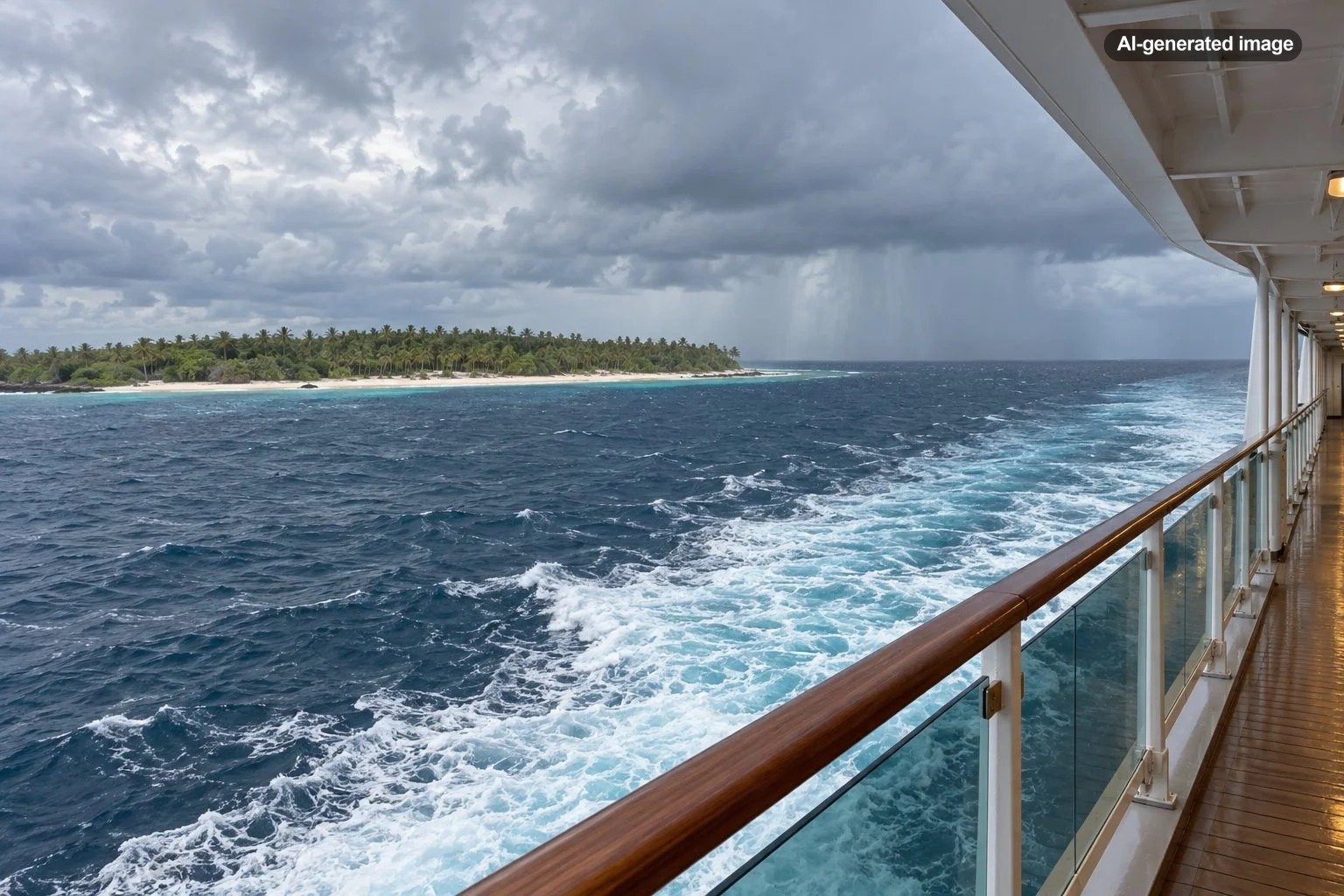
What Happens If a Cruise Ship Skips Its Only Beach Destination?
If a cruise ship skips its only beach destination, passengers may lose the main shore experience they expected without automatically receiving a refund for the cruise itself. The cruise line might substitute another port, add a sea day, or adjust the remaining schedule. Whether passengers receive compensation depends on the cruise contract, the reason for the change, applicable law, and the company’s policies.
The distinction matters particularly on short cruises. A traveler who booked a four-night sailing primarily for one afternoon on a Caribbean beach may feel the loss more acutely than someone who selected the same itinerary for its restaurants, entertainment, and onboard amenities. Understanding what can change, what expenses may be refundable, and what to do next makes an already disappointing situation easier to manage.
Quick Answer: What Happens When the Beach Port Is Canceled?
- The cruise generally continues: Missing a scheduled port does not necessarily mean the entire voyage is canceled.
- A replacement is not guaranteed: The ship may visit another destination or spend additional time at sea.
- Cruise fares are not automatically refunded: Most cruise contracts permit itinerary changes, subject to applicable laws and specific exceptions.
- Ship-booked excursions are generally refundable: When the cruise line cancels an excursion because the ship cannot visit its destination, passengers should check how and when the refund will be processed.
- Independent reservations require separate attention: Beach clubs, transportation providers, and private tour operators have their own cancellation terms.
Why Would a Cruise Ship Skip Its Only Beach Stop?
Weather is one of the most familiar explanations, but it is far from the only possibility. A cruise ship must consider conditions at sea, the approach to the harbor, and whether passengers can safely reach shore.
Some beach destinations are especially vulnerable to conditions that prevent tendering. Tender ports require passengers to transfer between the ship and shore using smaller boats. Even when the beach itself looks appealing, swells or wind can make those transfers unsuitable.
Other disruptions include port closures, operational problems, unexpected medical situations, and schedule adjustments resulting from earlier delays.
A captain may also decide that approaching a particular destination presents an unacceptable risk. A pleasant-looking morning from a passenger’s balcony does not establish that conditions are appropriate for navigating a harbor or operating tender boats.
Most importantly, cruise lines do not generally guarantee that every advertised port will be visited. Royal Caribbean, for example, explicitly reserves the ability to cancel or substitute ports under its itinerary-change terms. The precise rights and remedies depend on the cruise line and the contract applicable to the reservation.
Will the Ship Visit Another Beach Instead?
Possibly, but travelers should not assume that an alternative beach destination will be available. A ship’s route depends on geographical constraints, available port facilities, weather, local permissions, and the time remaining before its scheduled return.
Three outcomes are particularly relevant.
The Ship Replaces the Beach With Another Port
A substitute destination may provide sightseeing, shopping, dining, or organized excursions. It may also offer beach access, although that should never be assumed without checking the revised port information.
For passengers hoping to swim or relax beside the water, the useful question is not simply whether another port has been added. It is whether that destination provides a practical opportunity to enjoy the beach within the available time.
The Ship Adds an Extra Sea Day
When no suitable alternative exists, the itinerary may become a longer stretch at sea. Ships can sometimes adjust entertainment, dining, and onboard activities, but the availability of additional programming depends on the operator and vessel.
An extra sea day may appeal to travelers who enjoy pools, spas, and quiet time onboard. It can be much less satisfying for someone who booked the sailing primarily to experience a tropical shoreline.
The Remaining Schedule Changes
Instead of inserting a new stop, the captain might alter the order of existing destinations or adjust arrival and departure times. Such changes can affect previously booked excursions, independent transportation, and plans to meet people ashore.
Passengers should treat the revised daily schedule as the authoritative itinerary and avoid relying on the original booking confirmation for shore arrangements.
Are Passengers Entitled to a Refund?
Missing the only beach destination does not, by itself, guarantee a partial or full cruise-fare refund. The cruise line may still deliver the contracted voyage, including accommodations, meals, and other onboard services, even though an important port has been omitted.
Some cruise lines offer onboard credit, future cruise credit, or another goodwill adjustment following substantial changes. These gestures are not universal entitlements and should not be assumed simply because the missed port was the itinerary’s most attractive destination.
There are meaningful exceptions. A cruise that is canceled entirely or shortened because of certain mechanical failures can involve different passenger protections. Changes announced before departure may also be treated differently from those made after the ship has sailed, especially where particular booking conditions or consumer laws apply.
If the destination was central to the purchase decision, it is reasonable to request a clear explanation of the available options. The stronger approach is to cite the booking terms and the actual change rather than assume the cruise line must calculate a refund based on the number of advertised ports missed.
What About Port Taxes and Fees?
Port-related charges deserve a separate question. Depending on the cruise line’s pricing structure, applicable regulations, and itinerary adjustments, unused charges may be refunded, credited, or handled within a broader accounting of voyage expenses.
Policies differ. Some operators provide adjustments for canceled port calls, while others evaluate the circumstances individually or use pricing structures that do not assign a separately refundable amount to each destination.
Ask guest services whether any adjustment applies to the skipped port, where it will appear on the account, and whether a replacement port affects the calculation.
What Happens to Beach Excursions and Day Passes?
The booking channel often determines how easily a canceled beach outing can be resolved.
Excursions Purchased Through the Cruise Line
When the ship cannot reach a destination and the cruise line cancels its associated excursion, the unused excursion is generally eligible for a refund under the operator’s applicable terms. Carnival’s published shore-excursion conditions, for example, provide for refunds when Carnival or the tour operator cancels an excursion.
Passengers should check whether the amount returns to the original payment method or appears initially as an onboard account adjustment. They should also review the final statement before leaving the ship.
Independent Beach Clubs and Private Tours
Reservations made directly with beach clubs, drivers, independent excursion providers, or local resorts can be more complicated.
One operator may explicitly refund guests whose cruise ship does not dock. Another may require cancellation within a specified window, offer a credit instead, or treat the reservation as nonrefundable.
Contact the provider promptly and explain that the ship will not make its scheduled call. Ask whether written confirmation from the cruise line is necessary and preserve the response.
A day pass with flexible cancellation terms may be considerably less risky than a cheaper reservation that cannot be changed. This is an important consideration when comparing independent beach experiences before a cruise.
What Should You Do Immediately After the Announcement?
A missed port is frustrating, but passengers can take several practical steps before the remaining voyage becomes more complicated.
- Read the revised itinerary: Confirm whether the port was canceled outright, replaced, or moved to another day.
- Check excursion notifications: Determine which bookings have been canceled automatically and which require action.
- Contact independent providers: Request cancellation or rescheduling as soon as the change becomes official.
- Visit guest services if necessary: Ask about possible account adjustments and the process for submitting a compensation request.
- Preserve documentation: Keep the original itinerary, change announcement, receipts, cancellation terms, and final onboard statement.
- Reconsider the remaining days: Look for activities that genuinely fit your interests rather than purchasing an expensive substitute out of disappointment.
For families, the most pressing issue may be finding another opportunity for children to swim. Couples who wanted a quiet beach day may prefer less crowded onboard areas or a relaxed activity at a substitute port. Travelers who booked specifically for snorkeling or marine wildlife may find that no comparable alternative is possible.
Recognizing these differences helps prevent a rushed decision that adds expense without delivering much of the original experience.
Can You Cancel the Cruise If the Change Is Announced Before Sailing?
A predeparture announcement provides more time to evaluate options, but it does not automatically create a right to cancel without penalty.
The critical details are when the change was announced, whether the voyage is still operating, how substantial the revised itinerary is, and what the applicable booking agreement provides.
Before accepting a cancellation penalty, request written clarification of any available rebooking, refund, or credit options. Travelers who booked through a travel advisor should ask that advisor to review the reservation conditions and communicate with the cruise line.
Do not assume that missing a promotional private-island visit or a highly anticipated beach stop is legally equivalent to the cruise being canceled. The remaining sailing may still operate substantially as scheduled.
If the beach experience was the reason for choosing the trip, compare the cost of changing the reservation with the value of taking the revised cruise. A modest change fee might be worthwhile for some travelers, while others may prefer to keep their original sailing and plan a separate beach vacation later.
Will Travel Insurance Cover the Missed Beach Destination?
Travel insurance should not be treated as a general guarantee that every scheduled port will be visited. Many policies focus on defined events such as covered trip cancellation, interruption, delay, or other specifically listed losses.
Some travel protection products may include missed-port benefits, but eligibility, exclusions, required documentation, and payment limits depend on the actual policy.
Read the benefit descriptions carefully, particularly the definitions of an eligible missed port and the covered reasons for the itinerary change. A policy that reimburses certain prepaid costs is not necessarily a policy that compensates for disappointment or lost vacation enjoyment.
Keep written confirmation of the port cancellation, along with evidence of any unreimbursed expenses. Before filing a claim, establish whether the cruise line or independent excursion operator will refund those costs directly.
How to Choose a Cruise When the Beach Is the Priority
Not all cruise itineraries are equally suitable for travelers whose main goal is spending time on the sand.
A short itinerary with one beach-focused port concentrates the desired experience into a single opportunity. If that call disappears, there may be no second chance to go ashore for the activity that motivated the booking.
A sailing with several potentially suitable beach stops provides more opportunities, although every port remains subject to change. A longer voyage may also allow a more varied vacation, with beach days balanced by cultural destinations and time onboard.
When comparing itineraries, pay attention to whether the advertised destinations use tenders, how much time is scheduled in port, and whether access to the preferred beach requires a lengthy transfer. A destination labeled as a tropical island does not automatically provide a convenient beach day.
Travelers planning a future vacation can compare available sailings with particular attention to the number and variety of beach opportunities. Review the cruise line’s current itinerary and cancellation conditions before booking, since schedules, fares, taxes, and onboard charges can vary.
For travelers who would be genuinely unhappy without guaranteed time at a specific beach, a land-based stay may be a better fit. A beach hotel or resort avoids the particular risk of a ship missing its scheduled call, although weather and local conditions can still affect swimming and outdoor activities.
What Travelers Often Overlook
The emotional importance of a missed stop does not necessarily match the way the cruise contract treats that stop. A single beach day might represent only a small portion of the scheduled itinerary while accounting for most of one passenger’s anticipated enjoyment.
Another overlooked detail is the difference between a canceled port and a shortened visit. A ship may arrive too late for a long beach excursion yet still dock long enough for a brief walk ashore. Whether an excursion is refundable can depend on whether the operator cancels it, not simply whether the passenger now finds it less worthwhile.
Finally, compensation is not the only practical issue. Independent reservations, travel insurance documentation, and final onboard account adjustments may all require attention even when the cruise line has already explained why the stop was omitted.
Frequently Asked Questions
Can a Cruise Ship Cancel Its Only Port of Call?
Yes. A ship may omit its only scheduled port when conditions or operational circumstances make the visit unsuitable. The itinerary may become a voyage consisting entirely of sea days, subject to the cruise contract and applicable requirements.
Do Cruise Lines Have to Replace a Missed Beach Port?
Not generally. A replacement depends on the circumstances and the operator’s obligations. When another suitable port is unavailable, the cruise may continue without an additional destination.
Will the Cruise Line Refund My Beach Excursion?
If the cruise line cancels an excursion purchased through its own program because the ship misses the port, a refund is generally available under the applicable excursion terms. Independently booked activities follow their providers’ separate conditions.
Can I Ask for Onboard Credit Because My Beach Day Was Lost?
Yes. Passengers can ask whether a goodwill credit or other adjustment is available. Approval is discretionary unless a particular contract provision, policy, or applicable law establishes a specific entitlement.
Is It Better to Book a Beach Resort Instead of a Cruise?
For travelers whose principal objective is spending several days at one specific beach, a land-based resort may provide a more direct fit. Cruises make more sense when the ship itself, multiple destinations, and the broader travel experience are meaningful parts of the vacation.
The Bottom Line
When a cruise skips its only beach destination, the sailing can continue even though its defining shore experience has disappeared. Passengers should confirm the replacement schedule, review excursion refunds, ask about applicable port-charge adjustments, and preserve documentation for any compensation or insurance request.
The larger lesson is about choosing the right vacation structure. A cruise offers the advantages of traveling between destinations without repeatedly changing accommodations, but its advertised ports remain subject to change. Travelers who consider the beach essential should either select an itinerary with multiple suitable opportunities or consider staying on land where that particular experience is less dependent on a ship’s schedule.
Sources & Further Reading
- Royal Caribbean: Can Royal Caribbean Change a Cruise Itinerary or Port of Call? – Official explanation of itinerary changes and the operator’s stated contractual position.
- Carnival Cruise Line: Cruise Passenger Bill of Rights and Ticket Contract – Passenger protections and contractual provisions concerning schedule and port changes.
- Carnival Cruise Line: Shore Excursions Terms – Official conditions governing canceled excursions and associated refunds.
- Cruise Critic: Cruise Itinerary Changes – Practical discussion of missed ports, compensation, and differences among cruise lines.
- Cruise Critic: Missed Ports and Taxes and Fees – Reporting on variations in cruise-line policies for canceled-port charges.