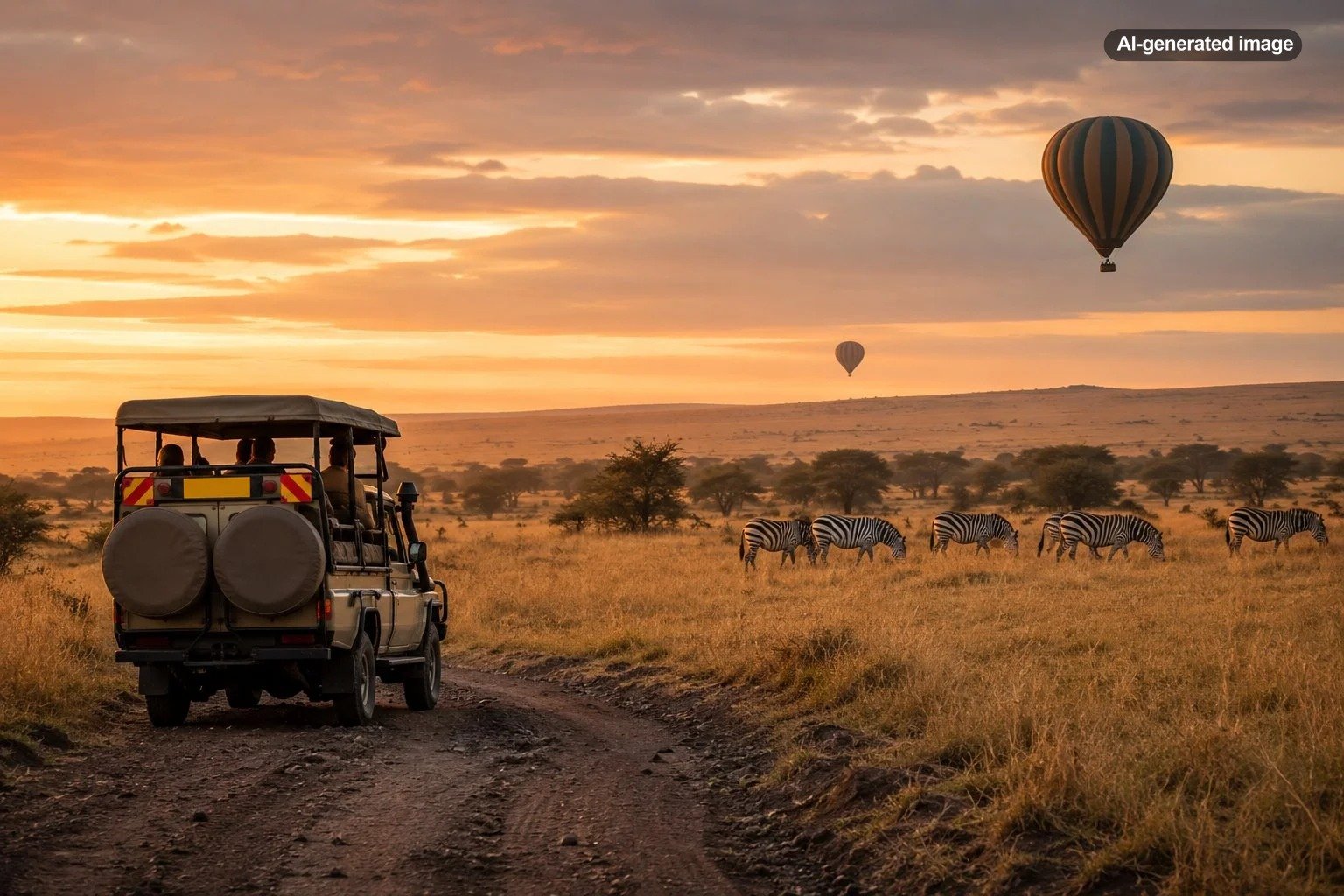
Serengeti vs. Masai Mara: Which Safari Experience Is Better?
The Serengeti is generally the better choice for travelers who want a longer, more expansive safari with varied landscapes and the chance to follow different stages of the Great Migration. The Masai Mara is often better for a shorter, more concentrated wildlife trip, especially when convenient access from Nairobi and productive game drives are priorities.
Neither destination is universally better. The two protected areas belong to the same broader ecosystem, but they create noticeably different trips. Your ideal choice depends on the season, available time, tolerance for busy wildlife sightings, preferred lodging style, and whether the safari will be combined with other destinations in Kenya or Tanzania.
Quick comparison: Serengeti vs. Masai Mara
| Consideration | Serengeti | Masai Mara |
|---|---|---|
| Best overall fit | Longer, wide-ranging safari itineraries | Shorter, wildlife-focused safari trips |
| Landscape | Vast and geographically varied | More compact, with open grasslands and river areas |
| Migration appeal | Multiple stages across different regions and seasons | Dry-season herds and possible river crossings |
| Trip length | Usually rewards more time | Works well within a tighter schedule |
| Crowd considerations | More room to distribute visitors, though hotspots can be busy | Peak migration sightings can attract many vehicles |
| Common pairing | Ngorongoro, Tarangire, or Zanzibar | Nairobi or another Kenyan safari area |
Choose the Serengeti for scale and a longer safari
The Serengeti’s defining advantage is its scale. A safari can involve substantially different regions rather than repeated drives through one compact area. Southern plains, central wildlife areas, western corridors, and the northern reaches offer different scenery and seasonal patterns.
That size makes the Serengeti especially appealing to travelers who want the journey itself to feel expansive. It also creates more itinerary choices. Depending on the month, a trip may focus on calving activity in the south, general wildlife viewing in the central region, or migration movement farther north.
The practical tradeoff is that distance matters. Reaching different parts of the ecosystem may require longer drives, internal flights, or a carefully sequenced route. A rushed visit can spend too much time in transit. The Serengeti is therefore strongest when the itinerary allows several nights and avoids trying to cover every region at once.
Choose the Masai Mara for a concentrated wildlife trip
The Masai Mara offers a comparatively compact safari experience. Productive wildlife areas can often be reached without building an extensive multi-region itinerary, making the Mara attractive for travelers with limited vacation time or those adding a safari to a broader Kenya trip.
Its open terrain can support clear wildlife viewing, while resident animals mean the reserve remains relevant beyond the migration period. During the months when migrating herds may enter the Mara, the landscape can deliver large concentrations of animals and potential river-crossing activity.
Concentration is both the advantage and the tradeoff. When animals gather near a crossing point or notable predator sighting, vehicles may gather as well. Travelers who value privacy should discuss camp location, conservancy access, vehicle policies, and daily drive strategy before booking rather than assuming every Mara safari feels secluded.
Which is better for the Great Migration?
The Serengeti is better for understanding the migration as a year-round cycle, while the Masai Mara is better suited to travelers hoping to see the herds during their seasonal presence in Kenya.
The migration does not follow a guaranteed schedule. Rainfall, water, and grazing conditions influence herd movement, so calendar windows should be treated as planning guidance rather than promises.
Migration experiences in the Serengeti
Tanzania’s official tourism information identifies late January into February with calving in the Serengeti and June into July as another important migration-viewing period. Different parts of the park become relevant as the herds move, which means travelers must match the camp location to the expected seasonal pattern.
The Serengeti is the stronger choice for travelers interested in behavior beyond river crossings. Depending on timing, the trip may emphasize newborn animals, predator activity, large moving columns, or herds gathering in northern areas.
Migration experiences in the Masai Mara
The Mara is commonly associated with migration activity from roughly July through October, although annual timing varies. Possible river crossings receive substantial attention, but they are unpredictable and may not occur during a particular game drive or even a short stay.
Travelers who choose the Mara should consider a crossing a possibility rather than the sole measure of a successful trip. Resident predators, plains wildlife, birdlife, and the broader landscape remain important parts of the experience.
Which destination offers fewer crowds?
The Serengeti often provides more opportunities to create a geographically dispersed itinerary, but it is not automatically quiet. Popular migration zones and well-known wildlife areas can still become busy. Selecting the right region is as important as selecting the park.
The Masai Mara can feel busier during peak migration months because wildlife activity and vehicles may be concentrated in a smaller area. However, the experience varies according to the location of the accommodation, whether drives take place in the main reserve or an adjoining conservancy, and how guides manage sightings.
For either destination, travelers seeking a quieter safari should consider shoulder or green-season travel, a longer stay that reduces pressure to chase every major sighting, and accommodations positioned away from the most congested routes.
How much time should you allow?
A Serengeti-focused safari commonly benefits from at least four or five nights, particularly when more than one region is involved. Additional time may be appropriate when combining it with the Ngorongoro area, Tarangire, or another part of Tanzania’s northern circuit.
The Masai Mara can work well with approximately three or four nights because its wildlife experience is more concentrated. Very short stays are possible, but travel time and arrival logistics can reduce the number of complete game-drive periods.
These are planning guidelines rather than fixed package lengths. Flight schedules, road transfers, camp locations, and seasonal conditions should determine the final itinerary.
Which safari is easier to combine with the rest of a trip?
The Masai Mara is a natural fit for an itinerary centered on Kenya. Travelers often begin or end in Nairobi, and air connections can make the reserve practical for a relatively focused safari. It can also be combined with other Kenyan wildlife regions when more variety is desired.
The Serengeti works particularly well within a Tanzania itinerary. It can be paired with the Ngorongoro Conservation Area and other northern destinations, while travelers with additional time may add a separate stay in Zanzibar. The result can be a broader trip, but the extra segments require more planning.
Combining the Serengeti and Masai Mara in one vacation is possible, yet the border between them is not a simple tourist crossing inside the wildlife ecosystem. Travelers generally need a planned transfer involving authorized routes and may require multiple road or air segments. A specialist should confirm current logistics before the trip is booked.
How lodging changes the experience
Both destinations offer tented camps and lodges across a broad range of comfort levels. The more useful distinction is not whether a property is called a camp or lodge, but where it is located and how that location supports the planned safari.
In the Serengeti, a beautifully designed camp in the wrong region for the season may produce a less effective itinerary than a simpler camp positioned near expected wildlife movement. Some operations are seasonal or mobile, while others remain in one area. Travelers should verify operating dates and transfer arrangements directly.
In the Mara, accommodation may be inside the reserve, near its boundaries, or in a neighboring conservancy. Those locations can affect driving areas, visitor density, activity options, and transfer time. Property descriptions should be read closely rather than treating every address labeled Masai Mara as interchangeable.
Affiliate disclosure: HotelInfo.com may earn a commission when you book or purchase through links on this page. This does not affect the price you pay. Learn more.
Travelers considering an upscale tented stay in the Mara can view rooms and property details for Fairmont Mara Safari Club. The property’s official website places it in the northwestern Mara area by the Aitong Hills and Mara River. Current room options, inclusions, activities, policies, transfer arrangements, and availability should be confirmed for the intended travel dates.
Which destination is better for different travelers?
- First safari with a full week or more: The Serengeti may provide a more varied sense of landscape and safari progression.
- Short safari added to a Kenya trip: The Masai Mara is often the more efficient choice.
- Travel focused on calving season: Southern Serengeti planning is generally more relevant.
- Travel focused on possible dry-season river crossings: Northern Serengeti and the Masai Mara can both be considered, with no guarantee of a crossing.
- Travelers sensitive to vehicle density: Either destination can work, but season, camp location, and access rules require careful attention.
- Travelers wanting several distinct safari regions: The Serengeti usually offers greater geographic variety.
- Travelers prioritizing a compact wildlife experience: The Masai Mara generally has the advantage.
The verdict
Choose the Serengeti for scale, seasonal variety, and a longer Tanzania safari. Choose the Masai Mara for a compact, high-impact wildlife experience that fits naturally into a Kenya itinerary.
Travelers who have enough time may find that the strongest answer is not choosing one ecosystem over the other, but selecting the destination that best matches the specific month. Migration expectations should guide the region and camp choice, while general wildlife viewing, trip pace, and comfort preferences should guide everything else.
Frequently asked questions
Is wildlife better in the Serengeti or Masai Mara?
Both can provide excellent wildlife viewing. The Serengeti offers greater geographic range, while the Masai Mara can deliver concentrated sightings within a more compact trip. Actual results vary with season, location, weather, and animal movement.
Is the Serengeti more expensive than the Masai Mara?
Neither destination is consistently cheaper. Total cost depends on travel season, accommodation level, internal flights, road transfers, park or reserve fees, private versus shared vehicles, and itinerary length. Comparable quotes should include the same services before they are evaluated.
Can you see the Big Five in both destinations?
Both ecosystems support major safari species, but no individual sighting is guaranteed. Travelers with a particular wildlife priority should ask an experienced operator about the most appropriate region and season.
Can children visit the Serengeti and Masai Mara?
Families visit both destinations, but camp age policies, family accommodation, private-vehicle options, drive duration, and health planning vary. Parents should verify each operator’s current rules and discuss whether the daily schedule suits their children.
Should you book the Serengeti and Masai Mara together?
A combined itinerary can be rewarding when enough time is available, but it involves more complicated logistics than the map may suggest. For a shorter vacation, choosing one destination and spending more time on game drives may produce a less rushed trip.