Where Should I Stay in Honolulu for Beaches, Dining, and Easy Access?
For most first-time visitors who want beaches, dining, and convenient transportation, Waikiki is the most practical place to stay in Honolulu. It has the largest concentration of visitor accommodations, direct access to several connected beach areas, abundant restaurants, and frequent bus service to other parts of the city.
Waikiki is not the only sensible option, however. Ala Moana is often better for travelers who value shopping, a calmer beach park, and access to both Waikiki and central Honolulu. Kakaako suits visitors who prioritize contemporary dining and an urban atmosphere over immediate beach access. The quieter eastern end of Waikiki, near Kapiolani Park and Diamond Head, offers a more relaxed base while remaining within reach of the resort district.
Quick answer
- Best overall for a first visit: Central Waikiki, especially if walking to the beach, restaurants, and visitor services matters most.
- Best balance of beach and city access: Ala Moana, between Waikiki and the commercial districts farther west.
- Best for dining and a modern urban setting: Kakaako, provided you do not need to walk directly from your hotel to Waikiki Beach.
- Best for a quieter atmosphere near the water: Eastern Waikiki near Kapiolani Park, Kuhio Beach, and Queen Surf Beach.
- Best for nightlife and maximum choice: Central and western Waikiki, with the tradeoff of more activity and visitor traffic.
Waikiki: the easiest all-around choice
Waikiki is the default recommendation for good reason. The neighborhood contains a large share of Oahu’s hotels and resorts, and its compact visitor district places lodging, dining, shopping, beaches, and transportation within a relatively small area. Travelers can often manage a Waikiki-centered trip without renting a car for every day.
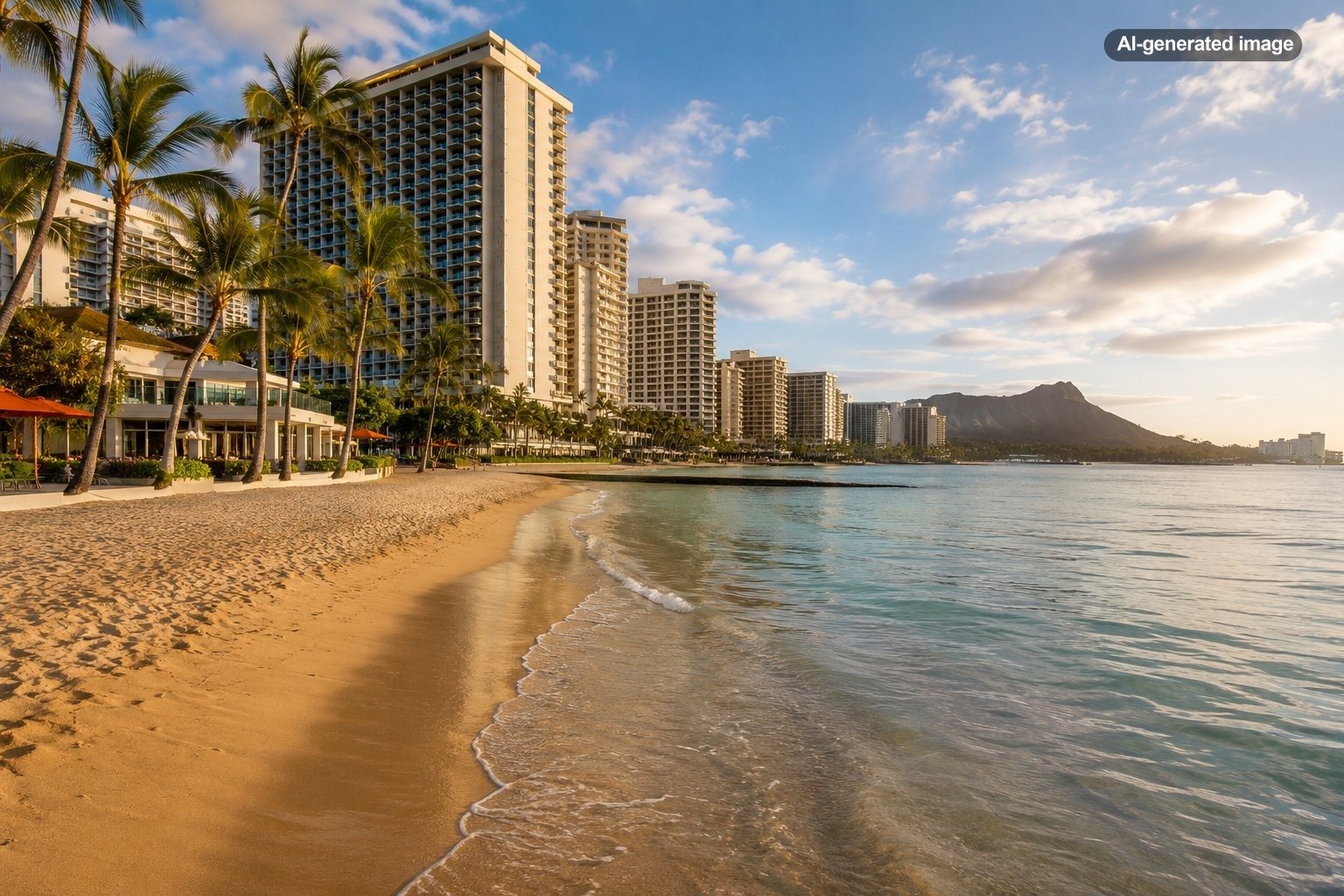
Waikiki Beach is not one uniform strip. It consists of several adjoining beach sections, including Fort DeRussy Beach toward the west, the central beachfront near Kalakaua Avenue, Kuhio Beach, and quieter stretches toward Queen Surf Beach in the east. The character of a stay therefore changes depending on which part of Waikiki you choose.
Central Waikiki
Central Waikiki is best for travelers who want to step outside and immediately find restaurants, shops, tour pickup points, and a busy resort atmosphere. It is particularly practical for a short first visit, a trip without a rental car, or a vacation where different members of the group want the freedom to pursue separate activities on foot.
The main tradeoff is intensity. Sidewalks, hotel entrances, and restaurant corridors can be active throughout the day and evening. A property described as being in Waikiki may also sit several blocks inland, so travelers who expect direct beach access should examine the map rather than relying on the neighborhood name alone.
Western Waikiki
The western side of Waikiki, near Fort DeRussy and the Ala Wai harbor area, can work well for travelers who want access to Waikiki while remaining closer to Ala Moana. This location may reduce the distance to Ala Moana Center and Ala Moana Regional Park, while still offering a walkable route into the central resort district.
It is a useful compromise for travelers interested in both beach time and shopping. However, the walk to the best-known central Waikiki landmarks can feel longer in heat or rain, especially for families with small children or travelers with limited mobility.
Eastern Waikiki
The eastern end of Waikiki, near Kuhio Beach, Queen Surf Beach, Kapiolani Park, and the Honolulu Zoo area, generally feels more open and less commercially concentrated than the center. It is a strong choice for morning walks, access to park space, and a somewhat calmer evening environment.
This area is best for couples, families, and repeat visitors who want to remain in Waikiki without being in its busiest blocks. The tradeoff is a longer walk to some major shopping areas and restaurants in western or central Waikiki.
Ala Moana: a practical bridge between Waikiki and the city
Ala Moana sits immediately west of Waikiki and offers one of Honolulu’s most useful location compromises. The area provides access to Ala Moana Regional Park, a reef-protected beach, major shopping, and bus connections serving Waikiki and other parts of Honolulu.
Compared with central Waikiki, Ala Moana can feel more like a functioning city district than a self-contained resort zone. Dining ranges from shopping-center restaurants and food halls to independent establishments in nearby streets. Travelers also have relatively convenient access to Kakaako and downtown Honolulu.
Ala Moana is particularly well suited to visitors who plan to divide their time among the beach, shopping, restaurants, and appointments or events around the city. It can also make sense for a longer stay, when being surrounded by resort activity every day is less important.
The principal drawback is that the beach experience is different from staying directly along Waikiki. Ala Moana Beach Park is a major recreational asset, but many accommodations are separated from the shoreline by wide roads, shopping areas, or several blocks of city development. Travelers should check the exact walking route, not merely the straight-line distance shown on a map.
Kakaako: best for contemporary dining and an urban atmosphere
Kakaako is a developing urban district west of Ala Moana known for restaurants, cafes, shops, public art, and newer residential buildings. It suits travelers who prefer a contemporary city setting and intend to explore Honolulu beyond the traditional resort corridor.
This area can be appealing for repeat visitors, food-focused trips, or travelers attending events near central Honolulu. It also provides access to waterfront spaces and places visitors between Waikiki and downtown rather than placing them at one end of the city’s visitor geography.
The major tradeoff is beach convenience. Kakaako is not a substitute for a Waikiki beachfront stay. Reaching Waikiki’s swimming areas generally requires a bus, rideshare, bicycle, or drive. Visitors who expect to return to their room easily between morning and afternoon beach sessions may find this inconvenient.
Kakaako is therefore best viewed as an urban Honolulu base with waterfront access, rather than as a conventional beach-resort location.
Near Diamond Head and Kapiolani Park: quieter, but less central
Travelers sometimes use the phrase Diamond Head broadly when referring to accommodations at the eastern edge of Waikiki or in nearby residential areas. The most practical visitor option is usually the zone around Kapiolani Park and the eastern Waikiki shoreline rather than a location deep within a residential neighborhood.
This part of Honolulu is attractive to early risers, runners, families, and visitors who want more open space. The eastern beach sections may feel less compressed than the busiest part of central Waikiki, and the park provides a welcome contrast to the hotel-lined streets farther west.
The tradeoff is reduced immediacy. Restaurant selection becomes thinner as you move away from Waikiki, and transportation or longer walks may be needed for shopping and nightlife. Travelers should also distinguish between a property near the base of Diamond Head and one marketed with a general Diamond Head reference but located farther from the beach than expected.
Downtown Honolulu and Chinatown: useful for specific priorities
Downtown Honolulu and Chinatown are better suited to travelers with a clear reason to stay there, such as business, government appointments, cultural interests, or an itinerary focused on historic Honolulu. The districts offer distinctive restaurants and convenient access to civic and commercial areas.
They are not usually the best match for a visitor whose top three priorities are beach access, resort convenience, and evening walks along Waikiki. Beach trips require transportation, and the atmosphere changes significantly from block to block and between business hours and evenings.
Rather than treating downtown as a less expensive substitute for Waikiki, compare it as a different type of stay. It is an urban base for exploring the city, not a beach vacation setting.
How to choose the right part of Honolulu
Choose Waikiki when convenience matters most
Waikiki is the strongest choice when you want to minimize planning friction. Restaurants, beaches, shops, visitor services, bus stops, and tour departures are concentrated nearby. It is also easier for a group with different interests because not everyone needs to travel together.
Choose Ala Moana for a balanced itinerary
Ala Moana works well when your trip includes substantial shopping, meals outside the resort district, and visits to several Honolulu neighborhoods. It preserves access to a major beach park without placing you in central Waikiki’s busiest environment.
Choose Kakaako for food and city life
Kakaako is a better fit when restaurants, cafes, design, and an urban atmosphere matter more than walking directly onto a swimming beach. It is especially reasonable for repeat visitors who already understand Honolulu’s transportation patterns.
Choose eastern Waikiki for quieter evenings
Eastern Waikiki is often the best compromise for travelers who want beach access and Waikiki convenience without staying amid the densest shopping and nightlife blocks. It remains a visitor-oriented neighborhood, but the park and wider eastern edge can make the setting feel less enclosed.
Transportation and car considerations
Honolulu’s public bus network connects Waikiki with Ala Moana, downtown, and many other destinations. Official route information should be checked close to the trip because routes and timetables can change. Several services operate between Waikiki and Ala Moana, making those two areas relatively practical to combine without driving.
A rental car is not automatically an advantage for a Waikiki-focused stay. Hotel parking can add cost, street parking may be limited, and traffic can make short trips slower than expected. A sensible approach is to stay without a car for city and beach days, then rent one only for portions of the trip that require broader island access.
Travelers arriving with large luggage, mobility equipment, or young children should compare airport transfers, taxis, rideshares, and rental cars rather than assuming the public bus will be the easiest arrival method. Vehicle and baggage policies should be confirmed directly with the transportation provider.
What travelers often overlook
- Neighborhood labels can be broad. Two hotels both described as Waikiki properties may offer very different walks to the beach, dining, and transportation.
- Beachfront and ocean view are not the same. A room may face the ocean from several blocks away, while a beachfront property sits directly beside the shoreline.
- Crossing major roads changes the experience. A short map distance may involve wide intersections, shopping complexes, or indirect pedestrian routes.
- Noise depends on the exact block. Nightlife, loading areas, traffic, and neighboring construction can matter more than the general neighborhood.
- An island-wide itinerary changes the best location. Waikiki is excellent for a Honolulu-centered trip, but travelers driving across Oahu most days may care more about parking and road access than immediate beach proximity.
Frequently asked questions
Is Waikiki the best area for first-time visitors?
For most first-time visitors, yes. Waikiki offers the simplest combination of beaches, restaurants, lodging choices, transportation, and visitor services. Travelers seeking a quieter or more urban experience may prefer eastern Waikiki, Ala Moana, or Kakaako.
Can I stay in Honolulu without renting a car?
Yes, particularly in Waikiki or Ala Moana. Walking, public buses, taxis, rideshares, and organized tours can cover many common visitor needs. A car becomes more useful when the itinerary includes repeated trips to distant parts of Oahu.
Is Ala Moana within walking distance of Waikiki?
The districts are adjacent, but the practical walking time depends on the starting and ending points. Western Waikiki is much closer to Ala Moana than eastern Waikiki. Weather, road crossings, and mobility needs should also be considered.
Where should families stay?
Families often benefit from eastern Waikiki because of its access to beaches and Kapiolani Park, or from central Waikiki when maximum convenience is the priority. Room layout, laundry access, kitchen facilities, and the exact beach route may matter more than the neighborhood name.
Where should couples stay for dining and nightlife?
Central Waikiki provides the greatest concentration of walkable evening options. Couples who prefer contemporary restaurants and a less resort-oriented atmosphere may favor Kakaako, while those seeking quieter evenings near the beach may prefer eastern Waikiki.