Are Interior Cabins Actually a Nightmare for Families With Toddlers?
No, an interior cabin is not automatically a nightmare for a family with a toddler. It can be a practical way to reduce the cost of a cruise, especially when the family expects to spend most waking hours elsewhere on the ship. The problems begin when parents book one without checking the actual sleeping configuration, available floor space, cabin location, and how the room will function after the toddler goes to bed.
For some families, the darkness of an interior cabin supports naps and early bedtimes. For others, the lack of daylight, limited separation, and tight layout make every part of the routine more difficult. The right choice depends less on the absence of a window and more on how your family sleeps, organizes belongings, and uses the cabin.
Quick answer: When an interior cabin works well
- It can suit families whose toddler sleeps reliably in a compact travel environment.
- It is often easier when the cabin has enough open floor space for the approved crib or portable sleep setup provided by the cruise line.
- The deep darkness may help with naps, but parents may need a dim nightlight for nighttime movement.
- It becomes harder when adults expect to relax, talk, or watch television in the cabin after bedtime.
- A carefully chosen location between quieter passenger decks can matter more than having a window.
The real problem is usually space, not the lack of a view
Interior cabins are commonly among the most compact accommodations on a cruise ship. Even when a room technically accommodates three or four guests, that does not mean it will feel spacious after beds are opened and a crib is positioned.
A floor plan that appears manageable during the day can become awkward at night. A lowered upper berth, converted sofa, or portable crib may narrow the route between the bed, bathroom, and cabin door. Parents may find themselves moving around luggage, diaper supplies, shoes, and a stroller whenever someone needs to leave the room.
Before booking, confirm the specific cabin’s maximum occupancy and sleeping arrangement directly with the cruise line. Ask where the crib would normally be placed and whether it blocks access to drawers, the bathroom, or either side of the main bed. Cabin layouts can vary within the same category, so a generic photograph of an interior room may not represent the exact configuration.
Darkness can be either the best feature or the biggest frustration
An interior cabin can become extremely dark when the lights are switched off. That may be useful for a toddler who is easily distracted during naps or who wakes as soon as daylight enters a hotel room.
The same darkness can disorient adults and children after waking. A parent handling an overnight diaper change may have to choose between turning on a bright cabin light and navigating a cramped room with limited visibility. A small, dim light can make nighttime movement easier, but families should check the cruise line’s current electrical-device rules before packing plug-in accessories.
The lack of natural morning light can also make it harder to judge the time. Families who depend on sunrise as part of the toddler’s routine may prefer an ocean-view or balcony cabin, while families struggling with very early wake-ups may appreciate the darker setting.
Bedtime creates a second shift for parents
The most overlooked question is not where the toddler will sleep. It is what the adults will do once the toddler is asleep.
In a standard interior cabin, the entire family generally shares one compact space. Parents may need to keep conversations quiet, reduce screen brightness, and avoid opening drawers near the sleeping area. There is no balcony to step onto, and the bathroom is rarely a comfortable substitute for a separate sitting area.
This setup is often acceptable on a short cruise or for parents who are happy to go to bed early. It can feel restrictive on a longer sailing, especially when a toddler goes to sleep several hours before the adults. Parents who value private evening time may find that an ocean-view room offers little improvement because it still lacks physical separation. A balcony, family cabin with a divider, or suite may better address that particular concern.
Cabin location can determine whether sleep is manageable
A quiet interior cabin can be more restful than a poorly located balcony room. Review the ship’s deck plan and look at what is directly above, below, and beside the cabin.
Rooms beneath pool decks, late-night venues, theaters, or heavily used public areas may experience noise from music, moving furniture, cleaning, or foot traffic. Cabins near elevators can be convenient when using a stroller, but they may also receive more hallway conversation. A long walk from the elevator may be quieter, yet inconvenient when carrying a sleeping child and daily supplies.
For many families, a cabin between passenger-accommodation decks offers the most balanced choice. It may reduce exposure to noise from major public spaces while preserving reasonable access to elevators. However, ship layouts differ, so parents should inspect the deck plan for the specific vessel rather than relying on a universal rule.
Storage discipline matters in a small family cabin
An interior cabin feels considerably smaller when open suitcases, loose shoes, wet clothing, toys, and diaper supplies occupy the floor. Families should plan to unpack soon after boarding and assign a specific place to each category of belongings.
Keep the daily diapering kit compact instead of leaving the entire supply accessible. Store rarely used clothing and backup supplies farther away, while keeping pajamas, medication, wipes, and bedtime items within easy reach. Collapsible organizers and packing cubes can help, provided they do not create additional clutter.
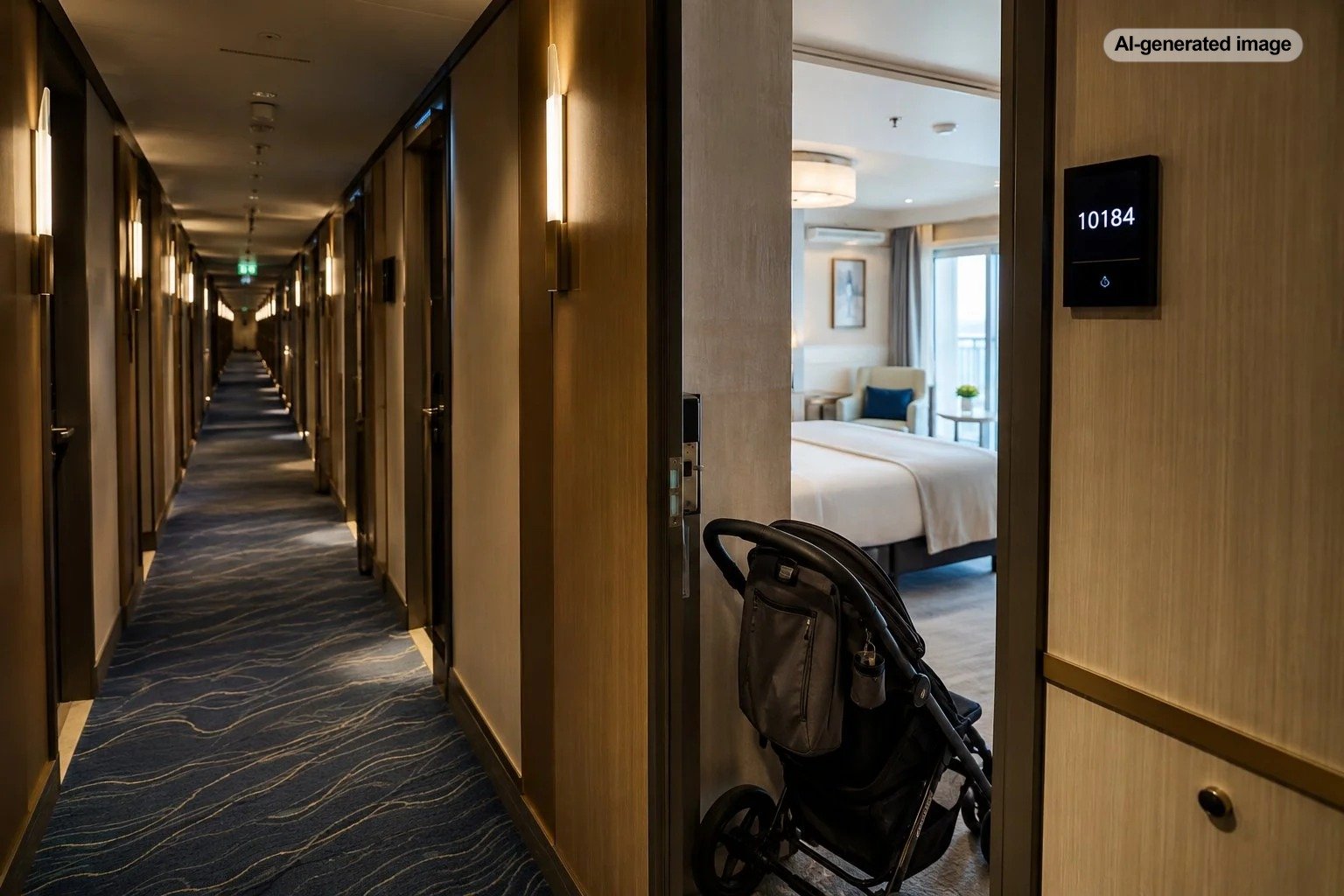
A compact or easily folded stroller may be easier to manage than a large model. Before traveling, ask the cruise line whether strollers must remain inside the cabin and whether hallways must be kept completely clear. Families should never assume that a stroller can be left outside the door.
Interior cabins are strongest when the savings have a purpose
The lower fare associated with an interior cabin can be meaningful, but value should be evaluated across the entire trip. The room may be a sensible choice when the savings allow the family to book a more convenient sailing, travel for an additional night, choose a better itinerary, or preserve room in the budget for other priorities.
It is less compelling when the cost difference from an ocean-view room is modest and natural light would noticeably improve the family’s routine. Similarly, paying more for a balcony may be worthwhile for parents who expect to spend significant time in the cabin during naps, although adults must treat balcony access and furniture as serious supervision considerations.
Compare total cabin configurations rather than category labels alone. Two compact connecting cabins may occasionally provide better functionality than one larger room because they add separation and another bathroom. That arrangement is generally more relevant for families traveling with older children or additional adults; parents should verify age, supervision, and booking rules before considering separate rooms.
Who is most likely to be comfortable in an interior cabin?
An interior cabin is usually a reasonable fit for parents who travel lightly, maintain flexible routines, and plan to use the cabin mainly for bathing, naps, and nighttime sleep. It also favors families whose toddler adapts well to unfamiliar environments and does not need extensive floor space for play.
A different cabin may be preferable for light-sensitive parents who need daylight in the morning, toddlers who become distressed in very dark rooms, families carrying substantial equipment, or adults who want usable private space during naps. Parents who experience discomfort in enclosed rooms should also consider how several nights without a window may feel.
What families often overlook before booking
- The exact bed configuration: A room that sleeps four may use overhead berths or a sofa conversion that changes the usable layout.
- Crib availability: Requesting one does not replace the need to confirm availability, dimensions, and placement with the cruise line.
- Outlet restrictions: Cruise lines may prohibit certain extension cords, surge protectors, heating devices, and other electrical equipment.
- Bathroom routine: Small bathrooms require careful organization when managing bathing, diapers, and wet clothing.
- Nap-day reality: On sea days, one adult may spend a substantial amount of time sitting quietly in the cabin.
- Motion and location: Travelers sensitive to movement may want to study the cabin’s position on the ship rather than selecting solely by price.
Questions to ask before choosing the cabin
- What is the actual sleeping configuration for three guests in this cabin?
- Where would a cruise-line-provided crib be positioned?
- Will the crib remain open all day, or can it be moved or folded?
- What is located directly above and below the room?
- How far is the cabin from the nearest elevator?
- Are connecting rooms, family cabins, or rooms with partial dividers available?
- Which electrical accessories are currently permitted onboard?
Frequently asked questions
Will a toddler sleep better in an interior cabin?
Some toddlers sleep well because the room remains dark during naps and early mornings. Others may find the unfamiliar darkness unsettling. Parents should base the decision on the child’s usual response to dark rooms rather than assuming one outcome.
Is an ocean-view cabin much better for families?
It provides natural light and a visual connection to the outside, but it may offer little additional floor space. Compare the dimensions and layout, not just the window.
Is a balcony cabin worth the upgrade?
It may be valuable when adults want a separate place to sit during naps or after bedtime. Families must maintain close supervision and follow all onboard balcony-safety guidance.
Should families avoid guaranteed cabin assignments?
A guaranteed category may reduce control over location. Families concerned about noise, elevator distance, or a specific configuration may prefer to select an exact cabin.
What is the final verdict?
An interior cabin is not inherently a bad choice for a family with a toddler. It is a compact, dark sleeping space that rewards careful organization and realistic expectations. Families who verify the layout, choose a thoughtful location, and accept limited adult space may find it entirely workable. Those who need daylight, separation, or room to remain comfortable during naps should treat an upgraded cabin as a functional expense rather than a cosmetic luxury.