What to Do If Your Cruise Cabin Shower Will Not Drain
If your cruise cabin shower will not drain, turn off the water before it reaches the bathroom threshold and report the problem to your stateroom attendant or guest services. Do not keep showering, remove drain components, pour chemicals into the drain, or attempt a plumbing repair yourself. The ship has maintenance personnel who can inspect the drain and the wastewater system serving the cabin.
A slow drain may seem like a minor inconvenience, but cruise bathrooms are compact and often have shallow shower thresholds. Water can spread across the bathroom floor quickly, creating a slip hazard and potentially reaching carpeting, luggage, or the cabin below. Prompt reporting gives the crew the best opportunity to correct the problem before it causes additional disruption.
Quick answer
- Stop the shower as soon as water begins pooling unusually high or escaping the shower area.
- Keep people out of the wet bathroom until the floor is safe.
- Contact your stateroom attendant or guest services and describe whether the drain is slow, fully blocked, overflowing, or producing an odor.
- Do not use drain cleaner, tools, or improvised methods to open the drain.
- After maintenance visits, test the shower briefly and report the problem again if drainage remains inadequate.
Stop using the shower before water leaves the bathroom
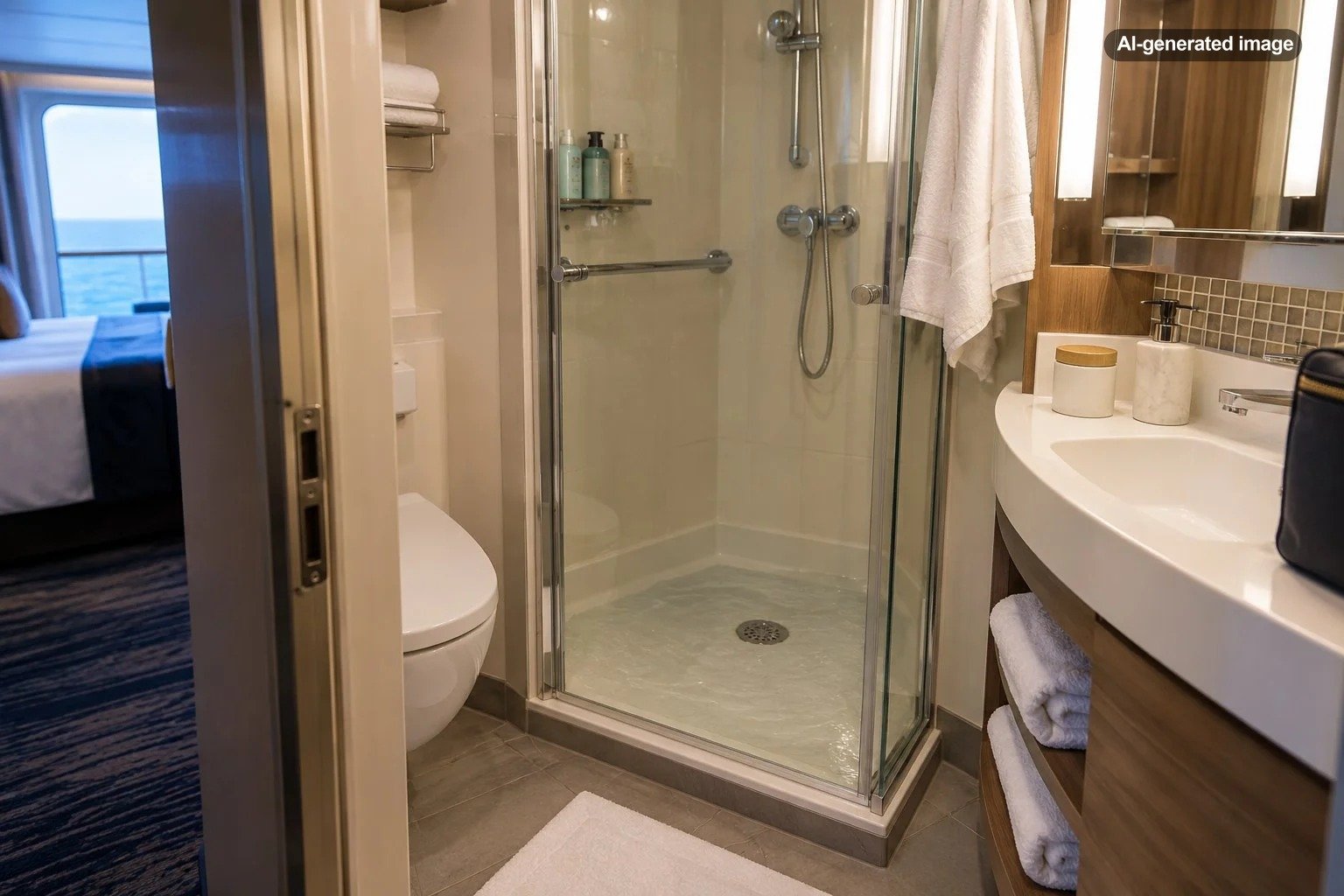
Shower floors on ships may retain a small amount of water momentarily, especially while the vessel is moving. The warning sign is water that continues rising, drains much more slowly than it arrives, or moves beyond the intended wet area.
Turn off the faucet and allow several minutes for the existing water to recede. If water has already crossed the bathroom threshold, move shoes, clothing, electronics, and luggage away from the area. Avoid rushing for towels while standing on a slippery floor. If another traveler is nearby, ask that person to contact the crew while you remain clear of the wet surface.
Bath towels can contain a small spill temporarily, but they are not a substitute for reporting the leak. Tell the crew if towels or carpeting have become saturated so housekeeping can provide replacements and assess whether additional drying is needed.
Report the problem with specific details
Start with the stateroom attendant if that person is readily available. Otherwise, contact guest services using the cabin phone, the cruise line’s onboard app if it supports service requests, or an in-person visit. Procedures vary by ship, so use the communication option provided onboard.
A precise description helps the crew determine the urgency and send the appropriate person. Include:
- Your cabin number and the name associated with the room.
- Whether the shower is draining slowly or not draining at all.
- Whether water has escaped into the rest of the bathroom or cabin.
- Whether the toilet or sink is also draining improperly.
- Whether you notice sewage-like odors, unusual sounds, or water returning through the drain.
- Whether anyone slipped, was injured, or needs medical assistance.
A single slow shower drain may indicate a local obstruction. Trouble involving the shower, sink, and toilet could suggest a broader plumbing issue. Guests do not need to diagnose the cause, but describing all affected fixtures can help maintenance investigate efficiently.
Do not attempt a cabin plumbing repair
A cruise ship’s wastewater system is not simply a household system placed at sea. Shipboard plumbing can involve specialized collection, treatment, pumping, and vacuum components. Even when the visible symptom resembles an ordinary clogged drain, the appropriate repair may require access beyond the cabin.
Do not pour drain cleaner, bleach, shampoo, boiling water, or another substance into the drain. Do not pry up a drain cover, insert a hanger or tool, or remove plumbing parts. Chemicals may be incompatible with shipboard systems, while mechanical attempts can damage fittings or push an obstruction farther into the line.
You can remove a loose item resting on top of the drain, such as a visible washcloth, only if it can be picked up without touching or dismantling the fixture. Leave anything inside the drain to the crew.
Give maintenance access and verify the repair
Clear toiletries and personal belongings away from the shower so maintenance can work. Secure valuables before leaving the cabin, just as you ordinarily would when staff members need access. If you prefer to be present, ask when the inspection is expected, recognizing that response times depend on the urgency of the problem and other shipboard operations.
After the crew reports that the repair is complete, run the shower briefly while watching the water level. The water should move toward the drain without continuing to accumulate. A small amount of residual water on the textured floor is different from a pool that grows as the shower runs.
If the problem continues, stop the water and contact guest services again. Refer to the earlier report and state that the first intervention did not resolve the issue. Remaining calm and specific is more effective than restarting the entire explanation without mentioning the previous visit.
Document a recurring or unresolved problem
For a problem that persists, note when it began, when it was reported, who responded, and what happened after each attempted repair. Photographs or a short video can document standing water or overflow, but take them only when it is safe to do so. Do not step onto a slick surface merely to obtain evidence.
Documentation is particularly useful if the shower remains unavailable for an extended period, water damages personal belongings, or the cabin develops dampness or odor. Report damaged items promptly and retain any related written communications. Do not wait until after disembarkation if the crew could still inspect the condition onboard.
When to ask about another shower or cabin
If maintenance needs time to complete the repair, ask guest services what temporary bathing arrangement is available. The practical solution depends on the ship, the facilities onboard, the severity of the plumbing problem, and cabin availability.
A cabin change may be reasonable to discuss when water repeatedly escapes the bathroom, the shower remains unusable after repair attempts, multiple fixtures are affected, or persistent moisture creates an unacceptable cabin condition. A move is not guaranteed, and it may be impractical when the ship is full. Guest services may instead arrange another shower, prioritize a further repair, or offer a different operational solution.
If anyone in the cabin has a mobility limitation or other condition that makes a wet floor especially hazardous, explain that concern clearly. The crew needs to understand that the issue is not merely inconvenient but affects the safe use of the bathroom.
What travelers often overlook
A slow drain can become worse during a long shower
A drain may appear adequate during a brief test but fall behind during normal use. After a repair, test it conservatively and remain nearby rather than leaving the water running unattended.
The bathroom may be designed as a wet area
Some cabin bathrooms allow limited water to reach parts of the bathroom floor while still directing it toward a drain. That design does not make uncontrolled pooling, cabin overflow, persistent odor, or water entering the living area normal.
Odor and backup deserve immediate reporting
Standing shower water is one issue; wastewater returning through a fixture or a strong sewage-like odor is another. Stop using affected fixtures and notify the crew promptly. Keep children away from the bathroom until staff members have assessed it.
Public showers are not an automatic substitute
Fitness center or spa facilities may have showers, but access rules vary. Ask the crew before relying on them, particularly if the facilities have limited hours, age restrictions, or controlled access.
Frequently asked questions
Can I use a plunger on a cruise cabin shower drain?
No. Leave plunging and other mechanical work to the ship’s maintenance team. An improvised repair could damage a fitting or affect connected plumbing.
Should I put towels around the shower?
Towels can help contain a small amount of escaped water while you wait for assistance, provided the floor is safe to approach. Do not continue showering simply because towels are in place.
Who should I contact first?
Contact the stateroom attendant if readily available or guest services through the method provided onboard. For active overflow, significant backup, or an injury, make the urgency clear immediately.
What if the drain problem happens late at night?
Use the ship’s designated after-hours contact or guest services number. Do not postpone reporting active overflow, water entering the cabin, or a potentially hazardous bathroom floor.
Will the cruise line move me to another cabin?
That depends on the severity of the problem, whether it can be repaired, and what space is available. Ask about realistic alternatives if the shower cannot be restored promptly, but avoid assuming that a cabin change or a particular form of compensation is automatic.