What Is the Difference Between Luxury Glamping and a Traditional Safari Tent?
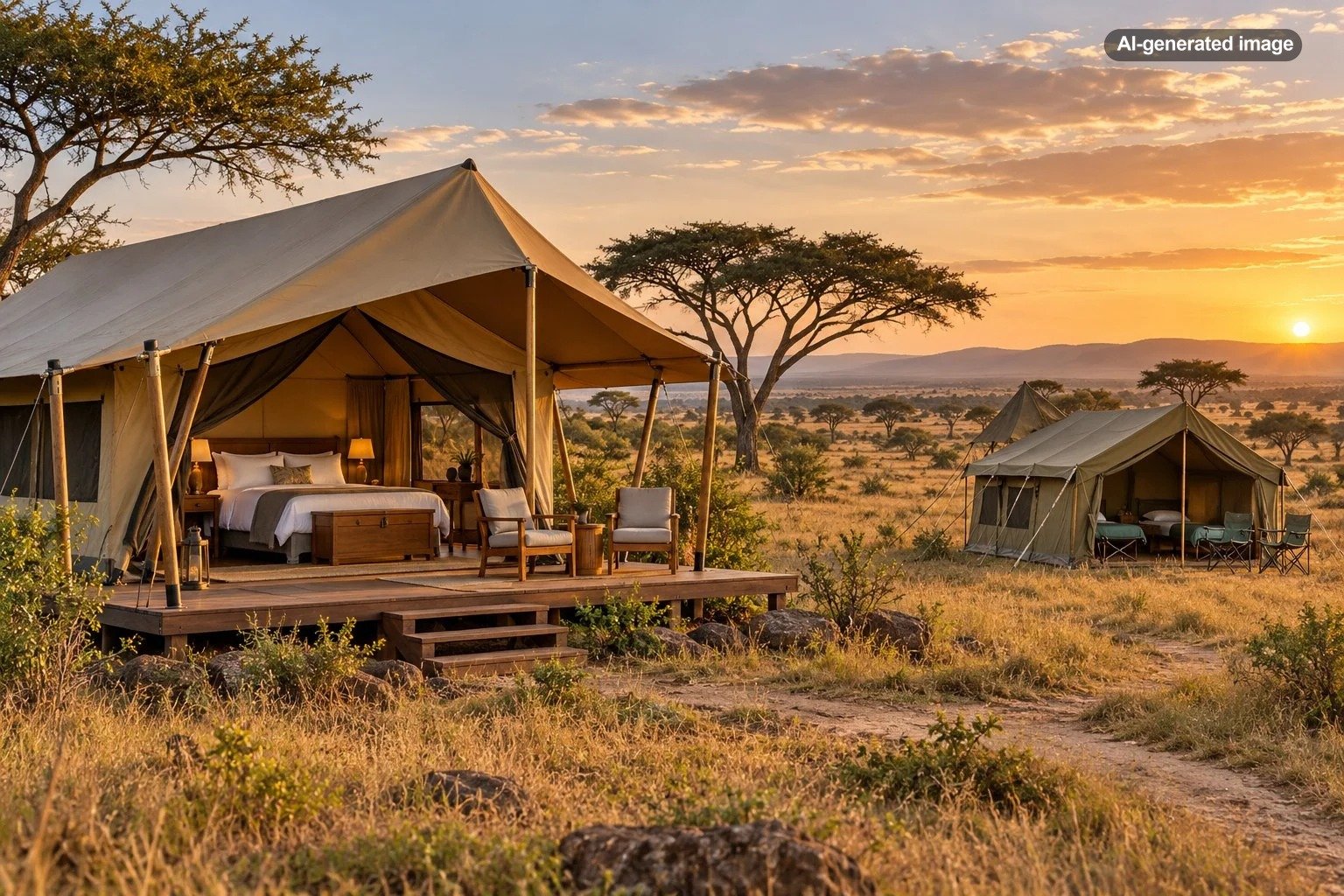
Luxury glamping and traditional safari tent camping can look remarkably similar in photographs. Both may feature spacious canvas structures, natural surroundings, and a closer connection to the outdoors than a conventional hotel room. The important difference is usually not the tent itself, but the level of comfort, infrastructure, and service provided around it.
Luxury glamping generally emphasizes hotel-like comfort in an outdoor setting, while a traditional safari tent typically prioritizes practical shelter, outdoor living, and a more direct camping experience. However, these categories overlap considerably. Some traditional-style safari tents are exceptionally luxurious, while other properties marketed as glamping provide relatively simple accommodations. Understanding the actual facilities is more useful than relying on either label.
Quick Answer: How Do Luxury Glamping and Safari Tents Compare?
- Sleeping arrangements: Luxury glamping often includes conventional beds, quality mattresses, and furnished interiors. Traditional safari tents may have simpler beds and fewer furnishings.
- Bathrooms: Upscale glamping accommodations may include private bathrooms, while more basic safari tents often rely on shared facilities.
- Electricity and climate control: Luxury properties are more likely to provide convenient charging, lighting, and temperature-management features, although these are not guaranteed.
- Service: Some luxury glamping properties operate much like boutique hotels, while traditional tented camps may emphasize self-sufficiency.
- Outdoor experience: Both can provide an immersive natural setting, but their balance between convenience and rustic atmosphere differs.
The Main Difference Is the Accommodation Experience, Not the Canvas
A safari tent is fundamentally a style of accommodation. It commonly uses a substantial canvas structure supported by poles or a frame, with enough interior space for guests to stand and move around. Depending on the design, it may include a raised floor, screened windows, a covered entrance, or an outdoor sitting area.
Glamping, a term combining glamorous and camping, describes an approach to outdoor accommodation rather than one specific structure. Glamping accommodations can include safari tents, yurts, domes, cabins, treehouses, and other designs.
This distinction matters because a luxury safari tent can also be a glamping accommodation. The two terms are not mutually exclusive.
For example, a canvas tent furnished with a king bed, private shower, electricity, and a shaded terrace may be described as both a luxury safari tent and a glamping suite. Meanwhile, a similarly shaped tent with basic beds, battery-powered lighting, and communal washrooms may offer a much more traditional camping experience.
The external architecture can be nearly identical even when the guest experience is substantially different.
Comparing the Features That Matter Most
| Feature | Luxury Glamping | Traditional Safari Tent |
|---|---|---|
| Bed | Usually a conventional bed with comfortable bedding | Often simpler beds or camp-style sleeping arrangements |
| Bathroom | Frequently private, sometimes en suite | Often shared, depending on the campsite |
| Electricity | More commonly available | May be limited or absent |
| Temperature control | May include fans, heating, or cooling | Often relies more on ventilation and weather conditions |
| Furniture | Typically more substantial and decorative | Usually practical and minimal |
| Food arrangements | May include dining services or prepared meals | Frequently more self-directed |
| Service | May resemble a hotel or lodge | Varies from independent camping to organized camp services |
| Cost position | Generally higher when comparable services are included | Often lower for basic facilities |
These are broad patterns rather than fixed standards. A traditional safari-style tent at a professionally operated wildlife camp may include services that exceed those of a small glamping property. Always compare the individual accommodation rather than assuming that a category guarantees certain amenities.
Sleeping Comfort: Real Beds, Bedding, and Interior Space
One of the clearest distinctions appears when guests settle in for the night.
Luxury glamping commonly replaces sleeping bags and portable camping mattresses with a fully made bed. Depending on the property, the interior may also have bedside tables, rugs, upholstered chairs, reading lights, and places to store luggage.
A traditional safari tent may provide a straightforward bed frame, basic mattress, and simple furnishings. Some are remarkably comfortable, while others are deliberately designed to preserve the feel of a campsite.
Consider two tents with the same floor area. One includes a large bed, two armchairs, and an organized dressing area. The other fits several single beds and a small table. The first is better suited to a couple seeking a relaxed retreat, while the second may be more practical for a group that plans to spend most of its time outdoors.
What to check: Look for the actual bed configuration, mattress type if described, maximum occupancy, and whether additional guests sleep on permanent beds or temporary arrangements. The word luxury does not establish these details.
Private Bathrooms Can Make the Biggest Practical Difference
Bathroom arrangements frequently determine whether an outdoor stay feels closer to a hotel visit or a conventional camping trip.
An upscale glamping tent may have a fully enclosed bathroom with a flushing toilet, sink, hot shower, and reliable running water. Some accommodations place the bathroom inside the tent, while others connect it through a covered outdoor passage.
Traditional safari tents may use shared bathroom blocks elsewhere on the property. Depending on the campsite, the walk could be short and convenient or require leaving the tent after dark.
However, an outdoor bathroom does not automatically mean an accommodation is basic. Some high-end tented properties deliberately incorporate partially open-air showers or separate bathing structures as part of their design.
Travelers should distinguish between three arrangements: an en suite bathroom inside the tent, a private bathroom outside the tent, and communal facilities used by multiple guests.
For families with young children, travelers who regularly wake during the night, and guests who value privacy, this distinction may outweigh furniture or decorative details.
Electricity, Heating, and Cooling Are Not Guaranteed
Canvas accommodation behaves differently from a conventional insulated hotel building. Even an elegant tent can become warm in direct sunlight or cool after sunset.
Luxury glamping properties may address this with ceiling fans, portable heaters, electric blankets, air conditioning, insulated roofing, or carefully designed ventilation. The available equipment depends on the location and infrastructure.
Traditional safari tents may rely more heavily on natural airflow, screened openings, canvas flaps, and the local climate. Some offer electricity only during designated hours, while others provide continuous power.
These distinctions become especially important in destinations with hot afternoons, cold nights, substantial humidity, or seasonal weather changes.
A property advertising electricity might provide only lighting and phone charging. It does not necessarily have the electrical capacity for air conditioning, hair dryers, or other appliances.
Before reserving, confirm whether power is continuous, whether guests can charge devices beside the bed, and exactly which heating or cooling equipment is provided. If comfortable sleeping temperatures are essential, ask about conditions during the specific month of travel.
How Much Service Should You Expect?
Luxury glamping sometimes operates as a small hospitality property rather than a campsite. Depending on the establishment, accommodation might include regular housekeeping, prepared breakfasts, luggage assistance, restaurant access, or organized activities.
A traditional safari tent experience may involve collecting supplies, preparing meals, making up beds, and managing more of the stay independently.
Yet this distinction requires an important qualification: traditional safari-style architecture does not imply limited service. Professionally operated tented safari camps can have extensive hospitality services despite retaining a rustic visual character.
Likewise, a privately rented glamping tent may have beautiful furnishings but no on-site reception, meal service, or daily cleaning.
Travelers who prefer the convenience of a hotel should investigate how the property actually functions. Is there staff on-site? Are meals available? Is housekeeping included? How are maintenance problems handled? Are guests expected to bring food or cooking equipment?
The answers offer a more accurate picture of the stay than the accommodation’s marketing category.
Is Luxury Glamping Less Authentic Than a Traditional Safari Tent?
Not necessarily. Authenticity is subjective, and an outdoor experience is not automatically more meaningful because it involves fewer amenities.
Traditional safari tents may create a stronger sense of camping through practical layouts, simpler interiors, and a greater reliance on the surrounding environment. Guests may hear more natural sounds, spend more time outdoors, and participate directly in everyday campsite routines.
Luxury glamping retains elements of this experience while reducing certain inconveniences. Canvas walls, open views, natural materials, and outdoor sitting areas can preserve a strong connection to the landscape even when the tent contains a private bathroom and comfortable furniture.
The setting often matters more than the furnishings. A well-positioned tent with thoughtful spacing between accommodations may feel more connected to nature than a highly decorated structure crowded among other units.
Guests seeking solitude should therefore consider tent spacing, nearby roads, shared walkways, outdoor lighting, and the proximity of communal facilities.
Which Option Usually Costs More?
Luxury glamping generally occupies a higher price position than basic traditional safari tent camping when comparing accommodations in the same destination. Permanent furnishings, private plumbing, electricity, staffing, and property maintenance can all contribute to a higher operating cost.
But nightly rates do not tell the entire story.
A basic tent may require guests to supply bedding, cooking equipment, groceries, or transportation. Another accommodation may include prepared meals and selected activities, making its advertised rate difficult to compare directly with a room-only option.
Location also changes the comparison. A remote tented wildlife camp with substantial logistical requirements may cost more than a comfortable glamping retreat near a major town, regardless of the interior design.
When comparing value, examine the total cost for the same number of guests and nights. Identify whether meals, bedding, bathroom access, required transfers, activities, parking, and applicable fees are included. Avoid treating a more expensive accommodation as inherently better without considering which services will actually be used.
Which Experience Is Better for Different Travelers?
Couples Seeking Comfort and Privacy
Luxury glamping is often the more natural choice for couples who want an outdoor atmosphere without giving up a comfortable mattress, private bathroom, or furnished sitting area. A secluded location and thoughtful layout may matter more than elaborate decorative features.
Families With Young Children
Either format can work, but practical details deserve priority. Families may appreciate an en suite bathroom, convenient sleeping arrangements, and reliable lighting. Traditional tents can also be appealing when children enjoy straightforward camping routines and the adults are comfortable with shared facilities.
Check occupancy limits, bed configurations, barriers around raised platforms, and the location of bathrooms rather than assuming all tented accommodations are arranged for families.
Experienced Campers
Travelers accustomed to camping may find traditional safari tents appealing because they offer protection and space without removing the outdoor routines they enjoy. A simpler setup may also leave more room in the budget for other trip activities.
First-Time Campers
Luxury glamping can provide a convenient introduction to sleeping in a natural environment. A conventional bed, dependable bathroom, and straightforward meal arrangements can reduce the number of unfamiliar tasks involved.
Travelers Focused on Wildlife or Outdoor Activities
For travelers whose main purpose is wildlife viewing, hiking, or exploring a particular landscape, location and operational arrangements may matter more than tent luxury. Access to planned activities, transport requirements, and the property’s setting should lead the decision.
What Travelers Often Overlook Before Booking a Tented Stay
Some of the most consequential differences are not visible in promotional photographs. A beautifully furnished tent can still present practical inconveniences if its layout or infrastructure does not match a guest’s needs.
- Noise: Canvas generally offers less sound insulation than conventional hotel walls. Other guests, weather, and activity around the camp may be more noticeable.
- Privacy: Check whether windows and entrances have secure coverings and whether neighboring tents overlook private terraces.
- Weather exposure: Ask how the accommodation handles heavy rain, wind, and temperature changes during the intended travel season.
- Access: Raised platforms, uneven paths, steps, and separate bathroom buildings can affect travelers with mobility limitations.
- Insects: Confirm whether sleeping areas have screened openings or mosquito nets where appropriate. Do not assume a luxury label means the tent is fully sealed.
- Connectivity: Wi-Fi and cellular service may be inconsistent in remote locations, even when the accommodation itself is upscale.
- Arrival arrangements: Establish whether guests can reach the property independently or need a designated transfer or scheduled arrival.
- Meals: Determine whether dining is included, available separately, or entirely self-catered.
These questions are useful for both luxury glamping and traditional safari tents. The level of finish inside a tent does not necessarily predict the convenience of the wider property.
How to Compare Two Tented Accommodations Before Reserving
Begin by deciding which comforts are essential rather than judging properties by their most attractive photographs.
First, confirm the physical setup: bed sizes, bathroom location, electricity, heating or cooling, and the distance to shared facilities. These are the features most likely to affect daily comfort.
Next, review the way the property operates. Identify which meals and services are included, when staff are available, and what guests must organize themselves.
Then consider the setting. A tent beside a busy communal walkway will feel different from one overlooking an open landscape, even if the interiors are identical. Check the property’s location, access arrangements, and the surrounding environment.
Finally, compare the complete booking terms, including occupancy rules, cancellation conditions, and any additional charges disclosed before payment.
A useful rule is to compare specific amenities first, the outdoor setting second, and the accommodation label last. This approach helps separate meaningful differences from marketing language.
Frequently Asked Questions
Is a safari tent the same thing as glamping?
No. A safari tent is a type of structure, while glamping describes a more comfort-oriented style of camping. A safari tent can be used for basic camping or furnished as a luxury glamping accommodation.
Do luxury glamping tents always have private bathrooms?
No. Many upscale glamping accommodations have private bathrooms, but others use private detached facilities or shared washrooms. Check the listing’s bathroom description before booking.
Are traditional safari tents comfortable enough for several nights?
They can be. Comfort depends on the beds, available space, ventilation, bathroom arrangements, weather, and personal expectations. Some traditional-style tents are suitable for extended stays, while simpler setups may be more appealing for shorter visits.
Are luxury glamping tents completely protected from outdoor noise?
Generally not. Canvas structures typically provide less acoustic separation than conventional hotel rooms. Luxury furnishings can improve comfort, but they do not necessarily reduce sounds from nearby guests, animals, rain, or wind.
Is luxury glamping worth paying more for?
It may be worthwhile for travelers who place significant value on private bathrooms, comfortable bedding, temperature management, and hospitality services. Guests who enjoy simpler camping arrangements may prefer to spend less on accommodations and prioritize the destination or planned activities.
Choosing Between Luxury Glamping and a Traditional Safari Tent
The best choice depends on which parts of camping a traveler wants to preserve and which inconveniences they would prefer to avoid.
Luxury glamping typically offers a more furnished, service-oriented stay that brings selected hotel comforts into an outdoor setting. Traditional safari tent camping often emphasizes practical accommodation, simplicity, and greater participation in campsite routines.
Neither experience is automatically more authentic, comfortable, or worthwhile. A thoughtfully operated traditional tent may suit one trip better than an elaborate glamping suite, while a private bathroom and dependable climate control may substantially improve another.
Because the categories overlap, the most reliable decision comes from verifying the facilities, location, services, and booking conditions of the actual accommodation. Once those details are clear, the difference between the two becomes much easier to judge.