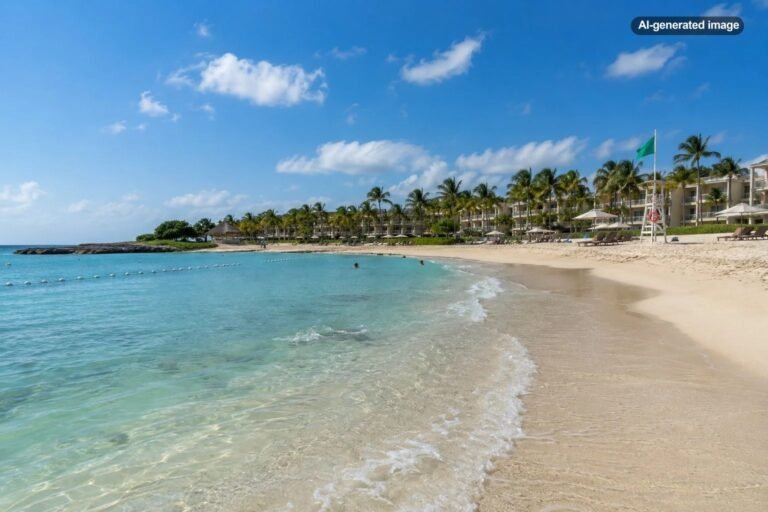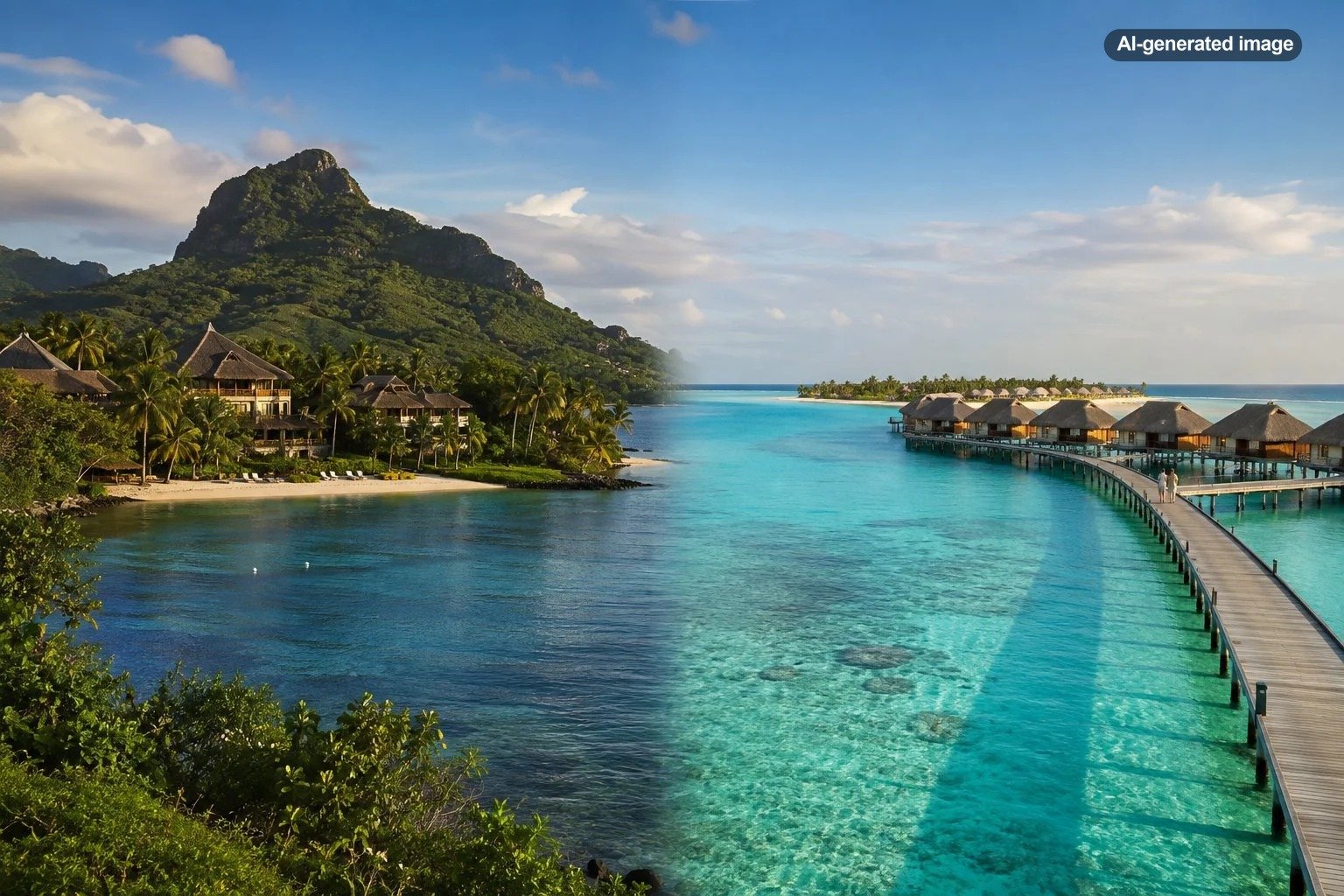
Fiji vs. Maldives for a Honeymoon Resort Vacation
Fiji and the Maldives can both deliver the private beaches, attentive resort service, and unhurried time that many couples want after a wedding. The better honeymoon destination depends less on which place looks more idyllic and more on how you want to spend your days.
Choose the Maldives if your ideal honeymoon centers on privacy, an overwater or beachfront villa, lagoon time, and the simplicity of remaining at one highly self-contained resort. Choose Fiji if you want a more varied trip combining beach time with culture, inland scenery, outdoor activities, and the possibility of visiting more than one island or resort area.
Quick answer: Fiji or the Maldives?
- Best for seclusion and villa-focused luxury: The Maldives.
- Best for varied landscapes and active days: Fiji.
- Best for a one-resort honeymoon: The Maldives.
- Best for combining resorts, islands, and cultural experiences: Fiji.
- Best value: It depends on flights, transfers, meal plans, and resort level, but Fiji generally offers a broader range of lodging formats.
Honeymoon planning snapshot
- Maldives trip style: One resort, substantial privacy, water-centered activities, and a deliberately slow pace.
- Fiji trip style: One or two resort areas, a wider activity mix, and more opportunities to engage with local landscapes and communities.
- Broad budget position: Both support luxury travel, although a remote Maldivian resort can carry significant transfer, dining, and activity costs beyond the room.
- Primary arrival points: Most Fiji honeymoons begin through Nadi, while many Maldives trips arrive through Velana International Airport near Male.
- Transportation: Island location matters in both destinations. Boats, domestic flights, and seaplanes can affect cost, timing, and the amount of usable resort time.
- Suggested pace: A shorter trip usually works better with one resort. A longer honeymoon makes a two-stop Fiji itinerary or a resort-plus-local-island Maldives itinerary more practical.
Fiji vs. Maldives at a glance
| Decision | Fiji | Maldives |
|---|---|---|
| Resort experience | Varied island, coastal, and private-island properties | Highly self-contained island resorts |
| Best-fit couple | Couples balancing relaxation with exploration | Couples prioritizing privacy and resort time |
| Typical activities | Snorkeling, hiking, waterfalls, sailing, and cultural visits | Snorkeling, diving, spa time, boating, and private dining |
| Getting to the resort | Road, ferry, water taxi, domestic flight, or resort transfer | Speedboat, seaplane, or domestic flight with an onward transfer |
| Main tradeoff | More choices require more itinerary planning | Seclusion can limit independent dining and exploration |
Choose the Maldives for privacy and a resort-centered escape
The defining Maldives experience is not simply the overwater villa. It is the island-resort format: couples can settle into one property where the room, beach, dining, spa, and water activities are all part of a contained environment. That arrangement suits honeymooners who want to make very few decisions after arrival.
Privacy is a particularly strong reason to choose the Maldives. Many stays are organized around individual villas rather than conventional hotel corridors, and daily plans can remain as simple as snorkeling, reading, taking a boat excursion, or spending an afternoon at the spa. Couples who view the room itself as an important part of the honeymoon may find this format more rewarding than travelers who expect to leave the property every day.
The tradeoff is dependence on the resort. Dining selection, activity pricing, and evening atmosphere are largely determined by the property chosen. A beautifully designed villa will not compensate for a meal plan that does not fit your habits or a quiet resort when you wanted social energy. Compare the full experience rather than choosing from room photographs alone.
Maldives transfers require careful coordination
According to the official Maldives tourism guidance, resorts near the international airport commonly use speedboat transfers, while properties farther away may require a seaplane or domestic flight. Transfers are often arranged with the accommodation, but couples should confirm the operating process, baggage rules, connection requirements, and total transfer charge before booking flights.
A distant atoll may provide a stronger sense of retreat, yet it can also add another travel segment after a long international journey. Couples taking a short honeymoon may prefer a speedboat-accessible resort to protect their limited vacation time. Those staying longer may consider the additional journey worthwhile for a more remote setting.
Choose Fiji for variety, culture, and more active days
Fiji is the stronger fit when a honeymoon should feel like a broader trip rather than an extended resort stay. Couples can combine beach time with rainforest scenery, waterfalls, diving, sailing, village-related cultural experiences offered through appropriate local channels, or a second island. The exact mix depends on the region, so selecting the right base is important.
The Mamanuca Islands work well for travelers who want island scenery with relatively straightforward access from the Nadi and Port Denarau area. The Yasawa Islands can suit couples seeking a more extended island journey and a quieter setting, although transfers may take more planning. Staying on Viti Levu can simplify logistics and provide road access to a wider range of activities. More distant islands may reward the extra effort with a slower pace and a stronger sense of separation.
Fiji also offers more flexibility in the shape of the honeymoon. A couple might stay at one resort for the entire trip, divide the vacation between the mainland and an island, or pair two contrasting resort areas. That choice is useful for partners with different travel styles: one person can have restorative beach days while the other still has access to hiking, paddling, diving, or cultural activities.
Fiji’s flexibility can create planning friction
The disadvantage of variety is that it creates more decisions. A two-resort itinerary requires coordinating checkout times, boat or flight connections, and baggage. Moving too often can make a honeymoon feel procedural rather than restful. Unless the trip is long enough to absorb a transfer day, one well-chosen island base may be more satisfying than attempting to sample several regions.
Which destination costs more?
Neither destination has one dependable honeymoon price. Airfare varies by origin and season, while accommodation spans a wide range of formats in Fiji and a broad luxury spectrum in the Maldives. The useful comparison is the total trip cost rather than the advertised room rate.
For the Maldives, examine mandatory resort transfers, meal-plan coverage, beverages, taxes or service charges shown during booking, equipment use, and excursions. An isolated resort naturally limits alternatives for meals and activities. Fiji can provide more lodging variety and, in some areas, more opportunities to dine or arrange activities beyond a single property. Private islands and remote luxury resorts in Fiji can still be priced at the highest end of the market.
Ask each resort for a written summary of what the quoted package includes. Compare equivalent room categories and meal arrangements, then add international flights, ground or island transfers, activities, spa treatments, and travel insurance. This produces a far more meaningful answer than comparing nightly rates.
When should you honeymoon in Fiji or the Maldives?
Seasonal patterns differ, and neither destination promises uninterrupted sunshine. Fiji generally has a warmer, wetter season from roughly November through April and a cooler, drier period from roughly May through October, although conditions vary among islands and from year to year. Couples should consult the Fiji Meteorological and Hydrological Services close to departure, especially when traveling during periods affected by tropical weather.
The Maldives Meteorological Service describes a southwest monsoon, normally extending from mid-May into November, and a northeast dry-season pattern from January through March, with April and December serving as transitional periods. These are climate patterns rather than day-by-day guarantees. Lower-season travel may offer appealing resort terms, but couples should be comfortable with a greater possibility of clouds, showers, wind, or disrupted water activities.
Wedding dates often determine honeymoon timing, so weather should guide expectations rather than automatically disqualify a destination. Flexible activity plans, appropriate travel insurance, and a resort with enjoyable indoor or sheltered spaces can matter as much as selecting the statistically drier season.
How to choose the right honeymoon resort
Start with the experience you want each morning, not the room category. In the Maldives, decide whether direct lagoon access, snorkeling conditions, dining breadth, spa time, or transfer simplicity matters most. In Fiji, decide whether you prefer an easily reached island, a remote retreat, a mainland base with excursions, or a split stay.
- Confirm the transfer: Identify who arranges it, where you meet the operator, the expected connection process, and what happens after a delayed international arrival.
- Study the meal plan: Determine which restaurants and beverages are included and whether reservations or supplements apply.
- Check the resort atmosphere: Adults-only, family-friendly, highly social, and deliberately quiet properties can produce very different honeymoons.
- Match the room to the season: An overwater villa can be memorable, but a sheltered beachfront room may offer easier beach access or feel more comfortable during windy weather.
- Read cancellation terms: Room, transfer, and activity policies may be separate and can change.
What honeymooners often overlook
Arrival day may be mostly logistical. Long-haul flights followed by a boat, seaplane, or domestic connection can consume much of the first day. Avoid scheduling an important private dinner or prepaid excursion immediately after arrival.
Privacy and isolation are not identical. A private villa can feel restorative, but a very small island may become limiting for couples who enjoy exploring independently. Fiji generally makes a more natural choice for a varied itinerary, while the Maldives rewards couples comfortable allowing the resort to define the trip.
The most photogenic room is not always the best room. Consider shade, walking distance to dining, steps into the water, wind exposure, and the difference between sunrise and sunset orientation. Ask the resort directly rather than assuming these details from photographs.
Pack for the actual itinerary. Reef-conscious sun protection, a light rain layer, sandals with dependable grip, and clothing suitable for resort dining are more useful than an oversized wardrobe. Couples still building a warm-weather capsule can browse the J.Crew Swim Collection, while checking current sizing, materials, and care details before purchasing.
Frequently asked questions
Is Fiji or the Maldives better for an overwater bungalow honeymoon?
The Maldives provides a particularly broad range of resort experiences built around overwater villas. Fiji also has overwater accommodations, but its honeymoon appeal is more varied and is not defined by that room type alone. Choose based on the complete resort, transfer, dining, and activity experience rather than the villa design by itself.
Which destination is better for adventurous couples?
Fiji generally offers the more varied land-and-water itinerary, including opportunities for hiking, waterfalls, island trips, diving, and cultural activities. The Maldives suits couples whose preferred adventures are primarily ocean-based, such as snorkeling, diving, boating, and marine excursions.
Can we combine two resorts?
Yes, but the logistics should justify the move. A two-stop Fiji trip can create meaningful contrast between regions. In the Maldives, changing resorts may require coordinated boat or air transfers and may not always be direct. Confirm the actual route before making nonrefundable reservations.
How long should a Fiji or Maldives honeymoon be?
A stay of about a week can work well at one resort, subject to the length of the international journey. Longer trips provide more room for a Fiji split stay or a carefully planned second stop in the Maldives. Couples traveling from far away should account for transit time and jet lag before deciding how many hotel changes are realistic.
The verdict
The Maldives is the more focused honeymoon choice: private accommodation, clear blue lagoons, and a resort environment designed to make staying in one place feel like the point of the trip. Fiji is the more versatile choice, offering romantic resorts alongside broader landscapes, cultural context, and greater itinerary variety.
If you want to retreat together and let one resort handle nearly every part of the experience, choose the Maldives. If you want relaxation balanced with exploration and a stronger sense of traveling through a destination, choose Fiji. The right answer is the place whose daily rhythm resembles the honeymoon you actually want, not simply the destination with the most recognizable photographs.