Alaska Cruise From Seattle vs. Vancouver: Which Port Is Better?
For most travelers, Seattle is the easier Alaska cruise departure port, while Vancouver is often the more interesting choice for itinerary flexibility and a streamlined downtown-to-ship experience. The better port depends less on which city is “best” and more on how you plan to reach the ship, whether you want a round-trip or one-way itinerary, and how comfortable you are adding an international border crossing to the beginning of your vacation.
Seattle has a major advantage for U.S.-based travelers who want to fly domestically, board a ship, and return to the same city. Vancouver counters with Canada Place, a cruise terminal directly in downtown Vancouver, plus Alaska programs that can include both round-trip voyages and one-way sailings connecting British Columbia with Alaska. Before choosing between the two, compare the actual itinerary rather than judging the cruise only by its departure city.
Quick answer: Seattle or Vancouver?
- Choose Seattle if domestic U.S. air travel and a straightforward round-trip cruise are your priorities.
- Choose Vancouver if you value a downtown cruise terminal, convenient rail access from Vancouver International Airport, or want to consider one-way Alaska itineraries.
- Compare ports and glacier days carefully. Two seven-night cruises can have materially different schedules even when both leave from the Pacific Northwest.
- Check travel documents before booking. Alaska cruises involve international travel, and document requirements depend on citizenship, itinerary, and how you enter or leave Canada or the United States.
Seattle is generally easier for U.S. travelers
Seattle’s biggest practical advantage is simplicity. Travelers flying from another U.S. city can reach Seattle-Tacoma International Airport without an international arrival process, spend a night in Seattle if desired, and board from one of the city’s two primary cruise facilities: Bell Street Cruise Terminal at Pier 66 or Smith Cove Cruise Terminal at Pier 91. The Port of Seattle’s 2026 schedule shows Alaska cruise operations at both terminals.
Pier 66 is particularly convenient for sightseeing because it sits on Seattle’s downtown waterfront and is within walking distance of Pike Place Market and other central attractions. Pier 91 is farther north and generally requires a taxi, rideshare, transfer, or other ground transportation. That terminal difference matters when choosing a hotel: a property that is exceptionally convenient for Pier 66 may not offer the same convenience for Pier 91.
Seattle-Tacoma International Airport is connected with downtown by Link light rail. Sound Transit currently lists the trip between the airport and central Seattle at about 38 minutes. There is not, however, a direct rail connection all the way to either cruise terminal. Travelers using light rail typically continue from downtown by walking, taxi, or rideshare, depending on the terminal and luggage.
Vancouver has the stronger cruise-terminal location
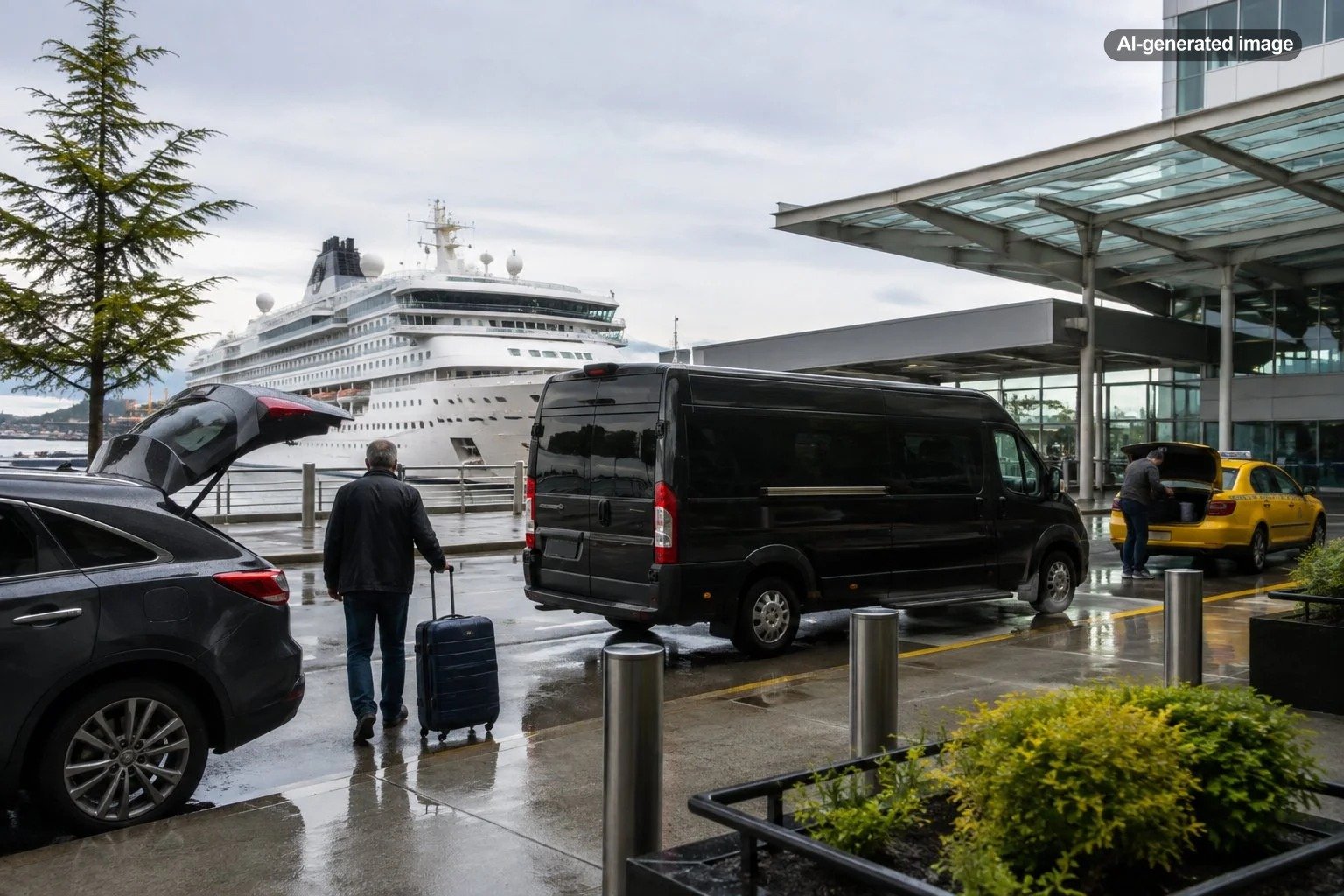
Vancouver’s Canada Place terminal occupies an unusually central waterfront location. Rather than traveling from a downtown hotel to an outlying port district, many cruise passengers can stay in central Vancouver and reach the terminal on foot or with a short local ride. Destination Vancouver identifies Canada Place as the city’s cruise ship terminal and notes that Alaska sailings depart from this downtown location.
Airport transportation is also a notable advantage. Vancouver International Airport is linked to downtown by the Canada Line. YVR states that the rail trip from the airport to downtown Vancouver takes under 30 minutes, and Waterfront Station is served by the Canada Line. Travelers should still allow time to move themselves and their luggage between Waterfront Station and Canada Place, but the airport-to-downtown rail connection can make a pre-cruise stay relatively easy without renting a car.
The tradeoff is that travelers arriving from the United States or another country are entering Canada before the cruise begins. That means passports, entry eligibility, airline requirements, and border procedures deserve attention before departure. Travelers should verify requirements for their own citizenship and itinerary rather than assuming that documents accepted for one cruise apply to another.
Itinerary differences may matter more than the port
This is where Vancouver can become especially compelling. Alaska cruise schedules are not simply identical voyages moved from one city to another. Holland America Line’s published 2026 Alaska program, for example, includes round-trip Seattle cruises, round-trip Vancouver cruises, and voyages between Vancouver and Whittier, Alaska. Royal Caribbean similarly markets Alaska departures from both Seattle and Vancouver and offers one-way Alaska options involving Vancouver and Seward.
A one-way sailing can be useful for travelers who want to connect a cruise with additional time in Alaska, while a round-trip itinerary is usually simpler for airfare. The correct comparison is therefore not “Seattle cruise versus Vancouver cruise” in the abstract. Compare the exact ship, ports, scenic-cruising days, embarkation and disembarkation cities, and total trip logistics.
Seattle round trips frequently include a Canadian call as part of the itinerary. For example, a currently published 2026 Royal Caribbean sailing from Seattle includes Victoria, British Columbia, before returning to Seattle. That is a useful reminder that departing from a U.S. port does not turn an Alaska cruise into a purely domestic trip.
Which port is better for a pre-cruise stay?
Both cities work well for adding a night or two before sailing, but they create different planning patterns. Seattle is a strong fit for travelers who want a U.S. city break and prefer to keep the flight portion of the trip domestic. If the ship uses Pier 66, the downtown waterfront can be particularly convenient. Travelers sailing from Pier 91 should pay closer attention to transportation on embarkation morning.
Vancouver may be more appealing if the pre-cruise stay is meant to flow directly into embarkation. Canada Place is integrated into downtown, with hotels, restaurants, waterfront areas, and transit nearby. The Canada Line also makes it realistic for many travelers to reach central Vancouver from YVR without arranging a private airport transfer.
Travel documents deserve more attention from Vancouver
Travel documentation should be checked for either departure port. U.S. Customs and Border Protection notes that U.S. citizens on qualifying closed-loop cruises can in some circumstances return to the United States using proof of citizenship and government-issued photo identification rather than a passport. CBP also cautions that travelers may still need a passport to enter countries visited by the cruise, and travelers should check with their cruise line regarding the documents required for their specific voyage.
A Vancouver departure adds another layer because the traveler must enter Canada before boarding. Rules differ by nationality and method of arrival, so this is not an area for assumptions. Verify current Canadian entry requirements, U.S. re-entry requirements, and the cruise line’s own documentation rules well before the trip.
What travelers often overlook
The terminal assignment can change the ground-transportation calculation. Seattle has Pier 66 and Pier 91, and they are not interchangeable from a hotel-planning perspective. Confirm the terminal assigned to your ship rather than booking around the general idea of the “Seattle cruise port.”
A cheaper flight may not produce the cheaper trip. An airfare difference can be offset by an extra hotel night, airport transfer, one-way flight from Alaska, or the logistics of crossing an international border. Evaluate the full vacation rather than airfare alone.
One-way cruises require a different transportation plan. A Vancouver-to-Alaska sailing can be excellent for combining the cruise with an Alaska land trip, but you will not return to your departure airport automatically. That may be an advantage or an inconvenience depending on the vacation you want.
Affiliate disclosure: HotelInfo.com may earn a commission when you book or purchase through links on this page. This does not affect the price you pay. Learn more.
Once you have narrowed the choice to specific dates and ports, you can compare available sailings with Expedia. Cruise fares, taxes, gratuities, itineraries, cancellation policies, and availability vary, so review the current terms for the exact sailing before booking.
Who should choose Seattle?
Seattle is usually the stronger fit for U.S. travelers who prioritize easy air access, want a conventional round-trip vacation, or prefer to minimize international logistics before embarkation. It can also work particularly well when the desired ship and itinerary already match the traveler’s Alaska priorities. The primary caveat is terminal location: Pier 66 is closely integrated with downtown, while Pier 91 requires more deliberate transportation planning.
Who should choose Vancouver?
Vancouver is a strong choice for travelers who appreciate an exceptionally central cruise terminal, plan to spend time in Vancouver before sailing, or want to explore one-way Alaska itineraries in addition to round trips. Its airport-to-downtown rail connection is another practical advantage. The main tradeoff is the need to account for Canadian entry requirements and international travel logistics before the cruise begins.
The bottom line
Seattle wins on simplicity; Vancouver often wins on cruise-port convenience and itinerary possibilities. If you are flying from within the United States and want the cleanest round-trip plan, start by comparing Seattle sailings. If you are interested in combining Alaska with a Vancouver stay, want to consider a one-way voyage, or value having the cruise terminal in the heart of downtown, Vancouver deserves equal or greater consideration.
Most importantly, compare the actual cruises. Departure port is only one part of an Alaska itinerary, and the ship, port calls, glacier viewing, sailing direction, transportation plan, and travel-document requirements can matter more than whether your vacation begins south or north of the U.S.-Canada border.
FAQ
Is an Alaska cruise better from Seattle or Vancouver?
Seattle is generally easier for U.S.-based travelers seeking a simple round trip. Vancouver can be better for travelers prioritizing a central cruise terminal or considering one-way Alaska itineraries.
Can I take public transportation from the airport to the cruise port?
In Vancouver, the Canada Line connects YVR with downtown and Waterfront Station, near Canada Place. In Seattle, Link light rail connects SEA Airport with downtown, but it does not deliver passengers directly to Pier 66 or Pier 91.
Do I need a passport for an Alaska cruise from Seattle?
Requirements depend on citizenship and itinerary. CBP allows certain documentation alternatives for qualifying closed-loop cruises, but travelers may still need a passport or other documents for countries visited. Confirm requirements with government authorities and your cruise line.
Can I take a one-way Alaska cruise from Vancouver?
Yes. Current 2026 programs from major cruise lines include Vancouver itineraries that travel one way between British Columbia and Alaska, in addition to round-trip options.
Sources & further reading
- Port of Seattle: Bell Street Cruise Terminal at Pier 66
- Sound Transit: Seattle-Tacoma International Airport transportation
- Vancouver International Airport: Public transportation
- TransLink: Waterfront Station
- U.S. Customs and Border Protection: Western Hemisphere Travel Initiative
- Holland America Line: 2026 Alaska cruise season