Does a Hotel Pool View Mean Your Room Will Be Noisy?
Not necessarily. A hotel room with a pool view can be quiet, moderately lively, or noticeably noisy depending on where the room sits, how the property uses its pool area, and how well the room is insulated from outdoor sound. The words “pool view” describe what you can see, not how much sound will reach your room.
The useful question is not simply whether the room faces the pool. It is how close the room is to the busiest parts of the pool deck, what happens there during the hours you expect to rest, and whether doors, windows, balconies, corridors, or connecting rooms create additional paths for noise.
Quick answer: when a pool view is more likely to be noisy
- A low-floor room directly beside the pool deck may receive more voices, music, splashing, and furniture noise than a room farther away.
- A room near a pool bar, activity area, children’s section, entrance gate, or heavily used walkway may be livelier than one facing a quieter edge of the pool.
- Higher floors can add distance, but they do not automatically eliminate sound because voices and music can still carry through open outdoor spaces.
- Balcony doors and exterior windows matter. A pleasant open-door evening can also mean hearing more of whatever is happening below.
- The pool’s operating pattern matters as much as its location. Daytime activity may be irrelevant to a traveler who is out sightseeing, while evening activity can matter greatly to an early sleeper.
A pool view and a poolside room are not the same thing
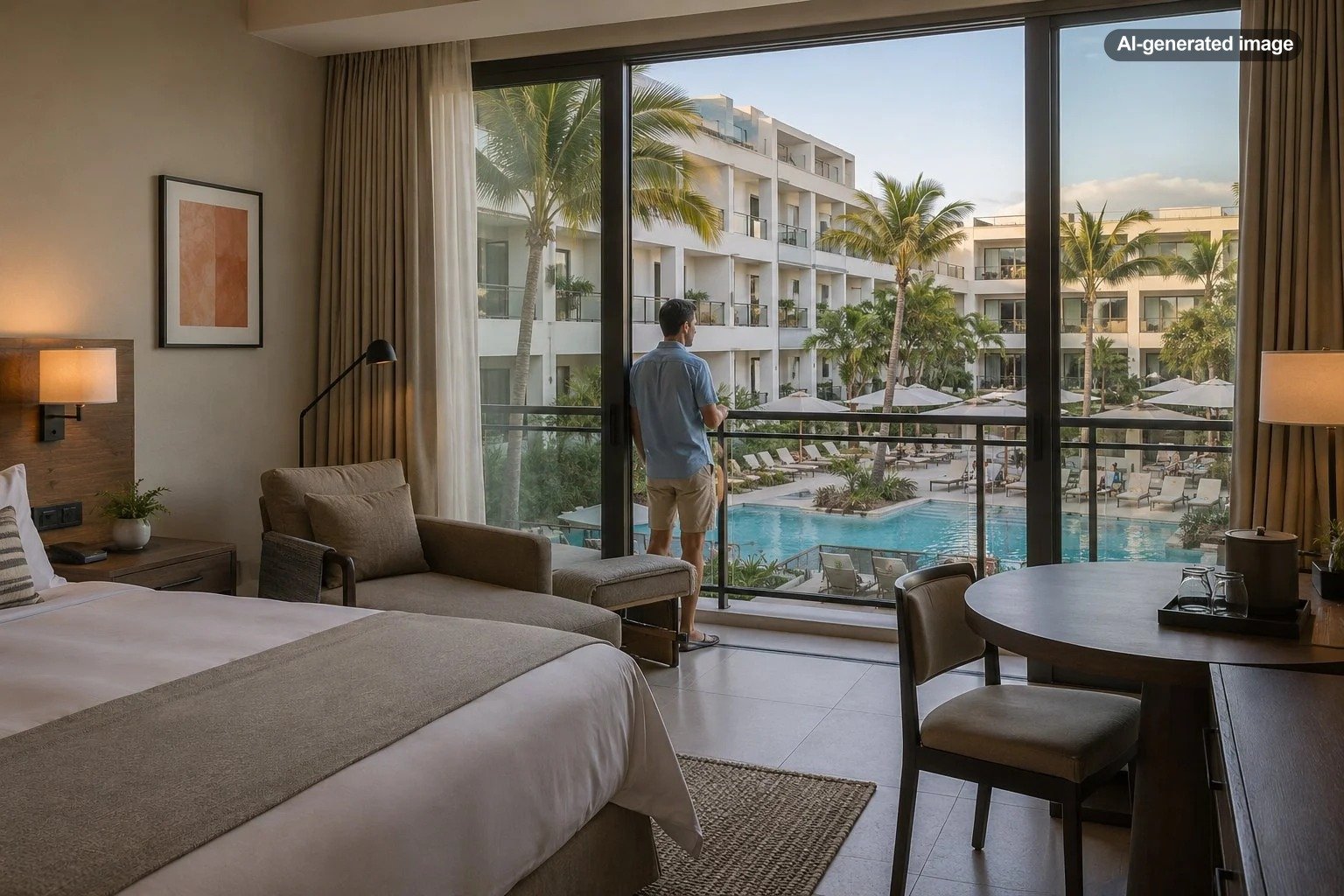
One of the most important distinctions is between seeing the pool and being immediately beside it. A room several floors above a central courtyard may be marketed as pool view because the water is visible from the window or balcony. Another room with the same general description could be only a short distance from loungers, gates, or a poolside gathering area.
That difference can matter more than the view label itself. A room directly over a busy section may feel connected to the activity below, which some travelers enjoy. A room set farther back or positioned toward a quieter corner may provide much of the same visual benefit with less immediate sound.
Booking descriptions do not always communicate that distinction clearly. If quiet is important, ask about the room’s approximate floor, setback from the pool, and position relative to the most active part of the deck rather than relying only on the room-category name.
The time of day may matter more than the view
Pool noise is often highly dependent on timing. A property where the pool is active through the afternoon could still work well for a traveler who plans to spend most of the day away and returns after the area becomes quieter. The same room may be a poor match for someone hoping to work remotely, put a child down for an afternoon nap, or spend a quiet day reading indoors.
Evening use deserves particular attention for light sleepers. Some pool areas function mainly as daytime recreation spaces, while others may be connected to dining, entertainment, or social areas. Because these patterns differ by property and can change, it is better to ask the hotel directly about typical operating hours and nearby activity than to assume every pool-facing room behaves the same way.
Floor level helps, but it is not a guarantee of quiet
Travelers often assume that a higher floor will solve the problem. Additional distance can help in some buildings, especially when it separates the room from footsteps, deck furniture, gates, and conversations immediately outside. However, height alone does not make a room acoustically isolated.
Sound can carry across open courtyards, particularly when the pool is surrounded by building walls. The shape of the property, the location of balconies, and the room’s windows and doors can all influence what reaches the interior. A higher room may therefore be quieter in one hotel and only modestly different in another.
If you care about both the view and the noise level, a better request is often “a higher-floor pool-view room away from the busiest pool activity” rather than simply “a high floor.” The hotel may not be able to guarantee the request, but the wording explains the actual priority.
Closed windows can change the experience considerably
The way you use the room matters. A pool-facing balcony may be appealing precisely because you can step outside, enjoy the view, and feel connected to the property. The tradeoff is that an open balcony door removes much of the separation between indoor and outdoor sound.
Travelers who plan to keep windows or doors closed may have a very different experience from travelers who want them open whenever they are in the room. Building construction also varies, so it is not wise to assume that every modern-looking room has exceptional sound insulation or that every older property is noisy.
If sleep quality is a major concern, recent guest reviews can provide useful clues when several reviewers independently mention sound from the pool area. Treat individual reviews as observations rather than guarantees, and pay attention to details such as room location, floor, season, and time of day.
Who may actually prefer a pool-facing room?
Not every traveler wants maximum separation from hotel activity. Families may appreciate being able to see part of the pool area from their room, particularly when different members of the group are moving between the room and recreational spaces. Travelers who enjoy a social resort atmosphere may also prefer a room that feels visually connected to the center of the property.
A pool view can also be appealing when the alternative outlook is less interesting, such as a service area, parking area, or neighboring building. In that situation, accepting some daytime activity may be a reasonable tradeoff for a more pleasant view.
By contrast, a light sleeper, remote worker, traveler recovering from a long flight, or family with strict nap schedules may place quiet above scenery. Those travelers may prefer to request a room away from pools, elevators, ice machines, service areas, connecting doors, and other potential noise sources, depending on the property’s layout.
What to ask the hotel before choosing a pool view
Instead of asking, “Are the pool-view rooms noisy?” try asking questions that are easier for the hotel to answer specifically. Noise is subjective, and a staff member may be reluctant to label an entire room category as quiet or loud.
- Are pool-view rooms located directly above the pool deck or set back from it?
- Which floors are generally farthest from pool activity?
- Is there music, entertainment, dining, or organized activity near the pool?
- What are the pool area’s typical operating hours?
- Can a pool-view room be requested away from the main entrance, children’s area, or busiest gathering space?
- If quiet is the priority, is another view category usually farther from recreational areas?
These questions turn a vague concern into a practical room-location discussion. They also make it easier to decide whether the pool view is worth the tradeoff for your particular trip.
What travelers often overlook
Corridor noise can matter as much as outdoor noise. A pool-facing room near an elevator or a heavily used route to the pool may experience more hallway traffic even when the exterior sound is manageable.
Weekday and weekend patterns can differ. A room that seems calm during one stay may feel livelier during another period simply because the guest mix or property programming is different. Avoid treating a single review as a permanent description of the hotel.
Weather can change how the area is used. When outdoor conditions are favorable, guests may spend more time around the pool. During poor weather, the same area may be nearly empty. That makes pool-related noise inherently less predictable than a fixed mechanical sound source.
Your schedule determines whether the noise is relevant. A lively pool from late morning through afternoon may be a nonissue if you will be away during those hours. For a traveler planning to work, nap, or relax in the room during the day, it can be a much bigger consideration.
How to decide whether a pool view is worth it
Start with your main priority. If the view and resort atmosphere are part of the experience you want, a pool-facing room can make sense, especially if you are comfortable with some daytime activity. Ask for a higher or more distant room when possible and clarify that you would prefer to be away from the busiest section.
If uninterrupted sleep or daytime quiet matters more than scenery, a non-pool-facing location may be the safer choice. That does not mean every pool-view room will be noisy; it simply removes one obvious source of variable outdoor activity from the equation.
The most practical approach is to treat “pool view” as the beginning of the room-selection conversation rather than a complete description. Floor, distance, orientation, nearby facilities, operating hours, and your own daily schedule will usually tell you far more about the likely experience.
Frequently asked questions
Are higher-floor pool-view rooms always quieter?
No. Greater distance from the deck can reduce some nearby activity noise, but sound can still travel across open courtyards and between buildings. The property’s design and the room’s position are also important.
Should light sleepers avoid pool-view rooms?
Not automatically, but light sleepers should ask detailed questions before booking. A room facing a quiet section from an upper floor may work well, while one directly above an active pool deck may be less suitable.
Can a hotel guarantee a quiet pool-view room?
Room requests and guarantees vary by property. It is reasonable to explain that quiet is your priority and request a location away from the busiest pool activity, but confirm directly with the hotel what can actually be guaranteed.
Is a pool view better for families?
It can be convenient for families who enjoy easy visual connection to the recreational area, but families with infants or strict nap schedules may prefer more separation from daytime activity. The better choice depends on how the room will be used.
What is the best room request if I want a pool view without as much noise?
Ask whether the hotel can place you on a higher floor or in a pool-facing room set away from the main pool entrance, activity areas, or other busy gathering points. Be clear that quiet matters more than being close to the pool.