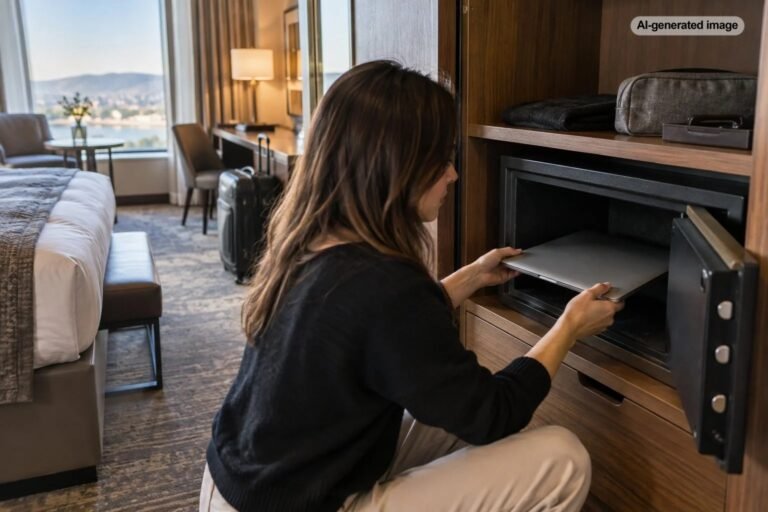
What to Do If the Replacement Hotel Room Is Worse Than the First One
Being moved to another hotel room is supposed to solve a problem, not create a new one. Yet a replacement room can turn out to be noisier, less clean, poorly maintained, or noticeably less comfortable than the room you originally occupied. If the second room is worse, the most effective response is to document the new problems, speak with a manager, and request a specific solution before accepting the room or arranging alternative accommodations.
The distinction between a disappointing room and a genuine downgrade matters. A less appealing view may be inconvenient, while a smaller room category, missing accessibility feature, broken lock, or serious cleanliness problem can substantially affect the accommodation you agreed to purchase. Knowing how to distinguish those situations helps you negotiate fairly without making your stay unnecessarily difficult.
Quick Answer: What Should You Do When the Second Room Is Worse?
- Inspect the replacement room before settling in. Check cleanliness, noise, bathroom condition, climate control, locks, and the features included in your reservation.
- Document the new problems. Take photographs or short videos and preserve your original booking confirmation.
- Return to the front desk promptly. Explain that the replacement has introduced new problems or failed to resolve the original complaint.
- Ask a manager for a specific solution. Request another suitable room, correction of the problem, or an appropriate adjustment to your bill.
- Do not assume a refund is automatic. The appropriate resolution depends on the circumstances, reservation terms, and applicable consumer protections.
Inspect the Replacement Room Before You Accept It
After an inconvenient first room change, travelers often feel pressure to accept whatever comes next. However, spending a few minutes checking the replacement can prevent another frustrating move later in the evening.
Look first at the issue that caused the original room change. If you moved because of excessive hallway noise, determine whether the second room is actually quieter. If the original room had faulty air conditioning, verify that the replacement room can maintain a comfortable temperature.
Then check for problems unrelated to the initial complaint. Examine the bathroom, bedding, flooring, windows, electrical fixtures, and basic room equipment. Confirm that the door closes securely and that the replacement accommodates your practical needs.
It is also worth comparing the room against your reservation confirmation. Room category, bedding configuration, accessibility requirements, and explicitly promised features are more meaningful reference points than an expectation that every room in the hotel will look identical.
Practical example: If a traveler reserved a room with two beds and the hotel replaces it with a single-bed room, the new accommodation may be unsuitable even if it is clean and recently renovated. The problem is not merely that the traveler dislikes the room. The replacement may fail to meet an important part of the reservation.
Decide Whether the New Room Is Actually a Downgrade
Not every disadvantage has the same significance. Hotels may have rooms with different layouts, views, furniture arrangements, and proximity to elevators, even within the same advertised category.
Focus on the measurable differences between what was booked, what was originally provided, and what is now being offered.
Problems That May Justify Another Room Change
- The replacement has a lower room category or fewer beds than the confirmed reservation.
- An advertised or confirmed feature is missing.
- The room has unresolved cleanliness or maintenance problems.
- The door, window, or another important security feature is defective.
- Noise or environmental conditions make normal rest difficult.
- The replacement does not meet a documented accessibility requirement.
Differences That May Be Matters of Preference
- The room has a less attractive but otherwise compliant view.
- The furniture arrangement is less appealing.
- The room is on a different floor without an associated reservation promise.
- The decor is older but the accommodation remains functional and consistent with the booking.
Preference-based concerns are still reasonable to raise, especially when the hotel initiated the move. However, they may support a polite request for another available room rather than a demand for a particular refund.
Document Both Rooms and Explain the Sequence of Events
When a second room is worse than the first, the hotel’s staff may initially see the situation as another isolated complaint. Explaining the sequence makes it easier for a manager to understand why the attempted solution has failed.
Record the original room number, the reason you requested or accepted a transfer, the approximate time of the move, and the new room number. Photograph visible problems in the replacement room, including any relevant room features that differ from your booking.
For noise, intermittent equipment failures, or water leaks, a short video may provide better evidence than a photograph. Keep your reservation confirmation, room description, and any messages exchanged with the property or booking platform.
Do not photograph other guests, enter restricted areas, or create a confrontation to gather evidence. Clear, factual documentation is generally more useful than an emotional description of everything that has gone wrong.
If possible, communicate the essential facts in writing after speaking with the front desk. A brief message identifying the problems and the remedy requested creates a record that may be useful if the issue remains unresolved.
Ask to Speak With the Hotel Manager
Front desk employees may be able to assign available rooms, but they might have limited authority to approve rate adjustments, alternative accommodations, or refunds. When a room change has already failed, asking for a manager or manager on duty is a reasonable next step.
Explain the issue without treating the employee as personally responsible for the condition of the room.
For example, you might say: ‘We moved because the first room had a problem with the air conditioning. Unfortunately, the replacement has a strong odor and the bathroom is not properly cleaned. Could a manager help us find a room in the category we booked that is ready for occupancy?’
This approach identifies the original concern, the new defect, and the requested resolution. It also leaves room for staff to offer a practical alternative.
Ask what rooms are genuinely available rather than insisting on a category that may be fully occupied. If the hotel proposes another transfer, request an opportunity to inspect the next room before completing the move.
What If the Hotel Offers a Room in a Lower Category?
A replacement room does not necessarily have to be identical to the original. However, a lower-category room should not automatically be treated as equivalent to the accommodation reserved and paid for.
If the property can only offer a smaller room or one with fewer confirmed features, ask whether it can provide an appropriate rate adjustment. The amount, if any, may depend on the price difference, reservation terms, and the circumstances of the change.
Before accepting the arrangement, clarify whether the adjustment applies to one night or the entire affected portion of the stay. Ask the hotel to document the revised room assignment and any approved compensation.
For example, moving from a confirmed suite to a standard room is materially different from moving between two standard rooms with slightly different layouts. A room category difference is easier to demonstrate when the original reservation identifies what was purchased.
If the proposed replacement lacks an essential accessibility feature, explain the specific functional requirement rather than accepting a general assurance that the room is similar. A discretionary upgrade or unrelated amenity does not necessarily resolve that problem.
What Compensation Can You Reasonably Request?
Compensation should reflect the actual inconvenience and the difference between the accommodation promised and delivered. There is no universal rule that every unsuccessful hotel room change entitles a guest to a free night.
Depending on the situation, reasonable requests may include:
- Another room: Particularly appropriate when a suitable room is available and the problem can be solved promptly.
- A room-rate adjustment: Worth discussing when a lower category is accepted or a material reservation feature is unavailable.
- A partial refund: Potentially appropriate when significant disruption or unresolved defects affect part of the stay.
- A refund for unused nights: Worth requesting if the hotel cannot provide acceptable accommodations and you need to leave early.
- An incidental accommodation: A manager may offer a practical courtesy, although it should not replace correction of a serious problem.
Keep the request proportionate and specific. Asking for a rate adjustment because the replacement room is demonstrably smaller is more persuasive than demanding a complete refund solely because its furnishings are less attractive.
Any proposed compensation should be confirmed in writing, including whether it will appear as a reduced charge, a refund to the original payment method, or a credit with separate restrictions.
Should You Accept a Third Room?
A third room change can sound exhausting, especially after a long journey or when children are already preparing for bed. Nevertheless, another transfer may be the quickest way to obtain the accommodation you reserved.
The decision should depend on the seriousness of the current problem and the credibility of the proposed solution.
A third room may be reasonable if a manager has personally confirmed that it is ready, meets the booking requirements, and does not have the defects that affected the earlier rooms. Ask to inspect it first when practical.
Repeated transfers become less reasonable when staff are guessing about room conditions or cannot explain how the next accommodation will address the issues. In that situation, request a more definitive plan rather than continuing an open-ended cycle of room changes.
If moving requires transporting substantial luggage, mobility equipment, or sleeping children, explain the additional burden. Staff may be able to assist with the transfer or provide another workable arrangement.
What If the Hotel Is Fully Booked?
A sold-out property makes room changes more complicated. The manager may have no suitable room immediately available, particularly late at night or during a busy event.
Ask whether the hotel can correct the existing room’s problem within a reasonable period. A housekeeping issue may be fixable, while a room that cannot be secured or occupied safely requires a different response.
If the property cannot provide acceptable accommodations, ask whether it will help arrange a room at another hotel and what expenses, if any, it agrees to cover. Such assistance is not guaranteed and should not be assumed without confirmation.
Before leaving, clarify whether the original reservation will be canceled, whether unused nights will be refunded, and who must authorize the transaction. Obtain written confirmation whenever possible.
Do not assume that booking another hotel independently guarantees reimbursement for the replacement accommodation, transportation, or price difference. Those expenses can become disputed if the original property has not agreed to cover them.
What If You Booked Through a Third-Party Website?
Third-party reservations can involve two separate parties: the hotel providing the room and the company processing or managing the booking. This distinction becomes important when a refund or cancellation is requested.
The hotel’s staff generally remains the first practical contact for correcting a room problem during your stay. However, if payment was collected by a booking platform, the refund process may also require action by that platform.
Contact the booking provider through its official customer support channel and provide the reservation number, photographs, description of both rooms, and summary of your discussions with the property.
Ask which organization is responsible for approving the requested adjustment and which organization will actually issue any refund. If the hotel agrees to release the reservation or refund unused nights, request written confirmation that can be shared with the booking provider.
Avoid canceling a nonrefundable reservation through an automated account interface before understanding the consequences. A voluntary cancellation may be treated differently from a documented failure to provide acceptable accommodations.
When Should You Leave Instead of Continuing to Negotiate?
Some room problems are serious enough that continued negotiation should not delay a decision to relocate. A door that cannot be secured, significant water intrusion near electrical equipment, suspected hazardous conditions, or an accommodation that cannot meet essential accessibility needs should be evaluated differently from a disappointing view or worn furniture.
Where there is an immediate threat, leave the affected area and seek appropriate assistance. Do not remain in a potentially dangerous room simply to strengthen a later refund request.
For nonemergency problems, give the hotel a clear opportunity to resolve the issue when practical. Before checking out early, explain that the replacement room is unsuitable, identify the unresolved defects, and ask how the property proposes to handle the unused portion of the reservation.
If you must book elsewhere, retain both reservation records, receipts, and correspondence. These materials can help establish what happened if further discussions are necessary.
What If the Hotel Refuses to Help?
If the manager declines another room, compensation, or an early departure arrangement, ask for a written explanation of the decision. Record the name or position of the person you spoke with and the time of the conversation.
For a chain-affiliated property, contacting the brand’s official customer relations department may offer another opportunity to review the complaint. For an independently operated hotel, a written request to the property’s management may be more appropriate.
If the accommodation was purchased through a booking platform, use its complaint process as well. Present the original reservation details, what the hotel actually provided, the attempts to resolve the problem, and the specific adjustment requested.
A credit card dispute may be another option when services were not delivered as agreed and direct efforts have failed. However, chargebacks are not automatic refunds for dissatisfaction. Eligibility, evidence requirements, and deadlines vary by jurisdiction, payment method, and dispute type. Contact the card issuer promptly if you believe a qualifying billing problem exists.
Keep the complaint factual. A clear timeline and supporting documentation generally provide a stronger basis for review than threats, exaggerated claims, or demands unrelated to the accommodation problem.
What Travelers Often Overlook During a Second Room Change
Confirm That the Original Room Assignment Is Closed
When staff transfer a guest between rooms, ask them to verify that the old room is no longer assigned to your reservation and that any room-related charges or deposits are being handled correctly. This is especially useful after multiple transfers.
Check Whether the Problem Affects the Entire Stay
A manageable inconvenience for one remaining night may be unacceptable for a longer reservation. If a suitable room will only become available later, ask whether the hotel can offer an interim arrangement and clarify how the affected nights will be handled.
Consider the Timing of the Complaint
Reporting the issue immediately gives the hotel a better opportunity to inspect the room and offer a remedy. Waiting until checkout can make it more difficult to establish the problem’s duration or whether the property had a reasonable chance to correct it.
Understand What an Upgrade Really Solves
A higher-category room is not necessarily better for every traveler. A suite with one bed may be unsuitable for a family that reserved two beds. A room farther from the elevator may be inconvenient for someone with mobility limitations. Judge a proposed upgrade by whether it meets your needs, not simply by the category label.
Frequently Asked Questions
Can I refuse a replacement hotel room?
You can explain that the proposed replacement does not meet your reservation requirements or has unacceptable problems and ask for another solution. However, refusing a room does not automatically guarantee a refund or alternate accommodations at the hotel’s expense. Clarify the consequences before making a final decision.
Does the hotel have to refund the price difference if the replacement room is smaller?
Not automatically in every situation. A documented move to a lower room category provides a reasonable basis for requesting an adjustment, but the outcome depends on the booking terms, the accommodation actually delivered, and applicable law. Ask the hotel to explain and confirm its proposed adjustment in writing.
Can I ask for compensation after accepting the second room?
Yes. Accepting a replacement does not prevent you from raising problems discovered afterward. Report the issue promptly and explain whether it was present when you entered the room or developed later. The fact that you accepted the room may still be relevant to how a subsequent complaint is assessed.
Should I leave a negative review immediately?
It is usually more productive to allow management an opportunity to address the problem first, unless immediate relocation is necessary. Afterward, an accurate review can describe the original defect, the replacement room’s condition, and the hotel’s response without exaggerating or disclosing private employee information.
What if the hotel says every available room is the same?
Ask whether the property can repair or clean the current room, offer a documented rate adjustment where appropriate, or assist with another arrangement. If the problem concerns an essential reservation feature, explain precisely why the available rooms do not meet that requirement.
The Best Resolution Is One That Actually Fixes the Stay
A second hotel room that is worse than the first creates a legitimate reason to return to management, but the most useful approach is to focus on what is wrong and what would resolve it. Inspect the replacement, compare it with the confirmed booking, preserve evidence, and ask for a clear remedy before making an irreversible decision.
Sometimes that remedy is a properly prepared third room. In other cases, it may be a rate adjustment, a repair, or a negotiated early departure. The important distinction is whether the hotel has provided accommodation that reasonably matches the reservation and can be used for its intended purpose. A calm, documented, and specific request gives both the traveler and the property the clearest path toward resolving the problem.