How to Choose a Safari Lodge With the Best Wildlife Viewing From the Property
Choosing a safari lodge with excellent wildlife viewing from the property requires looking beyond photographs of animals and descriptions of game drives. The strongest candidates are lodges whose physical setting naturally brings guests close to wildlife habitat: a river, floodplain, lagoon, waterhole, migration corridor, open grassland, or other area animals regularly use. Just as important, the lodge should provide comfortable, well-positioned places where guests can watch without needing to leave on an organized activity.
A lodge can offer outstanding guided drives yet relatively little wildlife viewing between excursions. Another property in the same region may overlook water, open plains, or a productive wildlife corridor where guests can spend hours watching animals from a deck, room, hide, dining area, or common space. If seeing wildlife during the quiet hours between activities matters to you, investigate the lodge layout and habitat as carefully as the safari program itself.
Quick answer: what makes a safari lodge good for wildlife viewing?
- Productive habitat immediately around the lodge: Look for water, floodplains, riverbanks, open grassland, wetlands, or established animal routes rather than simply a lodge located somewhere inside a wildlife region.
- Unobstructed viewing areas: Decks, hides, terraces, lounges, and rooms should face habitat rather than dense vegetation or internal lodge areas.
- Wildlife that can be watched safely without an activity: The key advantage is having meaningful viewing opportunities during breakfast, midday rest periods, late afternoon, or evenings.
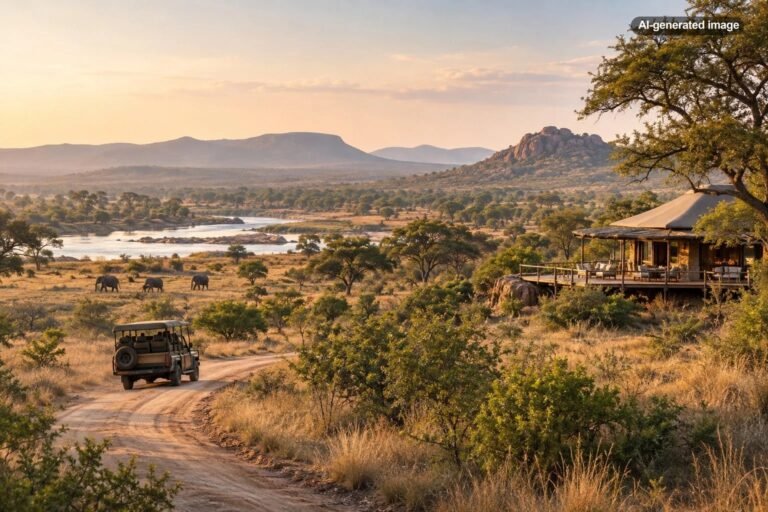
- A layout designed around the landscape: Elevated decks, sunken hides, waterside seating, and rooms facing open terrain can substantially improve the experience.
- Realistic expectations: Wildlife is never guaranteed. Habitat, season, rainfall, water availability, and animal movement can all change what guests see.
Start with the habitat, not the lodge photographs
The first question is not whether a lodge looks luxurious. It is what lies immediately beyond the deck. Properties beside dependable water can have an advantage because rivers, lagoons, wetlands, and waterholes may attract animals for drinking, feeding, cooling, and movement. Open floodplains and grasslands can also provide wider sightlines than thick woodland.
A beautiful lodge surrounded by dense vegetation may feel wonderfully secluded while offering limited long-distance viewing from the property. Conversely, a simpler camp overlooking a broad open area may provide a much stronger wildlife-watching experience. Neither is inherently better; they suit different priorities.
When reviewing a lodge, study maps and descriptions of the property’s setting. Specific phrases such as overlooking a river, facing a lagoon, positioned beside a waterhole, or elevated above a floodplain are more informative than broad marketing statements about being surrounded by nature.
Understand the difference between a waterhole and a good waterhole view
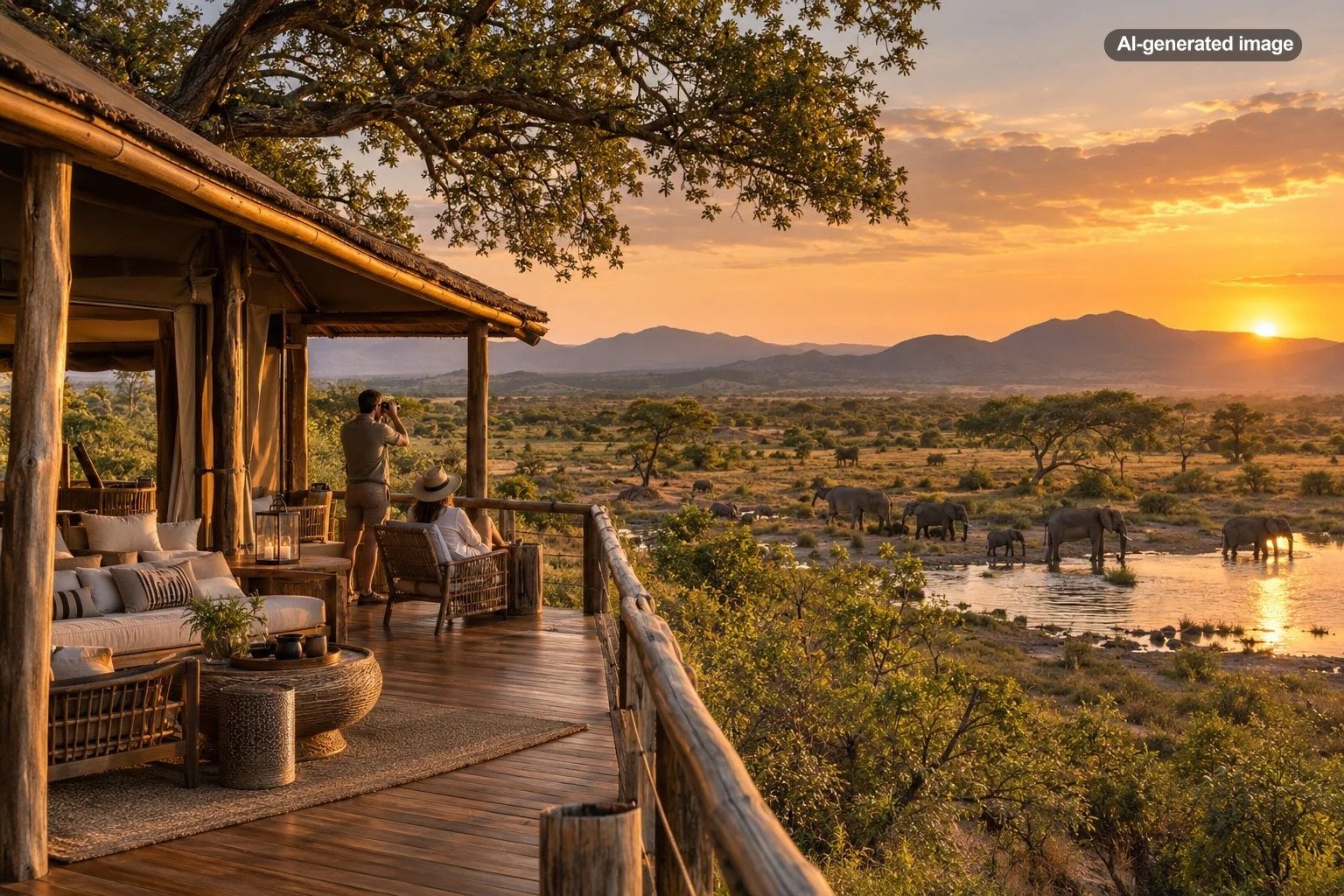
A waterhole can be a major advantage, but its presence alone tells you little about the guest experience. Find out where it is in relation to rooms and common areas. A waterhole visible only from one distant corner of the property is very different from one positioned directly in front of a shaded viewing deck or dedicated hide.
Consider visibility as well. Vegetation, distance, elevation, and the direction rooms face can determine whether guests actually have a clear view. Dedicated hides can be particularly useful because they allow people to remain relatively still and watch activity from a fixed position. Elevated platforms can provide broader views, while lower hides may offer a more intimate perspective at ground or water level.
Season also matters. Some water sources become especially important during dry periods, while landscapes with abundant seasonal water can spread animals over a much larger area. Ask the lodge how viewing from the property typically changes through the year rather than assuming photographs taken in one season represent every visit.
Look for multiple places to watch wildlife
The best property-based viewing is often not tied to a single lookout. A lodge becomes much more rewarding when wildlife can be watched from several parts of the property.
- A main deck overlooking open habitat can work well during meals or afternoon breaks.
- A lounge with broad sightlines gives guests somewhere comfortable to watch during hot or quiet periods.
- A dedicated hide can reward patient observation away from busier communal spaces.
- A private room deck allows guests to watch independently, particularly early in the morning.
- An elevated position can help guests scan a river, plain, or floodplain over a wider distance.
If wildlife viewing from the property is a major priority, ask which room categories actually face the viewing area. Do not assume every room has the same orientation simply because photographs show one room overlooking animals.
Consider what happens between game drives
Safari itineraries often include early-morning and late-afternoon activities, leaving several hours around midday. This is where a lodge with a strong wildlife setting can feel noticeably different. Instead of treating those hours purely as downtime, guests may be able to sit quietly and continue observing the landscape.
This matters especially for travelers who enjoy slow wildlife watching, birding, photography, or simply spending time in one place. It can also appeal to couples or mixed-interest groups when one traveler occasionally wants to skip a drive without giving up the possibility of seeing animals.
For travelers focused almost entirely on guided drives, however, property-based viewing may be less important than the quality of the surrounding reserve, guide team, vehicle access, and activity schedule. Decide how much of your safari you expect to spend actively exploring versus watching from camp.
Ask what can realistically be seen from the lodge
Broad claims such as abundant wildlife are less useful than concrete descriptions. Ask which animals are commonly seen around the property, from which areas guests tend to see them, and whether those sightings vary significantly by season.
Also distinguish between frequent wildlife activity and occasional dramatic encounters. A lodge may provide consistently enjoyable viewing of antelope, birds, elephants, or other animals without producing predators outside the dining deck every afternoon. That can still be excellent property-based wildlife viewing.
Birdlife deserves particular attention. Properties near wetlands, riverine vegetation, flowering trees, or varied habitat can offer substantial viewing even during periods when large mammals are less visible. Travelers interested in photography may also want to ask about morning and afternoon light, viewing direction, and whether decks provide enough space for longer lenses.
Compare openness, privacy, and proximity
A lodge designed for expansive wildlife views may feel more exposed than one surrounded by thick vegetation. Open floodplain locations can produce long sightlines but less visual privacy. Forested camps may feel intimate and atmospheric while making animals harder to spot from a distance.
Similarly, a lodge near a productive water source may experience considerable wildlife movement around the property. That can be a major attraction, but it also means guests may be subject to strict escort procedures after dark or other movement rules established for safety. Follow the property’s instructions rather than treating animals near camp as tame or predictable.
Travelers with mobility concerns should ask how viewing areas are reached. A spectacular hide is less useful if access involves stairs, uneven pathways, or a considerable walk that does not suit the traveler. A room or central deck with excellent views may be the better choice.
Do not confuse game-drive quality with lodge-view quality
These are related but separate considerations. A camp can be located in an exceptional wildlife area and still have limited views from the property because of vegetation or topography. Another lodge may have a remarkable river or waterhole outlook while requiring longer drives to reach certain habitats.
When comparing options, evaluate both. If the priority is maximizing wildlife encounters throughout the day, look for a lodge that combines access to productive safari areas with strong viewing from camp. If the priority is photography from a fixed location, the lodge’s orientation and observation areas may deserve even greater weight.
Questions to ask before booking
- What habitat can guests see directly from the main lodge?
- Is there a natural or artificial waterhole visible from the property?
- Can guests watch wildlife from their rooms or private decks?
- Does the lodge have a hide, viewing platform, or elevated lookout?
- Which room locations have the clearest wildlife views?
- How does wildlife activity around the lodge change by season?
- Are there times when guests must be escorted between rooms and common areas?
- Are the principal viewing areas accessible for travelers with limited mobility?
Specific answers to these questions are more useful than general promises of close-to-nature accommodations. They reveal whether wildlife viewing is central to the property’s design or simply possible because the lodge happens to be in a safari destination.
What travelers often overlook
Room orientation matters. Two rooms at the same lodge can provide very different experiences if one faces open habitat and another faces vegetation or an internal pathway.
Quiet observation can be as valuable as proximity. A broad view of an active floodplain may produce more sustained wildlife watching than a closer but heavily obstructed location.
The best viewing can happen when you are doing nothing. Breakfast, an afternoon rest, or time before dinner can become part of the safari when the property overlooks habitat animals regularly use.
Wildlife remains unpredictable. Even a superbly positioned lodge cannot guarantee particular species or sightings. Choose based on habitat, viewing infrastructure, and the overall safari experience rather than promises of individual animals.
FAQ
Is a lodge with a waterhole always the best choice?
No. A waterhole can be valuable, especially when it is clearly visible from comfortable guest areas, but rivers, wetlands, floodplains, and natural movement corridors can also provide excellent viewing. The quality of the sightline matters as much as the feature itself.
Should I pay more for a room with a wildlife view?
It can be worthwhile if you expect to spend meaningful time at the lodge and the room genuinely overlooks productive habitat. Before choosing a higher room category, confirm exactly what the view includes and whether less expensive rooms share access to the same central viewing areas.
Are animals more active around safari lodges at night?
Activity patterns vary by species, location, season, and conditions. Some properties may have wildlife moving nearby after dark, but guests should always follow lodge rules about nighttime movement and escorts.
Is property-based viewing a substitute for game drives?
Usually not. Watching from the lodge and exploring with trained guides provide different experiences. A strong safari itinerary can combine both, giving travelers active wildlife searches during excursions and quieter observation during time at camp.
What is the single most important feature to look for?
Look for a lodge that directly overlooks productive, visible habitat and provides comfortable places from which guests can watch it. A good setting combined with thoughtful viewing areas is more meaningful than a long list of generic safari amenities.