Are Aft Balcony Cruise Cabins Worth the Extra Walk?
Yes, an aft balcony cruise cabin can be worth the extra walk if you value wake views, a more tucked-away location, and the possibility of a balcony configuration that feels different from a standard side-facing cabin. The tradeoff is straightforward: you give up some convenience in exchange for a location many travelers find more distinctive.
The decision becomes less appealing if you have limited mobility, dislike long walks through corridors, want to be close to several public venues, or are particularly sensitive to vibration and ship movement. Because cabin layouts vary significantly between ships, the deck plan matters more than the word aft alone.
Quick answer: who will appreciate an aft balcony?
- Choose aft if the wake view is one of the experiences you most want from your balcony.
- Consider aft if you prefer being away from some of the heavier hallway traffic found near major elevator banks.
- Think twice if walking longer distances several times a day would become tiring or inconvenient.
- Check the exact deck plan because balcony depth, nearby venues, overhangs, structural features, and elevator locations vary from ship to ship.
- Compare the price difference carefully rather than assuming every aft cabin provides a substantially larger or better balcony.
What makes an aft balcony different?
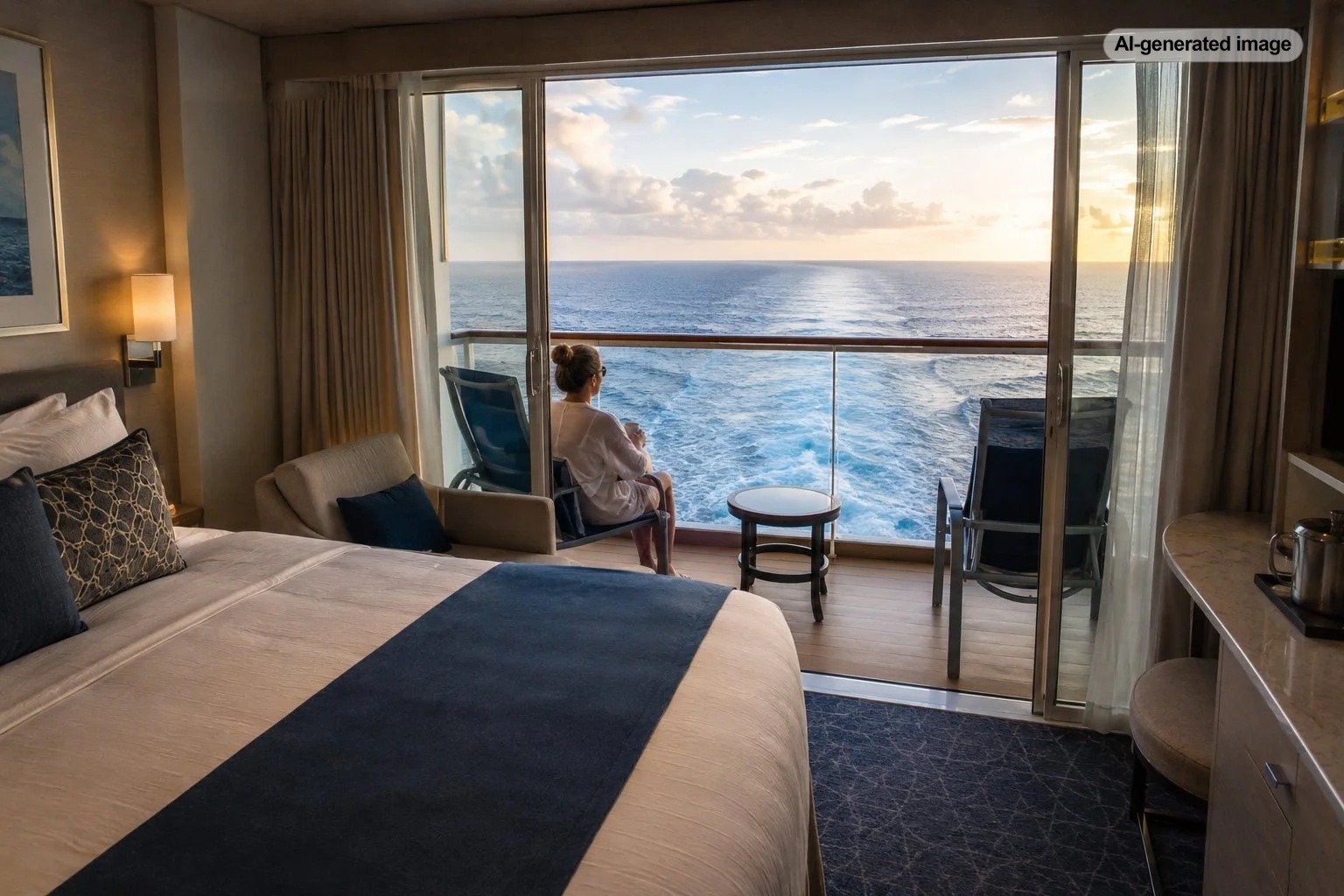
An aft-facing balcony sits at or near the stern, with its primary outlook behind the ship rather than directly off the port or starboard side. The defining feature is usually the wake view: instead of looking sideways across the water, you look back along the route the ship has traveled.
That positioning can give the cabin a noticeably different atmosphere. The stern is physically removed from many central gathering areas, and cabins at the end of a corridor naturally receive less through-traffic than cabins located between popular venues. That does not guarantee silence, however. Noise can still come from machinery, neighboring balconies, entertainment spaces, outdoor decks, or venues positioned above or below.
Some ships also have aft balconies that are deeper, wider, unusually shaped, or part of higher cabin categories. Others offer aft cabins whose outdoor space is not dramatically different from an ordinary balcony. Never assume that an aft location automatically means more square footage.
The extra walk is real, especially on larger ships
The most obvious disadvantage is distance. If the closest elevator or stair bank is some distance forward of your cabin, every trip to breakfast, the theater, the spa, or a forward observation area may begin with a substantial corridor walk. On a large ship, those trips accumulate over the course of a day.
For an active traveler, that may barely register. Some passengers actually enjoy the extra walking and consider the quiet location worth the distance. For someone using a cane, managing joint discomfort, traveling with small children, or frequently returning to the room, the same location can become frustrating.
Think about your likely daily pattern rather than simply measuring distance on a deck plan. A traveler who leaves the cabin after breakfast and stays out for most of the day will experience the walk very differently from someone who routinely returns for forgotten items, clothing changes, medications, naps, or breaks between activities.
Wake views are the strongest reason to choose aft
The stern view is what makes this cabin location compelling for many cruisers. Watching the wake stretch behind the ship can make the balcony feel less like an ordinary outdoor extension of the room and more like a destination in itself.
This can be particularly appealing to travelers who expect to spend meaningful time on their private balcony. If you normally use a balcony only for a few minutes each morning, paying a premium specifically for the aft position may offer limited value. If balcony time is central to how you enjoy a cruise, the location can matter much more.
The orientation also changes what you see. A side-facing balcony can be excellent for watching a coastline or activity alongside the vessel. An aft balcony emphasizes the ship’s wake and receding scenery. Neither perspective is universally superior; they simply create different experiences.
Aft cabins can feel quieter, but location still matters
Being at the end of the ship can reduce ordinary corridor traffic because fewer passengers need to pass your door on the way somewhere else. That can make an aft cabin appealing to travelers who like a more removed residential feel.
However, deck selection remains important. A cabin beneath an active outdoor deck or above a late-running venue can undermine the advantage. Likewise, unusual stern designs may place balconies near entertainment areas or other spaces that produce their own activity.
Before booking, inspect what is directly above, below, and adjacent to the cabin. A quiet-looking location on one deck can have a very different character when the neighboring decks are considered.
Motion and vibration deserve separate consideration
Travelers sometimes treat motion and vibration as the same issue, but they are worth evaluating separately. The amount of ship movement you notice depends on sea conditions, vessel design, your deck, and your position on the ship. Travelers who are especially concerned about motion generally have a stronger reason to consider a more central location.
Vibration can also be noticeable in some stern areas, particularly during certain maneuvers or operating conditions. The experience varies considerably by ship and cabin. It would be a mistake to assume every aft room is noisy or that every aft room is exceptionally calm.
If either issue could materially affect your trip, research the specific ship and cabin category rather than relying on broad rules about aft accommodations.
Is a larger aft balcony worth paying more for?
Potentially, but only when the actual deck plan and cabin details confirm what you are buying. Some aft-facing accommodations have outdoor spaces that are meaningfully deeper or configured differently from ordinary balconies. Corner locations can also have unusual shapes or wider fields of view.
The important question is whether you will use that space. A larger balcony has more practical value for travelers who enjoy reading outside, having coffee in private, watching sailaways, or spending unstructured time at sea. If most of your cruise will be spent at restaurants, pools, shows, lounges, and shore excursions, paying more for balcony characteristics may be less important.
Compare the aft option with a standard balcony on the same sailing and ship rather than judging the category in isolation.
Affiliate disclosure: HotelInfo.com may earn a commission when you book or purchase through links on this page. This does not affect the price you pay. Learn more.
If you are still choosing among ships or itineraries, you can compare available sailings before narrowing the decision to a specific deck and cabin. Cabin categories, fares, itineraries, taxes, gratuities, onboard charges, and cancellation terms vary by sailing, so evaluate the current details before booking.
Aft vs. midship balcony: the practical tradeoff
| Consideration | Aft balcony | Midship balcony |
|---|---|---|
| Primary appeal | Wake-facing location and a more distinctive outlook | Convenient access to more parts of the ship |
| Walking | Often more corridor distance | Usually easier for frequent trips to the cabin |
| Hallway traffic | Can feel more removed | May have more passing traffic near central circulation areas |
| Motion concerns | May be less appealing to motion-sensitive travelers | Often the more conservative location choice for motion concerns |
| Balcony layout | Can be unusual or larger on some ships | More likely to follow the ship’s standard balcony configuration |
Who should probably skip an aft balcony?
A midship cabin is usually the more practical choice for travelers whose priority is minimizing walking. It can also make sense for families who expect frequent returns to the room, travelers with mobility limitations, or anyone who wants the simplest possible access to elevators and central public areas.
You may also prefer a standard side balcony if you care more about watching ports, coastlines, and activity alongside the ship than watching the wake. Similarly, if you are paying a meaningful premium but the actual aft balcony is not larger or otherwise distinctive, the standard option may represent the more sensible use of your cruise budget.
What travelers often overlook before booking
The cabin number is ultimately more important than the general label. Two aft cabins on different decks of the same ship can have different balcony shapes, overhead coverage, nearby public spaces, structural elements, and distances from elevators.
Review the ship’s deck plan carefully. Look one deck above and below your intended cabin. Note whether the nearest stair and elevator bank fits your expected routine. Confirm the specific cabin category and balcony configuration rather than assuming photos of another aft cabin represent yours.
It is also useful to distinguish an aft-facing cabin from a cabin that is merely located toward the aft portion of the ship. A side-facing balcony near the stern may provide the longer walk without the classic wake-facing view that motivates many travelers to choose the location in the first place.
FAQ
Are aft balcony cabins always bigger?
No. Some ships have deeper, wider, or unusually shaped aft balconies, but the layout varies by vessel and cabin category. Check the specific deck plan and cabin description.
Are aft cabins bad for seasickness?
Travelers who are highly sensitive to motion may prefer a more central cabin location. Actual movement depends on the ship and sea conditions, so no cabin location can guarantee a motion-free experience.
Are aft balconies more private?
They can feel more secluded because they are removed from some heavily traveled corridors, but balcony privacy depends on the ship’s stern design. Some balconies can be visible from neighboring or higher decks.
How important is the distance from the elevators?
It depends on your routine. The distance may be insignificant for an active traveler who rarely returns to the cabin during the day, but important for someone who makes frequent trips or has mobility concerns.
So, are aft balcony cruise cabins worth it?
They are worth considering when the wake view and balcony experience matter more to you than convenience. They are less compelling when easy elevator access, minimal walking, or a central ship location are higher priorities. The strongest booking decision comes from comparing the exact aft cabin with a specific alternative on the same ship rather than assuming that aft is automatically better.