Big Island vs. Maui for Resorts and Outdoor Adventures
Maui is generally the stronger choice for travelers who want a polished resort vacation with outdoor excursions that are relatively easy to combine. The Big Island is better for travelers who see the resort as a comfortable base for exploring volcanic terrain, dramatically different climates, and widely separated regions.
Both islands offer beaches, snorkeling, golf, upscale lodging, and memorable landscapes. The real distinction is how the trip feels. Maui makes it easier to alternate between resort time and a major outing. The Big Island rewards longer drives, flexible plans, and a willingness to treat the journey across the island as part of the adventure.
Planning snapshot
- Choose Maui for: concentrated resort areas, beach-oriented days, a shorter first visit, and a convenient mix of relaxation and sightseeing.
- Choose the Big Island for: volcanic landscapes, geographic variety, road trips, stargazing experiences, and a more exploratory pace.
- Primary resort areas: Wailea, Kaanapali, Napili, and Kapalua on Maui; the Kohala Coast and Kona side on the Big Island.
- Transportation: A rental car is useful on either island and particularly valuable on the much larger Big Island.
- Suggested approach: Allow at least several nights for Maui and consider a longer stay or two lodging bases when exploring both sides of the Big Island.
Big Island vs. Maui at a glance
| Decision | Maui | Big Island |
|---|---|---|
| Resort experience | More concentrated and easy to combine with beaches and dining | Spacious resort districts that can feel more self-contained |
| Signature land adventure | Haleakala and the journey through East Maui | Hawaii Volcanoes National Park |
| Driving style | Long excursion days from a resort base | Greater distances and stronger case for changing bases |
| Best fit | First-time visitors, couples, and families balancing activity with downtime | Repeat Hawaii visitors, road-trippers, geology enthusiasts, and active travelers |
Which island has the better resort experience?
Maui favors convenience and a familiar resort rhythm
Maui’s principal resort districts place beaches, accommodations, restaurants, golf, and organized activities within clearly defined coastal areas. Wailea offers an upscale, composed atmosphere in South Maui, while Kaanapali provides a more active resort setting in West Maui. Napili and Kapalua can appeal to travelers seeking a quieter or less centralized coastal stay, depending on the property and immediate location.
This concentration is valuable when different travelers want different things. One person can spend the morning at the pool while another takes a snorkeling excursion, and the group can reunite without devoting the entire day to cross-island travel. Families and couples who want an easy vacation structure often find this especially useful.
The tradeoff is that Maui’s most prominent resort districts can feel highly developed. Travelers who prefer a trip centered on remote landscapes may spend more time leaving the resort corridor than enjoying it.
The Big Island favors space and destination-style properties
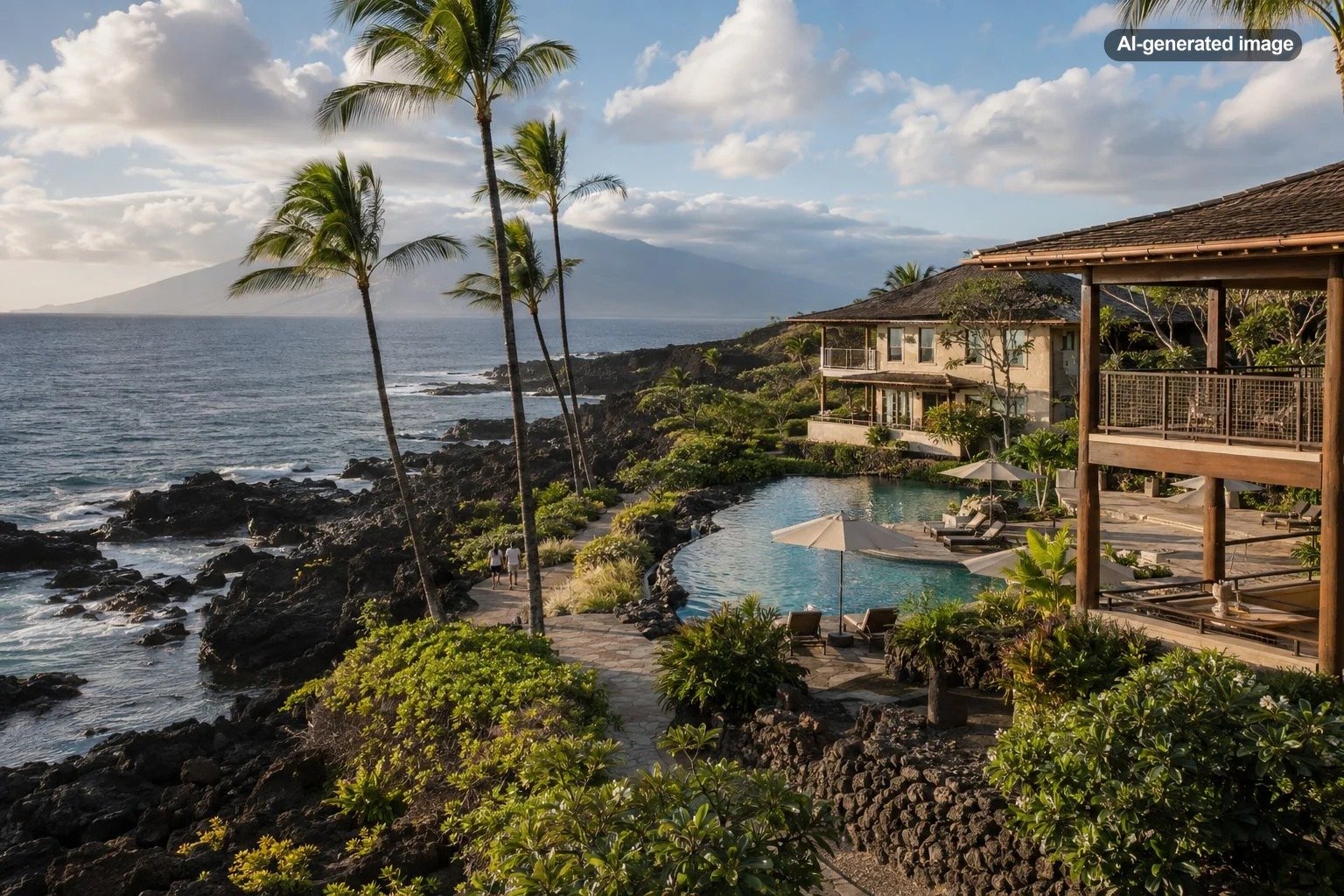
Many of the Big Island’s classic resort experiences are found along the sunnier western coast, particularly around Kona and the Kohala Coast. The landscape can feel expansive, with broad lava fields separating resort districts, beaches, historic places, and towns. This gives some stays a strong sense of retreat but also makes spontaneous exploration less convenient.
The Big Island offers more contrast between lodging regions. A coastal resort supports beach days, golf, and water activities, while a stay around Hilo or Volcano provides a more practical base for rainforests, waterfalls, and Hawaii Volcanoes National Park. Those eastern and upland areas generally should not be treated as substitutes for a full coastal resort experience; they serve a different purpose.
The practical tradeoff is distance. A beautiful resort on the Kohala Coast may be an excellent choice for relaxation but a demanding base for repeated trips to the national park. Travelers who want both sides of the island should consider dividing the stay rather than building every day around a long return drive.
Which island offers stronger outdoor adventures?
The Big Island delivers greater environmental contrast
The Big Island stands apart for the scale and variety of its terrain. Hawaii Volcanoes National Park offers crater views, volcanic features, trails, and drives through a culturally significant landscape. Conditions, closures, congestion, weather, and volcanic activity can change, so an eruption should never be treated as a guaranteed attraction. The National Park Service advises visitors to check current conditions, remain in designated areas, and keep a backup plan.
Elsewhere on the island, travelers can combine Kona-area ocean activities with Kohala scenery, Hilo-area waterfalls, black-sand coastlines, agricultural tours, and guided stargazing. Manta-ray snorkeling is one of the island’s distinctive water experiences, but participation should depend on current ocean conditions, operator requirements, and each traveler’s swimming ability.
The island is especially rewarding for travelers who enjoy the transitions between landscapes. The drawback is that seeing several environments requires time. A list of attractions that looks manageable on a map can become an exhausting itinerary once driving, meals, weather, and stops are included.
Maui packages major adventures more neatly
Maui’s outdoor identity is built around several strong, recognizable experiences. Haleakala National Park combines a high-elevation summit district with the coastal Kipahulu District, although these areas are reached by different routes and should not be treated as adjacent stops. Sunrise entry at the summit requires an advance reservation in addition to the applicable park entrance arrangements, while other park visits require travelers to monitor current conditions and guidance.
East Maui offers rainforest scenery, waterfalls, coastal views, and the famously winding route toward Hana. This is not simply a drive between two points. Its value lies in the landscape and planned stops, and its narrow roads demand patience and courteous driving. Travelers prone to motion sickness or uncomfortable with long, curving drives may prefer a guided excursion or a different Maui activity.
Maui also provides accessible beach days, snorkeling, paddling, sailing, hiking, golf, and seasonal wildlife-oriented excursions. The advantage is variety without the same geographic scale as the Big Island. The disadvantage is that popular routes and viewpoints can feel busy, and advance planning may be necessary for specific parks or activities.
How driving changes the vacation
A rental car provides the greatest flexibility on both islands, but it plays a different role on each. On Maui, many visitors use the car to connect a coastal resort with one substantial outing, such as Haleakala, Upcountry, or East Maui. Several resort days can still remain geographically compact.
On the Big Island, the car often becomes central to the trip. The island has two primary commercial airports, one serving the Kona side and one at Hilo, and the best arrival point depends on the lodging plan. Travelers should compare the airport, first hotel, final hotel, rental-car terms, and intended route before booking separate pieces of the trip.
A two-base Big Island itinerary can reduce backtracking. For example, travelers might pair a western coastal stay with a shorter eastern or Volcano-area stay. That arrangement introduces a hotel change, but it can produce calmer days and more time at the places the traveler came to see.
Which island is better for different travelers?
For a first Hawaii resort trip
Maui is usually the simpler recommendation. Its established resort regions, strong beach focus, and manageable mix of excursions make the choices easier to understand. The Big Island can still work for a first visit, particularly when volcanic scenery is the main priority, but it benefits from more deliberate route planning.
For couples
Maui suits couples who want polished resort time, beach walks, meals out, and one or two ambitious excursions. The Big Island suits couples who enjoy scenic drives, contrasting environments, and a quieter sense of space. Neither island is inherently more romantic; the better fit depends on whether the couple values convenience or exploration.
For families
Maui can be easier for families who need short transfers between the room, pool, beach, and meals. The Big Island may be more compelling for older children interested in geology, wildlife, and road-trip discovery. Families should consider swimming ability, elevation, heat, drive tolerance, and the difficulty of planned trails rather than choosing activities by name alone.
For highly active travelers
The Big Island has the edge for travelers who want the broadest range of terrain and do not mind significant driving. Maui may be better for those who want one major activity each day while preserving more time for swimming, dining, or resort recovery.
What travelers often overlook
- A resort address does not describe the entire island. Compare the exact lodging area with the activities that matter most, not simply the island name.
- Beach conditions vary. A beach that works well one morning may be unsuitable later because of surf, wind, currents, or seasonal conditions. Follow posted warnings and local guidance.
- Elevation changes the experience. Summit areas can be far cooler and more demanding than the coast. Bring appropriate layers and consider personal health limitations.
- Volcanic activity is not scheduled entertainment. Visit the Big Island for the landscape and cultural significance of the park rather than assuming visible lava will be present.
- Reservations and access rules can change. Recheck official park and state guidance shortly before the trip.
- Overplanning weakens both options. Maui’s scenic drives take time, and the Big Island’s distances are substantial. Leave room for weather, traffic, meals, and unplanned stops.
FAQ
Is Maui or the Big Island better for beaches?
Maui is generally easier for a vacation built primarily around sandy beaches and resort convenience. The Big Island has rewarding beaches, but shorelines are more varied and may require more driving from a particular hotel.
Which island is better without a rental car?
Maui is often the more workable choice if the plan centers on one resort district and organized excursions. A car remains useful. On the Big Island, going without one can sharply limit independent exploration because destinations are widely dispersed.
Can I visit both islands in one trip?
Yes, but the plan works best when the overall vacation is long enough to justify another flight, airport transfers, and hotel changes. On a shorter trip, choosing one island usually produces a more relaxed experience.
Is the Big Island less expensive than Maui?
Not reliably. Lodging, rental cars, food, and activities vary by travel dates, property type, location, and booking terms. Compare the complete trip rather than assuming one island is consistently cheaper.
What is the simplest final choice?
Choose Maui when the priority is a cohesive resort vacation with beaches and approachable day trips. Choose the Big Island when the priority is volcanic scenery, environmental variety, and an exploratory road-trip experience.