Where to Stay in Lisbon for Hills, Trams, and Easy Airport Access
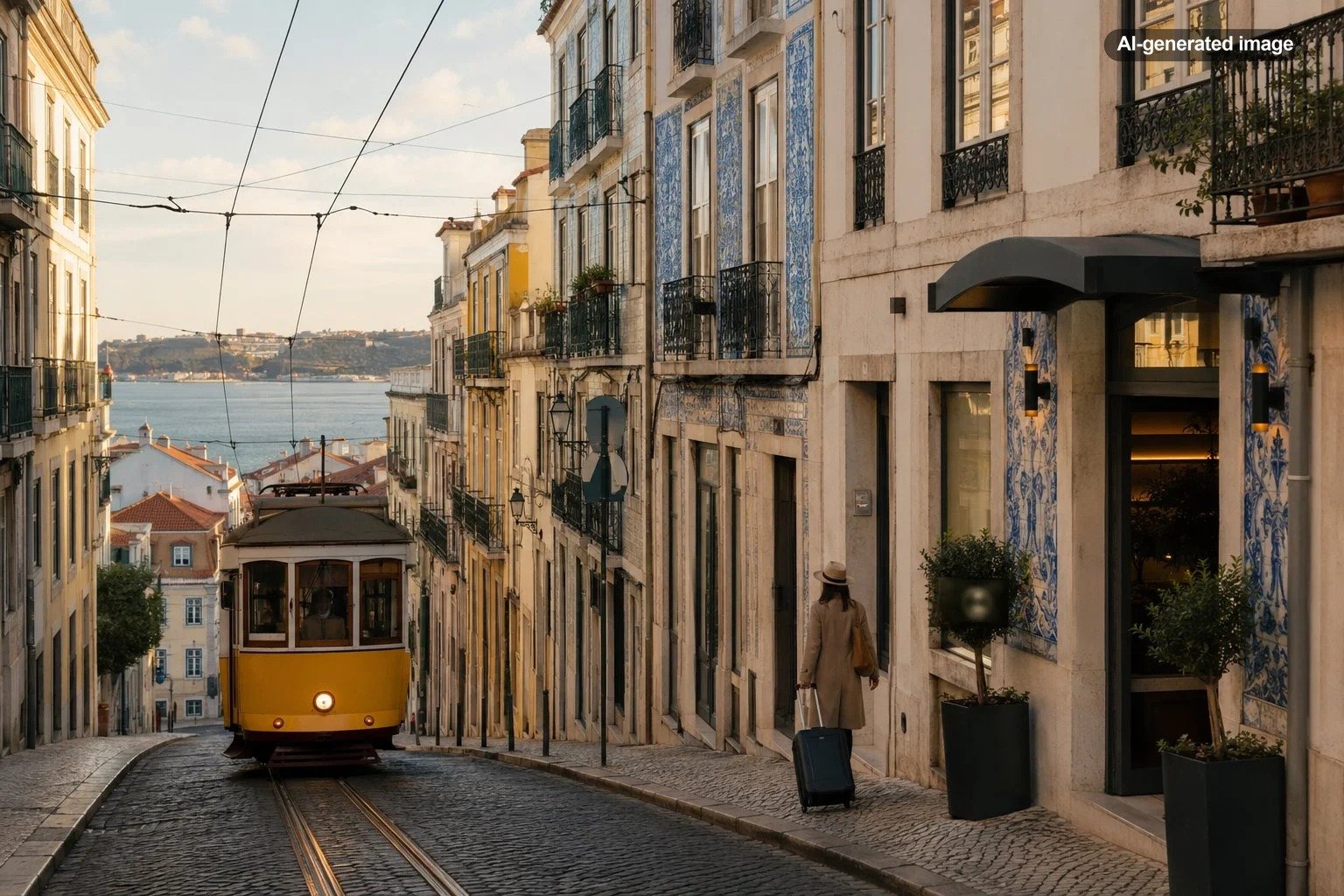
The most practical place to stay in Lisbon depends on which inconvenience you would rather avoid. Alfama and the upper historic districts put atmospheric lanes, viewpoints, and rattling trams outside the door, but they also introduce steep slopes, stairs, and less direct airport journeys. Baixa, Rossio, and Avenida da Liberdade offer flatter walking routes and stronger metro connections while keeping the old city within reach.
For a first visit that balances hills, trams, and airport access, Rossio or the lower edge of Avenida da Liberdade is usually the most adaptable base. Travelers who place historic character above luggage convenience may prefer Alfama, while visitors arriving late, traveling with children, or managing limited mobility should look closely at Baixa and metro-connected Intendente.
Planning snapshot
- Best all-around area: Rossio and Restauradores for central sightseeing, transit choices, and manageable access to hillier districts.
- Best for historic atmosphere: Alfama, provided steep lanes and possible vehicle-access limitations are acceptable.
- Best for classic tram access: Chiado, Alfama, Intendente, and the Rossio area place several historic routes within practical reach.
- Best for airport simplicity: Avenida da Liberdade, Rossio, and Intendente offer useful metro connections, although transfers or a walk may still be required.
- Rental-car need: Usually low for a city-focused stay. Parking and narrow streets can make a car more burdensome than helpful.
Quick comparison of Lisbon hotel bases
| Hotel | Area | Best for | Main tradeoff |
|---|---|---|---|
| Hotel Avenida Palace | Restauradores | Classic luxury and central transit | Formal style and upscale positioning |
| My Story Hotel Rossio | Rossio | First visits and car-free sightseeing | Busy surroundings |
| My Story Hotel Tejo | Baixa | Value-conscious central stays | Less retreat-like than hilltop hotels |
| Memmo Alfama | Alfama | Couples and historic atmosphere | Steep, uneven approaches |
| Bairro Alto Hotel | Chiado | Dining, culture, and nightlife | Active evening environment |
| Tivoli Avenida Liberdade Lisboa | Avenida da Liberdade | Full-service luxury and metro access | Less intimate old-quarter atmosphere |
| 1908 Lisboa Hotel | Intendente | Design and direct metro convenience | Not beside the riverfront core |
| Corpo Santo Lisbon Historical Hotel | Cais do Sodre | Riverfront transit and upscale comfort | Nightlife activity nearby |
Hotel Avenida Palace: the strongest classic base beside Restauradores
Hotel Avenida Palace occupies a highly practical position between Rossio, Restauradores, Avenida da Liberdade, and the lower approaches to Chiado. It suits travelers who want an elegant, historic hotel without committing to the steep lanes of Alfama or Bairro Alto. Rossio railway station and nearby metro access also make the area useful for travelers considering a day trip to Sintra or an airport journey by public transportation.
The hotel is in the luxury range and favors traditional interiors over minimalist design. Its central setting can feel active, and room outlooks may differ, so travelers sensitive to city noise should review available room locations. It is a particularly sensible choice for a first Lisbon visit, a special occasion, or a traveler who values staffed hotel service and a recognizable central landmark.
My Story Hotel Rossio: a compact option for first-time sightseeing
My Story Hotel Rossio places guests directly on Rossio Square, close to flatter Baixa streets and the foot of several hill routes. From here, travelers can walk toward the river, climb into Chiado, or connect with transportation toward Alfama and other historic quarters. The location reduces the need to make every outing begin with a strenuous ascent.
This is a moderate, compact city-hotel choice rather than a secluded retreat. Rossio is busy, highly visited, and rarely feels residential. That energy is useful for short stays and travelers who expect to spend most of the day outside, but couples seeking quiet evenings may prefer Alfama or a smaller property away from the main squares.
My Story Hotel Tejo: practical Baixa access with a value-oriented position
Near Praca da Figueira and Rossio, My Story Hotel Tejo offers another convenient lower-city base. The location works well for travelers who want to see Alfama and the castle district but do not want to carry luggage into their steepest lanes. Historic tram routes and central bus connections can be reached nearby, while Baixa’s grid is generally simpler to navigate than the oldest hill neighborhoods.
The hotel occupies a moderate market position and emphasizes location over resort-style facilities. Travelers who want expansive public spaces, a destination restaurant, or a hushed residential setting should look elsewhere. For sightseeing-heavy itineraries, however, the balance of centrality and relative practicality can be more valuable than a panoramic hilltop address.
Memmo Alfama: the atmospheric choice inside the old quarter
Memmo Alfama is for travelers who want to wake up inside Lisbon’s oldest quarter rather than commute into it. The hotel sits above Alfama’s red roofs with views toward the Tagus, and its setting supports early walks before day visitors fill the lanes. The cathedral, viewpoints, and the district’s maze of passages are part of the immediate experience.
The compromise is physical access. Alfama includes slopes, cobbles, stairs, and streets where vehicle access may be constrained. A taxi or transfer may not always deliver a traveler as close to the entrance as it could at a broad avenue hotel. This upscale boutique property is therefore best for couples, light packers, and travelers comfortable walking on uneven ground. It is less suitable for anyone whose priority is a seamless airport-to-lobby journey.
Bairro Alto Hotel: a polished base between Chiado and nightlife
Bairro Alto Hotel stands on Praca Luis de Camoes, where Chiado’s shopping, theaters, restaurants, and tram-lined streets meet the nightlife district of Bairro Alto. The position is excellent for travelers who want to move between the lower city and western hills without feeling isolated in either. Tram 28 passes through this broader corridor, while nearby streets lead down toward Cais do Sodre and the river.
This is a luxury choice with a strong sense of place, but the surroundings are lively. Even when guest rooms are designed for comfort, the district outside is not a quiet suburban enclave. It is best for couples, food-focused trips, and visitors who enjoy being out in the evening. Families with very early bedtimes or travelers seeking complete stillness may prefer Avenida da Liberdade.
Tivoli Avenida Liberdade Lisboa: full-service comfort near the metro
Tivoli Avenida Liberdade Lisboa suits travelers who want a conventional luxury hotel with broader facilities and relatively straightforward transportation. Avenida metro station is nearby, and the avenue provides a gentler approach than many medieval streets. Guests can walk downhill toward Restauradores and Baixa, then use a funicular, tram, taxi, or gradual route when exploring the higher neighborhoods.
The experience is more grand-avenue Lisbon than intimate Alfama. That is an advantage for business travelers, families wanting a full-service property, and visitors arriving with substantial luggage. It may feel less immersed in the postcard version of Lisbon, and reaching some historic sights still involves walking or transit. The tradeoff buys easier vehicle access and a more spacious hotel environment.
1908 Lisboa Hotel: design character with direct metro convenience
Located at Largo do Intendente, 1908 Lisboa Hotel combines an Art Nouveau building with a more contemporary, design-conscious atmosphere. Intendente metro station makes the area particularly useful for travelers who want a comparatively simple public-transport connection from the airport. The neighborhood also sits near the routes climbing toward Graca and the eastern historic districts.
This upscale boutique option works for travelers who prefer a less formal hotel and want access to both central Lisbon and neighborhoods beyond the most concentrated tourist streets. It is not directly on the riverfront or in the middle of Chiado, so some major sights require a metro ride or walk. In return, guests gain a useful transit base and a district with a more mixed, lived-in character.
Corpo Santo Lisbon Historical Hotel: river access near Cais do Sodre
Corpo Santo Lisbon Historical Hotel occupies a central position near Cais do Sodre, the lower edge of Chiado, and the Tagus. The location is useful for travelers combining city sightseeing with rail trips toward Belem, Cascais, or Estoril, subject to current service arrangements. It also avoids placing the hotel at the top of a steep hill, although reaching Bairro Alto and upper Chiado still requires an ascent.
This luxury hotel suits couples and travelers who want polished accommodations near dining and transportation. Cais do Sodre has an active evening scene, so the broader area can be energetic. Visitors primarily interested in quiet, early nights should compare room orientation and consider Avenida da Liberdade instead.
How to choose between Lisbon’s hills and easier transportation
Choose Rossio or Baixa when convenience comes first
Rossio and Baixa are the safest practical recommendation for many first-time itineraries. They put flatter streets, metro stations, central squares, and the lower ends of several hill routes close together. They also make it easier to change plans when heat, rain, tired legs, or luggage turn an attractive uphill walk into an unwanted chore.
Choose Alfama when the neighborhood is part of the trip
Alfama makes sense when wandering its lanes before breakfast and returning after dinner matter more than simple airport access. Do not select it solely because a map shows a short straight-line distance to major sights. Elevation, stairs, paving, and restricted vehicle routes can matter more than mileage.
Choose Avenida da Liberdade or Intendente for metro access
Avenida da Liberdade provides broad streets, upscale hotels, and a comfortable transition into central Lisbon. Intendente offers a more informal neighborhood setting on the metro’s Green Line. Both can be easier for airport arrivals than a hotel deep inside the oldest quarters, although the exact journey depends on the station, luggage, service changes, and whether a transfer is required.
What travelers often overlook
- A nearby tram stop is not always the fastest transportation choice. Historic trams are appealing but can be crowded and may not suit travelers carrying large bags.
- Distance does not reveal elevation. A hotel that appears close to a viewpoint may involve a demanding climb or a sequence of stairs.
- Door-to-door vehicle access varies. Ask a hotel where taxis and transfers normally stop, especially in Alfama and other narrow historic districts.
- Airport access should be evaluated at arrival time. A metro-friendly address is valuable during operating hours, while a late arrival may make a taxi or arranged transfer more practical.
- A rental car is rarely an advantage in central Lisbon. It becomes more relevant for an itinerary extending into areas poorly served by rail or organized transportation.
Frequently asked questions
Which Lisbon neighborhood is best for a first visit?
Rossio, Restauradores, or Baixa usually provides the most flexible first-visit base. These areas balance walkability, metro access, historic surroundings, and connections toward hillier neighborhoods.
Where should travelers stay to ride Lisbon’s historic trams?
Chiado, Alfama, Rossio, Intendente, and nearby historic districts all provide useful access to tram corridors. Routes and stops can change, so travelers should confirm current service with Carris before relying on a particular tram for an airport connection or timed reservation.
Is Alfama a good place to stay with luggage?
It can be, but travelers should verify the route from the nearest vehicle-access point to the hotel. Wheeled suitcases are less convenient on steep cobbles and stairs, particularly during warm weather or rain.
Is it easy to reach central Lisbon from the airport?
Lisbon Airport is connected to the city’s metro network. The simplest hotel journey depends on the destination station, required transfers, luggage, accessibility needs, and current operating conditions. Taxis and prearranged transfers may be more practical for several passengers or late arrivals.
Should visitors rent a car in Lisbon?
Most travelers concentrating on central Lisbon do not need one. Metro, trams, buses, trains, taxis, and walking cover many common itineraries. A car becomes more useful when the trip includes rural areas or multiple destinations without convenient rail connections.
Sources and further reading
- Visit Lisboa: Lisbon overview and transportation context
- Visit Lisboa: No. 28 tram route
- Hotel Avenida Palace official website
- My Story Hotel Rossio official website
- My Story Hotel Tejo official website
- Memmo Alfama official website
- Bairro Alto Hotel official website
- Tivoli Avenida Liberdade Lisboa official website
- 1908 Lisboa Hotel official website
- Corpo Santo Lisbon Historical Hotel official website