Is an Overwater Bungalow Worth It for More Than Two Nights?
For many travelers, two nights in an overwater bungalow is enough to experience the novelty without committing the entire vacation to one of the trip’s most accommodation-focused splurges. Staying longer can still be worthwhile, but the answer depends less on the bungalow itself and more on how you expect to spend your days.
If the room is a major part of the vacation – a place for swimming, lounging, reading, ordering a leisurely meal, watching the water, and enjoying a slower rhythm – three or four nights can feel entirely reasonable. If your itinerary centers on excursions, dining around the destination, exploring several islands or areas, or spending little daylight in the room, two nights may deliver most of the experience you wanted.
Quick answer: when more than two nights makes sense
- Two nights: A practical choice for travelers mainly interested in experiencing an overwater bungalow once.
- Three to four nights: Often a stronger fit when the resort itself is a major part of the vacation and you want unhurried time in the room.
- Five nights or more: Best suited to travelers who genuinely enjoy resort-centered trips and expect to use the bungalow extensively.
- A split stay: Often the most flexible approach when you want the overwater experience but also value another room type, resort, or location.
The first two nights usually deliver most of the novelty
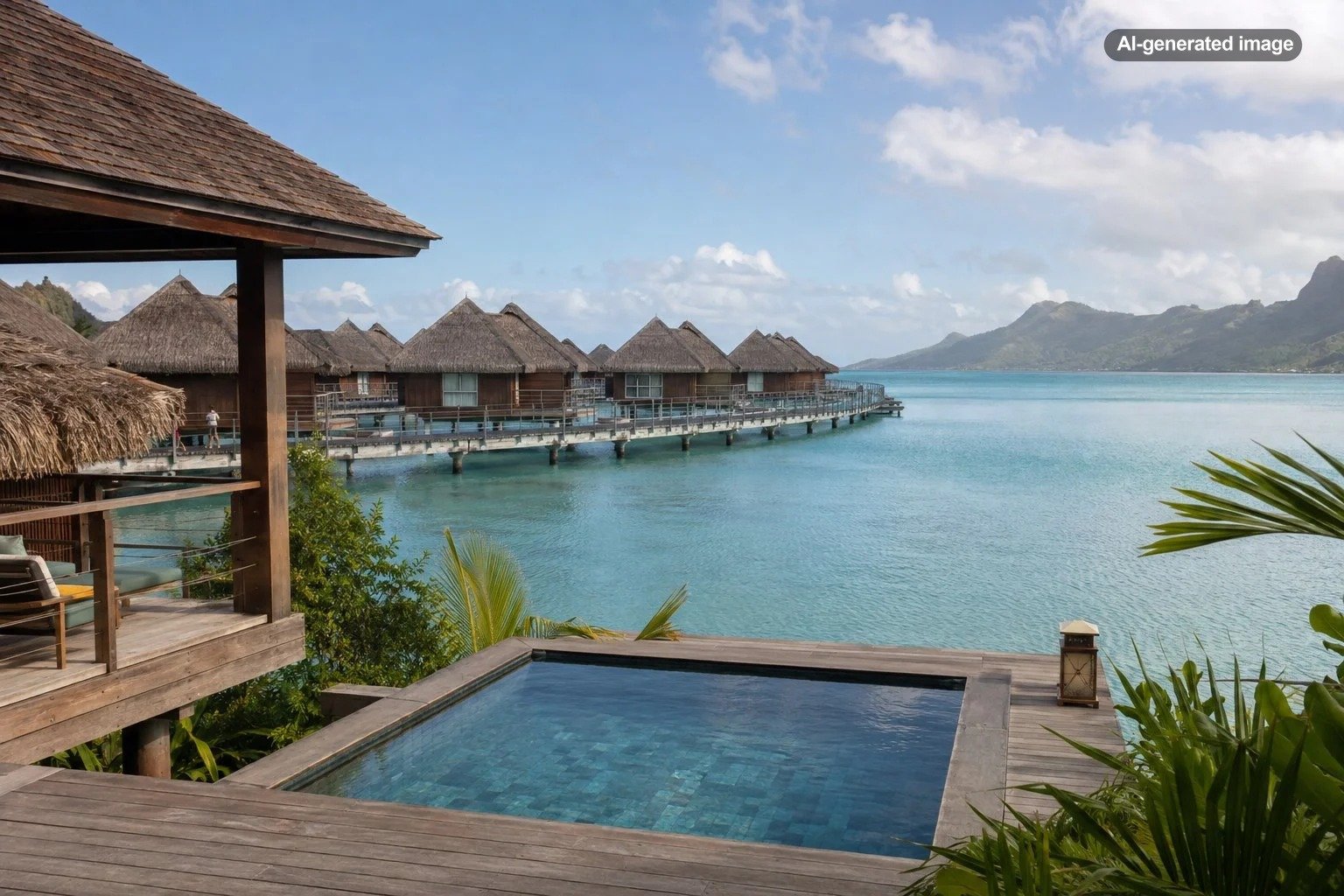
An overwater bungalow changes the rhythm of a hotel stay because the accommodation itself becomes an attraction. Direct access to the water, an open view, additional outdoor space, and the feeling of being physically separated from a conventional hotel building can make even ordinary moments feel different.
That effect tends to be strongest at the beginning. The first afternoon may be spent discovering the deck, settling into the view, swimming, taking photos, and simply enjoying the unusual setting. The next morning adds another part of the experience: waking up over the water and seeing how the setting feels at a different time of day.
By the end of a two-night stay, many travelers have experienced the bungalow in daylight, after dark, at sunrise or early morning, and during several periods of downtime. For someone whose primary goal is to understand what staying over the water is like, that can be enough.
Three or four nights can be better when the room is part of the itinerary
The strongest argument for staying longer is simple: an overwater bungalow provides more value when you actually spend time in it. Travelers planning a deliberately slow vacation may use the deck for reading, swimming, afternoon breaks, private conversations, quiet meals, or long stretches of doing very little.
In that type of trip, a two-night reservation can feel surprisingly compressed. Arrival and departure logistics occupy part of the stay, leaving only one fully uninterrupted day between them. Adding another night or two provides more time to settle into the experience rather than immediately thinking about the next checkout.
This is particularly relevant for couples celebrating an occasion, travelers recovering from a long journey, or anyone deliberately choosing a resort-focused vacation instead of an activity-heavy itinerary. The additional nights are not necessarily buying more novelty. They are buying more time to use the setting at a relaxed pace.
Longer stays are less compelling when most days happen away from the bungalow
An overwater room can be visually impressive without being the best place to allocate a large share of a vacation budget. If you expect to leave after breakfast, spend most of the day on excursions, return for dinner, and use the room primarily for sleeping, extending the stay may add relatively little to the experience.
The same applies when the destination itself is a major priority. Travelers who want to explore different beaches, islands, neighborhoods, restaurants, dive sites, cultural attractions, or landscapes may prefer to place more of the trip outside a single resort environment.
This creates an important distinction: the more room-centered your vacation is, the easier it is to justify additional nights. The more destination-centered your vacation is, the more attractive a shorter overwater stay can become.
A split stay can offer a useful middle ground
One practical strategy is to reserve an overwater bungalow for part of the vacation and use another accommodation for the remaining nights. Depending on the destination and resort, that might mean changing room categories at the same property or dividing the trip between different locations.
The advantage is that the bungalow still becomes a memorable component of the trip without requiring every night to be structured around the same accommodation experience. A traveler might spend the more active portion of the vacation in a conventional room and save the overwater stay for a quieter ending, or reverse the order if starting the trip with a dramatic room is more appealing.
There is a tradeoff. Changing rooms or properties introduces packing, checkout, transfer, and check-in time. A split stay therefore works best when the experiential variety is worth the interruption. Travelers who dislike moving once they have unpacked may reasonably prefer one room for the entire trip.
Consider what happens if the weather changes your plans
One overlooked reason to consider more than two nights is flexibility. On a short stay, a period of poor weather can consume a substantial portion of the time you expected to spend swimming, sitting outside, or enjoying the deck. A longer reservation gives the stay more opportunities to include favorable outdoor periods.
That does not mean a longer stay guarantees ideal conditions, and travelers should avoid treating additional nights as weather insurance. It simply means that a two-night stay concentrates the experience into a smaller window.
At the same time, travelers should think about how they would feel spending extended periods inside the bungalow if outdoor conditions were less appealing. Someone who enjoys reading, relaxing, and watching changing weather from the room may still be satisfied. Someone who chose the bungalow almost entirely for swimming and outdoor lounging may feel differently.
Think about privacy, convenience, and the walk back to shore
Overwater accommodations sometimes involve practical differences that receive less attention than the view. Depending on a property’s layout, an overwater unit may be farther from restaurants, pools, reception areas, beaches, or other resort facilities than a land-based room. Travelers who frequently return to the room during the day may consider that separation pleasant. Others may find repeated walks inconvenient.
Privacy can also be more nuanced than the photos suggest. Overwater villas may sit along the same boardwalk, and their orientation can affect how secluded outdoor spaces feel. Travelers should review the specific room category and property layout rather than assuming every overwater bungalow provides the same degree of isolation.
These practical details matter more during a longer stay. A minor inconvenience over two nights can become more noticeable after several days, while a layout that perfectly matches your preferred vacation rhythm may make an extended stay much more enjoyable.
Ask what you are giving up to stay longer
The clearest way to decide is not simply to ask whether another night in the bungalow sounds appealing. Ask what that night replaces.
Would the alternative be another resort, a different island, a beachfront room, additional activities, a longer overall vacation, or simply a lower lodging bill? The answer changes the comparison. Travelers who value variety may prefer two nights over water followed by a contrasting experience. Travelers who dislike changing hotels may willingly trade variety for continuity.
This opportunity-cost test is especially useful because an overwater stay can otherwise become an emotional decision based primarily on the room’s visual appeal. A beautiful accommodation can be worthwhile while still not being the best choice for every night of a trip.
Who should stay more than two nights?
A longer overwater bungalow stay is most likely to satisfy travelers who deliberately want a slow pace, expect substantial downtime, enjoy spending time in their room, and see the resort environment as a central part of the trip. Couples seeking privacy and travelers planning a restorative vacation may also appreciate having several uninterrupted days rather than treating the bungalow as a brief novelty.
Travelers who become restless at resorts, prioritize sightseeing, or plan full-day excursions may prefer a shorter stay. The same may be true for anyone who enjoys changing scenery and would rather divide a vacation among several distinct accommodations or locations.
What travelers often overlook
- Arrival and departure reduce usable time. A two-night reservation does not provide two complete days in the bungalow.
- The room category matters. Not every overwater accommodation offers the same layout, outdoor space, water access, privacy, or orientation.
- More nights do not create more novelty. They create more time to enjoy the same style of experience.
- Changing rooms has a cost in convenience. A split stay may save resources or add variety, but it also requires another move.
- Your normal vacation habits matter. Travelers who rarely spend time in hotel rooms may not suddenly become room-focused simply because the room is over water.
FAQ
Are two nights in an overwater bungalow enough?
For many travelers, yes. Two nights provide an evening, a full day, a morning, and enough time to experience the defining atmosphere of staying over the water. Travelers seeking a slower resort vacation may prefer three or four nights.
Is one night in an overwater bungalow worth considering?
It can be, particularly as part of a longer trip, but one night leaves relatively little uninterrupted time between check-in and checkout. Travelers who want time to settle in rather than simply see the room may find two nights more comfortable.
Is a week in an overwater bungalow too long?
Not for travelers who genuinely enjoy staying at one resort and spending substantial time around their accommodation. For travelers who prefer frequent exploration and changing scenery, a full week may feel repetitive.
Should an overwater bungalow be at the beginning or end of a trip?
Either can work. Starting with it creates an immediate highlight, while finishing with it can provide a slower, more restful conclusion after an active itinerary. The better choice depends on the sequence of the overall trip and how much moving between accommodations is involved.
What is the practical sweet spot?
For travelers who want more than a brief sample without making the entire vacation bungalow-centered, roughly two to four nights is a useful range to consider. The better end of that range depends on how much time you expect to spend at the resort and inside the accommodation itself.
The bottom line
An overwater bungalow can be worth more than two nights, but longer is not automatically better. Two nights are often sufficient when the goal is to experience the setting and then continue exploring. Three or four nights make more sense when the bungalow and resort are central to the vacation rather than simply where you sleep.
Before extending the stay, compare the extra nights with what they replace and consider your actual travel habits. If your ideal day includes long stretches on the deck, swimming from the room, quiet meals, and minimal scheduling, additional nights may be money and vacation time well spent. If your ideal day begins by leaving the hotel and returning after sunset, a shorter overwater stay may give you the experience without unnecessarily limiting the rest of the trip.