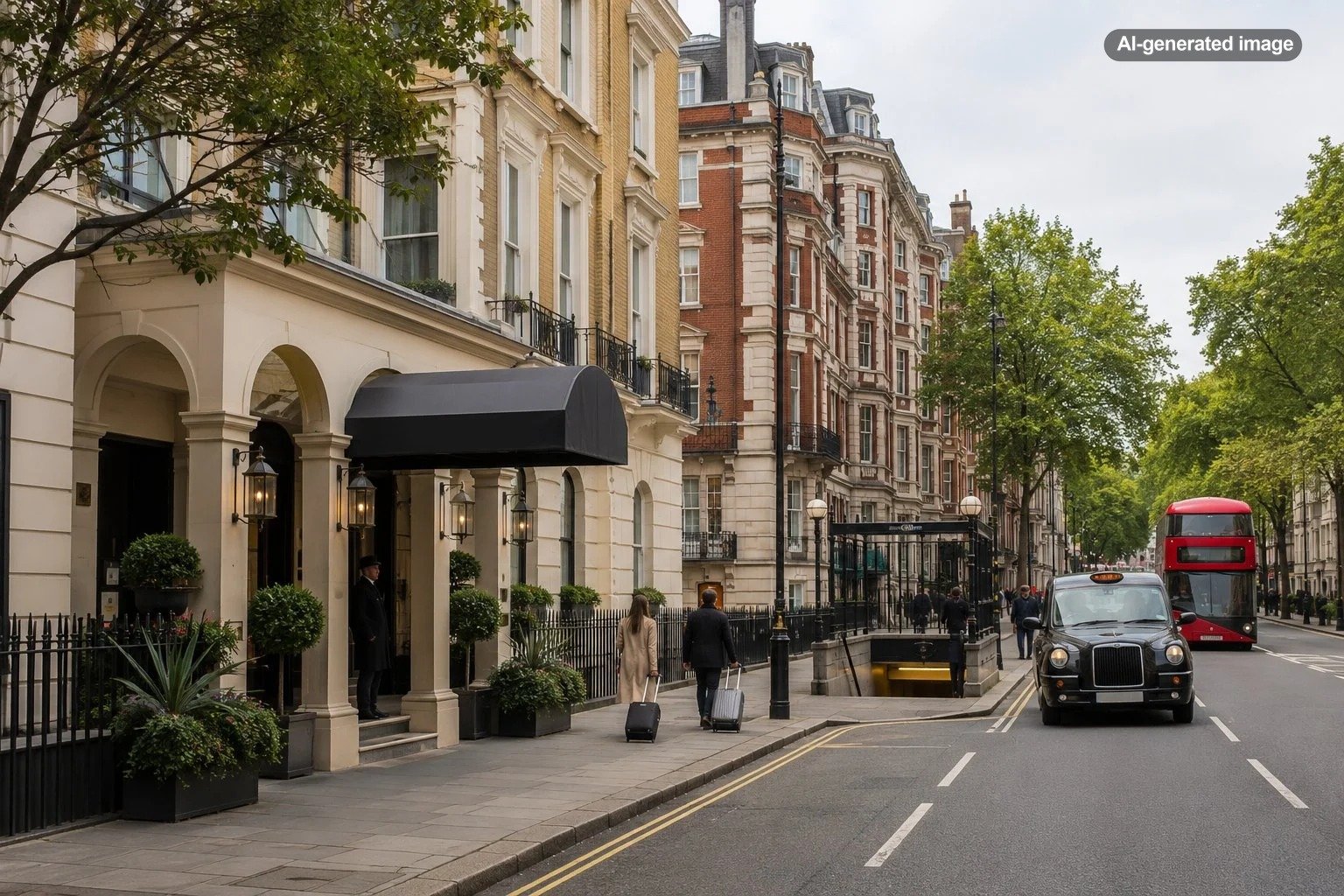
Where to Stay in London for Sightseeing and Easy Transportation
For a sightseeing-focused London trip, the most practical places to stay are Covent Garden, the Strand, Charing Cross, Westminster, and the South Bank. These areas put major attractions within walking distance while providing access to several Underground lines, National Rail stations, buses, and river services.
The right hotel depends on which kind of convenience matters most. Covent Garden and the Strand are strong for theaters, restaurants, and West End walking. Westminster suits travelers prioritizing royal and political landmarks. The South Bank offers riverside attractions and useful connections through Waterloo, Southwark, and Blackfriars.
Planning snapshot
- Best for first-time visitors: Covent Garden, the Strand, Charing Cross, or Westminster
- Best for walking: One Aldwych, The Savoy, The Resident Covent Garden, and The Clermont London, Charing Cross
- Best for major transport connections: The Clermont London, Charing Cross, Park Plaza Westminster Bridge London, and Sea Containers London
- Best for families needing space: Park Plaza Westminster Bridge London
- Best for culture and river walks: Sea Containers London
- Rental car needed: Generally no; central London is better explored by public transportation and walking
Quick comparison
| Hotel | Area | Best for | Main tradeoff |
|---|---|---|---|
| One Aldwych | Covent Garden | West End sightseeing and upscale stays | Luxury positioning |
| The Savoy | Strand | Landmark luxury and central walking | High-luxury price position |
| The Resident Covent Garden | Covent Garden | Independent travelers who value location | Fewer resort-style facilities |
| The Clermont London, Charing Cross | Charing Cross | Rail access and first visits | Busy central surroundings |
| St. Ermin’s Hotel | Westminster | Historic sights with a quieter base | Less immediate nightlife |
| Park Plaza Westminster Bridge London | South Bank | Families and Waterloo connections | Large, active hotel atmosphere |
| Sea Containers London | South Bank | Culture, design, and river walks | Some West End trips require transit |
| One Aldwych | Covent Garden | Couples and theater trips | Not a budget-oriented choice |
One Aldwych: Best for Covent Garden and West End walking
One Aldwych occupies a particularly useful position at the eastern edge of Covent Garden. The hotel states that Covent Garden and Embankment Underground stations are about a five-minute walk away, while Holborn is also accessible on foot. That gives guests practical access to several parts of the Tube network without sacrificing walkability.
This upscale hotel is a strong fit for couples, theatergoers, and first-time visitors who want to walk to Covent Garden, Somerset House, Trafalgar Square, and many West End venues. Its central setting can reduce the number of transit journeys needed during a short stay.
Tradeoff: The location and positioning are designed for travelers comfortable with an upscale hotel budget. Covent Garden can also feel busy during evenings and weekends.
The Savoy: Best for landmark luxury on the Strand
The Savoy is positioned on the Strand between Covent Garden and the Thames. Its location supports easy walks toward Trafalgar Square, the West End, Somerset House, and the South Bank bridges. It is best suited to travelers who want the hotel itself to be part of the London experience rather than simply a place to sleep.
Affiliate disclosure: HotelInfo.com may earn a commission when you book or purchase through links on this page. This does not affect the price you pay. Learn more.
Travelers considering a high-luxury stay can view rooms and property details for The Savoy. Rates, room categories, availability, fees, and policies vary by date and should be checked directly before booking.
Tradeoff: The Savoy occupies a high-luxury market position. Travelers who plan to spend most of their time away from the hotel may prefer a simpler property in the same general area.
The Resident Covent Garden: Best for location-focused independent travelers
The Resident Covent Garden overlooks the Strand and is within walking distance of both Covent Garden and Charing Cross Underground stations. Its 57-room scale makes it a useful alternative to London’s larger full-service properties.
This hotel is best for travelers who value a polished room, a compact property, and immediate access to restaurants, theaters, galleries, and central landmarks. In-room mini-kitchens can also be practical for breakfasts, snacks, or longer stays.
Tradeoff: This is not the strongest choice for travelers seeking extensive resort-style facilities, large public spaces, or a broad collection of on-site dining venues.
The Clermont London, Charing Cross: Best for rail connections and first-time sightseeing
The Clermont London, Charing Cross is directly beside Charing Cross Station on the Strand. Trafalgar Square, the National Gallery, Covent Garden, and West End theaters are close enough to reach on foot, while the station provides both National Rail and Underground access.
This combination is especially practical for first-time visitors, travelers taking day trips by rail, and guests who want straightforward connections without staying beside a major airport terminal. Charing Cross and nearby Embankment stations create several route options when one line is inconvenient.
Tradeoff: The neighborhood is intensely central. Street activity, station traffic, theater crowds, and evening footfall are part of the experience.
St. Ermin’s Hotel: Best for Westminster sights with a calmer setting
St. Ermin’s Hotel sits in a courtyard off Caxton Street in Westminster. According to the hotel, St. James’s Park Underground station is about 100 meters away. Buckingham Palace, Westminster Abbey, St. James’s Park, and the Houses of Parliament are all positioned within the broader surrounding area.
This independent, upscale hotel is a strong fit for history-focused visitors, families, and business travelers who want a central base that feels slightly removed from the busiest commercial streets. It can also work well for travelers who prefer beginning and ending the day in Westminster rather than the West End.
Tradeoff: Travelers primarily interested in late-night Soho dining, Covent Garden theaters, or East London nightlife will use transportation more often.
Park Plaza Westminster Bridge London: Best for families and Waterloo access
Park Plaza Westminster Bridge London is on the South Bank near Westminster Bridge. The hotel identifies Westminster and Waterloo Underground stations, along with London Waterloo railway station, as nearby transportation options. Its position works well for visits to the London Eye, the South Bank, Westminster, and attractions on both sides of the Thames.
The property is particularly relevant for families because it offers a large number of family suites and operates on a much larger scale than the boutique hotels in Covent Garden. Waterloo’s rail and Underground connections are also helpful for travelers arriving from or departing toward southern England.
Tradeoff: With more than 1,000 accommodations and substantial event space, the atmosphere can be busy. Travelers seeking an intimate hotel may prefer a smaller property.
Sea Containers London: Best for culture, design, and the Thames Path
Sea Containers London stands on the South Bank between Waterloo and Blackfriars bridges. The hotel identifies Southwark, Blackfriars, and Waterloo as nearby station options. Tate Modern, the National Theatre, Shakespeare’s Globe, the Southbank Centre, and riverside walking routes are within the surrounding cultural district.
This design-led luxury hotel is a good choice for repeat visitors, couples, and culture-focused travelers who prefer the South Bank to the denser West End. The riverside location also makes it easy to build sightseeing days around walking rather than repeatedly entering the Underground.
Tradeoff: The South Bank is central, but it is not equally close to every West End destination. Trips to areas such as Mayfair, Kensington, or Notting Hill will generally involve transit.
How to choose the right London base
Choose Covent Garden or the Strand for maximum walking
Stay around Covent Garden, Aldwych, or Charing Cross when your itinerary emphasizes theaters, Trafalgar Square, galleries, restaurants, and central shopping streets. These areas are particularly efficient for a first visit of three or four days because many headline sights can be grouped into walking routes.
Choose Westminster for historic landmarks
Westminster is the practical choice when Buckingham Palace, Westminster Abbey, Parliament, and royal parks are priorities. It is also useful for travelers who prefer a quieter evening base while retaining direct Tube access.
Choose the South Bank for families and cultural attractions
The South Bank makes sense for families, museum and theater visitors, and travelers using Waterloo. Riverside walks can connect several attractions without road crossings or complicated station changes, although the area can become crowded around major venues and events.
Transportation details travelers often overlook
- Station distance is not the whole story. Large stations can involve long corridors, stairs, escalators, and multiple exits. Travelers with mobility concerns should check the specific entrance and step-free route.
- Multiple nearby stations are valuable. A hotel between two or three stations provides alternatives during closures, disruptions, or crowded periods.
- Walking may be faster than changing trains. Central London stations can be close together, and a direct street-level walk may be simpler than making a short Tube journey.
- Waterloo and Charing Cross offer more than Underground access. Both are National Rail stations, which can simplify selected day trips and onward journeys.
- A rental car is usually a disadvantage in central London. Parking, traffic, restricted zones, and hotel parking charges make rail, Tube, bus, walking, and licensed taxi services more practical for most sightseeing itineraries.
Planning sightseeing after choosing a hotel
Once the hotel is selected, group attractions by area rather than crossing London several times in one day. A Westminster day can combine Buckingham Palace, St. James’s Park, Westminster Abbey, and the river. A Covent Garden day can include the National Gallery, Trafalgar Square, theaters, and nearby shopping streets. A South Bank day can connect the London Eye area, the National Theatre, Tate Modern, and riverside landmarks.
Travelers who prefer guided visits or timed attraction planning can browse GetYourGuide tours and activities. Schedules, accessibility, meeting points, age limits, operator standards, cancellation terms, and availability vary, and HotelInfo.com does not operate the experiences.
Frequently asked questions
What is the best area of London for a first-time visitor?
Covent Garden, the Strand, Charing Cross, and Westminster are among the most practical choices. They combine walkable sightseeing with access to multiple transportation routes.
Is it better to stay near Waterloo or Charing Cross?
Choose Waterloo for the South Bank, family attractions, and rail connections toward southern England. Choose Charing Cross for Trafalgar Square, Covent Garden, the West End, and a more central north-of-the-river location.
Should visitors stay beside a Tube station?
Being within a reasonable walk of a station is useful, but a hotel near several lines or stations is often better than one beside a single station. Check accessibility and the station entrance closest to the hotel.
Do tourists need a car in London?
Most central London visitors do not need one. Public transportation and walking are usually more convenient for sightseeing, while a car introduces parking and traffic complications.
Which listed hotel is best for families?
Park Plaza Westminster Bridge London has the clearest family-oriented advantage because of its large inventory of family suites and proximity to South Bank attractions. Families preferring a smaller setting may consider St. Ermin’s Hotel.
Sources & further reading
- The Savoy official website
- One Aldwych location information
- The Resident Covent Garden official website
- The Clermont London, Charing Cross official website
- St. Ermin’s Hotel location information
- Park Plaza Westminster Bridge London location information
- Sea Containers London transportation information
- Transport for London visitor transportation guidance