Should You Request a Room Away From the Housekeeping Closet?
Yes, requesting a room away from the housekeeping closet is sensible if you are a light sleeper, expect to sleep late, work from your room, or value a particularly quiet stay. These service areas can generate intermittent noise from rolling carts, opening doors, supply handling, and staff activity, especially during morning room preparation.
However, the closet is only one possible source of hotel noise. A room farther from the closet could still be close to an elevator, ice machine, stairwell, connecting door, event space, loading area, or mechanical equipment. The most effective request therefore describes your actual priority: a quiet room away from elevators and active service areas.
Quick answer
- Request some distance if you are sensitive to hallway noise or plan to sleep during housekeeping hours.
- Ask about service areas rather than assuming every housekeeping closet is noisy.
- Include elevators, ice machines, stairwells, and connecting doors in the conversation.
- Make the request before arrival, then politely confirm it at check-in.
- Treat the request as a preference, since room location is generally subject to availability.
Why rooms near housekeeping closets can be noisier
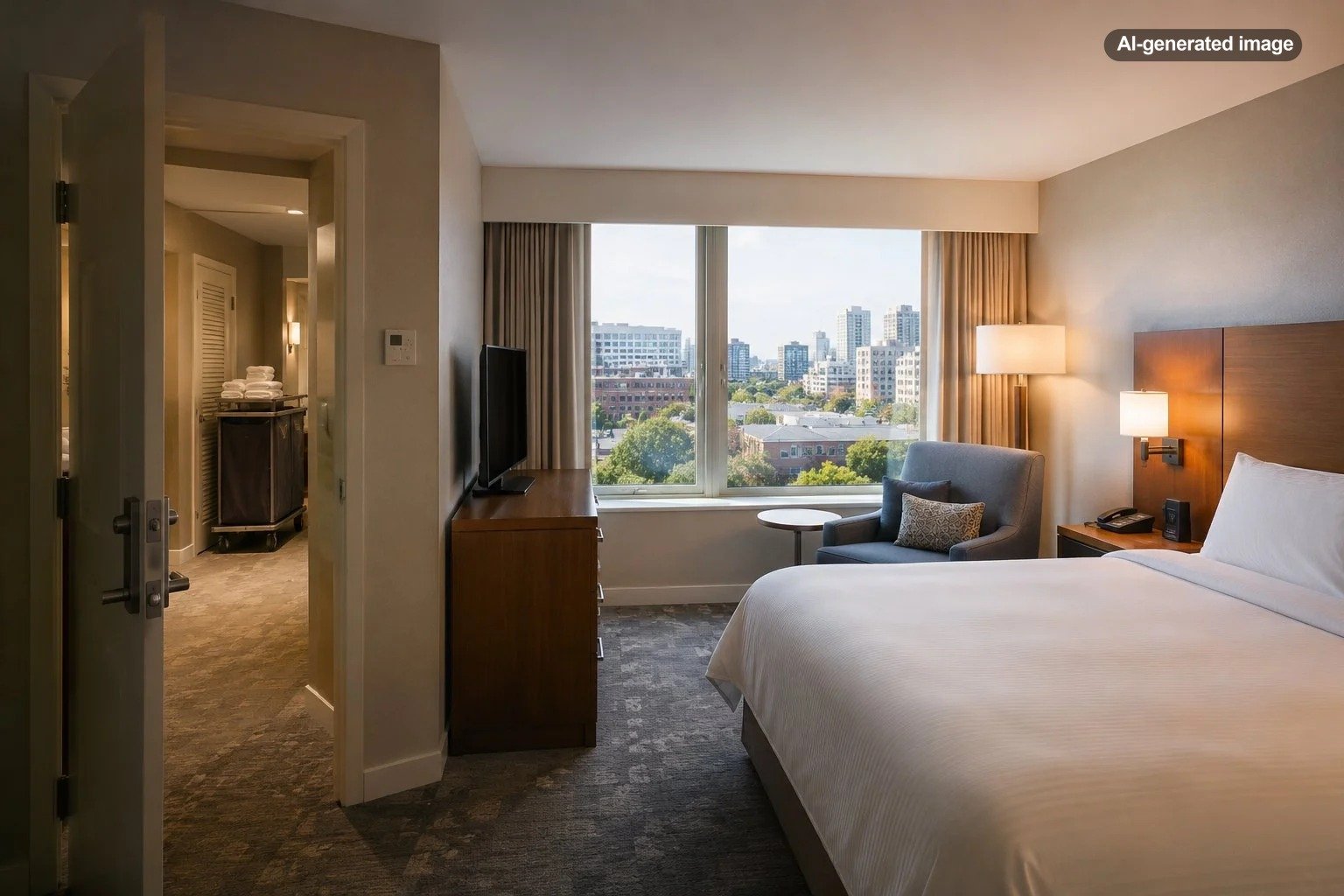
A housekeeping closet or floor pantry gives hotel staff convenient access to linens, toiletries, cleaning supplies, and other materials needed for servicing rooms. Depending on the building, it may also be a staging point for carts or bags of used linens.
The resulting noise is usually intermittent rather than constant. Guests might hear a service door closing, cart wheels crossing flooring transitions, items being placed on shelves, or brief conversations as employees coordinate their work. Activity may begin in the morning and continue through the afternoon as rooms are cleaned, inspected, and prepared for arriving guests.
Proximity alone does not guarantee a noisy room. Some closets are small, well insulated, and used only occasionally. Others are positioned behind service doors or in alcoves that limit sound transmission. Floor surfaces also matter: carts tend to be more noticeable on hard flooring or when they cross elevator tracks, door thresholds, and uneven joints.
Who benefits most from making the request
Light sleepers have the clearest reason to request distance. A few short bursts of sound may be enough to interrupt sleep even when the corridor is quiet for most of the night.
Late sleepers and overnight workers may be more affected than guests following a conventional daytime schedule. Housekeeping activity often overlaps with the hours when these travelers are still resting.
Business travelers working in the room may also prefer greater separation. Cart movement and corridor conversations can be distracting during calls, virtual meetings, or concentrated work, even if the same sounds would not disturb an ordinary leisure stay.
Families with infants or young children may want a quieter corridor during naps. At the same time, a family might prioritize proximity to an elevator over perfect quiet when moving a stroller and luggage. The better room depends on which inconvenience would have the greater effect on the trip.
Deep sleepers, early risers, and travelers spending little daytime time in the room may notice no meaningful disadvantage. For a short stay, a preferred view, bedding configuration, accessible layout, or proximity to travel companions may matter more.
How to phrase the request effectively
A specific but flexible request gives hotel staff useful information without making the room assignment unnecessarily difficult. A practical message is: I am a light sleeper and would appreciate a quiet room away from elevators, ice machines, and housekeeping or service areas, if available.
This wording works better than focusing exclusively on the closet because hotel employees understand the property’s layout. They may know that a different service door, elevator shaft, or vending area is a greater concern on the floor assigned to you.
Add only the preferences that genuinely matter. A long list involving the floor, view, bed, distance from the lobby, distance from elevators, and several other conditions may sharply reduce the number of qualifying rooms. If quiet is the priority, say so and allow the hotel to balance the remaining details.
When to submit the request
Add the preference to the reservation when booking, or contact the property before arrival. At check-in, politely confirm that the assigned room is in a relatively quiet location. Advance requests help the hotel understand your preference, but they should not be treated as guaranteed room features unless the property explicitly confirms otherwise.
Other room locations may present greater noise risks
The housekeeping closet deserves consideration, but several other locations can create longer or less predictable disturbances.
- Elevators: Nearby rooms may receive foot traffic, conversation, elevator chimes, and sound from the shaft or machinery.
- Ice and vending machines: Guests may use them at any hour, making the timing less predictable than housekeeping activity.
- Stairwells: Heavy doors can close abruptly, and stairs may become busy during events or elevator delays.
- Connecting rooms: The connecting door may transmit more sound than a standard shared wall, depending on construction and sealing.
- Event and dining spaces: Rooms above, below, or near ballrooms, bars, restaurants, and terraces may experience music, furniture movement, or departing crowds.
- Mechanical and exterior areas: Elevators, rooftop equipment, loading zones, traffic, and early deliveries can produce recurring sound.
There is no universally quiet floor or room number. Hotel layouts vary, and the highest floor is not automatically the quietest if it sits beneath rooftop equipment or an entertainment venue. Staff familiar with the building are usually better positioned to identify the quieter part of the property.
What to do after entering the room
Assess the room before fully unpacking. Pause near the entrance, window, connecting door, and headboard. Listen for elevator movement, mechanical vibration, hallway activity, outdoor traffic, or sound from adjacent rooms. Check the corridor to see whether a service area, ice machine, or elevator is nearby.
If the location appears unsuitable, contact the front desk promptly and explain the specific issue. A calm request made soon after check-in is generally easier to address than a complaint made after the hotel has assigned more of its available rooms.
If moving is not practical, ask what assistance the property can provide. Options vary and should not be assumed, but some hotels may have a quieter room available later, offer earplugs or a sound-masking device, or help address an unusually loud door or piece of equipment.
What travelers often overlook
Quiet-room requests involve tradeoffs. The room at the end of a corridor may be farther from elevators and service areas, but it also requires a longer walk. That distinction may matter to travelers with limited mobility, families carrying equipment, or anyone making frequent trips to and from the lobby.
A quiet location can also conflict with a preferred room type or view. The courtyard-facing room may receive less street noise but offer less natural light or a less appealing outlook. A room near the elevator may be more convenient despite additional foot traffic. Decide which characteristic will materially affect your stay rather than pursuing an ideal room that may not exist.
It is also important to distinguish normal operations from avoidable disruption. Housekeeping teams must move supplies and prepare rooms. A service area will naturally produce some daytime activity. The goal of a thoughtful request is to find a room suited to your schedule and sensitivity, not to suggest that routine hotel work should be silent.
FAQ
Is a housekeeping closet active at night?
It depends on the hotel and its staffing model. The most noticeable activity is often associated with daytime room service, but supplies, linens, and guest requests may be handled outside those hours. Ask the property if your schedule makes the distinction important.
Is the end of the hallway always the quietest location?
No. It often receives less passing foot traffic, but it could be near a stairwell, service room, exterior equipment, or another source of noise. It may also be less convenient for travelers who prefer a shorter walk.
Does requesting a quiet room guarantee one?
Usually not. A request tells the hotel your preference, while the final assignment depends on the property’s layout, occupied rooms, maintenance needs, and availability. Confirm the location politely at check-in.
Should you avoid both the elevator and housekeeping closet?
That is a reasonable preference for a light sleeper, but it can limit the available choices. If only one concern can be accommodated, elevator areas may produce activity over a wider range of hours, while housekeeping noise is often concentrated during the day.
What is the best single request for a quieter stay?
Ask for the quietest available room away from elevators, ice machines, connecting doors, and active service areas. Mention that you are a light sleeper or need daytime quiet so staff understand which placement issue matters most.
The practical verdict
Requesting a room away from the housekeeping closet is worthwhile when hallway activity could interfere with sleep, naps, or work. Make it part of a broader quiet-room preference rather than treating the closet as the only concern. A concise advance request, a polite check-in confirmation, and a quick assessment before unpacking give you the best chance of finding a room that fits your needs.