How to Identify Hotel Rooms With Views Into Other Guest Rooms
A hotel room can offer attractive furnishings, generous windows, and a desirable location while still presenting an unexpected privacy problem: a direct view into another guest room. In hotels with narrow courtyards, inward-facing wings, glass atriums, or closely spaced buildings, windows may face other occupied rooms at surprisingly short distances. Identifying these arrangements before booking requires looking beyond the advertised room view and examining how the property’s architecture positions guest accommodations.
The most reliable approach combines photographs, building-layout clues, guest reviews, and a specific question to the hotel. A description such as courtyard view, interior view, or city view does not necessarily reveal whether another guest room sits directly opposite the window. Understanding these distinctions can help travelers select accommodations that feel comfortable without sacrificing natural light or convenience.
Quick Answer: How to Spot Rooms That Face Other Guest Rooms
Before reserving a hotel room, look for several indicators that windows might overlook neighboring accommodations:
- Enclosed courtyards: Rooms arranged around a central opening may face windows on the opposite side.
- U-shaped or H-shaped buildings: Interior wings can create direct sightlines between guest rooms.
- Glass atriums: Some interior-facing rooms overlook shared spaces and other accommodation floors.
- Closely spaced towers: A city-facing room may look directly toward windows in another building.
- Guest photographs: Images taken from the windows can reveal neighboring rooms more clearly than promotional photography.
None of these features automatically makes a room unsuitable. The important question is whether the window arrangement provides enough separation and screening for your preferences.
Understand Which Hotel Layouts Create Direct Window Views
Rooms Surrounding an Interior Courtyard
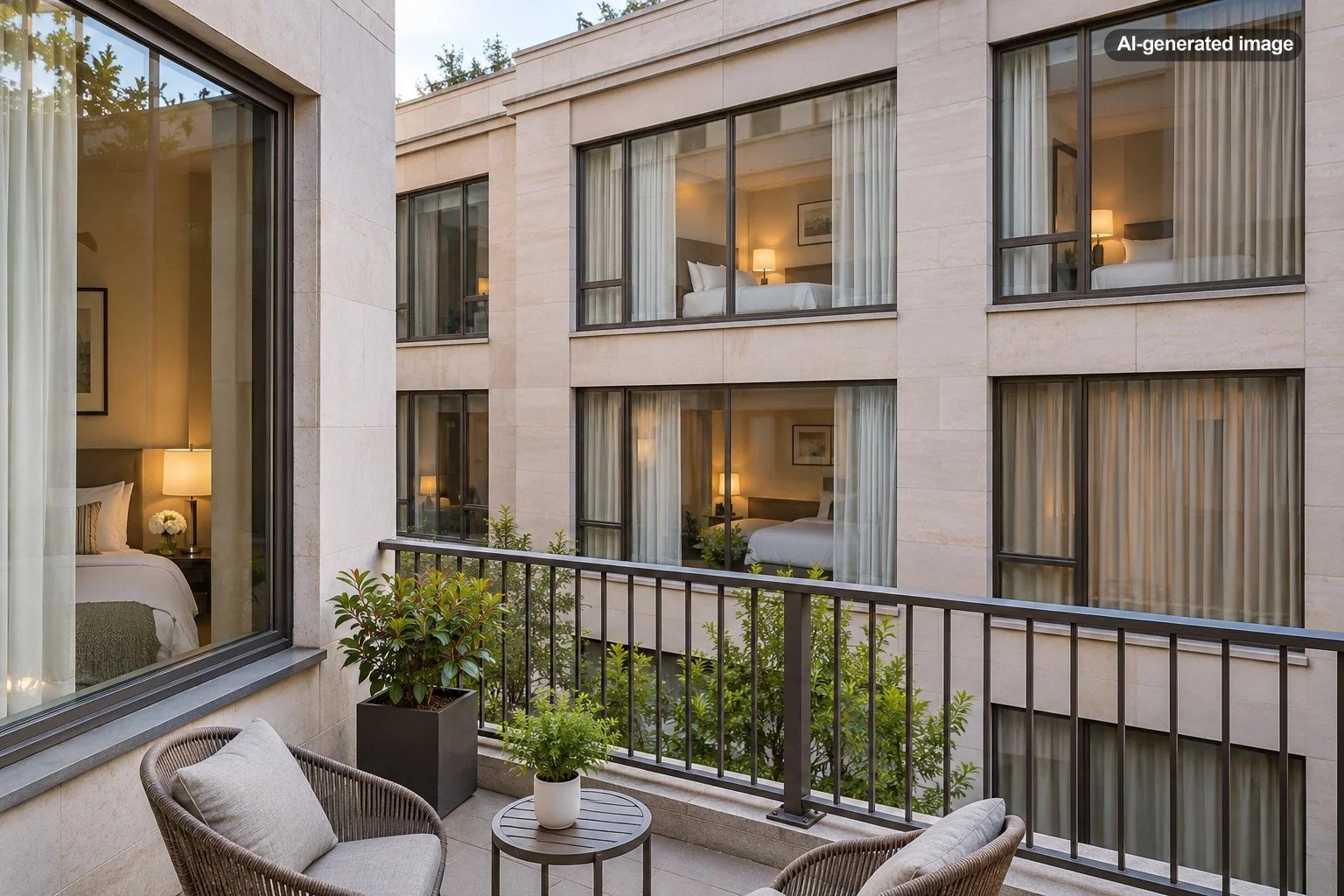
Courtyard hotels often arrange accommodations around a central garden, terrace, or open-air space. This configuration can provide sheltered views and sometimes reduce exposure to busy streets. However, a narrow courtyard may place windows directly across from one another.
Consider the courtyard’s proportions rather than assuming that its presence guarantees privacy. A broad landscaped courtyard generally provides more visual separation than a compact lightwell. The size of the courtyard, number of floors, window placement, and presence of screening all influence how exposed a room may feel.
For travelers who enjoy keeping curtains open while reading or working, the distance to facing windows may matter more than the courtyard’s appearance.
Rooms in U-Shaped and H-Shaped Buildings
Hotels with multiple wings can create inward-facing rooms even when the overall property appears open and spacious. In a U-shaped building, rooms along the inner sides of the wings may look toward one another across an enclosed space.
H-shaped layouts create additional possibilities for facing windows where the connecting sections and parallel wings meet. A room near an interior corner might also have an angled view into neighboring accommodations.
These relationships are not always obvious in individual room photographs. An overhead view of the building can be more informative than a photograph of the facade.
Glass Atriums and Internal Hotel Spaces
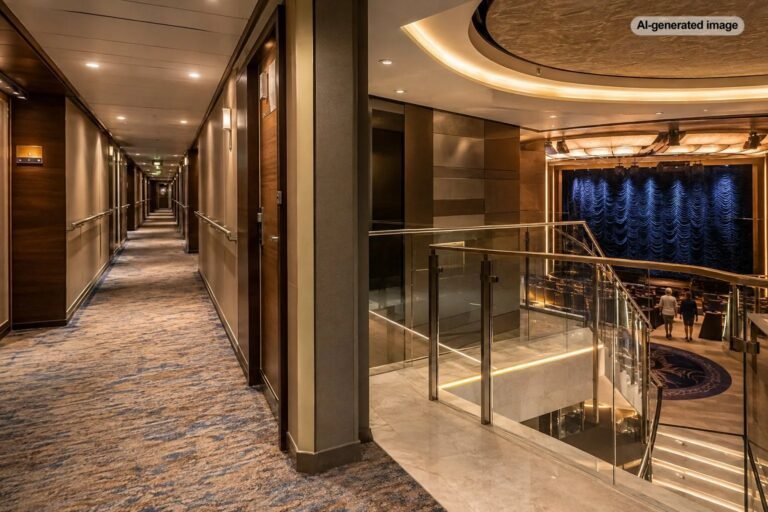
Some hotels arrange guest rooms around a covered atrium or an internal architectural feature. Windows may overlook a lobby, indoor garden, or shared circulation area, while other guest-room windows remain visible across the opening.
Interior-facing rooms can offer distinctive architectural views, but travelers should determine whether the windows face public spaces, other private rooms, or both. A bright atrium photograph does not necessarily show how the room feels after dark.
Closely Spaced Urban Buildings
The privacy issue is not limited to hotels with interior courtyards. In dense urban neighborhoods, windows may face another hotel, apartment building, or office building across a narrow street or gap.
A room categorized as city view might technically overlook the surrounding urban environment while still providing a close view of neighboring windows. Travelers should evaluate the actual outlook rather than relying on the category name.
Examine Room Photographs for Window Placement
Hotel photography frequently emphasizes the bed, furnishings, bathroom, and overall atmosphere. Window views may receive less attention, especially when the surrounding architecture is less visually appealing.
Look for photographs taken toward the windows rather than only photographs taken from the windows into the room. Notice whether curtains are fully open, partially closed, or positioned to conceal the outside environment.
A photograph with consistently closed curtains does not prove that the room has a privacy problem. However, it may leave an important question unanswered.
When an exterior view is visible, examine the distance to surrounding buildings, the orientation of opposing windows, and whether architectural screens or landscaping interrupt direct sightlines.
Also distinguish between photographs representing the entire hotel and those associated with the exact room category being booked. A property’s most attractive exterior view may belong to a different room type.
Use Maps and Building Images to Understand the Layout
Satellite imagery and aerial photographs can help identify whether a hotel has an enclosed courtyard, several parallel wings, or neighboring buildings close to its exterior walls.
Start by finding the hotel’s building footprint. Look for open central spaces, narrow gaps between structures, and sections that extend inward from the main facade.
Street-level imagery can provide a second perspective, particularly when evaluating rooms along public streets. It may reveal the approximate distance between buildings and the height of adjacent structures.
These tools have limitations. Aerial images rarely establish the precise position of a booked room, and exterior photographs may be outdated. Trees, architectural details, and reflections can also obscure the relationship between windows.
Use mapping as a preliminary screening method, not as proof that a particular room will have a specific view.
Read Guest Reviews for Privacy Clues
Guest reviews sometimes describe room characteristics that formal hotel descriptions overlook. Instead of relying only on overall ratings, search review text for words associated with window orientation and privacy.
Useful search terms include:
- Facing another room
- Windows opposite
- Courtyard view
- Privacy curtains
- Could see neighbors
- Interior-facing room
- Had to keep curtains closed
Reviews describing the need to keep curtains drawn throughout the day deserve attention, particularly when several independent guests mention similar experiences.
However, avoid assuming that one review represents every room in the property. Window orientation, floor level, room category, and building wing can produce significantly different experiences within the same hotel.
Review photographs can be particularly informative when they clearly show an actual window view. Check whether the reviewer identifies the room category or approximate location before treating the photograph as relevant to your reservation.
Ask the Hotel a Question That Produces a Useful Answer
A general request for a private room may be interpreted in several ways. Staff might understand it as a preference for a quiet location, minimal hallway traffic, or distance from shared facilities.
For a more useful answer, describe the window arrangement you want to avoid.
For example: Does this room category have windows that directly face other guest-room windows, and is there an alternative with a more open outlook?
You can also ask whether the room faces an interior courtyard, a neighboring building, or an external street. If the property has multiple wings, ask which room categories typically provide greater separation from facing windows.
When privacy is especially important, contact the hotel before committing to a restrictive reservation. Staff may be able to explain room-category differences even when they cannot guarantee an exact room assignment.
If the hotel offers an official room-selection process, use it to explore available locations. Otherwise, remember that a preference recorded on a reservation is not necessarily a confirmed assignment.
Recognize That Higher Floors Do Not Always Provide More Privacy
Requesting a higher floor is a common strategy for obtaining an open view, but height alone does not solve every window-privacy concern.
In a narrow courtyard, upper-floor rooms may still face an opposite wing at approximately the same distance as lower-floor rooms. Similarly, high floors in adjacent urban towers may provide direct views into neighboring accommodations.
Height can improve privacy when it raises a room above surrounding structures or changes the angle of the outlook. It is less helpful when neighboring windows continue upward alongside the room.
Ask about the direction and openness of the view rather than requesting a higher floor without additional explanation.
Compare Room Locations Based on Your Priorities
Different window orientations involve different compromises. A room with greater visual separation may face a busier street, while a quieter courtyard room may overlook other windows.
| Room location | Potential advantage | Privacy consideration |
|---|---|---|
| Interior courtyard | Sheltered outlook | Opposing guest windows |
| Street-facing | Potentially wider outlook | Nearby buildings or street visibility |
| Atrium-facing | Architectural interior views | Views from other rooms and shared spaces |
| Outer corner | Potentially broader sightlines | Depends on adjacent structures and window angles |
For business travelers spending substantial daytime hours in their rooms, the ability to work comfortably with curtains open may be particularly valuable. Couples seeking a secluded atmosphere may prioritize limited visibility from neighboring windows. Travelers who use their rooms mainly for sleeping may be more willing to accept a close courtyard outlook in exchange for other benefits.
No single orientation is universally preferable. The best choice depends on how you expect to use the space.
Check How Window Privacy Changes After Dark
One easily overlooked issue is the difference between daytime and nighttime visibility. During daylight, outdoor brightness and reflections can make interior spaces less apparent from certain angles.
After dark, an illuminated room may become easier to see through an uncovered window, particularly when the surrounding area is relatively dim.
This means a window arrangement that feels sufficiently private in the afternoon may feel more exposed in the evening.
When assessing a room, check whether curtains or blinds close completely and whether the available coverings provide the level of privacy you need. Sheer curtains can soften daylight and obscure some details, but they should not be assumed to prevent visibility from outside, especially at night.
Blackout curtains can provide stronger screening when fully closed, although they also eliminate the view and much of the natural light.
What to Do When Your Assigned Room Faces Another Guest Room
If you arrive and discover an unexpectedly direct view into neighboring accommodations, assess the issue before unpacking fully.
Stand at the window and consider the distance, angle, and visibility of the opposing rooms. Check the window coverings and determine whether they provide reasonable privacy while allowing you to use the room comfortably.
If the arrangement does not meet your needs, contact the front desk promptly. Explain that the window faces other occupied guest-room windows and ask whether a room with a more open or less directly overlooked view is available.
Be clear about the feature you want changed rather than requesting an unspecified upgrade. A different room in the same category may resolve the issue, but availability and reassignment conditions depend on the property.
If moving is not possible, use the available window coverings and avoid positioning personal belongings or sensitive information where they are visible from outside. Do not attempt to look into neighboring rooms to test visibility; focus on the sightlines and privacy of your own space.
Frequently Asked Questions
Does a courtyard-view hotel room usually face other rooms?
Not necessarily. Some courtyards are spacious and landscaped, while others are narrow and surrounded by guest-room windows. The building configuration determines whether other rooms are visible.
Can you request a hotel room without facing windows?
Yes. You can ask for a room with an open outlook or without directly opposing guest-room windows. Whether the hotel can accommodate the request depends on its layout, room inventory, and assignment procedures.
Are corner hotel rooms always more private?
No. An outer corner may provide a wider outlook, but an inner corner could face another building wing. The orientation of each window matters more than the corner designation itself.
Can hotel room photos reveal privacy problems?
They can provide useful clues when the actual window view is shown. However, promotional photographs may not represent every room in a category. Guest photographs and direct confirmation from the hotel can help clarify uncertain details.
Is an interior-facing room less desirable than a street-facing room?
Neither is inherently better. Interior-facing rooms may offer a more sheltered setting, while street-facing rooms may provide a broader outlook or greater separation from other guest windows. Noise, lighting, privacy, and personal preferences should all influence the decision.
Make Window Privacy Part of Your Room Selection
Identifying hotel rooms with views into other guest rooms is primarily an exercise in understanding building layout and window orientation. Room-category descriptions offer a starting point, but they rarely communicate every detail about visual separation.
Review the property’s architecture, study photographs that show actual window views, search guest feedback for privacy concerns, and ask the hotel whether the selected category directly overlooks other rooms. These steps cannot guarantee a completely private outlook, but they can substantially reduce uncertainty.
Ultimately, a comfortable hotel room is not defined only by its furnishings, size, or advertised view. It is also a space where guests can enjoy natural light, relax, and use the room without feeling unnecessarily exposed to neighboring accommodations.