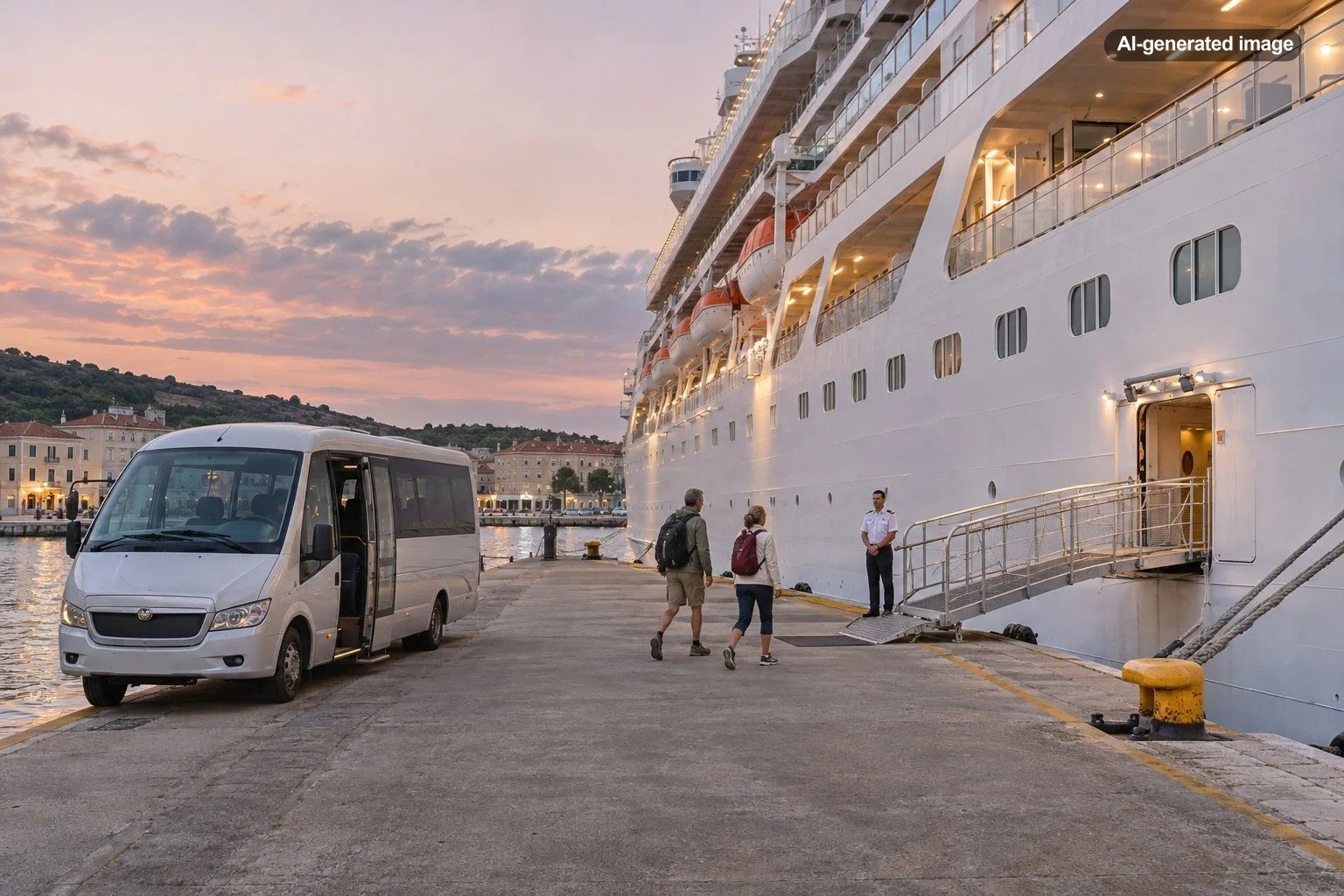
What Happens If a Cruise Excursion Returns After the Ship’s Scheduled Departure?
If a cruise excursion returns after the ship’s scheduled departure, what happens next depends largely on whether the excursion was booked through the cruise line or independently. Cruise-line-sponsored excursions generally come with arrangements designed to protect passengers from being stranded by tour delays. Independent excursions usually leave responsibility for returning on time with the traveler.
That distinction matters because cruise ships operate around port schedules, navigation requirements, and subsequent destinations. A captain may delay departure for a late organized excursion, but no passenger should assume the ship can remain in port indefinitely.
Quick Answer: Will the Cruise Ship Wait?
- Cruise-line-sponsored excursion: Many cruise lines promise to wait for delayed official tours or help passengers reach the ship if waiting becomes impossible.
- Independent excursion: The ship generally has no obligation to wait, even if a traffic jam or transportation problem caused the delay.
- Ship already departed: Passengers should immediately contact the cruise line’s local port agent for assistance.
- Unexpected expenses: Independent travelers may need to pay for transportation, accommodation, meals, and other arrangements.
- Rejoining the cruise: Boarding at another port may be possible, but immigration rules, cruise-line approval, and the itinerary can complicate the process.
What Happens When an Official Cruise Excursion Runs Late?
Excursions purchased directly through a cruise line are typically coordinated with the ship’s schedule. The onboard shore excursions team and local operators know when passengers must return and can communicate if an organized group encounters a significant delay.
For example, Royal Caribbean states that its ship will wait for passengers delayed on excursions booked through the cruise line. If a delay becomes so substantial that the vessel cannot wait, Royal Caribbean says it will arrange transportation to reconnect passengers with the ship at no expense to them.
Princess Cruises similarly describes a guarantee that its organized excursions will be coordinated with the ship’s schedule, with assistance to reach the next port if a delayed excursion cannot return before departure.
These protections are among the strongest practical reasons to consider an official excursion, particularly for activities far from the port or involving multiple transportation connections.
Why a Ship Might Still Have to Leave
Even with an official excursion, departure cannot always be postponed without consequences. The vessel may need to comply with port authority instructions, berth availability, tidal conditions, or operational requirements affecting its onward journey.
Consider a sightseeing excursion returning two hours late because a road has closed unexpectedly. The ship might remain alongside if the port permits it and the delay is manageable. If departure is unavoidable, the cruise line may instead coordinate onward transportation for the affected passengers under its applicable excursion terms.
The important distinction is that a missed departure does not necessarily mean passengers on an eligible official excursion are abandoned to arrange everything themselves. Nevertheless, travelers should confirm the exact guarantee associated with their cruise line and tour before booking.
What If an Independent Excursion Returns Too Late?
Independent excursions are tours arranged directly with local operators, travel agencies, or private guides rather than through the cruise line. They can offer greater flexibility, smaller groups, specialized experiences, or different pricing. However, they generally involve more responsibility for managing return times.
Royal Caribbean explicitly states that ships will not wait for guests exploring independently. Carnival likewise advises passengers who make their own arrangements that returning to the vessel on time is their responsibility.
Imagine booking a private beach excursion with a scheduled return at 4:00 p.m. when the ship’s all-aboard deadline is 4:30 p.m. If unexpected traffic delays the vehicle until 5:00 p.m., the ship may already be underway. A reassuring promise from the tour operator does not override the cruise line’s departure procedures.
Some independent excursion companies advertise missed-port or return-to-ship guarantees. These protections may offer reimbursement or assistance, but their coverage, exclusions, and claim procedures vary. A third-party guarantee should not be confused with a commitment from the cruise ship to wait.
Scheduled Departure Time Is Not the Same as All-Aboard Time
One of the most consequential mistakes passengers make is treating the published sailing time as the deadline for stepping onto the gangway.
Ships commonly require passengers to return earlier. Royal Caribbean explains that its all-aboard time is generally about 30 minutes before departure, although passengers must verify the actual deadline displayed onboard and near the gangway.
For example, if a ship is scheduled to depart at 5:00 p.m., its announced all-aboard time might be 4:30 p.m. An excursion returning at 4:45 p.m. could already be considered late even though the vessel has not reached its scheduled sailing time.
Port arrangements may add complications. At tender ports, passengers must use smaller boats between shore and the ship, and the final tender departure may occur earlier than expected. Walking to a dock is not equivalent to being able to board a tender after operations have ended.
Always follow the instructions announced for that specific port rather than relying on an itinerary printed before the cruise.
What Should You Do When an Excursion Is Running Late?
If a delay appears likely, prompt communication is considerably more useful than hoping the situation resolves itself.
- Notify the tour operator immediately. Ask the guide to communicate the delay, estimated return time, and current location to the appropriate cruise or port contact.
- Contact the ship or port agent. Use the emergency contact information supplied by the cruise line. Official excursion staff may already be communicating with the vessel.
- Confirm the actual all-aboard deadline. Do not assume the published departure time gives you additional flexibility.
- Stay with the organized group when appropriate. Leaving an official excursion independently can complicate the cruise line’s ability to coordinate assistance and may affect applicable protections.
- Keep essential documents accessible. Identification, travel insurance information, booking confirmations, and emergency contacts can be important if onward arrangements become necessary.
For a private excursion, ask the operator about the safest reasonable return option. Avoid pressuring a driver to travel unsafely or attempting a rushed journey that creates a greater hazard than missing the ship.
If the Ship Has Already Left, How Do You Rejoin It?
Missing the vessel is disruptive, but there is a practical sequence for addressing the situation.
Contact the Local Port Agent
The cruise line’s port agent is generally the first point of contact. Princess Cruises advises passengers who miss their ship to contact the port agent using details provided in the onboard newsletter.
The agent may communicate with the vessel, explain possible arrangements, and help determine whether rejoining at another port is feasible. Assistance does not necessarily mean the cruise line will cover the expenses.
Determine Whether Rejoining Is Permitted
Rejoining the ship requires more than purchasing a flight or ferry ticket to the next destination. The next port might be in another country, with its own immigration and documentation requirements.
Passengers may need cruise-line approval, suitable travel documents, and permission to enter the country where they intend to board. Depending on the itinerary, local regulations may prevent a proposed reboarding arrangement.
Some itineraries make catching up particularly difficult. An overnight voyage between distant islands, a sequence of sea days, or a crossing between countries can leave few practical options.
Arrange Transportation and Accommodation
When a passenger misses the ship after an independently arranged excursion, expenses may include a hotel stay, ground transportation, replacement flights, meals, and travel documentation.
Princess states that passengers who miss the vessel may receive assistance from its port agent, but travel and accommodation costs associated with catching up or returning home are generally the passenger’s responsibility.
Keep receipts and records of the delay, including communications with the tour operator. These may be useful if a travel insurance claim or reimbursement request is possible.
What Happens to Your Passport, Luggage, and Cabin?
A passenger separated from the ship may have most of their belongings onboard, including medication, clothing, or their passport. The handling of these items depends on the cruise line, circumstances, and available arrangements.
Contact the port agent to find out what documentation or belongings, if any, have been transferred ashore and how to retrieve items still onboard. Do not assume the crew will automatically deliver your passport or luggage to the pier.
Travel documents deserve particular attention. The U.S. Department of State recommends traveling with a valid passport book on cruises, even when an itinerary may permit certain passengers to sail without one. A U.S. passport card cannot replace a passport book for international air travel back to the United States.
Keep copies of essential documents in secure, accessible storage. If prescription medication is needed daily, consider what you would require during an unexpected separation from the ship, while following the applicable rules for carrying medicines ashore.
Does Travel Insurance Cover a Missed Cruise Departure?
Travel insurance may help, but coverage is not automatic simply because a passenger missed the vessel.
Policies differ in how they define missed connections, travel delays, trip interruptions, and covered reasons for reimbursement. A qualifying transportation breakdown or documented delay may be treated differently from returning late because an excursion went longer than expected.
Before purchasing coverage, examine whether it includes missed cruise departures during port calls, whether independently booked excursions qualify, what documentation is required, and the financial limits that apply.
Also review exclusions and any requirements to contact an assistance provider before making alternative bookings. Insurance should be evaluated against the actual wording of the policy rather than a general promise that travel disruptions are covered.
How to Reduce the Risk Before Booking an Excursion
Choosing between an official and independent excursion should involve more than comparing the advertised itinerary.
For distant excursions: A ship-sponsored tour may be especially worthwhile when the attraction requires a lengthy drive, multiple transfers, or transportation over roads prone to congestion.
For activities near the pier: Independent exploration may be easier to manage when passengers can walk back without depending on a vehicle or organized return trip.
For tender ports: Consider the additional time required to reach the departure point, complete the excursion, and return for the final tender.
For private tours: Ask the operator how it tracks cruise schedules, what happens if transportation fails, and whether its return guarantee offers assistance, reimbursement, or both.
A sensible independent itinerary includes a meaningful buffer before all-aboard time. The appropriate margin depends on distance, traffic conditions, available transportation, and the reliability of the route. A short buffer that works on a quiet morning may be inadequate after a major attraction closes or traffic builds.
Travelers comparing future sailings can also consider how much time each itinerary allows in port. A long excursion attached to a brief port call creates a different logistical challenge from a half-day activity during an extended stop.
Frequently Asked Questions
Will a cruise ship always wait for a ship-sponsored excursion?
Not necessarily. Some cruise lines guarantee that they will wait or arrange transportation to reconnect passengers if the ship must leave. The exact protection depends on the cruise line and excursion terms. Royal Caribbean and Princess describe arrangements for delayed official tours.
Can the captain delay departure for an independent excursion?
A captain may have operational discretion, but independent passengers should never rely on a delay. Cruise lines generally place responsibility for timely return on travelers who arrange their own activities.
Who pays for a flight to the next port if I miss the ship?
Travelers who miss the ship after an independent excursion generally face their own additional costs unless an applicable insurance policy or tour-provider guarantee offers reimbursement. Eligible cruise-sponsored excursions may receive different treatment under the cruise line’s terms.
Can I board the ship at the next port without notifying the cruise line?
No traveler should assume that is permitted. Contact the cruise line or port agent first. Immigration requirements, documentation, port regulations, and the ship’s itinerary may determine whether reboarding is possible.
What if the excursion is late but the ship is still at the pier?
The ship being physically present does not guarantee boarding remains open. Gangway procedures, port clearance, and the announced all-aboard deadline still matter. Contact the cruise line immediately and follow instructions from authorized port personnel.
The Most Important Distinction to Remember
A late shore excursion is not handled the same way in every circumstance. With an eligible cruise-line-sponsored tour, the operator and cruise line generally coordinate the response and may arrange to reunite travelers with the vessel. With an independent excursion, passengers usually bear substantially more responsibility for managing delays and the consequences of missing departure.
For travelers planning excursions far from port, the value of a cruise-sponsored tour may lie less in the activity itself than in the protection surrounding its return. For travelers preferring independent experiences, a realistic schedule, dependable transportation, and clear emergency contacts are the most important safeguards.
Whichever arrangement you choose, the deadline that matters is the ship’s announced all-aboard time, not merely the scheduled departure printed on the itinerary.
Sources & Further Reading
- Royal Caribbean: Will the Ship Wait for Guests on a Shore Excursion?
- Royal Caribbean: Do I Need to Book a Shore Excursion?
- Princess Cruises: Onboard Experience FAQs
- Princess Cruises: Tips for Booking a Shore Excursion
- Carnival Cruise Line: Shore Excursion FAQs
- U.S. Department of State: Cruise Ship Travel Guidance