How to Tell Whether a Hotel Room’s Balcony Has Enough Space to Sit Comfortably
A hotel room with a balcony can sound considerably more appealing than one without, especially when the room description mentions outdoor seating or a scenic view. Yet the word balcony tells you surprisingly little about whether you can actually sit outside comfortably. Some balconies accommodate two chairs and a small table with room to move around. Others are little more than narrow platforms where standing is practical but relaxing in a chair is not.
To determine whether a hotel balcony has enough space to sit comfortably, look beyond the presence of a railing or a photograph of the view. The most useful clues are the balcony’s depth, the size and arrangement of its furniture, the clearance around the door, and whether there is enough room for someone to sit without blocking the entire outdoor area.
Quick Answer: What Makes a Hotel Balcony Comfortable?
- Usable depth: A balcony generally needs enough depth for a chair, the person’s legs, and some clearance to move around.
- Appropriate furniture: Two properly positioned chairs suggest a different experience from a narrow ledge or a single compact stool.
- Door clearance: The balcony door should open and close without forcing guests to rearrange furniture.
- Seating arrangement: Chairs should face a useful direction without requiring guests to sit sideways or press against the railing.
- Photo evidence: A wide-angle photograph may make a small balcony appear much larger than it feels in person.
If sitting outdoors is an important part of your stay, consider the balcony a functional space to evaluate rather than an amenity to accept at face value.
Start With Balcony Depth, Not Total Square Footage
When evaluating outdoor seating, depth is often more revealing than total area. A balcony measuring eight feet across but only two feet deep may have a reasonable-looking footprint on paper, yet it can be difficult to place an ordinary chair there comfortably. By contrast, a somewhat narrower balcony with greater depth may accommodate a small seating arrangement much more successfully.
For rough planning, approximately three feet of clear depth can sometimes accommodate compact seating, although movement may remain restricted. Around four feet provides more flexibility for a chair and limited legroom. A balcony approaching five or six feet in usable depth can offer a noticeably more comfortable arrangement, depending on the furniture and layout.
These are practical reference points, not universal hotel standards. Chair dimensions, railing placement, structural projections, and the door configuration can change how much space actually remains available.
For example, a four-foot-deep balcony with a bulky lounge chair may feel more crowded than a slightly shallower balcony furnished with compact upright chairs. The correct question is not simply how large the balcony is, but how much usable space remains once its furnishings are in place.
Look Closely at the Furniture in Hotel Photos
Furniture provides valuable clues because it gives the balcony a recognizable scale. However, it is important to examine how each piece fits rather than assuming that the presence of outdoor furniture guarantees comfortable seating.
Two Chairs and a Small Table
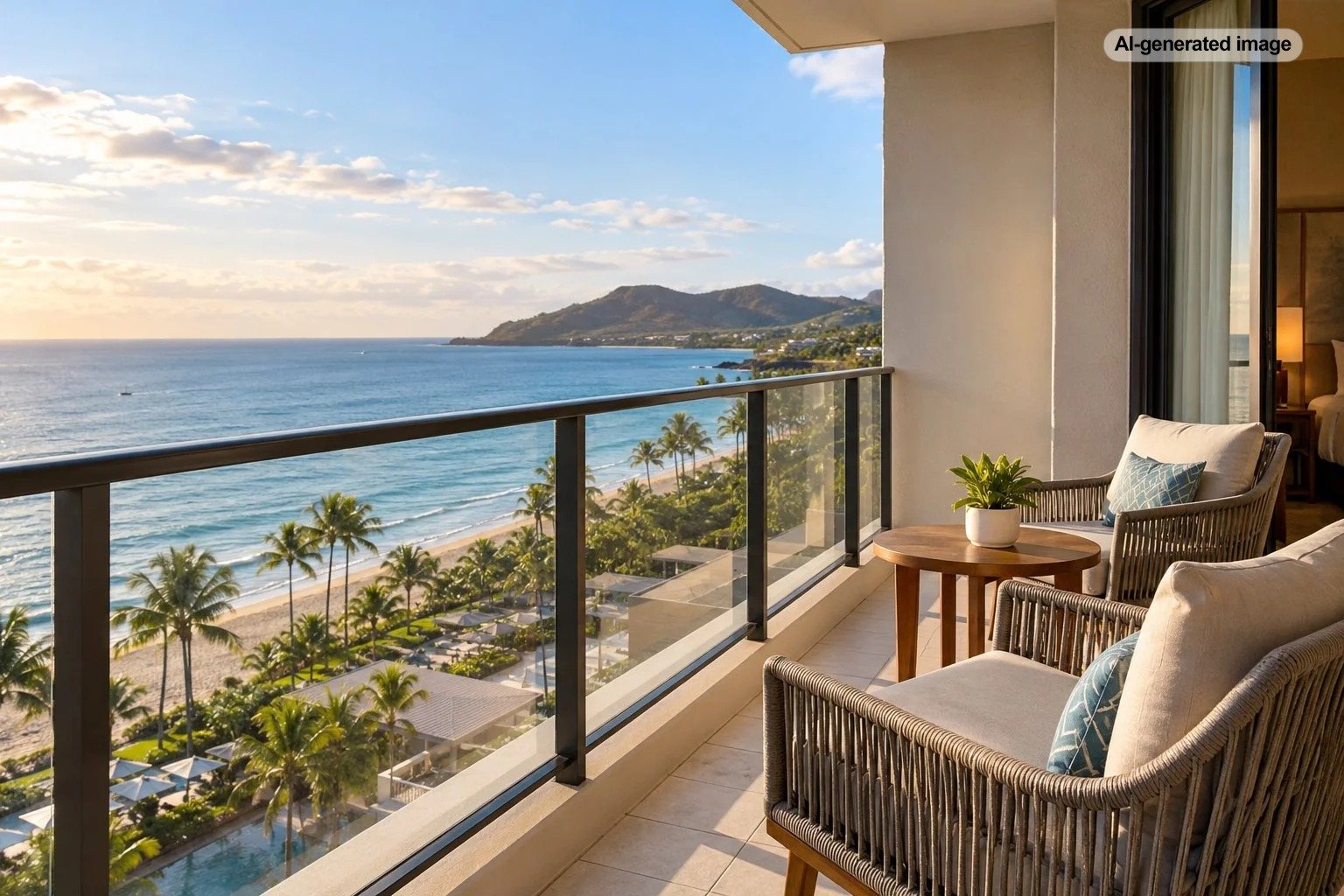
A pair of chairs with a modest table between them is often the most practical arrangement for travelers who want to drink coffee, read, or spend time outdoors together. Look for enough separation that both people could sit naturally without their knees colliding with the table or railing.
Also consider whether one person could stand up while the other remains seated. If both chairs appear pressed against opposite boundaries, the balcony may technically seat two people while offering very little freedom of movement.
One Chair or a Built-In Bench
A single chair may indicate limited floor space, but it can still work well for a solo traveler. A built-in bench can be efficient because it avoids the additional space required behind a movable chair. However, benches vary in back support, seat depth, and overall comfort.
For a couple hoping to spend evenings outdoors together, a balcony with only one practical seating position is less useful than a balcony designed around two occupants.
Loungers and Oversized Outdoor Furniture
A photograph featuring a lounge chair may suggest a spacious outdoor area. Check whether the chair can be used in its normal position without obstructing the entrance or occupying virtually the entire balcony.
Oversized furniture can make a generous-looking balcony surprisingly difficult to navigate. Conversely, small folding chairs may indicate that the outdoor space is being used efficiently rather than that the balcony is inadequate.
Understand How the Balcony Door Affects Seating Space
One frequently overlooked detail is the way the balcony door operates. Two outdoor areas with identical dimensions can have very different levels of comfort because of their doors.
A sliding glass door generally avoids taking up exterior floor space while opening. A hinged door that swings outward may require a clear arc on the balcony, potentially interfering with a chair or table. Doors that open inward create a different consideration, since they occupy part of the interior room instead.
Look at the photograph for clues about the door’s position. A door located near one end of the balcony may leave a more convenient seating zone than a centrally positioned door that divides the available space.
It is also worth considering how guests will enter and leave. If getting outside requires moving a chair or stepping around table legs, the balcony may become less appealing during daily use.
Recognize the Difference Between a Balcony and a Juliet Balcony
Balcony descriptions can be misleading when different architectural features are grouped together under similar terms.
A conventional projecting balcony typically provides an exterior platform that guests can step onto. A recessed balcony, sometimes called a loggia, sits within the building’s exterior envelope and may offer greater enclosure or protection from some weather conditions.
A Juliet balcony is fundamentally different. It generally consists of a railing positioned immediately outside a tall window or door, often without a usable exterior platform. It can allow light, air, and a more open visual connection with the outdoors, but it is not a substitute for a place to sit outside.
Descriptions such as French balcony may also refer to an arrangement without a substantial walk-out area. The precise terminology can vary, so examine the photographs and ask whether the room includes a platform large enough for seating.
If enjoying breakfast outdoors is a priority, confirm that the room offers a furnished, walk-out balcony rather than assuming that every balcony-labeled room has one.
Learn to Read Balcony Photographs More Critically
Hotel photography is designed to show spaces attractively. This does not necessarily mean the images are inaccurate, but camera positioning and lens choice can make small outdoor areas difficult to judge.
Watch for Wide-Angle Perspective
Wide-angle lenses capture more of a scene and can make distances appear exaggerated, particularly near the edges of an image. A balcony photographed from a corner may seem deeper than it actually is.
Look for visual reference points such as chairs, tables, floor tiles, and door frames. These familiar objects can help you form a more realistic impression of scale, although they cannot provide precise measurements without additional information.
Check What the Photographer Left Out
A photograph showing two chairs and an attractive view may omit the door, a structural column, or the narrow passage behind the furniture. Another image may show the balcony from the interior without revealing how much space exists between the chairs and railing.
Whenever possible, compare multiple photographs taken from different directions. A view looking back toward the hotel room is particularly useful because it can reveal the actual floor area and access arrangement.
Distinguish Room-Specific Images From General Property Photos
Hotel galleries sometimes display several room categories and shared outdoor spaces together. A spacious terrace shown in the property’s main gallery may not belong to the particular room category you intend to reserve.
Prioritize photographs attached to the exact room type. If the images remain ambiguous, request confirmation from the property before booking.
Consider Whether Two People Can Actually Use the Balcony Together
A balcony that works adequately for one person may feel cramped with two. The difference becomes especially important for couples, friends sharing a room, or anyone planning to spend meaningful time outside.
Imagine both guests seated simultaneously. Can each person place their feet naturally? Is there room to set down a beverage? Could one person get up without asking the other to move?
Also consider the intended activity. Two compact chairs may be perfectly suitable for a short morning coffee but less comfortable for an extended evening of reading. A narrow table might accommodate drinks yet be unsuitable for a meal.
Travelers who expect to work outside with a laptop should evaluate table height, chair support, and potential glare rather than relying on floor dimensions alone.
The ideal balcony is therefore not necessarily the largest one available. It is the one whose seating arrangement matches how you plan to use the space.
Account for Railings, Columns, and Unusable Corners
Published balcony dimensions do not always tell the full story. Architectural features can reduce the usable area even when the overall measurements appear generous.
A structural column may occupy a corner that otherwise could hold a chair. An irregularly shaped balcony may have a broad section that tapers into a narrow passage. A curved railing can create awkward furniture placement, while a raised threshold may affect how easily guests move between the room and outdoor area.
Railing design can also influence the seating experience. A solid parapet may block part of the view when someone sits down, even though the view looks excellent from a standing position. Transparent or open railings may preserve more of the seated sightline, subject to the balcony’s particular design.
If the view is the primary attraction, consider whether you can actually enjoy it while seated rather than only when standing at the railing.
Comfort Also Depends on Sun, Wind, and Privacy
Even a well-proportioned balcony can be unpleasant at certain times of day. Physical dimensions are only one part of the experience.
A balcony exposed to strong afternoon sun may become uncomfortable during the hours you hoped to use it. A shaded or recessed outdoor area could be more practical in warm conditions, although its orientation and surrounding buildings will influence how much direct sunlight it receives.
Wind exposure matters as well, particularly on elevated floors or in exposed coastal locations. A balcony that feels pleasant during calm conditions may be less useful when gusts make lightweight furniture, papers, or drinks difficult to manage.
Privacy is another consideration. Adjacent balconies may sit close together, and transparent partitions may offer limited separation between neighboring guests. A recessed balcony can feel more sheltered, but the degree of privacy depends on the actual building layout.
These factors do not determine whether furniture physically fits, but they can determine whether you want to spend time sitting there.
What to Ask the Hotel Before Reserving
If photographs and descriptions do not provide a convincing answer, a short, specific inquiry can resolve much of the uncertainty. Avoid asking only whether the balcony is spacious, since that invites a subjective answer.
More useful questions include:
- What are the approximate width and depth of the balcony for this exact room category?
- Does the balcony have two chairs and a table, or only one seating position?
- Can two adults sit outside simultaneously without blocking the balcony door?
- Does the door slide or swing open onto the balcony?
- Are the room-category photographs representative of the balcony in the room being booked?
- Is there enough room to sit facing the view rather than sideways?
If a balcony is especially important, ask whether the property has different balcony layouts within the same room category. Some hotels may have variations between floors, building sections, or individual rooms. Do not assume that an attractive photograph guarantees the same configuration in every unit.
Where a specific feature is essential, request written confirmation of what is included in your reservation. A preference noted on a booking is not necessarily a guaranteed room assignment.
When a Larger Balcony Is Worth Prioritizing
Balcony size deserves more attention when outdoor space is central to the trip. A traveler planning a quiet weekend with substantial time in the room may value a usable terrace more than someone spending most of the day sightseeing.
For a short city stay, a compact balcony suitable for a few minutes of fresh air might be entirely adequate. For a beach vacation, a shaded seating area with two comfortable chairs may provide much greater daily value.
Travelers planning longer stays might also consider vacation rentals with clearly documented outdoor seating areas. One option for comparing accommodation styles is to browse Homes & Villas by Marriott Bonvoy, although outdoor layouts, amenities, property standards, and reservation terms vary by listing.
Before choosing a more expensive room category solely for its balcony, evaluate whether you would actually use the additional outdoor space. For some guests, a better interior seating area or a quieter room location may be more valuable than a marginally larger balcony.
Common Balcony Details Travelers Overlook
One easily missed issue is the relationship between the seating area and the view. A balcony may be large enough for chairs, but the furniture might face a wall, neighboring building, or solid railing instead of the advertised scenery.
Another is the difference between a balcony being furnished and furniture being guaranteed for the booked room category. Hotel descriptions and photographic examples may not establish that every room has identical pieces.
Outdoor lighting can matter for evening use, while the location of nearby mechanical equipment or busy public areas can influence noise. Neither detail can be reliably determined from a single attractive daytime photograph.
Travelers should also avoid assuming that a balcony can accommodate additional furniture brought from inside the room. Properties may restrict moving furnishings outdoors, and doing so can obstruct circulation or create other problems.
Finally, remember that a larger outdoor area is not automatically more comfortable. The combined effect of usable floor space, seating quality, enclosure, view, and accessibility matters more than an isolated dimension.
Frequently Asked Questions About Hotel Balcony Size
Is a four-foot-deep hotel balcony big enough for chairs?
It can be, particularly with compact upright chairs. However, comfort depends on chair dimensions, door clearance, and whether the seating arrangement leaves enough room for legs and movement. Four feet should be treated as an approximate planning reference rather than a guarantee.
Can two adults sit comfortably on a small hotel balcony?
Yes, if the balcony has adequate depth, appropriately sized furniture, and a practical layout. A narrow balcony may accommodate two people seated side by side but still leave little room to move. Examine the furniture placement rather than relying only on the number of chairs shown.
Does a room advertised with a balcony always include outdoor seating?
No. Some balconies are unfurnished, and others offer minimal usable floor space. A Juliet balcony generally does not provide a conventional outdoor seating platform. Confirm the exact room category and its furnishings before reserving.
Are hotel balcony dimensions usually included in room listings?
Not always. Some accommodations provide exterior floor-area measurements, while others list only the interior room size or total accommodation area. If the distinction matters, ask the property specifically for the balcony’s usable width and depth.
How can I tell whether the balcony view will be visible while sitting?
Look for photographs taken from chair height, note whether the railing is solid or transparent, and examine the relationship between furniture and surrounding structures. If the view is a major reason for booking, ask the hotel whether seated guests can see the advertised outlook clearly.
Make the Decision Based on How You Will Use the Space
The most dependable way to evaluate a hotel balcony is to imagine its actual use, not merely its appearance in a listing. Assess the usable depth, check the furniture arrangement, account for the door and structural features, and consider whether the available seating matches the number of people staying in the room.
When the photographs leave important questions unanswered, requesting specific dimensions or room-category details is more reliable than guessing. A thoughtfully arranged small balcony can be perfectly comfortable for a brief coffee break, while a larger but awkwardly furnished outdoor area may be disappointing.
Ultimately, the right balcony is one that lets you sit naturally, move without difficulty, and enjoy the outdoor environment in the way you intended when booking.