Where Should I Stay in Nashville for Live Music and Nightlife?
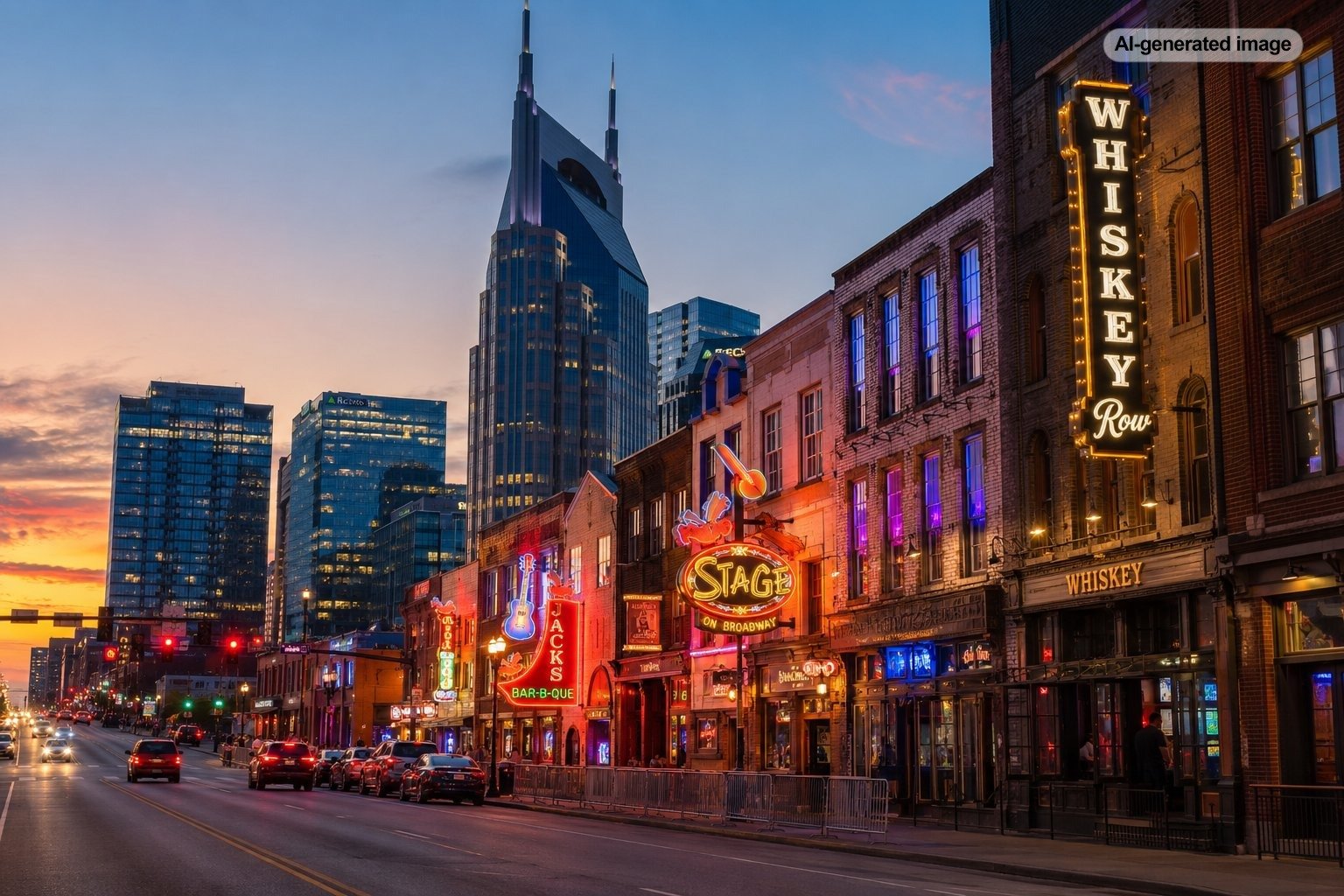
For the easiest access to Nashville’s most concentrated live-music and nightlife district, stay Downtown near Lower Broadway or immediately south of it in SoBro. You will be able to walk to honky-tonks, concert venues, restaurants, and many of the city’s best-known attractions without arranging transportation after every night out.
That is not automatically the best choice for every traveler. Midtown provides energetic nightlife with a somewhat more local, bar-oriented feel. The Gulch offers polished hotels and restaurants with music nearby but less nonstop intensity. East Nashville is better for independent venues, creative bars, and neighborhood character, although reaching Downtown usually requires a ride. Your decision should come down to the kind of music you want, how late you expect to stay out, and how much street noise you are willing to accept.
Quick answer
- Stay near Lower Broadway for maximum walkability to honky-tonks, major entertainment venues, and high-energy nightlife.
- Choose SoBro for convenient Downtown access with a slightly more removed position south of Broadway.
- Choose Midtown or Demonbreun for lively bars, frequent live music, and easier access to Music Row and the West End corridor.
- Choose The Gulch for stylish hotels, restaurants, and a more polished evening scene near established music venues.
- Choose East Nashville for independent music, cocktail bars, restaurants, and a neighborhood atmosphere rather than a Broadway-centered trip.
Downtown and Lower Broadway: best for first-time nightlife trips
Downtown is the most practical base when live music is the central purpose of the trip. Lower Broadway forms the core of Nashville’s famous honky-tonk district, with numerous venues clustered within a compact area. Staying nearby allows you to move between bars and performance spaces on foot, return to your room between outings, and avoid depending on a car at the end of the night.
This area is especially well suited to first-time visitors, groups celebrating an occasion, and travelers with only one or two nights in the city. It also works well when your plans include Downtown attractions, an arena event, a convention, or a concert at one of the central venues.
The main tradeoff is intensity. Sidewalks can become crowded, music may be audible well beyond individual venues, and traffic around major events can slow rideshare pickups. A room described as being near Broadway may also face the entertainment district directly, so review the property’s location carefully rather than relying on the neighborhood name alone.
Best for: travelers who want to walk out of the hotel and immediately enter the busiest nightlife district.
Consider another area if: you are a light sleeper, prefer intimate listening rooms, or want a neighborhood that feels calmer during the day.
SoBro: best for Downtown convenience with a little separation
SoBro, meaning South of Broadway, places travelers close to the central entertainment district while offering a somewhat different setting from Lower Broadway itself. The neighborhood includes hotels, restaurants, live-music options, major visitor attractions, and the convention center. Depending on the precise hotel location, Broadway may still be within a comfortable walk.
SoBro is often a sensible compromise for couples, conference travelers, and visitors who want Downtown access without placing their room directly over the busiest blocks. It can also be convenient for concerts or events on the southern side of the central district.
Do not assume every SoBro property will feel quiet. Large events, arena activity, rooftop venues, and Downtown traffic can affect nearby blocks. Check the actual distance to your priority venues and consider whether the route will still feel convenient late at night.
Best for: visitors who want to remain highly walkable while creating modest distance from the center of the honky-tonk activity.
Consider another area if: you want independent neighborhood bars or expect to spend most evenings in East Nashville or Midtown.
Midtown and Demonbreun: best for energetic bars beyond Broadway
Midtown extends the nightlife corridor west of Downtown and includes clusters of bars and live-music venues around Broadway, Division Street, and Demonbreun. The atmosphere remains lively, but it is less dominated by the visitor-focused honky-tonk experience found on Lower Broadway. Nearby Music Row adds industry history and recording-studio context, although Music Row itself should not be confused with a concentrated late-night entertainment strip.
This area can work particularly well for repeat visitors, younger groups, and travelers who want to divide their nights between Midtown and Downtown. It also provides convenient access to Vanderbilt University, West End, and several restaurant districts.
The neighborhood is spread across a wider area than the Lower Broadway core. A hotel marketed as Midtown may be close to one nightlife cluster but inconvenient for another. Walking to Downtown may be feasible from some properties, but distance, weather, hills, traffic, and late-night conditions can make a ride more practical.
Best for: travelers who want busy nightlife and live music without making Lower Broadway the center of every evening.
Consider another area if: your priority is walking to Downtown venues several times each day.
The Gulch: best for polished hotels, dining, and selective nightlife
The Gulch sits just south of Downtown and combines modern hotels, restaurants, shopping, bars, and music venues in a redeveloped urban district. It is a strong choice for travelers who want evenings to include good meals and cocktails as well as performances. The neighborhood is also associated with long-established music institutions, including bluegrass-focused programming.
The Gulch generally feels more curated and dining-oriented than Lower Broadway. That distinction appeals to couples, weekend travelers, and visitors who want a stylish base without being surrounded by honky-tonks from morning until late at night.
Its proximity to Downtown can look deceptively simple on a map. Rail lines, major roads, construction, weather, and the exact position of your hotel can influence whether walking feels practical. Travelers who expect to move back and forth repeatedly should compare the property’s entrance with their actual venues rather than measuring from the center of the neighborhood.
Best for: couples and friends who value restaurants, contemporary lodging, and access to music without nonstop party activity.
Consider another area if: you want the largest possible number of venues immediately outside the hotel.
East Nashville: best for independent music and neighborhood nightlife
East Nashville is known for independent restaurants, dive bars, creative cocktail programs, vintage shops, and live music. It is a better fit for travelers interested in smaller venues and neighborhood character than for those who want to spend every evening inside the Lower Broadway circuit.
The area is not one single nightlife strip. Five Points is one recognizable hub, but venues and restaurants extend across several pockets. This makes the exact location of a hotel or vacation rental especially important. Staying near one cluster does not guarantee that every East Nashville destination will be walkable.
Downtown lies across the Cumberland River, so most visitors should expect to use a rideshare, taxi, bus, or personal vehicle for at least some outings. Traffic and event demand can affect trip times and pickup locations. East Nashville therefore works best when its own venues are a meaningful part of your itinerary rather than merely a cheaper place to sleep after nights on Broadway.
Best for: repeat visitors, music-focused travelers, and people who prefer independent venues and neighborhood bars.
Consider another area if: you are visiting Nashville for the first time and want effortless access to the central honky-tonk district.
How to choose the right neighborhood for your trip
Choose according to your preferred music experience
Lower Broadway provides the greatest concentration and the easiest venue-hopping experience. The Gulch is useful for travelers interested in established music venues combined with dining. Midtown emphasizes busy bar districts and live entertainment beyond the central tourist core. East Nashville is more suitable for independent programming and smaller-scale nightlife.
Decide how much late-night transportation you want
Walking back to a Downtown or SoBro hotel can be a major advantage after a late show. Staying farther away may provide a calmer environment, but it introduces transportation costs, pickup logistics, and possible event-related delays. Nashville has public bus service, but routes and operating times can change, so check current schedules for the specific night rather than assuming transit will match a late venue closing.
Balance atmosphere against sleep quality
A hotel can be convenient and still be poorly suited to a light sleeper. Before booking, examine recent guest comments for references to street-facing rooms, rooftop bars, elevator noise, nearby construction, and weekend crowds. Requesting a higher floor or a room away from the entertainment side of the building may help, but requests are not guarantees.
Look at the entrance, not only the map marker
Large hotels may have entrances, valet lanes, pedestrian routes, or rideshare zones on a different street from the location shown on a map. In a busy nightlife district, a difference of several blocks can materially change the experience. Check the walking route between the actual hotel entrance and the venues you are most likely to visit.
What travelers often overlook
- Major events change the feel of a neighborhood. Concerts, sports, conventions, and festivals can increase pedestrian traffic and make transportation less predictable.
- Music Row is not Lower Broadway. Music Row is central to Nashville’s recording industry, but it does not provide the same dense, walk-in honky-tonk experience.
- Neighborhood labels are broad. Two hotels described as Downtown, Midtown, or East Nashville can offer very different walking distances and nighttime surroundings.
- Parking may add complexity. Travelers bringing a car should review the hotel’s current parking arrangement and access procedures directly before arrival.
- A quieter hotel may improve a music-focused trip. Visitors attending scheduled concerts rather than bar-hopping may prefer sleeping outside the loudest district and arranging transportation for specific performances.
Frequently asked questions
What is the best area for a first visit focused on nightlife?
Downtown near Lower Broadway is usually the most straightforward choice because it places the largest concentration of visitor-oriented nightlife within walking distance. SoBro is a useful alternative for similar convenience with slightly more separation.
Can I stay in Nashville without renting a car?
Yes. A car is often unnecessary for a short trip centered on Downtown, SoBro, The Gulch, and organized tours. Travelers exploring multiple outlying neighborhoods should plan for public transit, rideshares, taxis, or other transportation.
Where should couples stay for music without the biggest party crowds?
The Gulch is a strong option for contemporary hotels, restaurants, cocktails, and nearby music. SoBro can also work when a couple wants Downtown access but prefers not to stay directly on Lower Broadway.
Is East Nashville convenient for Broadway?
East Nashville is geographically close to Downtown, but the river and road network mean most visitors will use transportation rather than treat Broadway as an effortless walk. It is best chosen for its own restaurants, bars, and venues.
Which area is best for quiet nights?
No nightlife district can guarantee quiet. Properties on the edges of The Gulch, Midtown, or Downtown may be less exposed than hotels directly beside major bar clusters, but building design, room position, events, and nearby venues matter more than the neighborhood name alone.