Where to Stay in Marrakech for Rooftop Dining Without Sleeping Beside the Busiest Souks
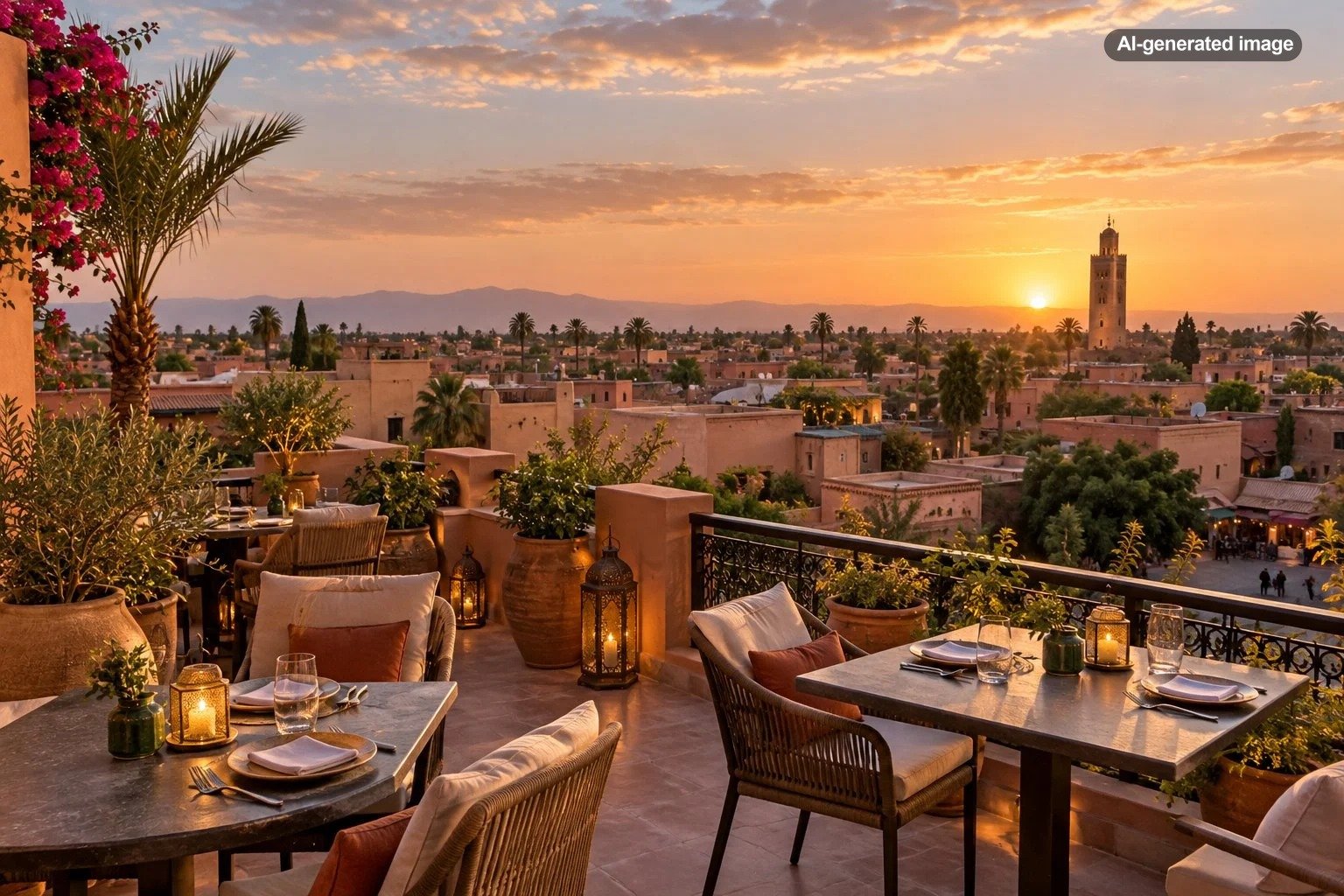
Choosing where to stay in Marrakech becomes more interesting when two priorities compete: you want memorable rooftop dinners overlooking the medina, but you do not want the noise and constant movement of the busiest shopping streets immediately outside your bedroom. Fortunately, those experiences do not have to come together. Several parts of Marrakech offer intimate riads, atmospheric terraces, and access to excellent restaurants without placing travelers directly beside the most heavily traveled souk corridors.
The strongest starting points are Bab Doukkala, Sidi Ben Slimane, selected streets in the Kasbah, and the western edge of the medina near Bab Laksour. Each offers a different balance of atmosphere, dining, access, and possible nighttime noise. The key is to distinguish a quiet interior from a genuinely quiet location, and a rooftop terrace from a restaurant that actually serves dinner outdoors.
Quick Answer: Where Should You Stay?
- For intimate rooftop dining: Riad Kniza in Bab Doukkala and Riad Kheirredine in Sidi Ben Slimane are particularly relevant.
- For a polished Kasbah experience: La Sultana Marrakech offers rooftop dining, while Les Jardins de la Medina provides a garden-focused alternative.
- For rooftop atmosphere close to the western medina: El Fenn and Palais Sebban are worth considering, with careful attention to evening activity.
- For a small luxury riad: Le Farnatchi combines a rooftop terrace with access to its established restaurant.
- For easier access near the southern medina: Riad Dar Anika offers a rooftop terrace and Moroccan hospitality close to major sights.
- For a high-luxury retreat near the medina: Royal Mansour Marrakech offers private riad terraces and multiple restaurants without requiring a room in the souk lanes.
Planning snapshot: Bab Doukkala and Sidi Ben Slimane suit travelers prioritizing traditional riads and a more residential setting. The Kasbah offers a different historic atmosphere south of the busiest central souks. Bab Laksour works for travelers who value access to the central medina and rooftop restaurants more than complete seclusion. A two- to four-night stay gives many visitors enough time to explore several neighborhoods without changing accommodations.
Why the Exact Street Matters More Than the Neighborhood Name
Marrakech’s medina does not divide neatly into silent residential quarters and noisy tourist areas. A peaceful-looking alley may lead to a busy square, while a hotel on a central street may conceal a remarkably calm courtyard. Sound can come from restaurants, motorcycles, passing visitors, deliveries, neighboring terraces, and ordinary neighborhood activity.
The distinction matters because a traditional riad typically faces inward around a courtyard. This architecture can create a strong sense of separation from the street, but it does not guarantee soundproofing. Courtyard conversations and rooftop gatherings can sometimes carry into guest rooms, particularly when windows open onto shared interior spaces.
For a rooftop-focused visit, compare three separate qualities: the atmosphere around the property’s entrance, the position of the guest room, and how the rooftop is used after dinner. A terrace that looks serene in daytime photographs may operate as a lively bar in the evening.
1. Riad Kniza: Traditional Rooftop Dining in Bab Doukkala
Area: Bab Doukkala. Positioning: Luxury boutique riad. Best for: Couples and travelers who want traditional Moroccan interiors and a carefully planned dinner.
Riad Kniza occupies a restored historic property in Bab Doukkala, a district that offers access to the medina without requiring guests to stay among its densest shopping passages. Its traditional architectural details and intimate scale make it a compelling option for travelers who prefer a residential-feeling setting.
The dining experience is a particular strength. Riad Kniza’s official restaurant information describes meals served in Moroccan salons or on the roof terrace, with advance meal orders required. That makes dinner more of a planned experience than a spontaneous restaurant visit.
The tradeoff: This is not the place to expect an extensive, continuously operating rooftop restaurant where you can arrive at any hour. Confirm dining arrangements and terrace seating before booking. Bab Doukkala also remains a working neighborhood, so individual streets can be active.
2. Riad Kheirredine: Rooftop Dining in Sidi Ben Slimane
Area: Sidi Ben Slimane. Positioning: Luxury riad. Best for: Travelers seeking a smaller-scale medina experience with dining close to their room.
Riad Kheirredine is located in Sidi Ben Slimane, in the northern portion of the medina. Its official restaurant description specifically identifies rooftop and courtyard dining, combining Moroccan influences with Mediterranean cuisine.
This is a strong fit for visitors who prefer to return to their accommodations after sightseeing and have dinner without navigating central shopping streets again. The restaurant’s different dining settings also give guests a choice of atmosphere, subject to reservations and operating arrangements.
The tradeoff: The northern medina’s winding lanes can require more deliberate navigation for first-time visitors. Ask where vehicle transfers stop and whether staff can assist with luggage. A quieter location also means that some central attractions may involve a longer walk.
3. La Sultana Marrakech: A Rooftop Dining Retreat in the Kasbah
Area: Kasbah. Positioning: High luxury. Best for: Couples, special occasions, and travelers who want dining and relaxation within one property.
La Sultana Marrakech is among the clearest matches for travelers who consider rooftop dining a defining part of their stay. Located in the Kasbah near the Saadian Tombs, the hotel describes an extensive roof terrace overlooking the city and dining beneath the stars.
Its courtyards, gardens, spa, and restaurants create a more complete retreat than a simple overnight base. The Kasbah setting also places guests south of the principal central souk passages while retaining access to the historic medina.
The tradeoff: The luxury positioning comes with a premium cost category. The Kasbah is not uniformly quiet, especially around prominent landmarks and busy streets. Verify the location and outlook of the specific room rather than assuming every accommodation shares the same sense of seclusion.
4. Les Jardins de la Medina: Garden Dining Instead of a Rooftop Scene
Area: Kasbah. Positioning: Upscale boutique hotel. Best for: Travelers who value restful surroundings, a garden, and a more conventional hotel experience.
Les Jardins de la Medina is a useful alternative for visitors who like Marrakech’s open-air dining atmosphere but do not need every meal to take place on a rooftop. The hotel occupies a former palace on Derb Chtouka and features a substantial garden, a swimming pool, and a restaurant.
Its official dining information emphasizes meals in elegant interior spaces and, when weather permits, in the garden. For guests who associate a successful evening with a calm setting rather than a dramatic skyline, this may be the more satisfying choice.
The tradeoff: Garden dining is not the same as a rooftop restaurant with panoramic views. Travelers whose priority is sunset dining above the medina should choose another property or plan to visit a separate rooftop restaurant.
5. El Fenn: Rooftop Restaurant and Social Atmosphere Near Bab Laksour
Area: Western medina near Bab Laksour. Positioning: Luxury design-focused hotel. Best for: Couples and travelers who enjoy contemporary design, restaurants, and an energetic rooftop setting.
El Fenn offers a different interpretation of a Marrakech stay. Its rooftop restaurant and bar are central to the hotel’s appeal, with views toward the Koutoubia Mosque and the roofs of the medina. The property welcomes outside visitors to its dining spaces, creating a more social atmosphere than an exclusively guest-oriented riad terrace.
The western medina location is practical for guests who want to explore central Marrakech without sleeping deep inside its shopping labyrinth. It also provides a convenient starting point for visiting rooftop restaurants around Bab Laksour.
The tradeoff: An active rooftop restaurant is not automatically compatible with a quiet bedtime. Guests sensitive to music, voices, or evening restaurant activity should ask about rooms away from public dining spaces and confirm current operating hours.
6. Palais Sebban: Historic Architecture and Rooftop Drinks in Laksour
Area: Laksour. Positioning: Upscale historic riad. Best for: Travelers who want traditional architecture, an on-site restaurant, and terrace time without staying in the central souk passages.
Palais Sebban occupies a historic property in the Laksour quarter. Its official website describes landscaped patios, accommodation, restaurant dining, and rooftop areas where guests can enjoy drinks and views of the city.
For travelers seeking both visual character and dining convenience, the property provides a useful middle ground between an intimate guesthouse and a larger luxury hotel. The location places central Marrakech within reach, although the surrounding quarter remains active.
The tradeoff: Palais Sebban promotes organized evening entertainment, including Friday programming. That may appeal to guests who enjoy a lively atmosphere but may not suit travelers seeking absolute silence. Confirm whether dinner is served on the rooftop itself, rather than assuming every restaurant meal takes place upstairs.
7. Le Farnatchi: Boutique Luxury With a Roof Terrace and Restaurant
Area: Central-to-northern medina. Positioning: Luxury boutique hotel. Best for: Design-conscious travelers who want a refined riad with dining options.
Le Farnatchi is an intimate luxury property offering suites and deluxe rooms, a rooftop terrace and garden, and access to the restaurant Le Trou au Mur. The official hotel website describes places to dine and lounge on the roof, making it relevant for guests who value private-feeling outdoor spaces.
Its smaller scale may appeal to visitors who prefer a property with a residential character rather than the facilities of a large resort. The central medina position also makes exploration convenient.
The tradeoff: This is still a medina property, and some walking through narrow lanes is part of the experience. Confirm which meals can be served on the roof and whether terrace dining needs to be arranged in advance.
8. Riad Dar Anika: Rooftop Relaxation Near the Southern Medina
Area: Southern medina near the Mellah. Positioning: Upscale intimate riad. Best for: First-time visitors who want traditional hospitality and access to historic sights.
Riad Dar Anika offers a compact alternative to the larger luxury properties. Its official site describes individually styled rooms, a pool, hammam, Moroccan cuisine, and a roof terrace with views across the city toward the Atlas Mountains.
Its location near the southern medina allows travelers to explore sites and neighborhoods beyond the busiest central souk corridors. The rooftop is particularly relevant for enjoying a relaxed drink after sightseeing.
The tradeoff: The property is close to an active historic neighborhood, so the surroundings should not be presumed silent. Also, a rooftop suitable for drinks and relaxation does not necessarily mean the full dinner menu is always available there. Confirm dining arrangements directly.
9. Royal Mansour Marrakech: Private Rooftop Space Outside the Souk Lanes
Area: Western edge of the medina. Positioning: High luxury. Best for: Travelers prioritizing privacy, elaborate accommodations, and multiple dining choices.
Royal Mansour Marrakech is different from a conventional medina riad. The hotel is organized around an extensive collection of private riads rather than standard hotel rooms, with rooftop terraces incorporated into the accommodation concept. Its restaurants range across several cuisines and dining settings.
The property is particularly relevant for travelers who want rooftop space without using a busy public terrace as their primary place to relax. However, the hotel’s prominent dining venues should not be confused with guaranteed private rooftop dinner service.
The tradeoff: This is among the most expensive styles of accommodation in Marrakech, and its scale and formality may be less appealing to travelers seeking an informal neighborhood guesthouse.
Affiliate disclosure: HotelInfo.com may earn a commission when you book or purchase through links on this page. This does not affect the price you pay. Learn more.
Travelers considering this style of stay can view rooms and property details for Royal Mansour Marrakech before comparing its accommodations with smaller riads. Confirm current terms, included services, and cancellation conditions before reserving.
Which Marrakech Area Offers the Best Balance of Dining and Quiet?
| Area | Main appeal | Consideration |
|---|---|---|
| Bab Doukkala | Traditional riads and intimate meals | Variable street activity |
| Sidi Ben Slimane | Residential atmosphere and riad terraces | Longer walks to some sights |
| Kasbah | Historic surroundings and upscale retreats | Activity near landmarks |
| Laksour and Bab Laksour | Central access and rooftop dining | Busier restaurant and pedestrian activity |
| Western medina edge | Luxury stays and access outside narrow lanes | Less intimate neighborhood character |
For a couple wanting a romantic rooftop dinner and a traditional riad, Bab Doukkala or Sidi Ben Slimane is a sensible starting point. Travelers seeking hotel facilities and a more self-contained experience should look toward the Kasbah or western medina edge. Those who want to visit several restaurants on foot may favor Laksour, accepting that proximity to dining also creates some potential for noise.
How to Confirm a Rooftop Hotel Will Actually Be Quiet
Before booking, contact the property with questions specific enough to produce useful answers:
- Where is the bedroom? Ask whether it faces an interior courtyard, street, rooftop dining area, or service passage.
- Is the rooftop a restaurant or a relaxation terrace? Ask whether full dinner service is offered there and whether outside diners are admitted.
- When does rooftop activity finish? Confirm current dining, bar, and entertainment arrangements rather than relying on an old review.
- How accessible is the entrance? Ask where a vehicle can stop, especially when arriving after dark or traveling with heavy luggage.
- What happens during poor weather? An attractive open-air terrace may not be the evening dining venue during rain, wind, or colder weather.
Recent reviews can provide useful clues, particularly when several independent guests mention similar noise or access issues. Read them with attention to the exact room category and timing of the stay. A complaint about a single festival night does not necessarily describe ordinary conditions, just as one quiet visit cannot guarantee silence throughout the year.
What Travelers Often Overlook About Marrakech Rooftops
A Beautiful Terrace May Not Have the Best Dinner Service
Some of the most attractive rooftops are primarily for lounging, breakfast, or drinks. Others operate full restaurants with reservations and structured menus. A property with a lovely rooftop photograph may still serve most dinners inside its courtyard or dining room.
Quiet Bedrooms and Quiet Restaurants Are Different Requirements
An active restaurant can be enjoyable when you are dining but inconvenient when you are sleeping below it. If early nights matter, request a room positioned away from the terrace and ask whether the building carries sound between floors.
A Car Is Usually Unnecessary for a Medina-Focused Stay
Visitors concentrating on rooftop restaurants, historic neighborhoods, and walking tours generally do not need a rental car for daily movement within the medina. Many narrow streets are not suitable for ordinary car access. Arrange airport transfers or taxis to an accessible meeting point and coordinate the final approach with the hotel.
A rental vehicle becomes more relevant when the trip includes independent excursions outside Marrakech, but parking and navigating the city should be considered separately from choosing a quiet riad.
Frequently Asked Questions
Is it quieter to stay outside Marrakech’s medina?
Sometimes, but not automatically. Modern districts and resort-style properties may avoid narrow souk streets, yet road traffic, nightlife, and hotel events can create their own noise. The particular property and room location matter more than a simple inside-or-outside distinction.
Can you visit rooftop restaurants without staying at the hotel?
Some properties welcome nonresident diners, including El Fenn, which describes its rooftop restaurant and bar as open to outside guests. Other riads may prioritize residents, require advance reservations, or offer meals only under particular arrangements. Confirm directly before planning an evening around a specific terrace.
Is the Kasbah better than Bab Doukkala for a peaceful stay?
Neither district is uniformly quieter. The Kasbah has significant landmarks and upscale hotels, while Bab Doukkala contains traditional residential streets and intimate riads. Choose the Kasbah for access to southern historic sites and larger retreat-style properties, or Bab Doukkala for a smaller riad atmosphere.
Should you request a room on the top floor?
Not necessarily. A room immediately beneath a frequently used rooftop terrace may receive more noise than a lower room. Ask which accommodation is best insulated from restaurant activity instead of assuming that higher floors are always quieter.
Is rooftop dining comfortable throughout the year?
Conditions vary with season, weather, and time of day. Marrakech can experience strong daytime heat and cool evenings, so outdoor dining arrangements may change. Ask whether the restaurant provides shaded seating or an indoor alternative rather than assuming the rooftop will always be comfortable.
Choosing the Right Marrakech Stay
The most useful decision is not simply whether a hotel has a rooftop. It is whether the property places its dining, sleeping, and neighborhood experiences in the right balance for your trip. Riad Kniza and Riad Kheirredine are strong candidates for traditional riad stays with rooftop meals. La Sultana Marrakech offers a more elaborate Kasbah retreat. El Fenn and Palais Sebban favor travelers who enjoy being near an active restaurant scene, while Royal Mansour Marrakech emphasizes private space and extensive facilities.
For travelers who want Marrakech’s evening skyline without its busiest shopping passages outside the bedroom, begin with the neighborhood, verify the room’s position, and then confirm exactly how rooftop dining operates. Those three checks are more reliable than choosing from terrace photographs alone.
Sources & Further Reading
- Riad Kniza – Official restaurant and rooftop dining information
- Riad Kheirredine – Official dining information
- La Sultana Marrakech – Official hotel and roof-terrace information
- Les Jardins de la Medina – Official hotel website
- El Fenn – Official rooftop restaurant and dining information
- Palais Sebban – Official hotel website
- Le Farnatchi – Official boutique hotel website
- Riad Dar Anika – Official riad website
- Royal Mansour Marrakech – Official hotel website