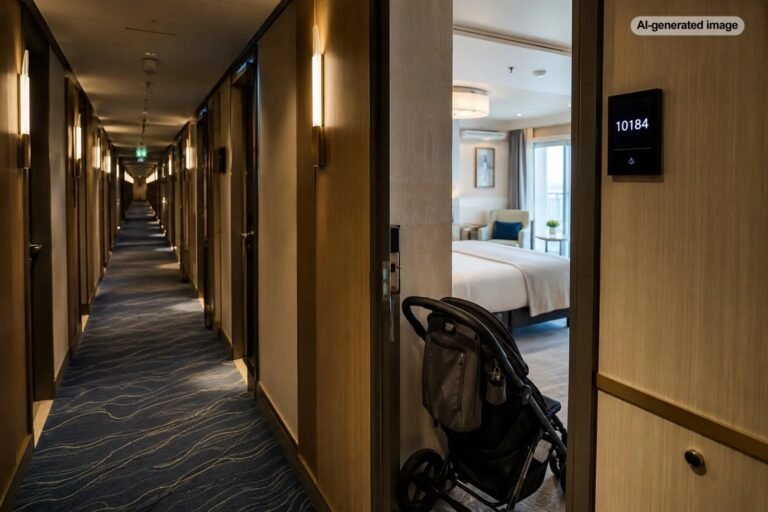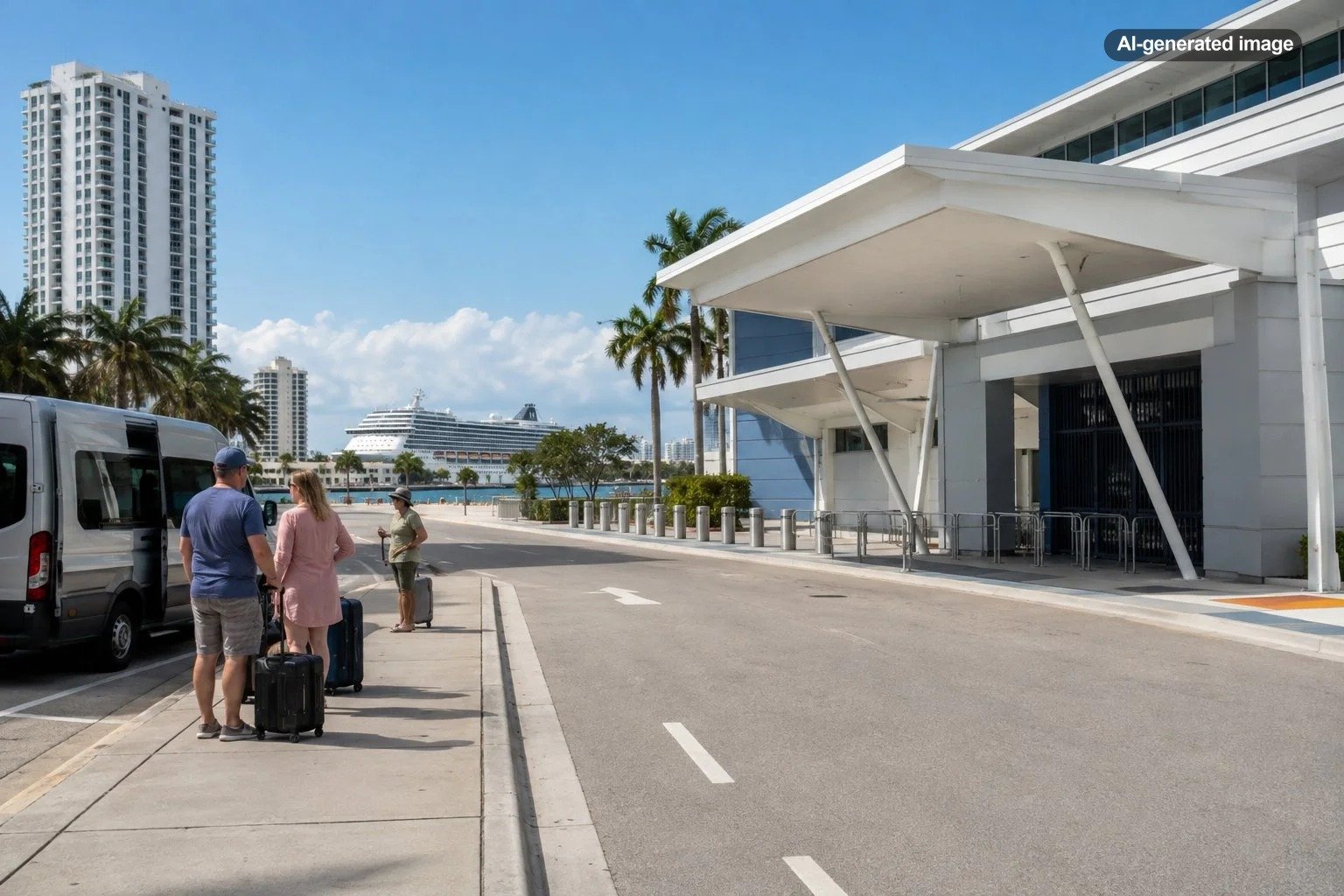
What Happens If You Arrive at the Cruise Terminal Too Early?
Arriving at a cruise terminal several hours early usually does not mean you will board sooner. Many cruise lines now assign or ask passengers to select an arrival window, and travelers who appear substantially before that time may have to wait outside, remain in a designated holding area, or return closer to their scheduled window.
The practical rule is simple: use the arrival time shown in your cruise documents or cruise-line app rather than treating the ship’s departure time as your target. Embarkation procedures vary by cruise line, port, ship, and sailing, so the instructions for your particular reservation should take priority over general advice.
Quick answer
- Arriving very early does not necessarily get you onto the ship earlier.
- Some cruise lines may restrict terminal entry until your assigned arrival window.
- Early passengers can encounter limited seating, outdoor waiting, congestion, or additional time standing with luggage.
- Your arrival appointment and the ship’s departure time are different things.
- Check your boarding pass, cruise documents, app, and any departure-day messages before leaving for the port.
Your arrival time is designed to control terminal traffic
A modern cruise terminal may need to process thousands of passengers over a relatively short period. Staggered arrival appointments help spread that demand across security screening, document checks, baggage handling, check-in counters, waiting areas, and boarding lanes.
That is why arriving two or three hours before an assigned window can work against the system rather than giving you an advantage. Carnival, for example, tells passengers to arrive within their selected Arrival Appointment and warns that arriving outside the appointment can produce longer waits. Royal Caribbean similarly directs guests to arrive within the time selected during check-in and states that early arrivals will not be able to begin boarding. Celebrity Cruises also tells travelers to arrive during the selected window to avoid delays.
The details are not identical across cruise lines. Norwegian Cruise Line advises passengers not to arrive more than one hour before the embarkation time shown in their eDocs because early terminal entry can be restricted. This variation is exactly why the instructions attached to your sailing matter more than a universal recommendation from another traveler.
You may not be allowed into the terminal yet
The most important distinction is between reaching the port area and being admitted into the cruise terminal. You can physically reach a cruise port long before your appointment without necessarily being able to start check-in.
Depending on the port and cruise line, staff may ask early passengers to wait until their designated window. Terminal space can also be limited. In practical terms, arriving excessively early could mean standing outside with carry-on bags, finding somewhere nearby to spend time, or waiting while passengers with current appointments are processed first.
This can be particularly inconvenient for families with young children, older travelers, anyone with substantial carry-on luggage, and travelers who expected an air-conditioned waiting lounge to be available immediately.
Arrival time, boarding time, and departure time are not the same
Embarkation day involves several different times that are easy to confuse.
- Arrival appointment: When the cruise line expects you to reach the terminal.
- Terminal check-in: The document, security, and processing stage before boarding.
- Boarding: When passengers are actually permitted to go onto the ship.
- Final boarding deadline: The cruise line’s cutoff for being checked in and onboard.
- Departure time: When the ship is scheduled to leave the port.
These times can be separated by hours. A ship scheduled to depart in late afternoon, for example, may begin processing and boarding passengers much earlier, but that does not mean every passenger should appear when the terminal first opens.
Final boarding deadlines also vary by cruise line and sailing. Missing one can result in being denied boarding, so travelers should never use general online advice to calculate how late they can safely arrive. Follow the deadline printed in your cruise documents.
Being early to the port area can still be useful
There is an important difference between avoiding an excessively early terminal arrival and cutting your travel schedule too close. Building a buffer into embarkation day is sensible, particularly when traffic, parking, hotel checkout, airport transfers, bridge openings, road construction, or unfamiliar port access could cause delays.
A useful approach is to plan to be near the port before your appointment without necessarily entering the terminal hours ahead of schedule. Depending on the departure city and your transportation arrangements, that might mean leaving your hotel with enough time for unpredictable traffic, arranging a transfer for the appropriate window, or allowing extra time to locate parking and move luggage.
If you reach the area much earlier than expected, check whether there is a practical place to wait before approaching the terminal. What works will depend heavily on the port, your luggage, local transportation, and whether you have already checked out of a hotel.
What to do if transportation makes you arrive very early
Sometimes an early arrival is unavoidable. A hotel shuttle may run at fixed times, a private transfer may have limited availability, or travelers may be coordinating several people coming from different locations.
Start by checking your cruise-line app and boarding documents for any updated instructions. If your assigned arrival time remains unchanged, do not assume that a mostly empty terminal entrance means you can check in immediately.
If you are traveling with several staterooms, also verify whether everyone has compatible arrival appointments. Some cruise lines organize appointments by stateroom, so a group with different windows may not automatically be processed together simply because everyone arrives at the same time.
Do not confuse arriving early with traveling to the departure city early
For travelers flying or driving a long distance, arriving in the departure city ahead of embarkation day can provide a useful buffer. That is a separate decision from arriving at the terminal hours before your appointment.
The first can reduce exposure to same-day transportation disruptions. The second may simply create additional waiting. Travelers sometimes combine the two ideas and assume that because getting to the city early is prudent, getting to the terminal as early as physically possible must also be better. Cruise-line scheduling procedures make that assumption unreliable.
What travelers often overlook on embarkation day
Your checked luggage may be separated from you before boarding and may not reach your stateroom immediately. Keep essential medication, travel documents, identification, valuables, and anything you expect to need during the first several hours in your carry-on rather than in a bag handed over for delivery.
It is also worth checking for departure-day notifications before leaving your hotel or home. Cruise lines can adjust operational instructions, and port procedures are not identical from one terminal to another.
Finally, avoid focusing so much on securing the earliest possible boarding that you create an unnecessarily stressful morning. A well-timed arrival with completed online check-in, documents ready, luggage organized, and adequate transportation buffer is generally more useful than spending several extra hours at the terminal.
FAQ
Will a cruise line let me board early if I arrive before my appointment?
Do not count on it. Some cruise lines explicitly instruct passengers to arrive within their assigned window and may delay or restrict processing for people who arrive early.
Can I arrive at the port early and wait nearby?
That may be possible, but the practicality depends on the specific port, surrounding area, transportation arrangements, weather, and how much luggage you have. Research the port area rather than assuming the terminal itself will provide a comfortable waiting space.
What if traffic could make me late?
Build transportation time into your plans so you are close to the terminal before your appointment. The goal is to create a buffer without necessarily presenting yourself for check-in hours early.
Where do I find my correct arrival time?
Check your cruise-line app, boarding pass, eDocs, online check-in account, and any sailing-specific communications. Those instructions should take priority over general embarkation advice.
How late can I arrive for a cruise?
Use the final boarding requirement stated by your cruise line for your specific sailing. Do not calculate the cutoff from the scheduled departure time using a generic rule, because requirements can differ.