Are Magnetic Hooks Really Useful in Cruise Cabins?
Magnetic hooks can be surprisingly useful in cruise cabins, particularly when several people are sharing a relatively compact space. They provide temporary hanging points for lightweight belongings, helping keep frequently used items off desks, chairs, and bathroom counters. However, their usefulness depends on the cabin’s surfaces, the strength of the magnets, and what travelers actually need to hang.
For many passengers, a small collection of hooks is a sensible packing addition rather than an essential accessory. The advantage is flexibility: a hook can be moved as daily routines change, without installing hardware or using adhesive. The limitations are equally important, especially because not every visible metal surface will hold a magnet securely.
Quick Answer: Are Magnetic Hooks Worth Bringing?
- Usually yes for shared cabins: Extra hanging space can help organize belongings for two or more passengers.
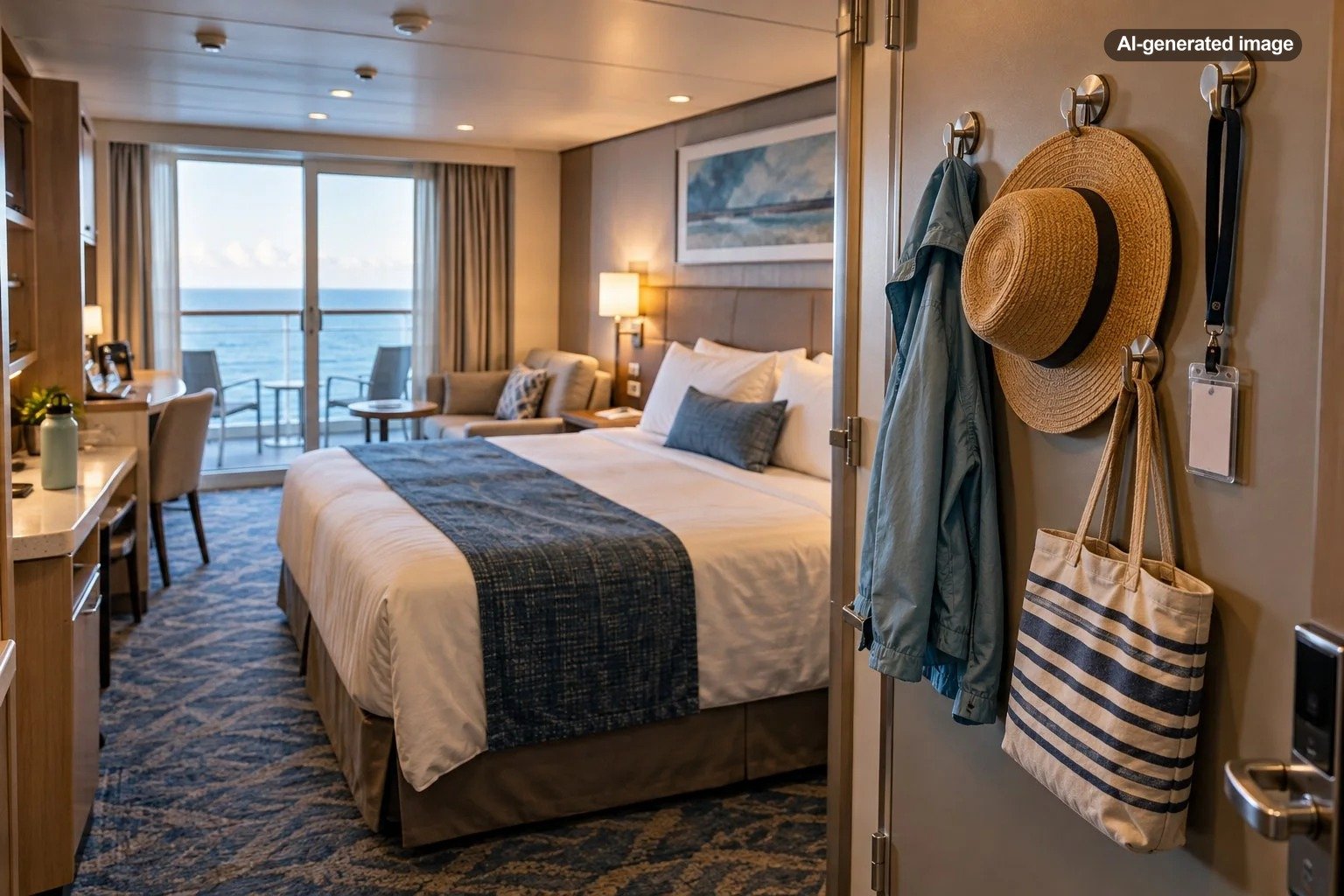
- Most useful for lightweight items: Hats, lanyards, empty tote bags, and small accessories are better candidates than heavy backpacks.
- Surface compatibility varies: Many cruise cabins have magnet-friendly steel panels, but some walls, doors, and furnishings are not magnetic.
- Advertised strength can be misleading: A hook’s rated holding force may not reflect its performance on a vertical wall.
- A few are generally sufficient: Three to six hooks are a reasonable starting point for many cabins, not a universal requirement.
Why Magnetic Hooks Work in Many Cruise Cabins
Many cruise ships use steel in cabin construction, including portions of interior wall assemblies and doors. This creates opportunities to attach magnetic accessories without drilling holes or permanently altering the space.
The important distinction is that a steel structure does not guarantee every finished surface is magnetic. Decorative coverings, nonmagnetic metal, wood panels, and other materials can prevent a magnet from attaching. Even when steel is present beneath a finish, distance from the underlying metal can reduce holding strength.
Passengers should therefore treat magnetic walls as a possibility rather than a guaranteed cabin feature. The most practical approach is to bring a small number of hooks, test them gently after boarding, and use only surfaces where they attach securely without scratching or damaging the finish.
What Are Magnetic Hooks Actually Useful For?
Keeping Cruise Cards and Lanyards Accessible
One of the simplest uses is hanging a lightweight lanyard near the cabin entrance. This establishes a consistent location for an item passengers may need whenever they leave the room.
A hook placed near the door can be especially helpful for families, provided it does not interfere with the door, locks, or other fixtures. Avoid relying on a loose hook for important documents or valuables that would be difficult to replace.
Creating a Place for Hats and Lightweight Accessories
Sun hats, baseball caps, and small accessories frequently end up scattered across cabin furniture. Magnetic hooks can move these belongings onto available wall space, leaving desks and countertops clearer.
This works particularly well when several passengers have similar items that would otherwise become mixed together. Assigning each person a designated hook is a simple organizational improvement.
Hanging Empty Tote Bags and Packing Accessories
An empty reusable tote, lightweight fabric pouch, or small packing accessory can hang from a suitable magnetic hook. This may help separate items intended for the next port visit from belongings that remain in drawers.
The distinction between an empty bag and a loaded bag matters. A tote that weighs almost nothing when empty can become too heavy for a wall-mounted magnet once filled with water bottles, electronics, and other excursion essentials.
Separating Dry Accessories From Damp Items
Hooks can provide temporary locations for lightweight accessories that need to remain separated from clean clothing. For example, a slightly damp hat may benefit from being positioned away from folded garments.
However, magnetic hooks should not automatically become a substitute for bathroom drying facilities. Heavy wet towels and swimsuits can exceed a hook’s practical holding capacity. Damp fabrics also need appropriate ventilation, and dripping water should be kept away from electrical outlets, electronics, and sensitive furnishings.
Use the cabin’s designated bathroom drying line or other approved facilities for wet clothing whenever available.
How Many Magnetic Hooks Should You Pack?
The right number depends less on cabin size alone than on how many passengers share the space and whether they already have sufficient built-in storage.
| Travel situation | Suggested starting quantity | Likely uses |
|---|---|---|
| Solo traveler | 2-3 hooks | Lanyard, hat, lightweight bag |
| Couple sharing a cabin | 3-5 hooks | Separate personal accessories |
| Family sharing a cabin | 4-6 hooks | Individual hats, lanyards, and small items |
| Traveler with ample built-in storage | 0-2 hooks | Occasional convenience rather than necessity |
These quantities are practical suggestions, not cruise line requirements. Bringing a large collection may create more clutter than it solves. Hooks occupying every available panel can also make a cabin feel crowded and increase the likelihood that something gets knocked loose.
Why Magnetic Hook Strength Matters More Than the Number on the Package
Magnetic hooks are frequently advertised with impressive holding capacities. Those numbers require careful interpretation because the amount a magnet can support depends on how force is applied.
A magnet attached to a horizontal steel ceiling may experience a direct pulling force. A magnet attached to a vertical wall must resist sliding, which depends partly on friction between the magnet and the surface.
Consequently, a hook advertised as capable of supporting a substantial weight under ideal test conditions may hold considerably less when attached sideways to a painted cabin wall.
Other factors also influence performance:
- Surface thickness: Thin or unsuitable metal can reduce magnetic holding force.
- Paint and coverings: Finishes increase the distance between the magnet and the underlying steel.
- Contact area: Uneven surfaces can prevent the magnet from sitting flat.
- Hook orientation: Some designs work better when the load pulls in a particular direction.
- Movement: A swinging bag or sudden tug can dislodge an otherwise secure attachment.
The safest approach is to use hooks conservatively. Test each hook with a lightweight item before trusting it with anything heavier, and never position it where falling objects could injure someone or damage property.
Where Should You Place Magnetic Hooks in a Cabin?
Placement determines whether a hook improves organization or creates an obstacle.
Near the Entrance
A suitable wall panel near the entrance can provide a convenient location for lanyards or lightweight hats. Keep hooks clear of door movement, safety instructions, locks, switches, and emergency equipment.
Beside a Wardrobe or Storage Area
If a magnetic surface is available, a hook near existing storage can help keep frequently used accessories together. This may be particularly helpful when wardrobe shelves are already occupied by folded clothing.
Away From Narrow Walkways
Cabin circulation space can be limited, especially when additional beds are in use. Avoid placing projecting hooks where passengers might brush against them while moving around the room or getting up at night.
Ceiling Placement Requires Extra Caution
Some travelers attach magnets to suitable ceiling panels, but this should not be treated as automatically safe or permitted. Overhead items can fall, create hazards around sleeping areas, or interfere with fixtures.
Unless a cruise line expressly allows the intended use and placement, keeping lightweight hooks on accessible vertical surfaces is the more conservative choice.
Are Magnetic Hooks Allowed on Cruise Ships?
Policies vary by cruise line, and guidance about decorative magnets does not necessarily establish permission for every type of interior hook or every location.
Disney Cruise Line guidance published through planDisney in January 2026 states that guests may bring magnets provided they are smooth and do not damage the door or stateroom wall finish. It also warns that passengers may be charged for resulting damage.
Carnival Cruise Line publishes specific rules for stateroom decorations. Its policy permits magnets for appropriate door decorations but limits decorations to the door rather than surrounding walls, railings, or frames. The policy also includes fire-safety restrictions.
These examples demonstrate why travelers should distinguish between using a magnet as a storage accessory and displaying decorations. Permission for one application does not necessarily establish permission for the other.
Before sailing, check the current policy for the cruise line and, where necessary, ask guest services or the cabin attendant about acceptable placement. Never attach hooks to safety equipment, sprinkler heads, light fixtures, or other operational fittings.
What Travelers Often Overlook About Magnetic Hooks
Strong Magnets Can Be Difficult to Remove
Powerful magnetic hooks can be harder to detach than expected. Pulling them directly away from a surface may require considerable force, and dragging them sideways can scratch painted panels.
Choose designs with smooth protective contact surfaces. If a magnet is difficult to remove, carefully tilt or lift it according to the manufacturer’s instructions rather than scraping it across the wall.
Hooks Can Scratch or Mark Surfaces
Not every magnet has a suitable protective coating. Exposed metal edges can leave marks, especially when a loaded hook shifts against a painted finish.
Inspect hooks before packing, avoid damaged coatings, and remove anything that appears to be marking the surface.
Magnets Should Stay Away From Sensitive Items
Powerful magnets should not be placed directly against magnetic-stripe cards, mechanical watches, certain medical devices, or other magnet-sensitive equipment. Travelers using implanted medical devices should follow the device manufacturer’s guidance about magnetic accessories.
More Hanging Space Does Not Always Mean Better Organization
Magnetic hooks solve a specific problem: a shortage of convenient hanging points. They do not make the cabin larger, create secure storage for valuables, or replace existing drawers and closets.
For a traveler who unpacks into the wardrobe and keeps only a few accessories accessible, additional hooks may offer little practical benefit. For a family managing several hats, lanyards, and small bags, the same accessories may prove considerably more valuable.
Magnetic Hooks Versus Other Cruise Cabin Organizers
Magnetic hooks work best for individual lightweight belongings. Packing cubes serve a different purpose by organizing clothing inside drawers or luggage. Small zippered pouches are often better for cables, medication, and personal accessories that should not remain exposed.
Hanging organizers can provide multiple compartments, but they may occupy more space and are subject to cruise line restrictions. Over-the-door products should not be assumed permissible simply because they are marketed for travel.
A sensible organization system combines existing cabin storage with a few portable accessories selected for the passengers’ actual needs. Magnetic hooks are most valuable when they fill a gap rather than duplicate storage already available.
How to Decide Whether They Belong on Your Packing List
Before purchasing magnetic hooks, consider which belongings routinely need a place to hang. If the answer is limited to one hat and a cruise card, two small hooks may be sufficient. If four people will share a cabin and frequently use excursion bags, lanyards, and sun accessories, a few additional hooks may be worthwhile.
Choose compact, smooth-backed hooks designed for the expected load. Avoid assuming that a high advertised weight rating guarantees performance on a cruise cabin wall. Test compatibility after boarding and be prepared to use existing storage if appropriate surfaces are unavailable.
Travelers comparing ships and cabin layouts may also want to examine general storage arrangements before choosing accommodations. However, magnetic compatibility should rarely outweigh more important considerations such as sleeping arrangements, accessibility, location, and overall cabin configuration.
Frequently Asked Questions
Do Magnetic Hooks Stick to All Cruise Cabin Walls?
No. Many cabins contain steel surfaces that attract magnets, but decorative panels, nonmagnetic materials, and certain finishes may prevent them from attaching. Compatibility varies by ship and even by location within the same cabin.
Can You Hang Towels From Magnetic Hooks?
A small, lightweight dry towel may be manageable on a suitable hook, but heavy or wet towels are less reliable. Use designated towel rails and drying facilities whenever possible, and avoid loading hooks beyond their practical capacity.
Are Magnetic Hooks Better Than Adhesive Hooks?
Magnetic hooks can be easier to reposition and remove without adhesive residue, provided the surface is compatible. Adhesive hooks may work on other materials, but their use can be restricted and removal may damage finishes. Follow the cruise line’s policy rather than assuming either option is universally acceptable.
Should You Buy the Strongest Magnetic Hooks Available?
Not necessarily. Extremely strong magnets can be difficult to handle and remove, while advertised holding capacities may not reflect performance on vertical walls. A compact, properly protected hook suitable for lightweight belongings is often more practical.
Can Magnetic Hooks Be Used on a Cruise Cabin Door?
Some cabin doors attract magnets, but permission to display magnetic decorations does not automatically mean protruding hooks are appropriate. Hooks on corridor-facing doors may interfere with clearance or create hazards. Keep storage hooks inside the cabin and follow the cruise line’s current rules.
The Bottom Line: Useful, but Not Essential
Magnetic hooks deserve consideration because they address a common cruise cabin inconvenience without taking much luggage space. Their strongest applications are simple: keeping lightweight accessories accessible, reducing countertop clutter, and giving passengers a few additional places to organize their belongings.
They are less useful when cabin surfaces are incompatible, built-in storage is sufficient, or travelers expect them to support heavy items. Bringing a small number of well-designed hooks, checking the rules, and using them conservatively is a more practical strategy than purchasing an extensive collection.
For most travelers, magnetic hooks are a modest convenience rather than a necessity. The best reason to pack them is not that cruise packing lists routinely recommend them, but that there is a clear, lightweight item they will help keep organized.